IMPLICATOR
On May 4, in the second week of Musk v. Altman, Greg Brockman took the stand in federal court in Oakland. Bloomberg reported that Musk attorney Steven Molo asked why Brockman had not given OpenAI's nonprofit the portion of his fortune above $1 billion. The amount at issue was $29 billion. Judge Yvonne Gonzalez Rogers said Brockman had not really answered.
The point for the case is narrow. The court docket describes Musk's claim as a nonprofit promise followed by a profit-driven shift. Brockman's testimony put pressure on OpenAI's defense because personal equity, Foundation equity and Microsoft equity all come from the same corporate conversion.
Key Takeaways
- Brockman's stake near $30 billion turned OpenAI's mission defense into an ownership fight.
- OpenAI says the Foundation still controls the company and holds a stake worth above $150 billion.
- Reuters and The Verge added financial-tie details involving Cerebras, Helion, CoreWeave and Altman's family office.
- The remedy question now runs through equity, compensation records and Foundation control rights.
AI-generated summary, reviewed by an editor. More on our AI guidelines.
The $29 billion question
Musk's lawyers used Brockman's own writing to make the number personal. Bloomberg and the New York Times reported that Molo showed jurors a 2017 journal entry in which Brockman wrote, "Financially, what will take me to $1B?" The entry came from the same period when OpenAI's leaders were debating whether a nonprofit could pay for enough compute and talent to keep up with DeepMind and other AI labs.
Brockman told the jury that the entry was about choosing between Musk's terms and a separate OpenAI path, not about greed. The $1 billion figure, he said, described an amount at which he would feel "good" either way. Molo then turned the old figure against the current one: if $1 billion was enough, why keep the other $29 billion?
CNBC reported that Musk argues his roughly $38 million in early support was used for commercial purposes he had not authorized. OpenAI has argued that Musk backed for-profit restructuring before leaving in 2018, then later built xAI as a rival in 2023. Brockman's stake gave both sides a number they could use.
Foundation control is the official answer
OpenAI's formal defense starts with governance, not Brockman's wallet. In its structure page, the company says the OpenAI Foundation controls OpenAI Group PBC and appoints all directors through special voting rights. At the recapitalization close, the Foundation held 26 percent of OpenAI Group, worth about $130 billion, plus a warrant for more shares if the company hit a valuation milestone.
Brockman disclosed a personal stake near $30 billion.
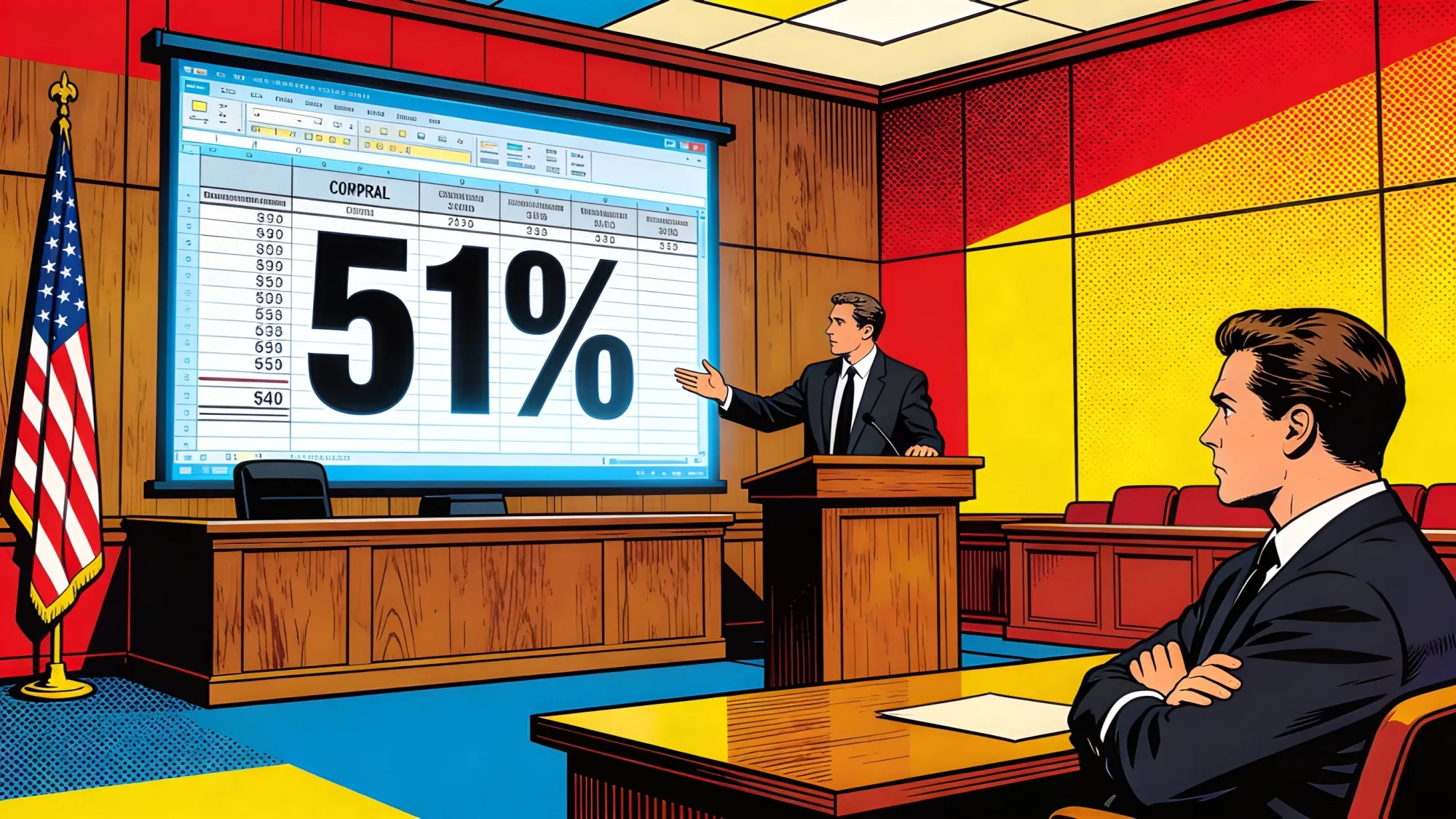
OpenAI's answer is that those numbers work together. Bloomberg reported that OpenAI said Monday the nonprofit arm's stake is now worth about $200 billion. WIRED reported Brockman's courtroom statement that the Foundation stake was above $150 billion, roughly five times his own, while employees collectively held about 25 percent.
That is not a weak rebuttal. It is also not a clean one. The Foundation may be richer because OpenAI became more commercial. Brockman may be richer for the same reason. Microsoft said its own stake was worth about $135 billion, or roughly 27 percent, while OpenAI contracted to buy an incremental $250 billion of Azure services.
Musk's case asks whether that arrangement preserved the mission or sold it. Brockman's testimony made the question harder to keep at the level of corporate design. A juror does not need to understand OpenAI's full recapitalization to understand a founder target of $1 billion and a current stake near $30 billion.
Track the OpenAI Trial Without the Theater
Strategic AI news from San Francisco. No hype, no "AI will change everything" throat clearing. Just what moved, who won, and why it matters. Daily at 6am PST.
No spam. Unsubscribe anytime.
The conflicts narrowed
Reuters reported that Brockman's incentives extended beyond OpenAI stock. He disclosed stakes in Cerebras and Helion Energy, companies with OpenAI ties, and a stake in Altman's family office worth $10 million when arranged in 2017. Reuters said an email read in court showed Jared Birchall warning that the arrangement could create "greater allegiance to Sam."
The Verge reported that Molo also asked Brockman about CoreWeave, Stripe and Helion, then spent time on whether OpenAI used purple boxes in documents to mark important terms. In a trial about humanity, the lawyers were arguing over a purple box.
That detail belongs in the story because the case has become less abstract each day. The jury is hearing who received equity, who knew about compensation, which suppliers had ties to insiders, and which documents a founder says he read closely. Musk's "steal a charity" line is still the public frame. The courtroom version is more granular.
The remedy now has numbers
Musk is seeking leadership changes, damages and structural relief. The New York Times reported the damages request at $150 billion and said Musk also wants an order removing Altman from OpenAI's board and undoing the for-profit structure adopted last year. OpenAI has argued that the suit is meant to weaken a competitor after Musk's own control proposals failed.
Brockman's stake disclosure entered the remedies record on Monday. Musk's complaint, summarized in the court docket, frames the equity as evidence of private gain after charitable funding. OpenAI's filings cite the Foundation's voting rights, its 26 percent stake at recapitalization and the Foundation valuation Bloomberg reported Monday at about $200 billion. Gonzalez Rogers would weigh those filings under charitable-trust and unjust-enrichment theories if the trial reaches a remedies phase.
Brockman's direct examination had not finished when the court adjourned on Monday, according to Bloomberg. Molo's questioning so far has covered the $30 billion OpenAI stake, the Cerebras and Helion Energy positions disclosed by Reuters and the $10 million stake in Altman's family office arranged in 2017.
Frequently Asked Questions
What did Greg Brockman disclose in court?
He testified that his OpenAI stake is worth close to $30 billion. Musk's lawyer then asked why he had not donated the portion above $1 billion to OpenAI's nonprofit arm.
Why does the stake matter to Musk's lawsuit?
Musk argues OpenAI shifted charitable value into a for-profit structure. Brockman's stake gives his lawyers a personal-gain example tied to the same corporate conversion OpenAI defends.
What is OpenAI's answer?
OpenAI says its Foundation still controls OpenAI Group PBC and holds a large equity stake. The company frames commercialization as the funding mechanism for the nonprofit mission.
How does Microsoft fit into the argument?
Microsoft said its OpenAI stake was worth about $135 billion after recapitalization and that OpenAI had contracted for an additional $250 billion in Azure services.
What happens next in the trial?
The trial continues through testimony and documents about governance, compensation and control. If liability is found, Judge Yvonne Gonzalez Rogers would handle equitable remedies.
AI-generated summary, reviewed by an editor. More on our AI guidelines.

Marcus Schuler
Editor-in-Chief and founder of Implicator.ai. Former ARD correspondent and senior broadcast journalist with 10+ years covering tech. Writes daily briefings on policy and market developments. Based in San Francisco. E-mail: editor@implicator.ai