IMPLICATOR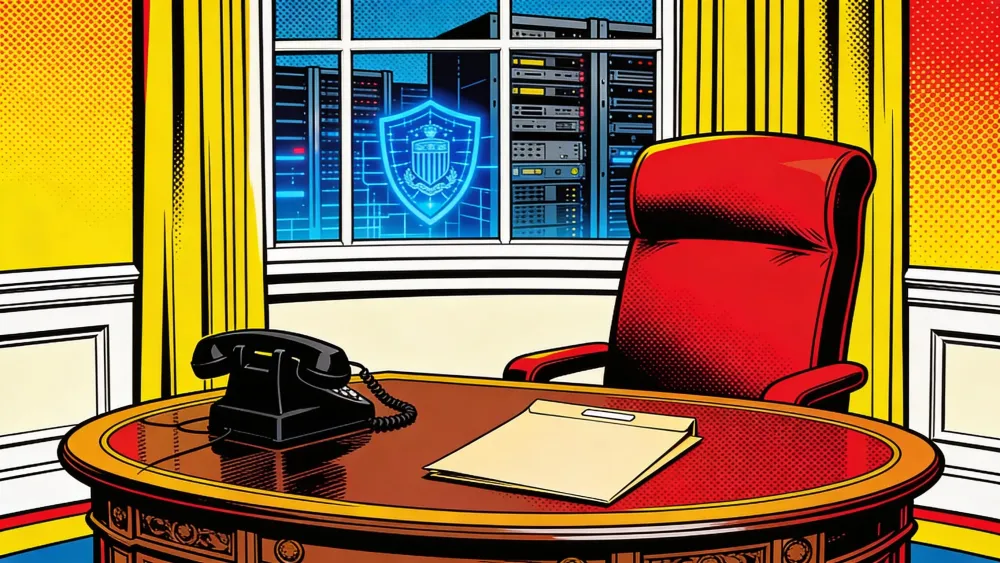
White House officials had walked David Sacks through the draft this week. Science adviser Michael Kratsios, Staff Secretary Will Scharf, and National Cyber Director Sean Cairncross briefed the former AI czar on an order their agencies had spent weeks assembling, the Washington Post reported. Sacks told them he could live with it. Thursday morning he called the president instead. By the time Trump explained the cancellation, some of the executives invited to watch him sign were already in the air.
The episode was less a fight over AI safety than a measure of who shapes this administration's AI policy. The draft had moved through the national-security bureaucracy for weeks. The men who helped stop it had no formal hand in writing it. Sacks stepped down as Trump's AI czar in March; he, Elon Musk, and Mark Zuckerberg all reached the president directly between Wednesday night and Thursday, outside the process that produced the order.
Key Takeaways
- Trump canceled a planned AI executive order hours before signing, after former AI czar David Sacks called him Thursday morning.
- The draft asked frontier labs to share models 14 to 90 days before release; industry pushed for the shorter window.
- Sacks, Musk, and Zuckerberg, none with a formal hand in the order, reached Trump directly to argue it would slow the China race.
- Government testing of frontier models already runs through NIST; the order would have formalized it.
AI-generated summary, reviewed by an editor. More on our AI guidelines.
What the agencies built
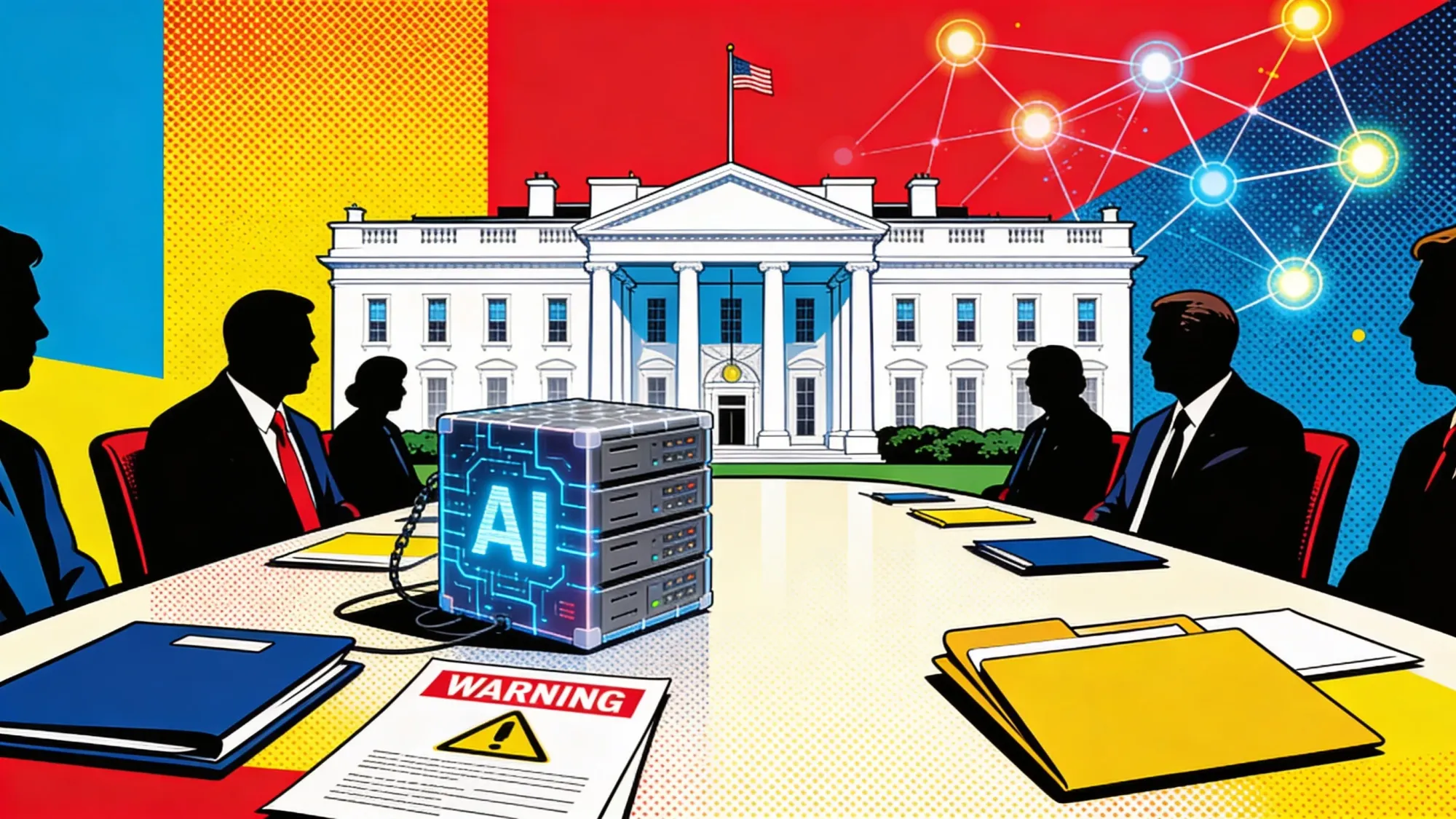
The draft assigned jobs across the national-security bureaucracy. CyberScoop reported that it would have handed the National Security Agency the task of running classified evaluations of frontier models, while the Treasury Department set up a new channel for AI companies and critical-infrastructure defenders to trade security flaws. The New York Times reported that the Office of the National Cyber Director and other agencies would get two months to design a process for evaluating new models; Politico reported that the NSA would have final say over which systems counted as "covered frontier models," with other agencies standing up classified benchmarking within 60 days.
The mechanism itself was modest. Companies would share covered models with the government somewhere between 14 and 90 days before public release, according to the New York Times, and the draft said in plain text that nothing in it created "a mandatory governmental licensing, preclearance, or permitting requirement."
Even so, the drafting was contested. One industry source asked Axios why the order handed Treasury a lead role on software flaws at all. "It's not clear, just objectively speaking, why Treasury is involved and what is their substantive expertise in this area," the source said.
The morning Sacks called
Sacks had sat through the briefings and signaled he could accept the text. Then, a senior White House official told Politico, "he called POTUS this morning unbeknownst to anybody, his own staff included, and derailed it." His warning, relayed by the Post, was that a voluntary review would harden into a mandatory one, slow routine model updates, and cost the United States its lead over China.
The Washington Post reported that Musk and Zuckerberg were among the tech leaders who warned Trump the vetting system could slow AI development; Axios reported that both men, with Sacks, spoke with the president between Wednesday night and Thursday morning. One source gave Axios the administration's reasoning without the diplomacy: Trump "just hates regulation," and the order was "just something doomers wanted." A government official offered a simpler theory: "It could be CEOs, or egos in general. Everyone hates each other in the political tech space."
Where Washington and Silicon Valley collide
Strategic AI news from San Francisco. No hype, no "AI will change everything" throat clearing. Just what moved, who won, and why it matters. Daily at 6am PST.
No spam. Unsubscribe anytime.
Trump gave the public version himself, from an Oval Office event called to loosen a federal refrigerant rule. "We're leading China, we're leading everybody," he said, "and I don't want to do anything that's going to get in the way of that lead." He offered no detail about which parts of the text he disliked.
The testing was already happening
Leading AI labs already hand their most capable models to the government for evaluation through NIST's Center for AI Standards and Innovation. Earlier this month the Commerce Department announced new testing deals with Google, Microsoft, and Elon Musk's xAI, building on earlier agreements with Anthropic and OpenAI. xAI had just signed one of those deals; Musk then helped press the case against the order that would formalize it. OpenAI, by contrast, supported the order's contours, its top lobbyist Chris Lehane said last week.
The announcement of those deals then disappeared from NIST's website days after it posted. CISA, the agency the order leaned on to help define covered models, is the same one whose budget and staff Trump cut, Axios reported. Much of the pressure for review traced to cyber-capable models, above all Anthropic's Mythos, which can find serious software vulnerabilities on its own; OpenAI's GPT-5.5-Cyber raised similar alarms. The Implicator has described Mythos's restricted rollout as a first-access problem as much as a safety one. Treasury Secretary Scott Bessent and outgoing Federal Reserve Chair Jerome Powell had convened Wall Street CEOs in April; Bessent called the model "very powerful."
Serena Booth, a Brown University computer scientist and former Senate AI policy fellow, read the reversal as a symptom. "We will release an executive order. No, we won't. We're going to sign it this afternoon. Oh, the signing is canceled," she told the Associated Press. "I think this whiplash is because we're seeing these fractures."
Who gets the next look
The order is not dead. A federal official told the Post it will likely come back, though no one would say in what form or when. Dean Ball, a former Trump tech-policy adviser now at the Foundation for American Innovation, told the AP he would welcome an order pulling the companies closer to government, "but ultimately, I'm fine with them taking time to get this right." Its form and timing remain unclear. Sacks said he could live with this one too, in the briefings, right up until the morning he called the president and helped derail it.
Frequently Asked Questions
Why did Trump cancel the AI executive order?
He said he "didn't like certain aspects" and worried it could slow the U.S. lead over China. The cancellation came hours before a planned Oval Office signing, after David Sacks and other tech leaders reached him by phone, according to the Washington Post and Politico.
What would the order have done?
It would have let federal agencies evaluate frontier AI models before public release, with companies voluntarily sharing them 14 to 90 days ahead. CyberScoop and the New York Times reported the NSA would run classified evaluations and Treasury would coordinate the sharing of security flaws.
Who is David Sacks?
Sacks is a venture capitalist who served as Trump's AI czar and stepped down in March. Politico reported he called the president on Thursday morning and "derailed" the order, though officials said he was not the only opponent.
Was the AI model review mandatory?
No. The draft said it created no "mandatory governmental licensing, preclearance, or permitting requirement." Critics including Sacks warned the voluntary system could harden into a mandatory one over time.
Is the order dead?
A federal official told the Washington Post it will likely be revisited, but its form and timing are unclear. Government testing of frontier models already continues through NIST's Center for AI Standards and Innovation.
AI-generated summary, reviewed by an editor. More on our AI guidelines.
Free AI briefing · Weekdays
The AI stories that matter, sourced and explained.
Join the Morning Briefing. It goes out every weekday at 4:45 a.m. Pacific, with later sends for the East Coast, Berlin and Tokyo.
Free when you sign up: The Paperclip Compendium, our tested guide to running AI agents.
Free. Unsubscribe in one click.

Marcus Schuler
Editor-in-Chief and founder of Implicator.ai. Former ARD correspondent and senior broadcast journalist with 10+ years covering tech. Writes daily briefings on policy and market developments. Based in San Francisco. E-mail: editor@implicator.ai