IMPLICATOR
San Francisco | Friday, July 3, 2026
Mark Zuckerberg told Meta's staff this week that the reorganization behind 8,000 layoffs hasn't paid off, and the AI agents meant to justify it stalled for four months. Minutes later, in the same room, his AI chief Alexandr Wang said Meta's unreleased model had already caught OpenAI's GPT-5.5.
That gap is the story. Zuckerberg is spending up to $145 billion this year and promising results by December, while Wang says the breakthrough is already in training. Investors trusted the doubt over the promise and knocked the stock down almost 5%.
This is also our sign-off for the season. After today, The Implicator pauses and returns August 31, fully redesigned. The Tuesday paid edition keeps arriving all summer. Details below.
Stay curious,
Marcus Schuler
☀️ Summer Break
We're off for the summer. Back August 31, rebuilt.
Today is the last Morning Briefing until August 31, when The Implicator returns as a completely redesigned daily. We're rebuilding it from the ground up over the break.
The Tuesday paid edition keeps arriving all summer, with in-depth tips and tricks for deploying AI as efficiently and effectively as possible. Keep it coming while we retool.
Keep the Tuesday edition →Zuckerberg Concedes Meta's AI Reorg Stalled as Wang Claims Its Model Caught GPT-5.5

Meta cut 8,000 jobs and moved 7,000 people onto AI teams to move faster. Mark Zuckerberg told a July 2 town hall it hasn't worked yet. Minutes later his AI chief said the next model already caught GPT-5.5.
Zuckerberg said the agent push hadn't accelerated the way he expected over four months and called the reorganization less clean than it should have been. He put the real payoff three to six months out.
That timeline arrives as Meta lifts 2026 capital spending to as much as $145 billion. Alexandr Wang's rebuttal leaned on scale: the unreleased model, codenamed Watermelon, runs on an order of magnitude more compute than its April predecessor and, he said, now matches GPT-5.5 on internal benchmarks.
He shared none of them, and neither Meta nor OpenAI has confirmed the claim. Investors trusted the confession over the promise, marking the stock down 4.9%.
Why This Matters:
- Meta wants shareholders to fund a $145 billion bet on a payoff its own CEO puts two quarters out, backed by benchmarks no outsider has seen.
- A CEO and his AI chief describing the same company minutes apart, and disagreeing, is the clearest read yet on how much of the superintelligence push is real.
Reality Check
What's confirmed: Zuckerberg told a July 2 town hall the reorg behind 8,000 layoffs hasn't delivered and agents stalled for four months. Meta raised 2026 capex to $125-145 billion; the stock closed down 4.9%.
What's implied (not proven): That Watermelon actually matches GPT-5.5, and that the agent delays are a timing problem rather than a strategy one.
What could go wrong: The three-to-six-month payoff slips again, and a $145 billion spend meets a model that trails a shipped GPT-5.5.
What to watch next: Meta's Q2 earnings call and any independent benchmark of Watermelon once it leaves training.

The One Number
5% - the equity stake Sam Altman proposed giving a U.S. sovereign wealth fund, the Financial Times reported. The plan would ask other major AI developers to contribute matching slices. The pitch is public participation in AI gains; the risk is a government with ownership becomes a softer regulator.
Source: TechCrunch, July 2, 2026
💰 Fresh Funding
💰 Fresh Funding
Raises $110M: Taktile puts AI inside financial decisions
Taktile said Wednesday it raised a $110 million Series C led by Growth Equity at Goldman Sachs Alternatives, with Index Ventures, Tiger Global, Balderton Capital, Y Combinator and Dig Ventures joining. The company sells an agentic decisioning platform that lets banks and insurers trust AI with underwriting, claims and fraud screening, and says one major insurer projects more than $90 million in cost savings from claims processing alone.
Visit Taktile →Raises $22M: LinqAlpha builds AI research agents for investors
LinqAlpha said Thursday it raised a $22 million Series A anchored by AVP, Atinum Investment and GFT Ventures to build AI agents that turn an investor's own research framework into market signals. The New York startup serves more than 70 financial institutions including Causeway Capital and Schonfeld, and its buy-side clients collectively manage more than $5 trillion in assets.
Visit LinqAlpha →Raises $28M: Coval stress-tests voice AI agents before they talk
Coval said Thursday it raised a $28 million Series A led by Norwest, with Base10 Partners, Twilio Ventures and Y Combinator joining, bringing total funding to $31 million. The San Francisco startup builds simulation and evaluation infrastructure for voice AI agents, counts Zoom and Deepgram among its customers, and was founded by Brooke Hopkins, who previously built evaluation systems for autonomous vehicles at Waymo.
Visit Coval →AI Image of the Day

Prompt: 見たことの無い可愛い動物、異世界、街中、フォトリアル、綺麗、人との日常描写, single image, one subject, full frame, centered composition, no collage, no grid, no multiple panels, no contact sheet --no split view --v 8.1
🧰 AI Toolbox
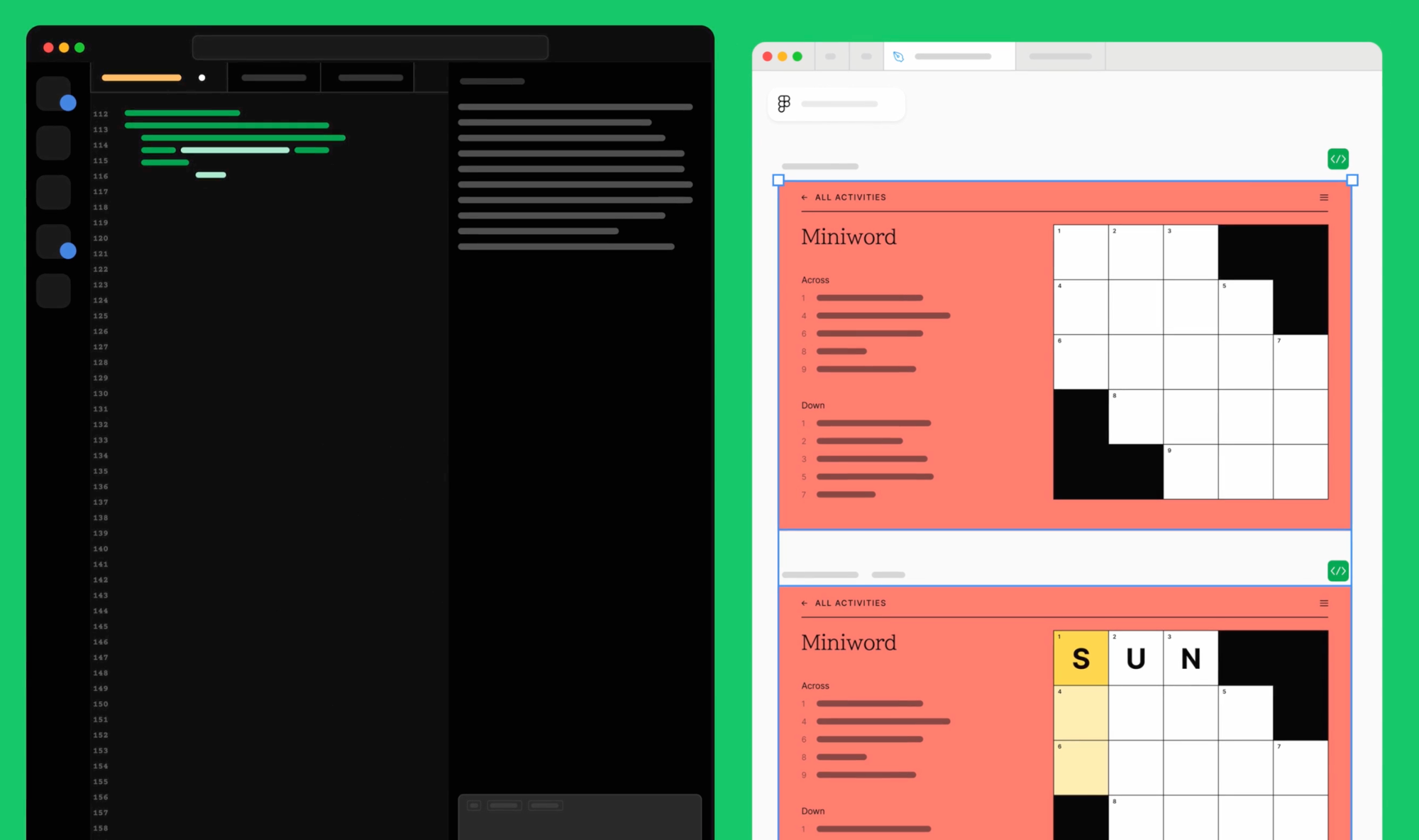
How to Let AI Agents Design in Your Figma Files Using Your Real Design System with Figma for Agents
Figma for Agents opens the Figma canvas to AI coding agents through an MCP server, so Claude Code, Cursor, Codex, or Warp can read and write directly to your design files using your existing components, variables, and tokens. No more AI-generated mockups that ignore your typography and color palette. Skills let you author shareable workflows in Markdown instead of writing plugin code. Works with any MCP-compatible client.
Tutorial:
- Open Figma desktop and enable the MCP server under Preferences > AI Agents
- In your MCP client (Claude Code, Cursor, Codex CLI, Warp), add Figma as an MCP server using the connection URL Figma provides
- Open a Figma file and grant the agent access to that specific file or your whole design system
- Ask the agent to perform a design task: "Create a pricing page using our existing Button and Card components"
- Watch the agent write to the canvas using real variables and tokens, not hardcoded values
- Author a Skill in Markdown to codify a recurring workflow (e.g. "Generate a landing page variant" with your naming conventions and spacing rules)
- Share the Skill with your team or the Figma community so agents across the company follow the same design conventions
URL: https://www.figma.com/blog/introducing-figma-mcp-server/
What To Watch Next
|
||
|
||
|
||
|
||
|
💡 5-Minute Skill: Turn a Health Plan Comparison Into the One That Actually Fits Your Year
Friday, 8:15 a.m. Open enrollment closes Monday and three plans all look fine until you run the math. Before you pick on the monthly premium, make the model price your actual year.
Your raw input:
Open enrollment closes Monday. Plans: HDHP ($90/mo, $3,000 deductible, $6,000 out-of-pocket max, employer adds $1,200 to an HSA), PPO ($310/mo, $750 deductible, $4,000 max, $30 copays), mid-tier ($190/mo, $1,500 deductible, $5,000 max). Expected this year: a planned knee surgery billed near $18,000, two ongoing prescriptions, routine visits. Family of three. Need: which plan, with the math.
The prompt:
Act like a benefits analyst, not a sales rep. Run the total-cost math on each plan using my expected care, not the sticker premium. Show annual premium plus likely out-of-pocket for the surgery, prescriptions and visits, then name the cheapest plan for my year and the one risk that would flip the answer. Keep it to numbers I can check.
The output:
HDHP wins your year, which surprises people planning surgery. Premium $1,080, you hit the $6,000 out-of-pocket max, minus the $1,200 HSA, total near $5,880. PPO runs higher: $3,720 in premiums plus its $4,000 max, near $7,720. Mid-tier lands around $7,280. Risk that flips it: if the surgery slips past December 31, every deductible resets, so book it this year.
Why this works:
Plan choice usually gets made on the monthly premium alone, which ignores the surgery and prescriptions that decide the real bill. This prompt makes the model total premium plus expected out-of-pocket for each plan, so you compare your actual year, not the sticker.
What to use:
Claude is best when you paste the full benefits PDF and your expected care. ChatGPT is fine once you know the three numbers. Keep the phrase "the one risk that would flip the answer," or the model hands you a tidy winner and buries the assumption under it.
📖 AI Alphabet
|
P
|
📖 AI Alphabet Perplexity Perplexity is a measurement often used to judge how well a language model predicts text. Lower perplexity generally means the model is less surprised by the correct next word or token. |
AI & Tech News
Anthropic Moves to Block Chinese Firms From Reaching Claude Through Cloud Loopholes
Anthropic is closing the contractual and technical gaps that let Chinese firms like Ant Group reach Claude through cloud providers and overseas units, the Financial Times reported. Engineers had kept exploiting workarounds despite export controls, prompting stricter monitoring.
Chip Industry Warns Washington Not to Distort the Memory Market
Trade group SEMI, with Micron and Samsung, told Treasury that policies steering memory prices or capacity could worsen the shortage, Bloomberg reported. The group urged coordinated international efforts and long-term manufacturing investment instead.
Anthropic Hires Freshfields for an IPO That Could Value It Above $1 Trillion
Anthropic engaged UK firm Freshfields to advise on an IPO that could raise tens of billions and value the company north of $1 trillion, The Information reported. The firm also worked on Google's Wiz deal and ServiceNow's Armis purchase.
Crusoe Nears $3 Billion Raise That Would Triple Its Value to $30 Billion
AI data-center firm Crusoe is in talks for about $3 billion at a $30 billion valuation, nearly triple its mark from nine months ago, Bloomberg reported. Crusoe already supplies compute to Meta and Oracle.
ElevenLabs Weighs a Tender Offer at a $22 Billion Valuation
Voice-AI startup ElevenLabs is discussing a secondary share sale at $22 billion, double its valuation from five months ago, Bloomberg reported. The tender would give employees liquidity as demand for generated audio climbs.
IQM Becomes Europe's First Public Quantum Firm at a $1.9 Billion Valuation
Finnish quantum company IQM debuted on Nasdaq via SPAC at roughly $1.9 billion, Europe's first listed quantum firm, TechCrunch reported. Shares rose 2% even as the company flagged uncertainty over quantum's commercial path.
Blackstone's QTS Abandons a Massive Virginia Data Center After Local Pushback
QTS scrapped its part of a 2,100-acre data-center campus in Louisa County, Virginia, citing community opposition and unresolved legal challenges, Bloomberg reported. Only a partner-built portion of the site continues.
Hopper Pays $35 Million to Settle FTC Claims Over Hidden Fees
Travel app Hopper will pay $35 million to resolve FTC allegations it hid fees and overstated savings from its AI price predictions, TechCrunch reported. The deal requires clearer cost disclosures going forward.
Microsoft Folds Its Copilot Apps Into a Single 'AutoPilot' Product
Microsoft is merging consumer and enterprise Copilot apps into one product called AutoPilot with coding tools and agents, The Information reported. An internal memo said the suite must "earn the right to exist" by cutting underused features.
Spotify Wipes 500,000 Streams After a Suspicious Surge Sends a Song to No. 1
Spotify removed more than 500,000 streams of Malcolm Todd's "Earrings" after a 70% play spike pushed it to No. 1, the Financial Times reported. The surge lined up with unusual bets on the prediction market Kalshi, raising manipulation concerns.
🚀 AI Profiles: The Companies Defining Tomorrow
Patronus AI builds simulated digital worlds where AI agents can make mistakes without breaking real systems. The San Francisco company just raised $50 million and says its Digital World Models are the next testing layer for an industry shipping agents before it fully controls them. 🧪
Founders
Founded in 2023 by Anand Kannappan and Rebecca Qian, both former Meta AI researchers who built evaluation systems inside the lab before most AI companies had heard the word benchmarking. The company grew out of a plain observation: a language model that passes a test can still fail inside a workflow, and once you put the model inside an agent that runs for hours, the failure is harder to spot and more expensive. Kannappan is CEO.
Product
Patronus builds Digital World Models, simulated environments that replicate the software, authentication flows, error states and internal tools an AI agent encounters in production. Agents train inside these environments through reinforcement learning that rewards successful task completion and penalizes mistakes, so the agent learns to handle ambiguity, recover from failure and operate across long, unpredictable workflows before it ever touches a real system. The company's first commercial focus is software engineering and finance, two domains where success is at least partially verifiable: a code change compiles or it does not, a financial reconciliation matches or it does not.
Competition
Patronus competes against the internal evaluation teams every frontier AI lab has already built, plus the human-data firms that power reinforcement learning, including Mercor and Surge, and a growing field of simulation and synthetic-data startups. The differentiation is depth: Patronus builds an environment the agent can actually operate inside, with real-enterprise complexity, rather than generating training data in the abstract.
Financing 💰
$50 million Series B led by Greenfield Partners, with Notable Capital, Lightspeed Venture Partners, Datadog and Samsung participating, bringing total funding to $70 million. Revenue has grown more than 15-fold over the past year, and the company says the majority of leading frontier AI labs and hyperscalers are now customers. The round closed June 25, 2026. Source: TechCrunch, June 25, 2026.
Future ⭐⭐⭐⭐
A market that needs simulations to keep its agents honest is a market betting on agents getting more powerful and more autonomous at the same time, which is what is already happening. The risk for Patronus is that the frontier labs eventually build their own simulation infrastructure and treat the external evaluator as a stopgap rather than a permanent layer. But the speed at which agent deployment is moving, and the number of companies shipping agents without any evaluation infrastructure at all, suggests that stopgap is long enough to build a company on. The Waymo comparison the founders often draw is not a marketing line. It is how this worked last time. 🧪
🤨 Yeah, But...
The Information reported Wednesday that Tesla will cap employee spending on outside AI tools at $200 a week starting July 6. One set of tools is exempt: the beta versions of Elon Musk's own xAI.
(The Information, July 2, 2026)
Our take: A spending cap is an odd way to run an AI adoption push, until you see which AI keeps its allowance. Tesla engineers can reach for any model they like, as long as the invoice stays under $200 and the loyalty runs to the family firm. Frugality is the cover story here. The working part is that Musk has built a closed loop where his cars help fund his chatbot, and the staff testing it on the clock happen to work for the one vendor that never counts against the limit. Cost discipline rarely looks this much like a house advantage.
Free AI briefing · Weekdays
The AI stories that matter, sourced and explained.
Join the Morning Briefing. It goes out every weekday at 4:45 a.m. Pacific, with later sends for the East Coast, Berlin and Tokyo.
Free when you sign up: The Paperclip Compendium, our tested guide to running AI agents.
Free. Unsubscribe in one click.

Marcus Schuler
Editor-in-Chief and founder of Implicator.ai. Former ARD correspondent and senior broadcast journalist with 10+ years covering tech. Writes daily briefings on policy and market developments. Based in San Francisco. E-mail: editor@implicator.ai