IMPLICATOR
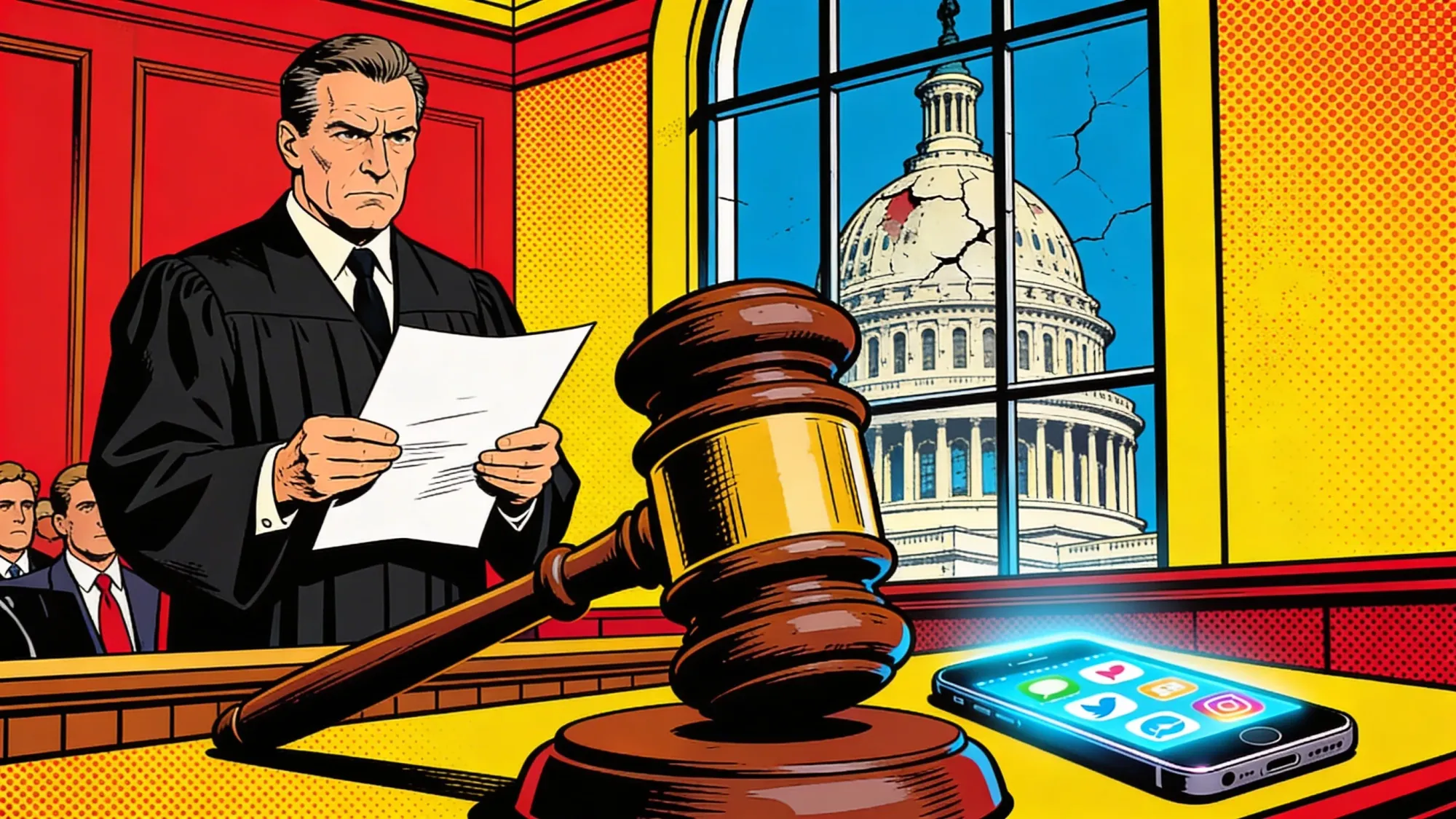
Rob Bonta, California’s attorney general and a co-leader of the case, is pressing claims against Meta in the state where the company is based. On Tuesday, a federal child-safety trial is scheduled to open in an Oakland courtroom, with California, Colorado, Kentucky and New Jersey becoming the first members of a multistate coalition to put their consumer-protection claims before a jury.
Ahead of the trial scheduled to open on August 18, 2026, lawyers for the states have told the judge that roughly $200 billion is a likely penalty scenario.
The Oakland proceeding will test claims that Meta misled families about Facebook and Instagram, designed features that promoted compulsive use among young people and collected children’s data without parental permission. It may also decide whether one federal judge can impose COPPA remedies reaching far beyond the states trying the case.
What Changed
- California, Colorado, Kentucky and New Jersey are the first four coalition states to try their consumer-protection claims, while all 29 states advance federal COPPA allegations.
- The states have presented roughly $200 billion as a likely penalty scenario; Meta has estimated maximum exposure of as much as $1.4 trillion. Neither figure has been adjudicated.
- The states seek nationwide deletion of data collected from children under 13 and models trained on it, along with changes to features such as infinite scroll, autoplay and beauty filters.
- An eight-member jury will advise U.S. District Judge Yvonne Gonzalez Rogers, who makes the final ruling after a trial expected to last six to eight weeks.
AI-generated summary, reviewed by an editor. More on our AI guidelines.
The courtroom map
Eight jurors were selected in Oakland during the week before opening statements. Their verdict will be advisory: U.S. District Judge Yvonne Gonzalez Rogers will make the final ruling after a trial expected to last six to eight weeks, with a possible result in October 2026. Meta Chief Executive Mark Zuckerberg and Instagram head Adam Mosseri are expected to testify.
The four states are trying claims under their own consumer-protection laws. All 29 states in the coalition are also advancing allegations under the federal Children’s Online Privacy Protection Act, known as COPPA. The 1998 law generally requires online services to obtain parental consent before collecting personal information from children younger than 13.
This trial sits inside a much larger multidistrict litigation, a procedure that brings similar federal cases before one judge for coordinated pretrial work. The consolidated docket contained 3,137 actions as of August 3, 2026. Those cases include claims from families and school districts, among others. They are not all being decided in this trial.
The remedies at stake
The states accuse Meta of knowing that children younger than 13 used its services while gathering their personal information without valid parental consent. For any COPPA violations, the coalition seeks nationwide relief that would require Meta to delete the children’s data and any algorithms or models trained on it.
The consumer-protection claims attack decisions made by Meta itself. The requested remedies include removing infinite scroll, autoplay, ephemeral posts, beauty filters and recommendation systems optimized for engagement. That framing matters because Section 230 of the Communications Decency Act generally protects online platforms from liability for material posted by users. The states are focusing on product design, data collection and alleged deception, rather than asking the court to hold Meta responsible for a particular user’s post.
Stuart Benjamin, a professor at the Duke University School of Law, said courts may find it difficult to separate a design claim from a complaint about what appeared on a screen because product features deliver content. Section 230 and the First Amendment can still restrict some remedies, even when a lawsuit survives long enough to reach trial.
Get Implicator.ai in your inbox
Strategic AI news from San Francisco. No hype, no "AI will change everything" throat clearing. Just what moved, who won, and why it matters. Daily at 6am PST.
No spam. Unsubscribe anytime.
Laura Marquez-Garrett, an attorney with the Social Media Victims Law Center who worked on a Los Angeles case against Meta, said of state attorneys general, “They have the ability that private plaintiffs typically do not have to actually force these companies, through the court system, to change their business model, their design decisions, all of that.” Julia Powles, executive director of the UCLA Institute for Technology, Law and Policy, said, “California matters more than any other jurisdiction in the U.S. It’s where they are subject to the greatest legal reach, and it’s a jurisdiction watched around the world.”
Meta’s defense
Meta denies the allegations and says the states have not proved that residents were misled. “The AGs offer no proof anyone in their states was misled,” the company said, calling the requested financial penalties “vastly disproportionate.” It describes age verification as a problem facing the whole industry and says it has built protections for teenagers while continuing to contest claims that its products caused the alleged harms.
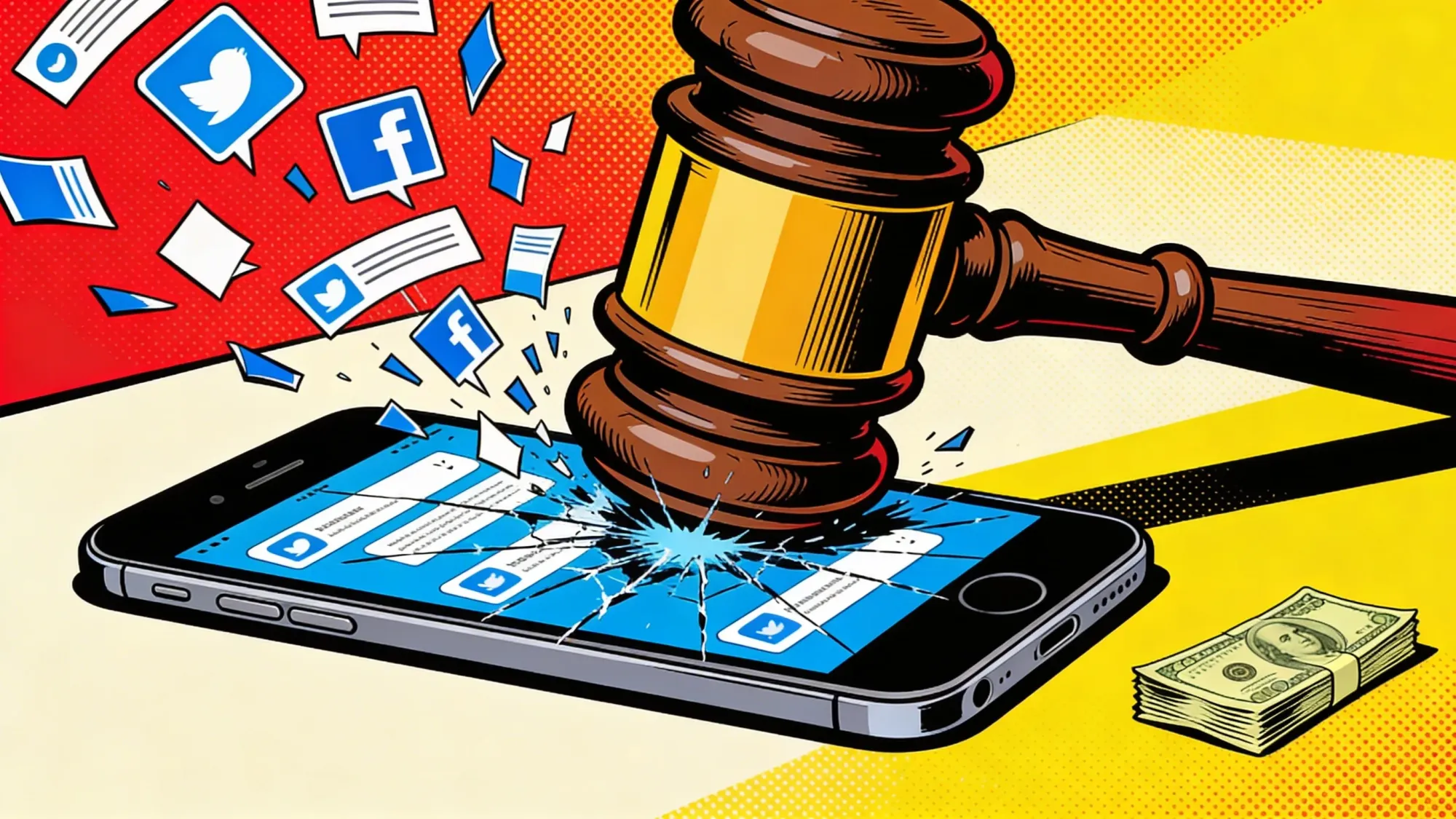
Meta’s lawyers have estimated maximum exposure of as much as $1.4 trillion, close to the company’s roughly $1.5 trillion stock-market value in August 2026. Lawyers for the states presented about $200 billion as a more likely outcome. The penalty figures are litigation estimates, and the allegations have not been adjudicated in the Oakland trial.
Know someone who'd find this useful? ✉️ Email it to a friend in one click, or they can subscribe free here.
Even a large award would leave questions about who benefits. Michael Coffey, a defense litigator and founding partner of New York firm Coffey Modica, warned that injured users might receive little after governments distribute the money and lawyers collect fees. “It’s all going to go to government, and then they’re going to dole it out, and then the plaintiffs’ bar is going to take a cut out of it,” he said.
The New Mexico limit
In a state of about 2 million people, a jury ordered $375 million in civil penalties in March 2026. A judge added a $567 million abatement fund in August, bringing the combined orders to $942 million as of that month. Meta disputes the ruling and plans to appeal.
The New Mexico order requires work on age-assurance tools, an effort to develop a model for identifying users younger than 13 within two years, and new reporting channels for suspected underage accounts. It did not impose every change the state requested. The judge declined to force alterations to recommendation algorithms and other features after identifying concerns involving Section 230, the First Amendment and the unfairness of imposing restrictions on Meta that competitors could avoid.
Raúl Torrez, New Mexico’s attorney general, is now taking that mixed result to lawmakers as he seeks changes to state consumer law. He also sees the $942 million result, produced in a state with a fraction of California’s population, as a warning about the Oakland case. “You could wake up with a headline judgment that is, as I’ve said, astronomical,” Torrez said.
For Meta, the timetable is now fixed: opening statements on August 18, weeks of evidence and a possible ruling in October 2026. Torrez’s question is whether investors have accounted for what Gonzalez Rogers could order. “The analysts aren’t pricing this correctly right now,” he said.
Frequently Asked Questions
What begins in Oakland on August 18, 2026?
A federal trial begins over allegations that Meta violated state consumer-protection laws and the federal Children’s Online Privacy Protection Act through Facebook and Instagram’s design, data collection and safety representations.
Why are four states trying a case involving 29 states?
California, Colorado, Kentucky and New Jersey are the first four coalition members to try their own consumer-protection claims. All 29 states also advance the coalition’s federal COPPA allegations in the Oakland trial.
What does COPPA require?
The 1998 Children’s Online Privacy Protection Act generally requires online services to obtain parental consent before collecting personal information from children younger than 13.
How large could the financial penalty be?
Lawyers for the states have presented roughly $200 billion as a likely scenario. Meta’s lawyers have estimated maximum exposure of as much as $1.4 trillion. The figures are litigation positions, not adjudicated amounts.
What product changes are the states seeking?
The requested relief includes deleting data collected from children under 13 and models trained on it. The states also seek restrictions on features including infinite scroll, autoplay, ephemeral posts, beauty filters and engagement-optimized recommendations.
AI-generated summary, reviewed by an editor. More on our AI guidelines.
Free AI briefing · Weekdays
The AI stories that matter, sourced and explained.
Join the Morning Briefing. It goes out every weekday at 4:45 a.m. Pacific, with later sends for the East Coast, Berlin and Tokyo.
Free when you sign up: The Paperclip Compendium, our tested guide to running AI agents.
Free. Unsubscribe in one click.

Marcus Schuler
Editor-in-Chief and founder of Implicator.ai. Former ARD correspondent and senior broadcast journalist with 10+ years covering tech. Writes daily briefings on policy and market developments. Based in San Francisco. E-mail: editor@implicator.ai