IMPLICATOR
Bureaucracy out, TBD Lab protected as Zuckerberg prioritizes velocity
Meta says it’s streamlining. The knife fell anyway: roughly 600 jobs were cut from Superintelligence Labs on Wednesday, spanning FAIR research, product AI, and infrastructure, while the newly formed TBD Lab was spared—moves laid out in an internal memo obtained by Axios. U.S. staff were told early this morning; affected employees are urged to seek roles elsewhere inside Meta.
Meta’s chief AI officer, Alexandr Wang, framed the decision as a fix for slow decision-making: fewer layers, faster calls, more “load-bearing” people. The goal is agility, not austerity. That message follows months of reorganizations and a frank internal admission: Meta’s legacy AI structure got too cumbersome to ship breakthroughs at the pace leaders now expect. The “TBD” group—small by design—remains untouched.
Key Takeaways
• Meta cut 600 roles from FAIR research and legacy AI teams while protecting TBD Lab and hiring top researchers from OpenAI and Thinking Machines.
• The reorganization follows Meta's $15 billion investment in Scale AI, which brought CEO Alexandr Wang aboard as Meta's Chief AI Officer.
• Zuckerberg concluded existing AI efforts weren't producing breakthroughs after Llama 4 underperformed and senior researchers left for competitors.
• Meta is offering individual researchers packages ranging from seven to nine figures to build a 50-person team focused on superintelligence research.
What’s actually new
This is not routine belt-tightening. Meta is shrinking older units while fortifying a team that still counts only “a few dozen” researchers and engineers. The bet is that a compact, insulated lab can move faster than sprawling, publication-driven groups like FAIR. The company has been dangling extraordinary packages—up to nine figures in reported cases—and recently lured Thinking Machines co-founder Andrew Tulloch back to Menlo Park. It’s a talent land grab, not an expense cut.
The Scale calculus
The restructuring pairs with Meta’s ~$14–15 billion investment for a 49% stake in Scale AI, a deal that brought Scale co-founder Alexandr Wang into Meta’s AI leadership while leaving Scale operating independently. It’s the industry’s playbook of the moment: buy a big stake, secure the people, skip a full acquisition. Regulators are watching these quasi-acquisitions more closely, but for now they give Big Tech a fast path to talent and tooling. The open question is how Scale maintains neutrality with other top clients when its former CEO is leading Meta’s AI charge.
Speed vs. output
Speed isn’t the only concern. Output is. Meta’s latest Llama 4 release drew a cool reception, and the company has been reorganizing its AI org repeatedly since summer. Cuts of 600 out of “several thousand” leave a large apparatus in place; the shift is less about headcount than decision velocity—routing frontier work through a leaner TBD Lab, while FAIR and product teams plug into a tighter training pipeline. We’ll know it’s working when Meta ships models that clearly close the perceived quality gap with OpenAI and Anthropic.
Infrastructure money still talks
Zuckerberg isn’t skimping on compute. He’s pledged “hundreds of billions” for multi-gigawatt data centers like Prometheus (targeting 2026) and Hyperion, arguing that infrastructure is table stakes for any bid at superintelligence. Capital will not be the limiting factor. Converting that spend into better reasoning, reliability, and safety—fast—is the bar this reorg sets for itself.
The hiring optics
Aggressive packages help, but culture and clarity matter more once the stars arrive. Meta’s AI org has churned leaders and teams this year; even elite recruits can stall if reporting lines and research direction keep shifting. The tightrope here is obvious: keep TBD Lab small enough to move, but not so cloistered it duplicates work or alienates adjacent teams needed to ship products to billions. Early hires suggest Meta understands the balance; whether it can hold it through 2026 is the test.
What’s next
In the short term, expect more selective hiring into TBD Lab and a push to prove gains on reasoning benchmarks and agent reliability. In the medium term, watch for how quickly Meta product surfaces—Facebook, Instagram, WhatsApp—absorb new model capabilities. Speed without impact is just motion. The company now owes evidence that the cuts translated into better systems, not just cleaner org charts.
Why this matters
- Meta is swapping academic-style breadth for strike-team focus, signaling that frontier model progress now hinges on compact groups that can run, evaluate, and ship training ideas quickly—backed by massive, pre-funded compute.
- The $14–15B Scale deal codifies a new M&A template for AI talent, accelerating hiring while raising fresh questions for competition and neutrality across the wider ecosystem that still relies on Scale’s services.
❓ Frequently Asked Questions
Q: What is FAIR and why did Meta cut it?
A: Facebook AI Research (FAIR) launched in 2013 with Yann LeCun leading a global research network focused on deep learning. It published extensively and contributed foundational work to the field. But Meta concluded that academic-style research—papers, conferences, building institutional knowledge—moved too slowly compared to competitors shipping breakthrough models every few months. Publishing doesn't win races anymore.
Q: What exactly is TBD Lab and why is it protected?
A: TBD Lab is Meta's newly formed AI unit with only a few dozen researchers, designed to operate separately from the company's existing bureaucracy. It was created after Zuckerberg concluded legacy teams couldn't ship breakthroughs fast enough. The lab recently hired Ananya Kumar from OpenAI and Andrew Tulloch from Thinking Machines. Meta is building it to about 50 top researchers with offers ranging from $10 million to over $100 million per person.
Q: How does Meta's $15 billion Scale AI deal actually work?
A: Meta is paying roughly $15 billion for about half of Scale AI. Scale CEO Alexandr Wang and other key leaders join Meta, but Scale itself continues operating independently as a data labeling service. It's similar to Microsoft hiring Inflection AI's CEO Mustafa Suleyman last year—acquiring talent and technology without buying the full company. This approach potentially avoids the regulatory scrutiny that traditional acquisitions face.
Q: What went wrong with Llama 4?
A: Meta's Llama 4 model received a "poor reception" according to reports, though specific performance benchmarks weren't publicly detailed. The model apparently didn't show the competitive improvements Meta expected despite massive compute investments. This underperformance, combined with senior researcher departures including AI research head Joelle Pineau in April, triggered Zuckerberg's decision to reorganize the entire AI operation and create TBD Lab.
Q: Who is Alexandr Wang and why did Meta pick him?
A: Alexandr Wang co-founded Scale AI at age 19 and built it into a data labeling company valued at roughly $14 billion before Meta's investment. He's 28, a self-made billionaire, and reportedly close to Zuckerberg personally. Meta brought him in as Chief AI Officer specifically because they think he can recruit other top researchers. His memo announcing the 600 job cuts emphasized reducing bureaucracy to make decisions faster.
 Maria Garcia
 Marcus Schuler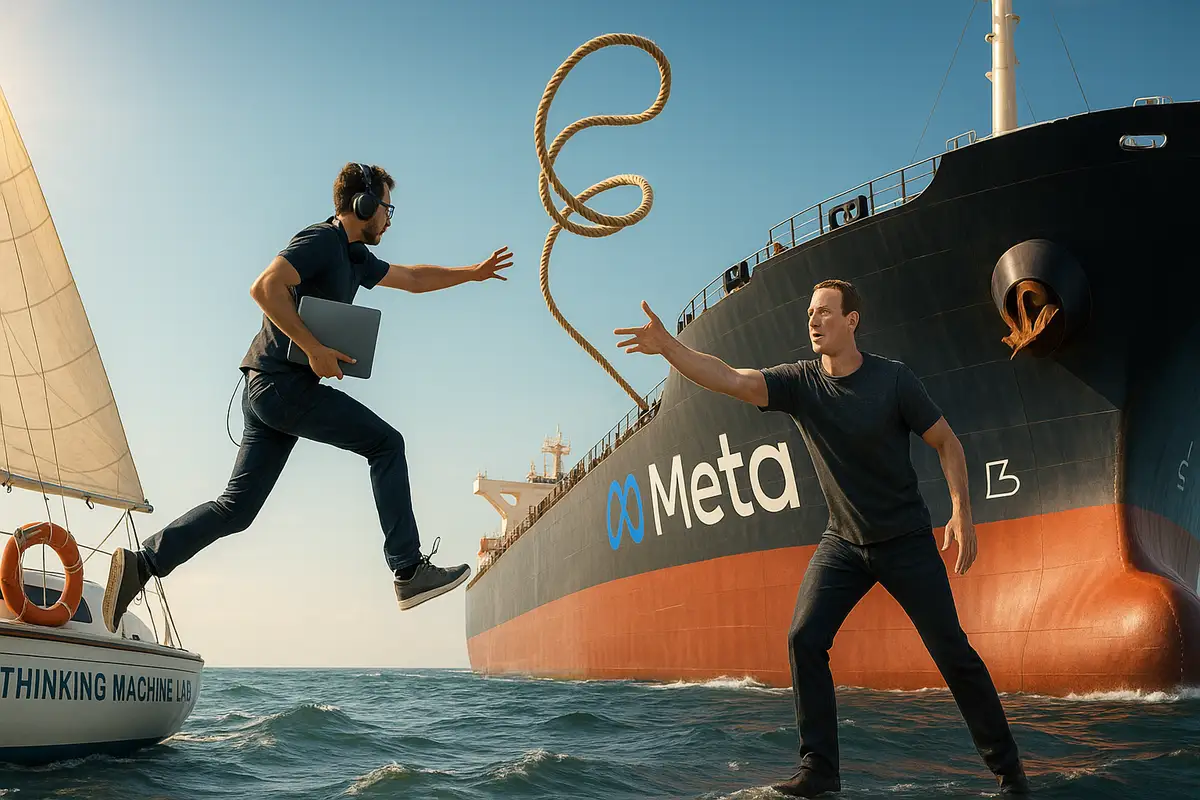
 Marcus Schuler

Marcus Schuler
Editor-in-Chief and founder of Implicator.ai. Former ARD correspondent and senior broadcast journalist with 10+ years covering tech. Writes daily briefings on policy and market developments. Based in San Francisco. E-mail: editor@implicator.ai