IMPLICATOR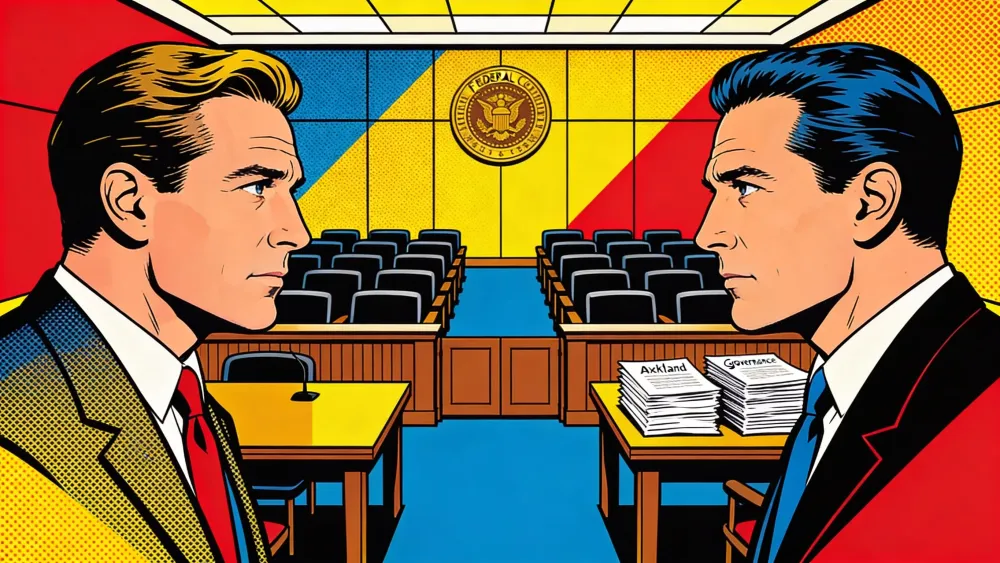
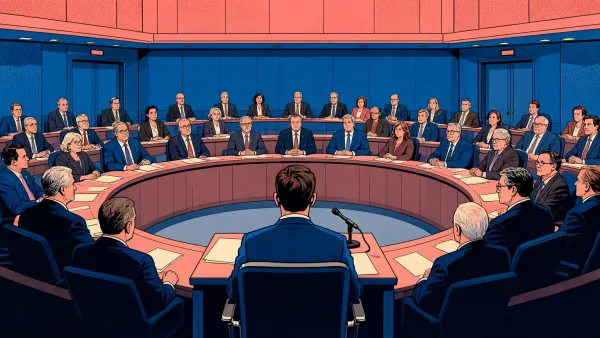
U.S. District Judge Yvonne Gonzalez Rogers seated a nine-person jury Monday in Elon Musk's lawsuit against Sam Altman, OpenAI, Greg Brockman and Microsoft at the federal courthouse in Oakland, California. Opening statements are set for Tuesday, April 28. Lawyers spent most of Monday probing whether prospective jurors who already held opinions about Musk, Altman or artificial intelligence could still weigh evidence on its own terms. OpenAI's nonprofit origins and its later turn toward profit will dominate the testimony that follows.
Key Takeaways
- A nine-person jury was seated Monday in Oakland; opening arguments start Tuesday, April 28.
- The liability verdict is advisory; Judge Gonzalez Rogers keeps the final decision.
- Fraud claims are gone, leaving charitable trust and unjust enrichment at the center.
- Musk seeks remedies aimed at OpenAI's nonprofit arm, leadership and for-profit structure.
AI-generated summary, reviewed by an editor. More on our AI guidelines.
A jury with a narrow job
Gonzalez Rogers has split the trial into a liability phase and a remedies phase, according to an April 17 court order. Jurors hear the first half and are expected to be in the box through May 21 before handing the judge an advisory finding she can adopt, set aside or reshape.
That structure matters because two very different questions are stacked on top of each other. The first is whether OpenAI's leaders violated duties tied to the nonprofit Musk helped fund. The second, only triggered if the answer to the first is yes, is what a federal judge should do about a company that outside reports now value above $850 billion and that is preparing the ground for a possible public offering. One question gets answered with documents and testimony. The other runs into a corporate machine that a decade of investors, employees and contracts has built around the disputed structure.
Jury selection was unlikely to move quickly. CNBC, WIRED, Courthouse News and Bay City News reported that prospective jurors faced questions about Musk, Altman and the technology itself. Several said they held negative views of Musk. A handful said they worried about AI broadly. Gonzalez Rogers, by courtroom accounts, kept pressing for jurors who could keep those instincts to one side and decide on the evidence in front of them.
Altman and Brockman attended Monday's session. Musk did not, multiple courtroom reporters confirmed.
Two claims survived the pretrial purge
The trial no longer carries the full list of claims Musk first brought. Gonzalez Rogers approved Musk's request Friday to dismiss fraud and constructive fraud, narrowing the case days before jury selection. The fight now centers on breach of charitable trust and unjust enrichment, the same pared-down frame Implicator covered before trial week opened.
Musk alleges that OpenAI, Altman and Brockman induced him to support a nonprofit research lab, then moved the project toward profit after his departure. OpenAI says the lawsuit is a bid to slow a competitor and that Musk himself pushed for a structure that would have given him control. Microsoft denies colluding with OpenAI.
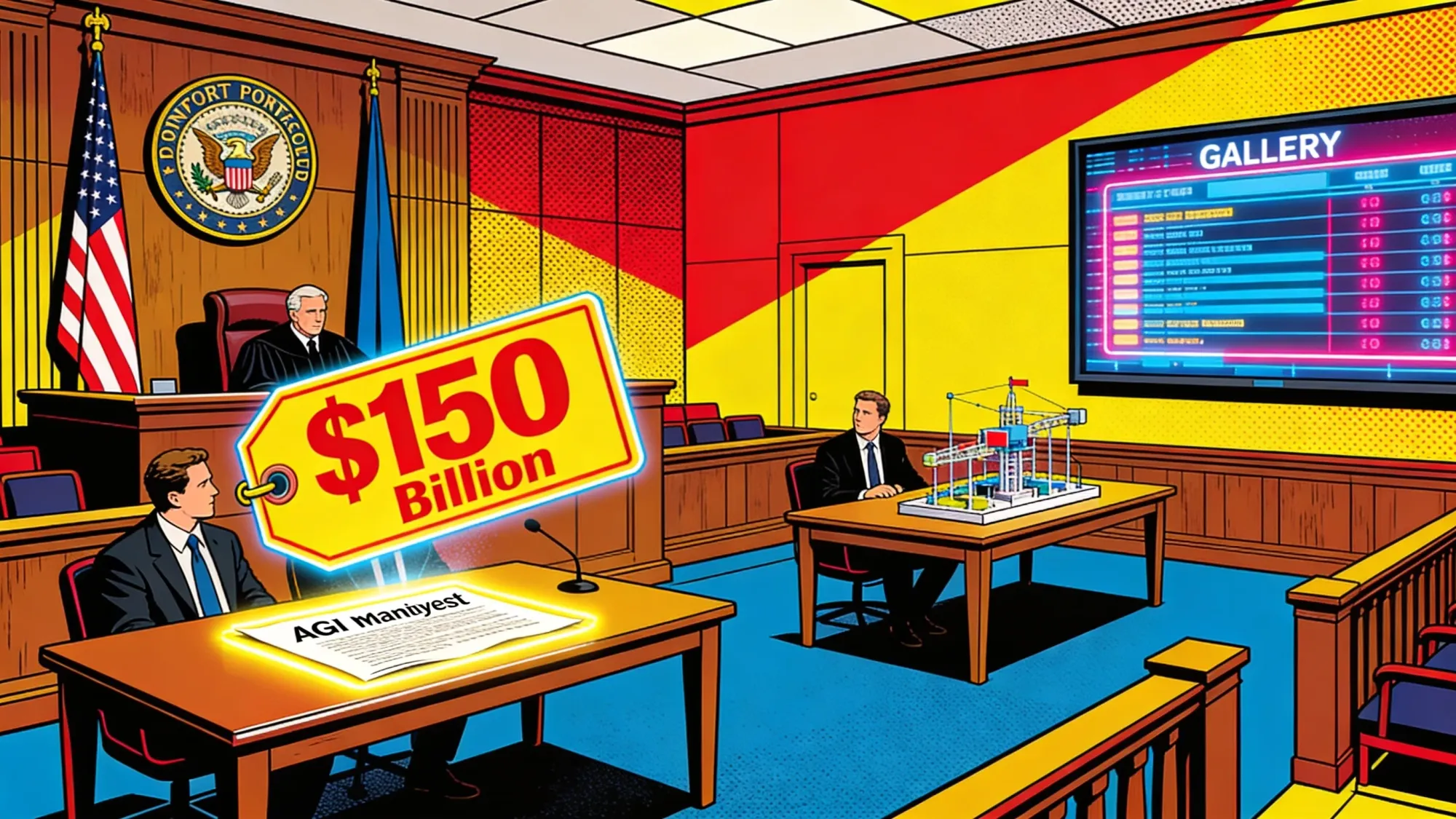
Public estimates of the money at stake do not line up neatly. CNBC cited Musk's lawyers in January saying he should receive up to $134 billion in "wrongful gains." Reuters, via The Japan Times, reported a $150 billion demand from OpenAI and Microsoft, citing a person involved in the case. Musk's current position is simpler than either of those numbers: any recovery should flow to OpenAI's charitable arm, not to him personally.
The case has not gotten smaller because of that framing. It has shifted from a personal-payout fight toward a fight over institutional control of OpenAI itself.
Track the AI trial that matters
Strategic AI news from San Francisco. No hype, no "AI will change everything" throat clearing. Just what moved, who won, and why it matters. Daily at 6am PST.
No spam. Unsubscribe anytime.
Musk also wants the court to unwind OpenAI's for-profit conversion and remove Altman and Brockman from their roles. Gonzalez Rogers has already described that kind of restructuring remedy as "extraordinary and rarely granted" in court filings, signaling that rebuilding a corporate charter from the bench is not something she views lightly.
The structure now on trial
OpenAI was founded in 2015 as a nonprofit lab built around a mission of developing artificial general intelligence for public benefit, with Musk, Altman, Brockman and others attached to it. Musk left the board in 2018. A capped-profit arm came the following year, then Microsoft's investment, then the launch of ChatGPT in late 2022. A 2025 recapitalization wrapped a new corporate shell around the dispute that is now in court.
The for-profit business became OpenAI Group PBC, while the OpenAI Foundation kept control and a large equity stake. Microsoft holds 27% of the for-profit entity and has extended model rights through 2032, as Implicator wrote when OpenAI sealed its restructure. OpenAI describes that arrangement as a way to preserve the original mission while opening the door to capital. Musk's lawyers will set those public descriptions next to internal emails, board notes and witness testimony and ask the jury whether the two pictures still match.
Reuters has reported that one piece of evidence is a 2017 diary entry from Brockman, written while OpenAI's early leaders were debating how to reduce Musk's influence over the project. Court documents have also surfaced emails in which Musk questioned whether OpenAI could keep up with Google and discussed alternate structures tied to Tesla or a for-profit vehicle of his own.
That paper trail cuts both ways. OpenAI's lawyers will argue Musk knew for-profit options were under discussion and wanted a version where he had control. Musk has a simpler argument to make. He says he wrote early checks for what looked like a charity, and the company that exists today is something else entirely, with Microsoft sitting on a significant equity stake and a private-market valuation that hovers around $850 billion.
This is not just a legal theory question. Governance fights tend to disappear into background noise once an IPO process kicks off. A jury finding tied to charitable obligations would not. It would force OpenAI to address the issue in any S-1 filing and leave bankers asking whether the cap table they agreed to actually holds.
The founders move toward the stand
The expected witness list pulls in most of the people responsible for the rivalry. Musk himself is on it. So is Altman. So is Brockman. Microsoft CEO Satya Nadella is expected to take questions about the investment terms and the contractual relationship that ties Microsoft to OpenAI's models. Mira Murati, the former chief technology officer, is on the list as well, along with Shivon Zilis, who served on the board during a period that has so far surfaced only in leaks and court filings.
The weekend before opening arguments was spent on social media. Musk used X to accuse Altman and Brockman of stealing a charity. OpenAI's newsroom account fired back, calling the suit baseless and motivated by jealousy. None of those posts will decide liability in Oakland. They do hint at the second audience this trial has, somewhere between Sand Hill Road, Redmond and an analyst's desk in Manhattan, all of whom are watching for what surfaces under oath.
Predicting how this jury will land is harder than the polling instinct suggests. A juror who personally dislikes Musk can still find a specific email of his persuasive when it shows up on a courtroom screen. Someone who has used ChatGPT at work every day since 2023 may still walk in with unresolved questions about how the company building it is being run. Gonzalez Rogers needed nine such people in Oakland on Monday, drawn from a Bay Area pool where almost every prospective juror has used at least one of the products at issue here.
For all the noise around this trial, the liability phase decides something fairly narrow: whether OpenAI's path from nonprofit research lab to public benefit corporation crossed a line drawn by California's charitable trust doctrine. If jurors decide it did not, OpenAI still has to sit through weeks of unflattering private email and old internal fights aired in open court. If they decide it did, the case rolls into May for the remedies phase, where Gonzalez Rogers will be asked to weigh in on damages, on what (if anything) to do about OpenAI's corporate structure, and on whether anyone should be removed from their job.
Tuesday belongs to the lawyers. The witness stand comes later, when Musk, Altman, Brockman and the rest take an oath and try to answer the question this case has been circling for two years: is OpenAI today still the company Musk thinks he funded back in 2015?
Frequently Asked Questions
What happened on the first day of Musk v. Altman?
Judge Yvonne Gonzalez Rogers seated a nine-person jury Monday in Oakland. Lawyers questioned potential jurors about Musk, Altman and AI before opening statements scheduled for Tuesday, April 28.
Why is the jury verdict advisory?
Gonzalez Rogers split the case into a liability phase and a remedies phase. Jurors hear the first phase, but the judge keeps final authority over liability and any remedy.
Which claims remain in the trial?
The case now centers on breach of charitable trust and unjust enrichment after Musk dropped fraud and constructive fraud before jury selection.
What does Musk want from OpenAI?
Musk wants any monetary recovery sent to OpenAI's charitable arm. He also seeks remedies tied to OpenAI's for-profit conversion and the roles of Sam Altman and Greg Brockman.
Why does the case matter beyond the courtroom?
A finding against OpenAI could complicate its governance story, Microsoft relationship and possible IPO path. Even a defense win could expose private emails and early power struggles.
AI-generated summary, reviewed by an editor. More on our AI guidelines.
Free AI briefing · Weekdays
The AI stories that matter, sourced and explained.
Join the Morning Briefing. It goes out every weekday at 4:45 a.m. Pacific, with later sends for the East Coast, Berlin and Tokyo.
Free when you sign up: The Paperclip Compendium, our tested guide to running AI agents.
Free. Unsubscribe in one click.

Marcus Schuler
Editor-in-Chief and founder of Implicator.ai. Former ARD correspondent and senior broadcast journalist with 10+ years covering tech. Writes daily briefings on policy and market developments. Based in San Francisco. E-mail: editor@implicator.ai