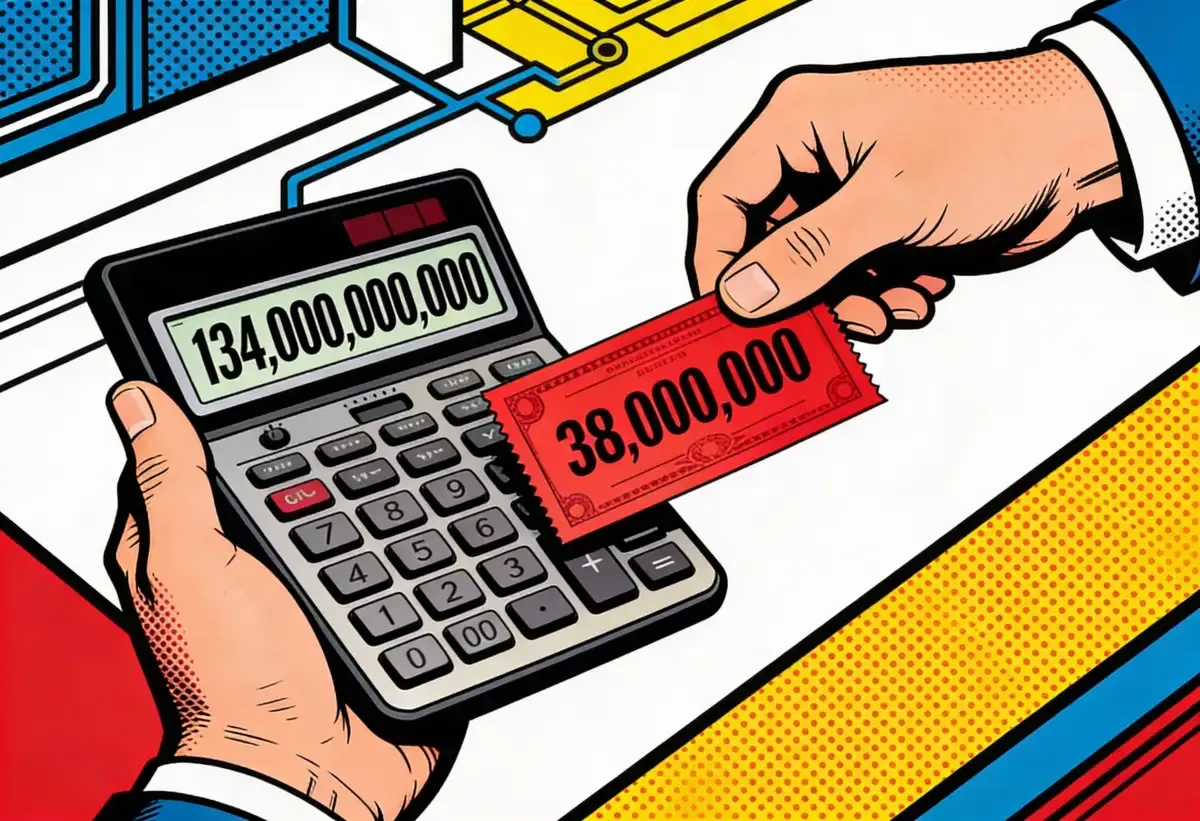
The richest man in human history is asking for more. Elon Musk's fortune currently hovers around $700 billion. He could buy most countries. And yet his lawyers filed paperwork Friday demanding somewhere between $79 billion and $134 billion from OpenAI and Microsoft.
His original contribution to the AI nonprofit? Thirty-eight million bucks. His lawyers want a 3,500-fold return on what was technically a charitable donation. Even at the high end, winning would bump his net worth by roughly 19 percent. For a man who already has more money than he could spend in a thousand lifetimes, this isn't about getting paid.
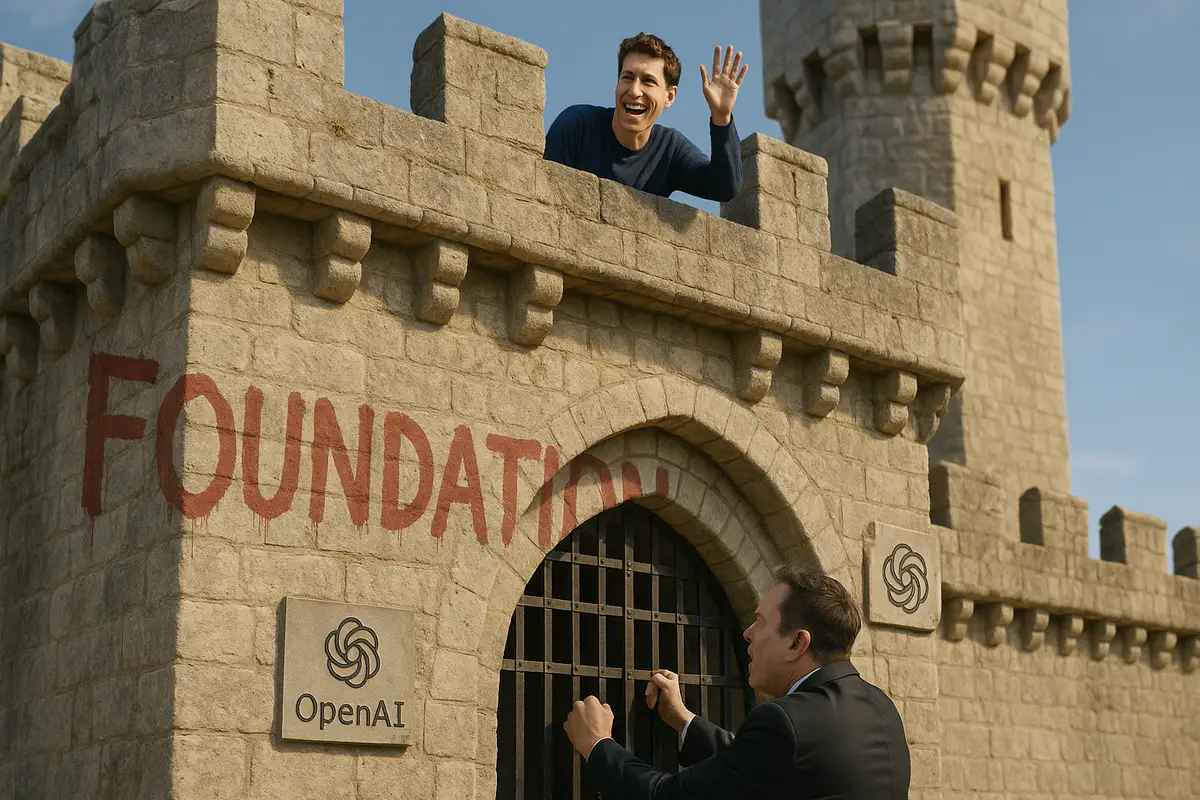
A federal judge in Oakland just rejected OpenAI's and Microsoft's final attempts to kill the case. Trial starts April 27. Musk says he was deceived about OpenAI's commitment to remain a nonprofit back when he was writing checks. OpenAI calls the whole thing harassment. The documents, now unsealed, tell a messier story than either side wants to admit.
The Breakdown
• Musk seeks $79-134 billion from OpenAI and Microsoft, claiming his $38 million donation was based on broken nonprofit promises
• Trial begins April 27 in Oakland after judge rejected dismissal attempts by both defendants
• Key evidence: Greg Brockman's 2017 journal entries about nonprofit commitments, now unsealed
• Microsoft faces "aiding and abetting" claim; internal emails suggest awareness of donor concerns
The calculation
Financial economist C. Paul Wazzan built the damages model for Musk's team. Picture a man whose job is turning grievances into spreadsheets, rows and columns that translate "I feel wronged" into "you owe me X billion dollars." Wazzan has been deposed nearly 100 times and testified at more than a dozen trials. His methodology here: combine Musk's $38 million cash contribution with his "non-monetary contributions," including technical advice, recruiting help, and credibility-lending during OpenAI's early days. Then calculate what share of OpenAI's current valuation those contributions represent.
Wazzan's model splits the alleged "wrongful gains" between the two defendants. OpenAI owes somewhere between $65.5 billion and $109.4 billion. Microsoft gets tagged for $13.3 billion to $25.1 billion, the cost of owning 27% of something that might have been built on broken promises. Imagine being the OpenAI lawyer who first opened that filing. You can almost hear the sigh.
The calculation treats Musk like an early startup investor who deserves returns "many orders of magnitude greater" than his initial stake. That framing is legally convenient. It's also financially absurd. No venture capitalist in history has seen 3,500x returns on a donation they made to a nonprofit. VC math doesn't work that way. Neither does charity law.
But Musk's lawyers aren't really arguing venture capital economics. They're making a different claim entirely. OpenAI's leaders made specific promises about the nonprofit structure. Musk relied on those promises. And now the entire $500 billion valuation represents, in their telling, stolen charitable intent.
The Brockman notes
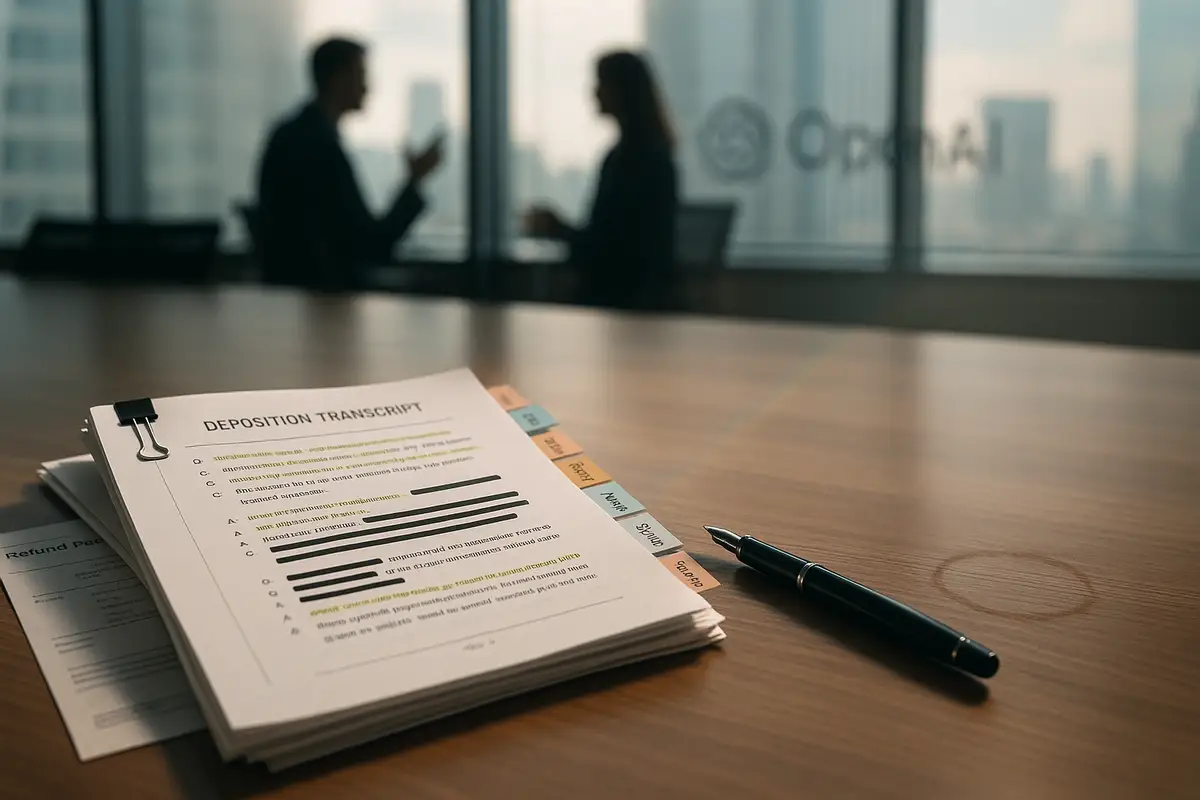
One piece of evidence keeps appearing in Judge Gonzalez Rogers's January 16 ruling: Greg Brockman's private journal from November 2017. These entries are like finding someone's therapy notes and using them in court. Not polished memos. Not board presentations. Just a cofounder typing into a document at odd hours, trying to think through a problem he couldn't solve in daylight.
Here's what Musk's lawyers quoted in their filing: "Cannot say that we are committed to the non-profit. Don't want to say that we're committed. If three months later we're doing b-corp then it was a lie."
Looks bad. Reads like a confession. OpenAI published its own rebuttal Friday, including the full context around those entries.
Stay ahead of the AI power plays
The legal battles, the board drama, the money moves. We track it all so you don't have to piece it together from Twitter threads. Daily at 6am PST.
No spam. Unsubscribe anytime.
What emerges is messier. In September 2017, Musk himself had been enthusiastically discussing converting OpenAI to a B-corp or C-corp structure. "Coming weeks, top priority," he told Brockman and Ilya Sutskever. "Gotta figure out how do we transition from non-profit to something which is essentially philanthropic endeavor and is B-corp or C-corp or something." He even incorporated an OpenAI public benefit corporation that month.
The negotiations collapsed because Musk wanted majority control. OpenAI says they refused. Musk says he was misled. Those private Brockman notes? Written during a period when the cofounders were trying to figure out how to build an AI company without ending up as a division of Tesla, which Musk had proposed as an alternative structure.
"The true answer is that we want him out," Brockman wrote in those same entries. The frustration was mutual. Musk wanted control; the cofounders wanted independence. What looks like deception from one angle looks like self-preservation from another.
What Microsoft knew
If you're Microsoft, getting dragged into someone else's founder fight feels like being billed for a dinner you didn't order. Judge Gonzalez Rogers allowed one claim against the company to proceed anyway: aiding and abetting breach of fiduciary duty. She pointed to internal Microsoft communications that suggest awareness of potential problems.
In March 2018, Microsoft's Chief Technology Officer wrote: "Ideologically, I can't imagine that they funded an open effort to concentrate ML talent so that they could then go build a closed, for-profit thing on its back."
Notes from an October 2020 Microsoft meeting show the company discussed "effectively owning OpenAI" and considered "Musk's perspective on what they referred to as a closed OpenAI."
Microsoft declined to comment on the ruling. The company's defense will likely center on timing. Knowledge isn't the same as participation, and whatever OpenAI's founders were thinking in 2017 doesn't necessarily implicate a partner who arrived later with billions in investment capital. But Microsoft's lawyers now have to spend months defending a relationship that was supposed to be a straightforward technology investment. The mood in Redmond, if you had to guess? Irritated resignation. They didn't pick this fight. They're stuck in it anyway.
The real play
OpenAI sent a letter to investors Thursday warning them to expect "deliberately outlandish, attention-grabbing claims" as the trial approaches. The $134 billion number certainly qualifies.
This lawsuit is a flashbang. It's not designed to win. It's designed to disorient.
Consider the positioning. Musk runs xAI, a direct competitor to OpenAI. His chatbot Grok competes with ChatGPT. He rejected OpenAI's rejection of his $97.4 billion bid to acquire the nonprofit's assets last year. Every headline about OpenAI's legal troubles is a headline that isn't about xAI's progress.
Sam Altman has called the lawsuit "a weaponization of the legal system to slow down a competitor." OpenAI published a dedicated webpage cataloging what it calls Musk's "harassment." The company's legal response calls the damages demand "unserious."
But here's where the corporate calculus gets uncomfortable for OpenAI. Even if they win, even if the jury finds Musk's claims completely baseless, the trial itself guarantees months of discovery documents becoming public. Brockman's diary entries. Internal emails about control and profit. Negotiations about who deserved what piece of a company that barely existed.
Losing the case? Musk can handle that. What he can't handle is watching OpenAI walk away looking like the good guys.
What the jury will decide
Late April, Oakland. Jurors will sit through weeks of testimony about nonprofit governance and charitable intent. The room will smell like old carpet and vending machine coffee by week two. The question underneath all of it: was a billionaire's advice really worth $134 billion? The judge has already narrowed what they're allowed to consider.
Did OpenAI's founders lie to Musk about staying nonprofit? Did he believe them? Did that belief cost him something? The jury has to answer all three. They'll also determine if his donations created enforceable conditions on how OpenAI could operate, and whether he has standing to enforce those conditions even though he gave through intermediary funds. For Microsoft, the question is simpler but still uncomfortable: did the company know OpenAI was potentially breaching obligations to donors, and did that knowledge make Microsoft complicit?
Daily at 6am PST
Don't miss the verdict
This trial runs through May. We'll be there for the depositions, the document dumps, and whatever Musk tweets at 2 AM. Get the analysis before the hot takes.
Free. No spam. Unsubscribe anytime.
The judge already rejected one claim. Musk argued that Microsoft "unjustly enriched" itself at his expense. That required a quasi-contractual relationship he couldn't demonstrate.
Even Musk's own team seems to treat the damages number as a ceiling. The filing mentions punitive damages and "other penalties, including a possible injunction," but stays vague on what that injunction might actually do. Win on the fraud claims, get $38 million back? That's a PR victory dressed as a legal footnote.
The $700 billion question
When you're already worth $700 billion, another $134 billion doesn't change your life. It doesn't change your buying power. Musk could spend a hundred lifetimes trying to burn through what he has now. Tesla shareholders handed him a $1 trillion pay package in November. He's richer than Larry Page by roughly $500 billion, which is itself more than most countries' GDP.
This lawsuit is his fourth run at these claims. He first filed in February 2024. Each version has generated headlines. Each headline paints OpenAI as a company with something to hide. Whether that's true almost doesn't matter.
OpenAI is valued at $500 billion. The nonprofit foundation that still technically controls it holds equity worth approximately $130 billion. If that nonprofit somehow became subject to Musk's claims, the structural implications would dwarf any cash settlement.
But structural implications aren't what juries award. They award damages. And the gap between "$38 million returned" and "$134 billion in wrongful gains" is where Musk's legal theory either flies or crashes.
The math doesn't add up as venture capital. It barely adds up as charity law. What it adds up to is pressure. A number big enough to command attention. Serious enough to survive dismissal motions. Expensive enough to make OpenAI's lawyers earn every billable hour between now and April. This lawsuit is sand in the gears. It doesn't need to win to work.
Musk was worth far less when he first filed. He'll be worth more by the time it concludes. The money was never the point. Control was. And if he can't have control, making sure his former partners can't have peace is the next best thing.
April 27, Oakland. By then Musk will have added another few billion to his fortune. The $134 billion claim will look exactly as absurd as it does today. That absurdity? It's the whole point.
Frequently Asked Questions
Q: How much did Musk originally donate to OpenAI?
A: Musk contributed approximately $38 million to OpenAI between 2016 and 2020. His legal team now claims this entitles him to damages between $79 billion and $134 billion, representing a 3,500-fold return on what was technically a charitable donation.
Q: What is Greg Brockman's journal and why does it matter?
A: Brockman's private journal entries from November 2017 are central to the case. The entries include statements like "cannot say that we are committed to the non-profit" which Musk's lawyers cite as evidence of intent to deceive. OpenAI argues the full context shows internal debate, not fraud.
Q: Why is Microsoft included in this lawsuit?
A: Microsoft faces an "aiding and abetting breach of fiduciary duty" claim. Internal Microsoft communications from 2018-2020 suggest awareness of potential issues with OpenAI's nonprofit structure. Microsoft owns 27% of OpenAI and could owe $13.3-25.1 billion if Musk prevails.
Q: When does the trial start and how long will it last?
A: The trial begins April 27, 2026 in Oakland's federal courthouse and is expected to run through May. U.S. District Judge Yvonne Gonzalez Rogers will preside after rejecting both defendants' motions to dismiss.
Q: Does Musk actually expect to win $134 billion?
A: Likely not. Even Musk's legal team treats the number as a ceiling. The lawsuit's value may be strategic rather than financial: generating headlines, forcing discovery of internal documents, and creating pressure on a direct competitor. OpenAI calls the damages demand "deliberately outlandish."
Related Stories: