 IMPLICATOR
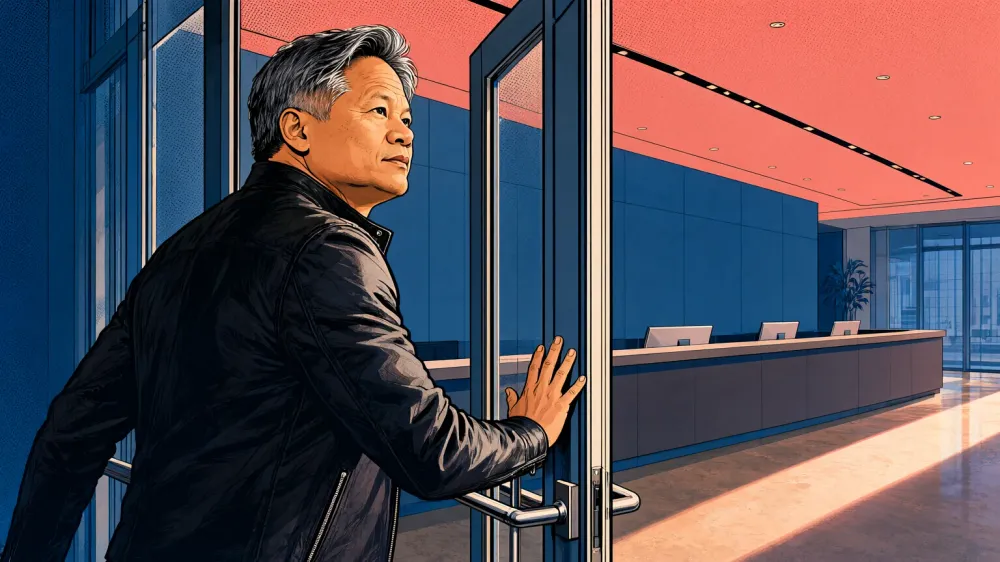
Harvey C. Jones, Nvidia’s newly installed chairman, began last Tuesday’s earnings call by ruling out the return of its founder. The board “unanimously accepted his resignation and does not intend to reinstate Jensen as CEO,” he said. He closed the subject: “With that we will take no further questions about the circumstances of Jensen’s resignation.” Interim chief executive Colette Kress took over. She had run these calls for years alongside Huang. On the call, Kress described “explosive” adoption of Nvidia’s Vera Rubin computing platform and said, “Our momentum is real.” “Our ambition will not change, our passion for innovation will not change.”
Six days later, the same board, with Jones still chairman, put Huang back.
The reinstatement rests on meetings with Huang and input from senior U.S. officials. That is the same government whose intelligence agencies tracked the woman at the center of the scandal as she maintained contact with a Chinese intelligence officer during part of her relationship with him. The board did not identify the officials it consulted or disclose what they said.
What Changed
- Nvidia's board unanimously reinstated Jensen Huang as president, CEO and director on Monday, Nov. 23, six days after its chair said it did not intend to bring him back.
- The board cited meetings with Huang and input from senior U.S. officials, whom it did not name, for its confidence that his return poses no national security risk.
- U.S. intelligence tracked Alice Huang's contact with an officer of China's Ministry of State Security from spring 2025 until this fall, overlapping part of her relationship with Huang.
- Nvidia shares jumped roughly 30% in premarket trading; the board's investigation into whether Huang was targeted by a foreign intelligence effort continues.
AI-generated summary, reviewed by an editor. More on our AI guidelines.
The reversal
The unanimous vote announced before markets opened Monday, Nov. 23, restored Huang as president, chief executive and director, effective immediately. He had resigned on Nov. 12 after revelations of extramarital relationships, including one with a senior Nvidia executive who reported directly to him.
Kress, Nvidia’s chief financial officer since 2013, gives up the interim chief executive role and remains chief financial officer. She had repeated in a CNBC interview that the company would not reinstate Huang. Heidrick & Struggles had been running a search for his successor, considering internal and external candidates. Arm Holdings CEO Rene Haas, whom the board’s search had reportedly approached, announced Monday that he was remaining at Arm, with a contract extension through 2033.
At a White House news conference Friday, Trump publicly pressed Nvidia to bring Huang back as chief executive. An investigation published Sunday described the woman’s contact with an officer of China’s Ministry of State Security during at least part of her relationship with Huang. In a Sunday-night post, Trump called on the board to rehire Huang and said doing so would be best for both Nvidia and the United States.
The board said “a series of discussions and meetings with Mr. Huang” had left it “satisfied with respect to Mr. Huang’s candor and ability to lead NVIDIA.” It also cited “input from senior levels of the United States government,” on which it based its confidence that his return “poses no national security risk.”
In a Nov. 8 memo to employees, Huang, who co-founded Nvidia in 1993, wrote: “I was unfaithful to my wife. My actions hurt her and our children. There is no excuse for what I did. I am deeply sorry.”
“I am honored to return to NVIDIA and lead one of the most consequential technology companies in the world at the beginning of a new industrial revolution,” Huang said Monday. “I take this responsibility with the greatest humility and renewed commitment.”
“I can’t wait to get back to work.”
What Washington said
President Donald Trump had phoned Huang and privately urged him to fight for his job.
“We have to protect our brilliant people. Jensen is one of them,” Trump said at a White House news conference Friday.
On Sunday night, Trump wrote: “I hope the Board of Nvidia rehires Jensen Huang. It would be the best thing for the Company, and also, for the U.S.A.”
Within minutes of Monday’s announcement, he celebrated the “correct and proper decision”. He called Huang a “Great Patriot and National Treasure” and said the United States “has no reason to believe” his return posed a national-security risk. Attorney General Todd Blanche, Trump said, had confirmed that the government “does not possess evidence that he has engaged in any unlawful conduct.”
Trump also said Nvidia should continue investigating its compliance with export controls. Those rules restrict the sale or transfer of advanced American chips to China.
Before the scandal became public, Trump’s advisers had briefed him on at least two occasions about Alice Huang, a former executive of Megaspeed, the Singapore-based data-center and cloud firm, U.S. officials with direct knowledge of the briefings said. They said the briefings covered her links to Chinese intelligence and her close relationship with Nvidia’s chief executive. Both times, he downplayed the concerns, the officials said. Trump has claimed that no one in his government told him of intelligence indicating that she was a Chinese intelligence asset. “I don’t know that she is a spy,” he said.
Marco Rubio, secretary of state and national security adviser, had laid out Alice Huang’s intelligence ties in a confidential memo dated March 30 this year. Jensen Huang was never given a defensive briefing, the warning officials can provide someone targeted by a foreign intelligence service.
The intelligence record
An investigation published Sunday by The New York Times described Alice Huang’s contact with an officer of China’s Ministry of State Security from spring 2025 until this fall. That period overlapped at least part of her relationship with Jensen Huang. People with knowledge of the intelligence also said her business partner Kang Wei, often introduced as her husband, worked with the agency.
The Ministry of State Security is China’s top spy agency. Its minister, Chen Yixin, added a sixth mission in April this year: overcoming “blockades” on access to technologies such as artificial intelligence.
Megaspeed acquired large amounts of advanced Nvidia chips. Some went to Southeast Asian data centers serving Chinese companies such as Alibaba. Others are suspected of having been smuggled to China. Megaspeed is under investigation.
U.S. officials are investigating Alice Huang and Kang’s roles in a network of Southeast Asian companies linked to possible chip smuggling. People with knowledge of the intelligence said it included shipping records showing their roles in that network. Officials are still determining the full extent and duration of their work with Chinese intelligence.
Matt Pottinger, deputy national security adviser during Trump’s first term, now runs Garnaut Global, an open-source research firm. He spoke before Monday’s reinstatement.
“This network of companies working to procure and smuggle Nvidia chips lines up precisely with the M.S.S.’s recently stated core mission of circumventing and undermining U.S. export controls on semiconductors and other key technologies,” Pottinger said.
“To assume the M.S.S. wasn’t at the center of this operation would be to assume that they are incompetent,” he said. “That’s not an assumption I would make.”
Know someone who'd find this useful? ✉️ Email it to a friend in one click, or they can subscribe free here.
Little of the intelligence has reached Capitol Hill. Lawmakers from both parties have demanded briefings, and administration officials postponed a follow-up session for top national-security staffers scheduled for last Wednesday.
The stock
Nvidia shares jumped roughly 30% in premarket trading Monday. By the end of last week, the company had lost roughly half its market value since the start of October, including a decline of more than 20% last week alone.
The selling had continued despite the results Kress presented on Nov. 17. Fiscal third-quarter revenue was $115.8 billion against Wall Street’s forecast of roughly $109 billion, and Nvidia projected revenue of $130 billion for the current quarter.
The broader market had also fallen. The S&P 500 lost 8.6% last week, its worst weekly performance since April 2025. Stuart Kaiser, Citi’s head of equity trading strategy, called last week’s sell-off a “gut-punch” after Nvidia’s earnings and Anthropic’s stock-market debut failed to stop it.
Huang’s supporters included investors with money in the company. Brad Gerstner, chief executive of Altimeter Capital Management, which has a significant Nvidia stake, and Atreides Management managing partner Gavin Baker urged directors in a letter last week to keep all options open, including bringing him back.
Elon Musk and Epic Games chief executive Tim Sweeney also called for reinstatement. Musk claimed “critical deals” involving Nvidia technology would be lost.
Huang had done much of Nvidia’s dealmaking with customers and partners. He kept a firm grip on the company, with up to 200 people reporting directly to him. The company sells chips to customers including Meta, SpaceX and OpenAI, and has funded customers and supply-chain companies through loans or direct investments. His departure brought concerns about how those arrangements would work without him.
The inquiries continue
The intelligence on Alice Huang is described by people with knowledge of it and has not been released; Nvidia did not respond to a request for comment Monday morning.
The National Security and Export Control Oversight Committee established last week remains in place. Director Suzanne Nora Johnson chairs it.
Nvidia is creating a new chief compliance officer post. The company also said it would continue cooperating with government investigations and inquiries.
The Securities and Exchange Commission is probing the company, with a focus on its accounting practices, an inquiry reported by The Wall Street Journal. The SEC declined to comment, and Nvidia did not return a request for comment on the reports.
The separate committee of independent directors investigating whether Huang was the target of a foreign intelligence effort has retained independent counsel. Huang supports the inquiry and has committed to cooperating. The board reinstated Huang before that investigation concluded. The board said that investigation “will proceed to conclusion.”
Frequently Asked Questions
Why did Nvidia's board reinstate Jensen Huang?
The board said a series of discussions and meetings with Huang left it satisfied with his candor and ability to lead, and that input from senior levels of the U.S. government made it confident his return poses no national security risk. It did not identify the officials or say what they told it.
How quickly did the board reverse itself?
On the Nov. 17 earnings call, chair Harvey C. Jones said the board did not intend to reinstate Huang. Six days later, on Nov. 23, the board voted unanimously to restore him as president, CEO and director, effective immediately.
What does U.S. intelligence say about Alice Huang?
People with knowledge of the intelligence said she was in contact with an officer of China's Ministry of State Security from spring 2025 until this fall, overlapping part of her relationship with Huang. Her former company, Megaspeed, acquired large amounts of advanced Nvidia chips and is under investigation.
What happens to Colette Kress?
Kress, Nvidia's chief financial officer since 2013, gives up the interim CEO role and remains CFO.
Which inquiries are still open?
A committee of independent directors is still investigating whether Huang was the target of a foreign intelligence effort, and the board said that investigation will proceed to conclusion. The Securities and Exchange Commission is also probing the company, with a focus on its accounting practices.
AI-generated summary, reviewed by an editor. More on our AI guidelines.

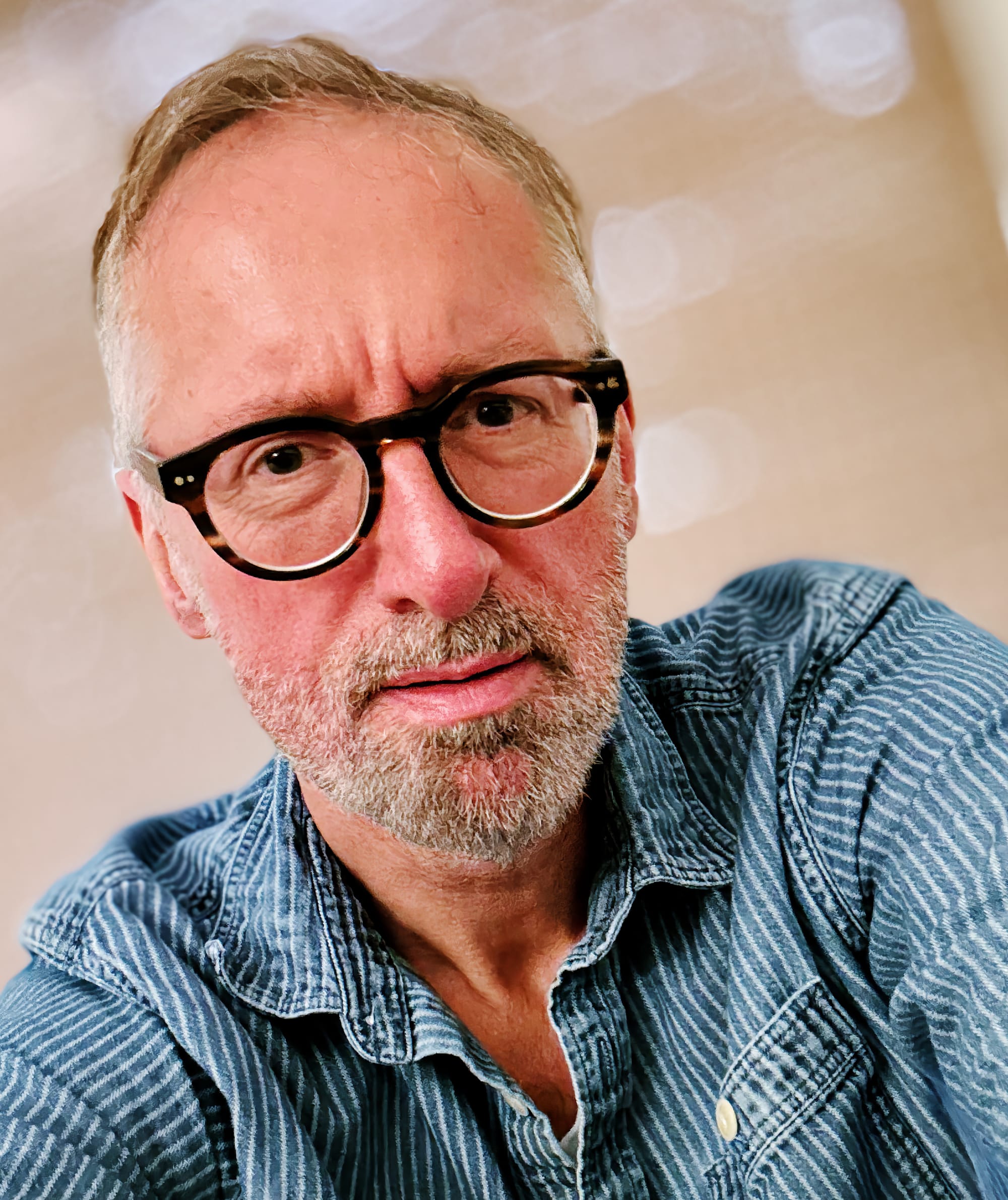
Marcus Schuler
Editor-in-Chief and founder of Implicator.ai. Former ARD correspondent and senior broadcast journalist with 10+ years covering tech. Writes daily briefings on policy and market developments. Based in San Francisco. E-mail: editor@implicator.ai