IMPLICATOR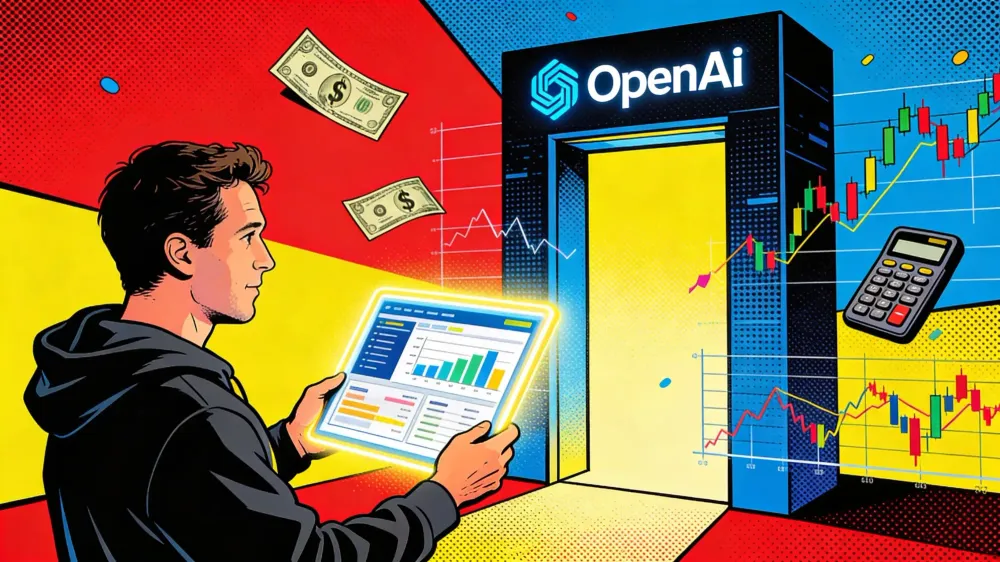
OpenAI has acquired AI personal finance startup Hiro Finance in an apparent acquihire, founder Ethan Bloch announced Monday in a LinkedIn post. Hiro will stop accepting new signups immediately, stop functioning on April 20, and delete all user data from its servers by May 13, while Bloch said his whole team is coming with him to OpenAI. Bloch did not disclose financial terms. The signal is clear enough anyway. ChatGPT wants into personal financial planning, a category Mint, the robo-advisors, and old-line wealth managers have split between them for years.
One line in the post did most of the framing. "For decades, personalized financial guidance has been too expensive, too generic, or too hard to access. ChatGPT is finally changing that." Bloch added that Hiro had helped clients "plan for and manage more than $1 billion in assets" since launch. Neither the company nor its backers, Ribbit, General Catalyst, and Restive, ever disclosed how much money Hiro raised. Hiro itself started in 2023. Bloch built it with Rushabh Doshi, formerly a product lead at Digit and Facebook.
That $1 billion figure is the last customer number Hiro will ever publish.
Key Takeaways
- OpenAI acquired Hiro Finance in an acquihire, bringing founder Ethan Bloch and his whole team to ChatGPT's personal finance push.
- Hiro stops taking new signups immediately, shuts down April 20, and wipes user data by May 13.
- Bloch previously sold Digit to Oportun in 2021 for around $230 million. Hiro was his 15th project.
- The deal puts ChatGPT on a collision course with Mint, robo-advisors, and traditional wealth managers.
AI-generated summary, reviewed by an editor. More on our AI guidelines.
A serial founder's fourth act
Bloch is not a first-time seller. His previous company, Digit, built an algorithmic savings app that Oportun bought in 2021. Oportun publicly called the price "more than $200 million." Bloch told Business Insider he sold it for around $230 million. Secondary sources have put the figure at $238 million. The discrepancy has never been reconciled on the record.
Digit itself was the 14th attempt in a streak that started when Bloch imported PlayStation controllers from China at age 13 and sold them cash-on-delivery through a site he called Blochardware. The first 13 projects failed, he told Business Insider. Number 14 was Flowtown, a social media tool Bloch launched in 2009. It eventually sold for $4.5 million. Hiro was number 15.
The mission has carried across all three of his fintech attempts. Bloch has said repeatedly that his goal is building "a Jane," the AI assistant from Orson Scott Card's Ender's Game who helps the main character file his taxes. Digit got partway there through automation. ChatGPT, in Bloch's framing, is what lets him finally try for the full version.
What OpenAI actually bought
Everything about the structure suggests this is a people deal, not a technology deal. The servers are getting wiped. The brand is going away. You are not going to find a Hiro feature flag inside ChatGPT next week.
What stays is Bloch, Doshi, and the team they are bringing over, plus whatever training work Hiro did to make its model reliable on financial math. That last piece is the one worth watching. Hiro was built around a verification layer that let users open the math behind any answer and check it line by line. Large language models have historically been unreliable on exactly that kind of task. Recent frontier models have improved, but finance is unforgiving of hallucinated decimal places.
The AI story behind every headline.
Strategic AI news from San Francisco. No hype, no "AI will change everything" throat clearing. Just what moved, who won, and why it matters. Daily at 6am PST.
No spam. Unsubscribe anytime.
The deal also plugs a gap. Bloch's LinkedIn post reads, at points, less like a founder celebrating an exit and more like a founder who needed a place to land. The tone is grateful, almost apologetic: thanks to users for trusting him with their finances, thanks to investors for their patience as "the Hiro journey is ending sooner than any of us expected." That is not the language of a founder selling into strength. It is the language of a product that ran out of time.
ChatGPT's quiet pivot into money
For OpenAI, the acquihire fits a pattern visible across recent weeks. The company shuttered side projects earlier this year, including its Sora video generator and a planned adult-content mode for ChatGPT. This month it launched a $100 ChatGPT Pro tier centered on Codex, its coding product. Now it is adding a specialized finance team. The direction is clear. OpenAI wants ChatGPT to stop being a chat interface and start being a set of vertical products sitting on top of one.
Personal finance is a deliberate target. It is a category where trust is the entire product, switching costs are high, and users already hand over sensitive data to apps they barely understand. Whoever becomes the default interface for your net worth, your debt picture, and your savings timeline gets to own one of the stickiest relationships in consumer software. The cornered incumbents, Intuit and the robo-advisors and the traditional wealth managers, have been telling themselves for years that regulation and compliance create a moat. An AI lab with $852 billion in valuation and a founder who has built this exact product before is the scenario they have never modeled.
OpenAI does not hold a financial services license. It has not said whether it intends to seek one, or how it plans to store financial data once ChatGPT starts handling it, or what guardrails will sit between a model's confident-sounding answer and a user's retirement account.
Those questions were already going to come up. The Hiro deal moves them to this quarter.
What Bloch gets is the distribution he never had. What OpenAI gets is a founder who has spent three companies trying to build the same product, and a team that already solved the hardest problem in consumer fintech: convincing strangers to trust an algorithm with their savings account.
Frequently Asked Questions
What did OpenAI buy from Hiro Finance?
OpenAI acquired Hiro Finance, an AI-powered personal finance startup founded in 2023 by Ethan Bloch and Rushabh Doshi. The deal is effectively an acquihire. Hiro stops accepting signups immediately, shuts down its product on April 20, 2026, and deletes all user data by May 13. Bloch and his team move to OpenAI to work on ChatGPT's financial planning capabilities.
How much did OpenAI pay for Hiro?
Bloch did not disclose financial terms in his LinkedIn announcement. Neither Hiro nor its investors, Ribbit, General Catalyst, and Restive, have ever said how much the company raised. The structure of the deal, with the full team moving over and the product shutting down within weeks, strongly suggests an acquihire rather than a traditional acquisition with a disclosed price tag.
Who is Ethan Bloch?
Bloch is a serial entrepreneur on his 15th project. He previously founded Digit, an algorithmic savings app that Oportun bought in 2021 for around $230 million. Before that, he launched Flowtown in 2009, which eventually sold for $4.5 million. Bloch has said his long-running goal is building an AI assistant modeled on Jane, the AI character from Orson Scott Card's Ender's Game.
Why is OpenAI moving into personal finance?
Financial planning is one of the stickiest categories in consumer software. Trust, personalization, and switching costs all favor the default interface. OpenAI has been pivoting ChatGPT from a general chat tool into a set of vertical products, including a recent $100 Pro tier centered on Codex. Adding a specialized finance team fits that pattern and opens a multi-trillion-dollar market.
Will ChatGPT now give investment advice?
OpenAI does not hold a financial services license and has not said whether it intends to seek one. How the company will store sensitive financial data, what regulatory guardrails it will put in place, and whether Hiro's verification layer for financial math will carry over to ChatGPT are all unanswered questions. Expect them to matter much more in the next quarter.
AI-generated summary, reviewed by an editor. More on our AI guidelines.


Free AI briefing · Weekdays
The AI stories that matter, sourced and explained.
Join the Morning Briefing. It goes out every weekday at 4:45 a.m. Pacific, with later sends for the East Coast, Berlin and Tokyo.
Free when you sign up: The Paperclip Compendium, our tested guide to running AI agents.
Free. Unsubscribe in one click.

Marcus Schuler
Editor-in-Chief and founder of Implicator.ai. Former ARD correspondent and senior broadcast journalist with 10+ years covering tech. Writes daily briefings on policy and market developments. Based in San Francisco. E-mail: editor@implicator.ai