Implicator
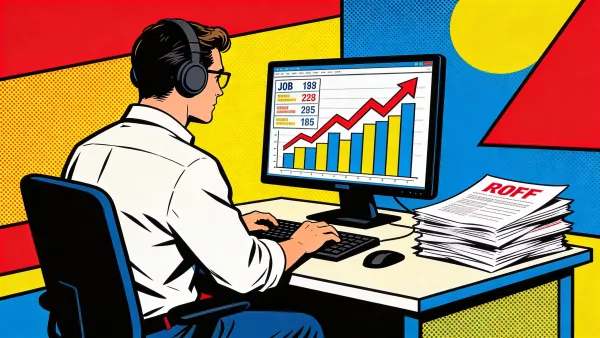
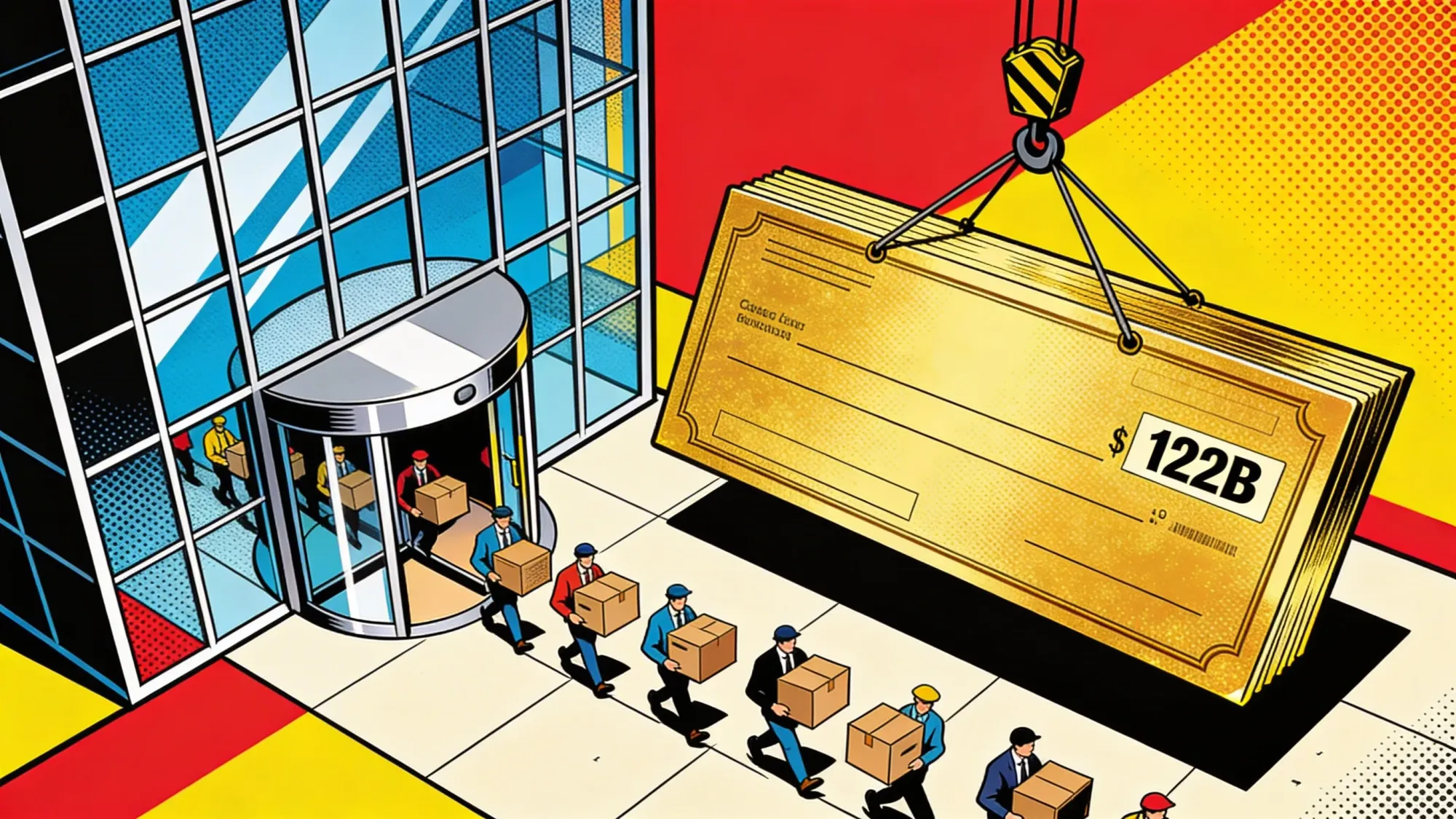
OpenAI Chief Financial Officer Sarah Friar has told colleagues she does not believe the company will be ready for an initial public offering by late 2026, The Information reported Sunday, placing her in direct conflict with CEO Sam Altman's push to list as early as the fourth quarter. Friar cited the scale of organizational and compliance work still required for a company that has committed more than $600 billion over five years to cloud server infrastructure. The warning comes at a precarious moment for OpenAI, which just closed a $122 billion funding round at an $852 billion valuation but faces mounting questions about whether its revenue growth can sustain one of the fastest cash burns in corporate history.
Key Takeaways
- OpenAI CFO Sarah Friar told colleagues the company won't be ready for a 2026 IPO, conflicting with CEO Sam Altman's Q4 timeline
- Internal projections show $200 billion in cash burn before breakeven and $14 billion in losses expected for 2026 alone
- Friar has been excluded from key financial meetings and no longer reports directly to Altman since August 2025
- OpenAI has retained Goldman Sachs and Morgan Stanley for preliminary IPO discussions while racing Anthropic to list first
AI-generated summary, reviewed by an editor. More on our AI guidelines.
$200 billion before breakeven
The financial picture behind Friar's caution is blunt. Internal projections show OpenAI burning through more than $200 billion before reaching positive cash flow, according to The Information, with losses for 2026 alone projected at roughly $14 billion. Compute costs, research spending, and infrastructure buildout at a scale few companies have ever attempted are driving the gap.
Monthly revenue sits at about $2 billion. Significant, yes. But measured against the spending commitments, not nearly enough. Friar has questioned whether OpenAI even needs to pour so much capital into AI servers in the near term, particularly as revenue growth decelerates.
The structure of the funding itself carries risk. A large portion of the $122 billion round came from Amazon and NVIDIA, both of which also sell OpenAI the chips and cloud capacity it needs to operate. When your investors are also your suppliers, the distinction between funding and procurement starts to dissolve. Friar has flagged this overlap as a vulnerability in the company's capital structure. Separately, OpenAI has acknowledged internally that its deep dependence on Microsoft, its largest partner and cloud provider, poses a strategic risk if the relationship shifts.
Friar pushed to the margins
But this extends well beyond spreadsheets. Altman has repeatedly excluded his CFO from financial discussions, according to The Information. During a recent high-level meeting with a major investor about server procurement, he did not invite Friar. One attendee called her absence "noticeable and awkward."
The organizational distance runs deeper still. Since August 2025, Friar no longer reports to Altman. She reports to Fidji Simo, who oversees application business. That structure breaks the standard corporate chain of command where a finance chief answers directly to the CEO. For a company eyeing the public markets, it looks like anxiety written into the org chart.
And the timing compounds everything. Simo is now on medical leave, disclosed last week alongside the departure of Chief Marketing Officer Kate Rouch. COO Brad Lightcap picks up an expanding portfolio. Three senior roles in flux, barely months before a possible filing window.
Get Implicator.ai in your inbox
Strategic AI news from San Francisco. No hype, no "AI will change everything" throat clearing. Just what moved, who won, and why it matters. Daily at 6am PST.
No spam. Unsubscribe anytime.
After reports surfaced, Friar and Altman issued a joint statement saying they remain "completely aligned on compute strategy." That's the tell. Joint statements tend to arrive precisely when alignment has already fractured.
A race with no clear finish line
OpenAI has quietly retained law firms Cooley and Wachtell Lipton Rosen & Katz and held preliminary conversations with Goldman Sachs and Morgan Stanley about managing an offering, The Information reported. Altman has privately told people he wants to beat Anthropic to the public markets, according to the report. Anthropic is reportedly discussing its own fourth-quarter listing.
That competitive urgency lands alongside a much larger credibility test. An extensive investigation published Sunday in The New Yorker, drawing on interviews with more than 100 people, examined whether Altman can be trusted to lead OpenAI. It details the internal memos that triggered his 2023 firing, the investigation that cleared him without producing a written report, and the safety teams the company has since shuttered. A board member described him as "unconstrained by truth."
The financial scrutiny is already intensifying from another direction. Documents reviewed by the Wall Street Journal show that both OpenAI and Anthropic have projected profitability to investors with and without training costs included, and that inference expenses at both companies consume more than half of revenue.
Public markets will demand what private funding rounds have not. Audited financials. Quarterly scrutiny from analysts asking pointed questions about $14 billion losses and circular funding. Governance that institutional investors can verify, not just joint statements issued after the cracks show. Friar understands what that transition costs. Altman appears focused on who crosses the line first. The distance between those two positions may be the most expensive gap on Wall Street.
Frequently Asked Questions
Why is OpenAI's CFO concerned about the IPO timeline?
Sarah Friar believes OpenAI lacks the organizational and compliance infrastructure needed for public markets. She also questions whether the company's $600 billion cloud server commitments and slowing revenue growth are sustainable, with projected losses of $14 billion in 2026.
How much money will OpenAI burn before becoming profitable?
Internal projections cited by The Information suggest OpenAI will burn through more than $200 billion before reaching positive cash flow. The company generates about $2 billion in monthly revenue but has committed $600 billion over five years to cloud infrastructure.
What is the dispute between Sam Altman and Sarah Friar?
Altman wants to take OpenAI public as early as Q4 2026, partly to beat rival Anthropic to market. Friar warns the company isn't ready and has raised concerns about financial risks. Reports indicate Altman has excluded Friar from key meetings and she no longer reports to him directly.
Who are OpenAI's IPO advisors?
OpenAI has retained law firms Cooley and Wachtell Lipton Rosen & Katz and held preliminary discussions with investment banks Goldman Sachs and Morgan Stanley, according to The Information.
Why is OpenAI's funding structure considered risky?
A large portion of OpenAI's $122 billion funding round came from Amazon and NVIDIA, which are also key suppliers of chips and cloud services. This circular arrangement means funders profit from OpenAI's spending, blurring the line between investment and procurement.
AI-generated summary, reviewed by an editor. More on our AI guidelines.


Marcus Schuler
Tech translator with German roots who fled to Silicon Valley chaos. Decodes startup noise from San Francisco. Launched implicator.ai to slice through AI's daily madness—crisp, clear, with Teutonic precision and sarcasm. E-Mail: [email protected]