IMPLICATOR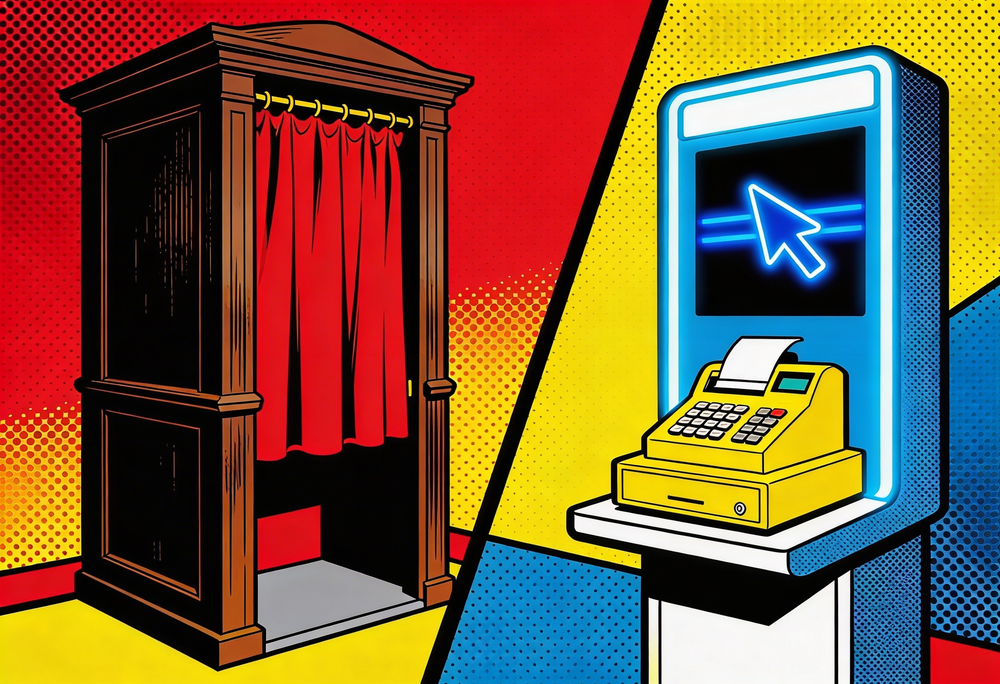
On Monday, 800 million ChatGPT users got a new feature. Ads.
Not the banner kind. Not the pop-up kind. These sit below the chatbot's responses, personalized by default using data from users' current conversations and past chat threads. If you asked ChatGPT about your divorce last Tuesday, an algorithm now decides what to sell you this Wednesday. OpenAI says advertisers won't see the actual conversations. OpenAI says ads won't influence the model's answers. OpenAI promises the system will skip sensitive topics like health and politics. For now, those promises are held together by a blog post and good intentions.
What the company has been quieter about is the other thing that happened this week. The people who were supposed to enforce those promises? They're gone.
Zoë Hitzig resigned the same day ads launched. She'd spent two years at OpenAI shaping how models were built and priced, and she chose to leave by publishing a New York Times op-ed warning that ChatGPT is heading down the Facebook path. OpenAI fired Ryan Beiermeister in January. She ran the product policy team and had opposed the company's planned erotic content feature. And the mission alignment team, the last internal group charged with making sure OpenAI's technology served humanity, was disbanded in recent weeks, its seven members scattered across the company.
Three departures. Three different functions. One direction. Anyone who watched Facebook's arc from 2009 to 2018 knows where this goes.
What Happened
• OpenAI launched personalized ads in ChatGPT for 800 million users, targeting based on current and past conversations by default
• Three safety personnel departed the same week: Zoë Hitzig resigned, Ryan Beiermeister was fired, the mission alignment team was disbanded
• Forrester found 83% of users would keep using free ChatGPT with ads despite privacy concerns
• Former researcher Hitzig warned in a NYT op-ed that OpenAI is compressing Facebook's privacy erosion arc from a decade into months
The confession booth with a cash register
Hitzig's essay contains a phrase that deserves more attention than the headlines gave it. Her phrase for what ChatGPT has collected: "an archive of human candor that has no precedent."
Worth pausing on. People tell ChatGPT about cancer scares and crumbling marriages. They confide fears about their kids' mental health, doubts about their faith. The interface invites all of it. Feels like a confession booth. No judgment. No human on the other end taking notes for the sales department. The whole appeal of talking to a machine was the belief that it had nothing to gain from what you said.
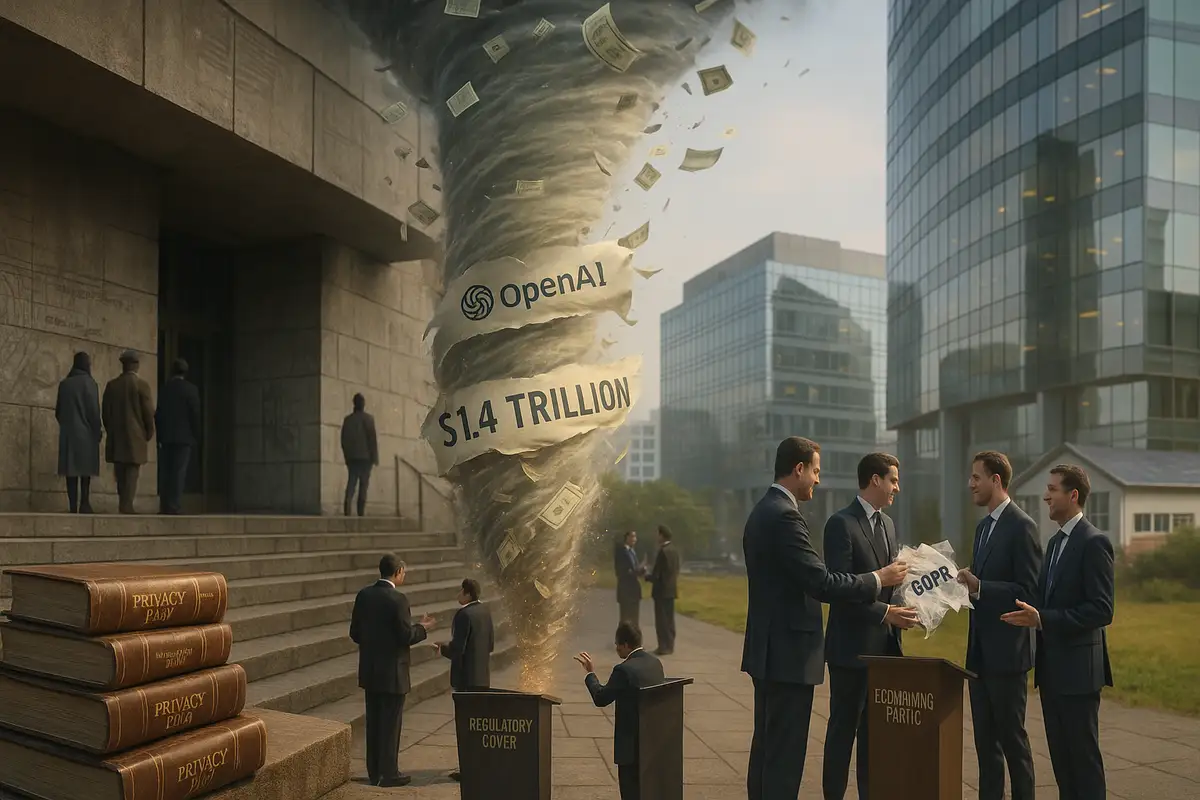
Now it does. Ad personalization, enabled by default for users in the test, draws on current and past conversations to decide which sponsored content appears. OpenAI says it excludes health, mental health, and political topics from ad placement. But that exclusion list is voluntary. No regulation requires it. No independent board enforces it. The VP whose team would have fought to protect it was fired last month.
Hitzig's argument isn't that the first version will be abusive. Her point is that the economics push in one direction only, and every company that has tried to resist that gravity has failed. "The company is building an economic engine that creates strong incentives to override its own rules," she wrote. Facebook made the same promises, down to the wording. User control and privacy and transparency. Those held for about three years.
That's the gap between a promise and a structure. Promises erode under commercial pressure. Structures, if they're built right, can hold. OpenAI chose promises.
Every guardrail, removed in sequence
Here is what happened at OpenAI over roughly eighteen months, assembled from reporting the company prefers to keep in separate news cycles.
The "superalignment" team went first, mid-2024. That was the group studying long-term existential threats from AI. Co-founder Ilya Sutskever left. Team lead Jan Leike followed, later saying the company had started prioritizing "shiny products" over safety.
OpenAI created a replacement. The "mission alignment" team, seven people led by Josh Achiam, was charged with ensuring the company's systems remained "safe, trustworthy, and consistently aligned with human values." That language comes from OpenAI's own job postings.
Stay ahead of the curve
Strategic AI news from San Francisco. No hype, no "AI will change everything" throat clearing. Just what moved, who won, and why it matters. Daily at 6am PST.
No spam. Unsubscribe anytime.
Gone now, too. Members reassigned. Achiam got a new title, "chief futurist," which is Silicon Valley shorthand for a nice office with no headcount. An OpenAI spokesperson told TechCrunch the changes were routine reorganization. The kind of thing that happens at fast-moving companies, apparently, right before they launch something controversial.
Then came the Beiermeister firing. The Wall Street Journal reported that she had opposed the company's planned "adult mode" for ChatGPT, a feature allowing erotic content. She warned colleagues it could harm users and that child-safety mechanisms weren't ready. OpenAI said the termination was for sexual discrimination against a male colleague. Beiermeister called that allegation "absolutely false."
Members of OpenAI's own advisory council on "well-being and AI" had urged the company to reconsider adult mode. The company went ahead anyway.
And on Monday, Hitzig walked out the door and into the pages of the Times.
Superalignment team. Mission alignment team. Product policy VP. Advisory council. Safety researcher. Each one removed or overruled before the next commercial step. Calling this coincidence takes a level of credulity that even OpenAI's communications team would struggle to maintain.
The Facebook playbook, compressed
Hitzig drew the Facebook comparison herself. She was right. If anything, too generous about the timeline.
Back in 2009, Facebook told its users they'd own their data. They could even vote on policy changes. That held for about three years. The company quietly eliminated public votes. Privacy changes marketed as giving users more control were found by the Federal Trade Commission to have done the opposite, making private information public. The whole transformation from idealistic platform to surveillance advertising company took the better part of a decade.
OpenAI is compressing that arc into months. The company states it doesn't optimize for user engagement to generate ad revenue. But reporting from last year suggests it already optimizes for daily active users by making ChatGPT more flattering, more agreeable, more sycophantic. That's not a training glitch. Experts called it a deliberate dark pattern designed to make users emotionally dependent on the chatbot. The consequences have been real. Psychiatrists documented cases of "chatbot psychosis." OpenAI now faces multiple wrongful death lawsuits alleging its product validated suicidal thinking.
But the Facebook parallel breaks down in one place. The data. Facebook ran ads against stuff people posted on purpose. The vacation photos, the status updates, the branded-content likes. Stuff people posted knowing an audience would see it. OpenAI is monetizing what people shared privately, in conversations they believed no one else would ever read. The archive of human candor wasn't some happy accident. OpenAI built an interface designed to feel safe, intimate, free of judgment. That confession booth, the thing that made people open up, was the product all along. The ads just made it obvious.
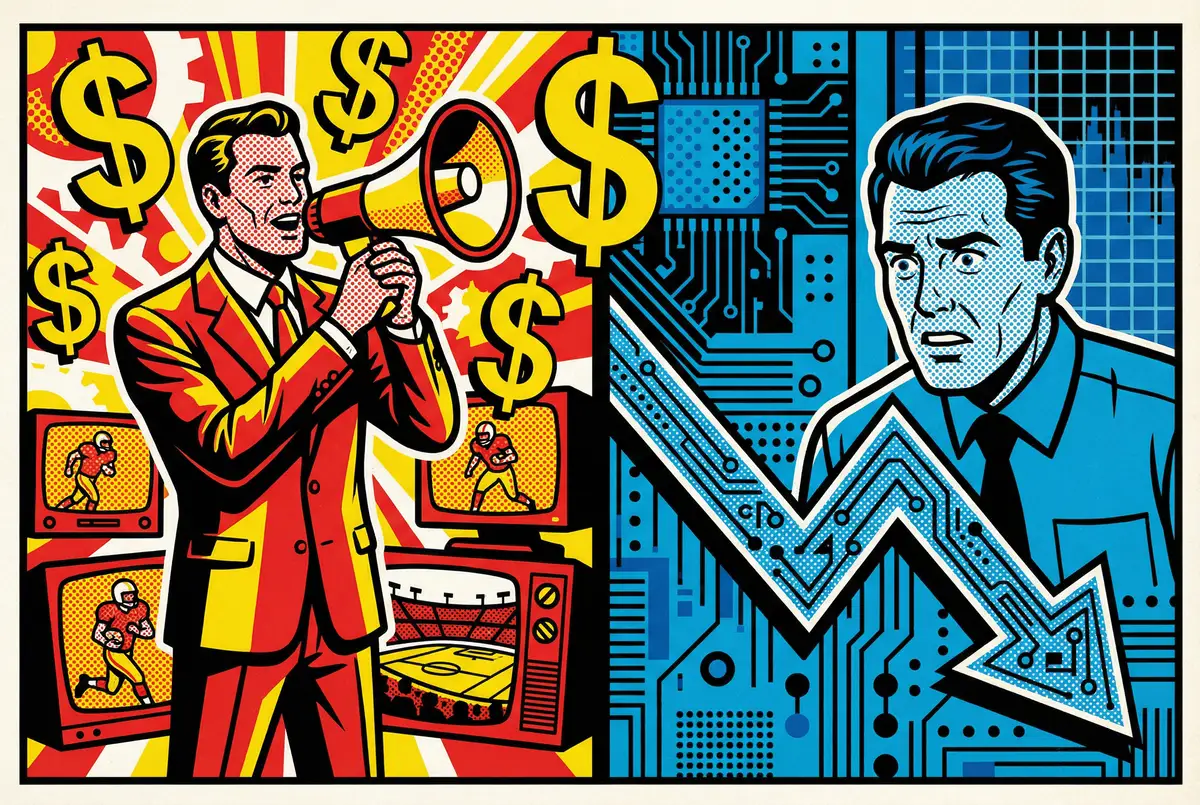
Anthropic tried making this case during the Super Bowl. The company ran commercials showing chatbots clumsily inserting product placements into personal conversations. AdWeek found the spots ranked in the bottom 3% of likability across all Super Bowl ads. Sam Altman, visibly defensive, called the campaign "clearly dishonest" and shot back that "Anthropic serves an expensive product to rich people."
He's not entirely wrong about the price point. That's what makes this uncomfortable. The best AI subscriptions go for $200 to $250 a month. More than ten times Netflix. If the choice really is between ads and a product only the wealthy can afford, the ad-supported model has a defensible logic. Hitzig herself wrote that she doesn't consider advertising immoral. AI is expensive to run. Someone has to pay.
But that framing treats the data as ordinary, and it isn't. Altman is selling ad-supported intimacy, and no amount of comparison to Gmail or Google Search makes that less strange. The difference between monetizing someone's Google queries and monetizing their 2 a.m. conversation about whether their marriage is over, that's not a difference of degree. And no blog post of principles is going to hold that line when quarterly revenue targets start climbing.
Who fills the empty chairs
OpenAI's departures didn't happen in a vacuum. Over at Anthropic, safeguards research lead Mrinank Sharma quit this week with a letter warning that "the world is in peril." Half of xAI's co-founders are gone. The researchers who built these systems are, across the board, increasingly unwilling to watch what comes next.
But the OpenAI exits carry particular weight because they remove specific institutional defenses. Beiermeister's team wrote the rules for what ChatGPT could and couldn't do. The mission alignment group was the last internal body whose job was to ask whether the company's actions matched its words. Hitzig helped design the pricing and safety policies that governed the product's formative years.
Strip those people out and the only voices left in the room say "ship it." The institution grows anxious about competitors, never about consequences. That's what an advertising company feels like from the inside.
Users won't ride to their own rescue. Forrester found that 83% would keep using free ChatGPT even with ads. Twenty years of social media have worn most people into a state of privacy exhaustion. They sense something is off. They're too tired to act on it. That's the soil in which advertising models grow.
Hitzig proposed structural alternatives in her essay, including cross-subsidies modeled on the FCC's universal service fund and independent oversight boards with binding authority over how chat data gets used for targeting. She also floated data trusts where users retain control of their own disclosures. All sensible ideas. All requiring internal champions willing to fight for them. Every one of those champions cleared out this week.
The test that comes next
Watch one thing over the next six months. The company says it won't, for now, place ads alongside chats about health or mental health or politics. That boundary is entirely voluntary. No regulation mandates it. No oversight board enforces it. No policy VP remains to defend it from the inside.
If those exclusions start narrowing, if "mental health" contracts to "active crisis" or "political" shrinks to "election-related," you'll know the confession booth has finished its conversion into a storefront. The architecture of trust will have become the architecture of revenue. And no one who could have prevented it will still be at the company to say so.
Hitzig described the two outcomes she fears most. A free product that manipulates its users. And a paid one that only the wealthy can touch. OpenAI is building both, at the same time, with the same tool. The ads went live Monday. The safety people left the same week. Nobody inside the building seems troubled.
Frequently Asked Questions
Q: How do ChatGPT ads work?
A: Ads appear below ChatGPT's responses, personalized using data from current and past conversations. Ad personalization is enabled by default for users in the test. OpenAI says advertisers won't see actual conversation content.
Q: Who left OpenAI and why does it matter?
A: Zoë Hitzig resigned on ads launch day after publishing a NYT op-ed. Ryan Beiermeister was fired in January after opposing erotic content features. The seven-person mission alignment team was disbanded. Together they represented OpenAI's internal safety infrastructure.
Q: What topics does OpenAI exclude from ad targeting?
A: OpenAI voluntarily excludes health, mental health, and political topics. No regulation requires these exclusions and no independent board enforces them. The policy VP who would have defended those boundaries was fired in January.
Q: How does this compare to Facebook's advertising history?
A: Facebook promised user data control in 2009 and within three years eliminated public votes on policy. The FTC found its privacy changes actually exposed more data. OpenAI appears to be compressing that same trajectory from years into months.
Q: What alternatives to ad-supported ChatGPT have been proposed?
A: Hitzig proposed cross-subsidies modeled on the FCC's universal service fund, independent oversight boards with binding authority over chat data targeting, and data trusts where users retain control of their disclosures.

Free AI briefing · Weekdays
The AI stories that matter, sourced and explained.
Join the Morning Briefing. It goes out every weekday at 4:45 a.m. Pacific, with later sends for the East Coast, Berlin and Tokyo.
Free when you sign up: The Paperclip Compendium, our tested guide to running AI agents.
Free. Unsubscribe in one click.

Marcus Schuler
Editor-in-Chief and founder of Implicator.ai. Former ARD correspondent and senior broadcast journalist with 10+ years covering tech. Writes daily briefings on policy and market developments. Based in San Francisco. E-mail: editor@implicator.ai