IMPLICATOR
Sarah Friar put OpenAI’s public-company preparation in plain terms last month, telling CNBC that a company of OpenAI’s size should “look and feel and act” like a public company before she would name an IPO date. CNBC reported Wednesday that the company is preparing a confidential filing that could arrive as soon as Friday, with a September listing possible.
The filing would invite investors to compare OpenAI with Anthropic on revenue quality, compute obligations and pricing power, because both companies are now seeking near-trillion-dollar valuations before either has filed public numbers. Friday first, then September.
Key Takeaways
- OpenAI is preparing a confidential IPO filing that could arrive as soon as Friday.
- Anthropic’s valuation talks make it OpenAI’s live public-market comparator.
- OpenAI’s compute commitments now sit beside long-term capacity contracts.
- Cheap model routing pressures the premium pricing both labs need.
AI-generated summary, reviewed by an editor. More on our AI guidelines.
The valuation comparison is already set
The Wall Street Journal reported that Goldman Sachs and Morgan Stanley are helping OpenAI prepare the paperwork. OpenAI was last valued near $852 billion, while Anthropic has discussed raising $30 billion to $50 billion at a valuation up to $950 billion.
OpenAI told CNBC: “As part of normal governance, we regularly evaluate a range of strategic options.” Bloomberg carried the shorter second sentence: “Our focus remains on execution.” The next paragraph in the investor file will be harder to keep that narrow. The Journal reported that OpenAI missed internal revenue and user targets after Google and Anthropic gained ground.
Dario Amodei gave Anthropic’s side of the comparison at the company’s developer conference. Anthropic had reached a $30 billion revenue run rate, according to the Times, and Amodei said the company could grow 80 times this year. “I hope that 80-times growth doesn’t continue because that’s just crazy and it’s too hard to handle,” he said. “I’m hoping for some more normal numbers.”
Capacity becomes a line item
OpenAI announced Guaranteed Capacity on Tuesday, one day before the filing reports, offering customers one, two and three-year commitments for long-term compute access. Altman wrote: “Customers are increasingly asking us for certainty on capacity. As models get better, we expect that the world will be capacity-constrained for some time.” He called the product a “big win-win.”
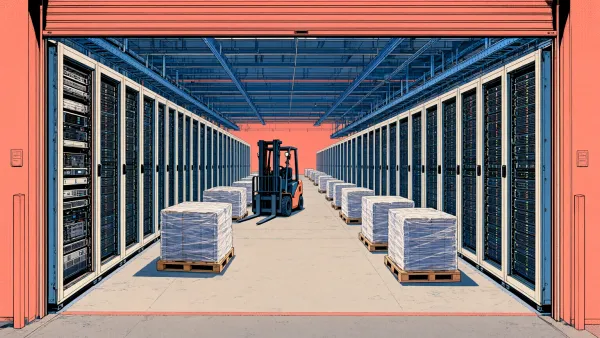
CNBC reported that OpenAI is targeting roughly $600 billion of total compute spend by 2030. Bloomberg put broader physical-infrastructure commitments above $1.4 trillion. Those figures will sit beside the one, two and three-year capacity contracts OpenAI is asking customers to sign now.
Anthropic has a nearer dated example. At Code with Claude in San Francisco, Ami Vora told developers that the company would use all of Colossus 1’s capacity in Memphis, more than 300 megawatts and over 220,000 Nvidia GPUs. The same announcement raised Claude Code and API limits.
Track the AI IPO race
Strategic AI news from San Francisco. No hype, no "AI will change everything" throat clearing. Just what moved, who won, and why it matters. Daily at 6am PST.
No spam. Unsubscribe anytime.
Where the price breaks
CNBC’s pricing analysis cited Artificial Analysis data on the cost of each lab’s most capable model across the same 10 evaluations. Claude cost $4,811, ChatGPT cost $3,357, DeepSeek cost $1,071, Kimi cost $948 and Zhipu’s GLM cost $544. Claude was nearly nine times the cheapest Chinese option. OpenAI was more than six times it.
Ali Ghodsi, Databricks’ chief executive, said customers are using an “advisor model.” A cheaper open-source model handles most tasks and calls a frontier model only when needed. “You can curb costs really well this way,” he told CNBC.
Figma’s Dylan Field described the budget cycle from inside customer accounts. Companies first push staff to use AI, with some “literally holding competitions of who can spend the most with tokens,” and then realize “everyone’s spending too much.” OpenAI’s answer, according to a person familiar with its thinking, is that GPT-5.5 and other frontier releases still increase API and product usage. Enterprise demand is growing in a “vertical wall,” that person told CNBC.
The next public document
Business Insider reported Tuesday that Andrej Karpathy joined Anthropic’s pretraining team. Karpathy helped start OpenAI, later ran AI at Tesla and rejoined OpenAI in 2023 before leaving again in 2024. At Anthropic, he sits on the team led by Nicholas Joseph, another former OpenAI employee.
In Oakland, the jury rejected Musk’s claims after less than two hours, and Judge Yvonne Gonzalez Rogers adopted the timing verdict. Wedbush analyst Dan Ives wrote that the ruling put the damages threat “in the rearview mirror.” The ruling reduced the immediate damages and restructuring overhang from the listing path, as The Implicator reported.
Axios reported that confidential filings usually precede public S-1 documents by a couple of months, with offerings another month or so later. Under that sequence, a Friday confidential filing points to a public S-1 later in the summer.
Frequently Asked Questions
What is OpenAI preparing to file?
OpenAI is preparing a confidential IPO filing, according to multiple reports. CNBC said it could arrive as soon as Friday, with a September listing possible if the process stays on track.
Why does Anthropic matter to OpenAI’s IPO?
Anthropic is discussing valuation levels near or above OpenAI’s last private mark. Its revenue run rate, enterprise traction and compute deals give investors a direct comparison.
What is OpenAI Guaranteed Capacity?
Guaranteed Capacity lets customers reserve long-term compute access for one, two or three years. OpenAI says customers want more certainty as advanced models strain available capacity.
What risks will investors look for?
Investors are likely to scrutinize revenue mix, compute obligations, partner concentration, infrastructure spending, competition from Anthropic and whether customers keep paying frontier-model prices.
How do cheaper AI models affect the IPO story?
If enterprises route routine work to cheaper models and call frontier systems only for harder tasks, OpenAI and Anthropic may face pressure on premium pricing and usage growth.
AI-generated summary, reviewed by an editor. More on our AI guidelines.


Free AI briefing · Weekdays
The AI stories that matter, sourced and explained.
Join the Morning Briefing. It goes out every weekday at 4:45 a.m. Pacific, with later sends for the East Coast, Berlin and Tokyo.
Free when you sign up: The Paperclip Compendium, our tested guide to running AI agents.
Free. Unsubscribe in one click.

Marcus Schuler
Editor-in-Chief and founder of Implicator.ai. Former ARD correspondent and senior broadcast journalist with 10+ years covering tech. Writes daily briefings on policy and market developments. Based in San Francisco. E-mail: editor@implicator.ai