IMPLICATOR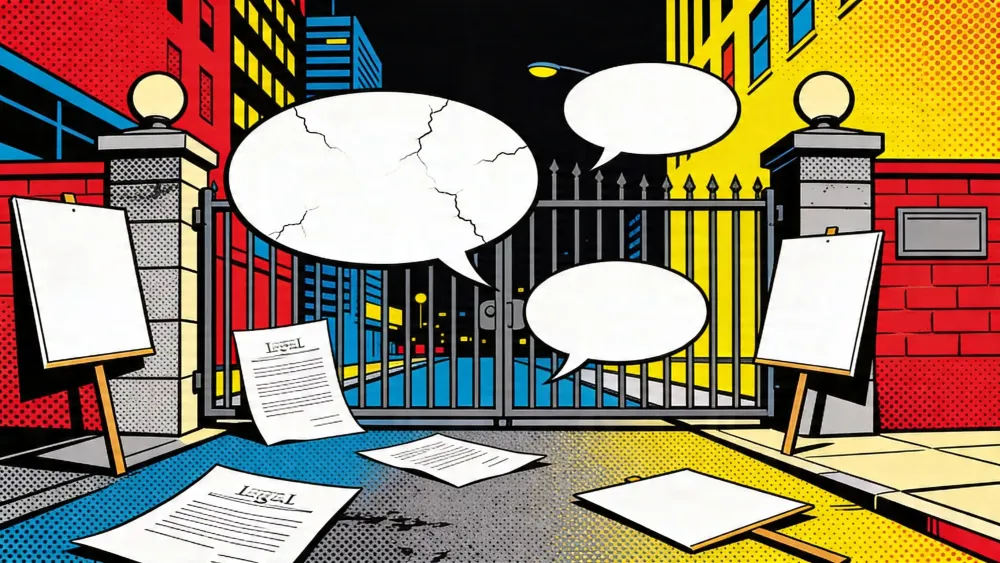
The San Francisco Standard reported that OpenAI policy chief Chris Lehane thinks some AI critics are playing with fire after an alleged attack on Sam Altman's home. Federal prosecutors say Daniel Moreno-Gama traveled from Texas to San Francisco, threw a Molotov cocktail at Altman's gate, then went to OpenAI headquarters with incendiary materials and a document targeting AI executives. PauseAI says the suspect had no role in the group, attended no campaigns and posted only 34 messages in its public Discord.
That is the part OpenAI wants framed as a rhetoric problem. It is one. But the deeper number is worse for the company: Pew found only 17 percent of U.S. adults expect AI to have a positive impact on the country over the next 20 years, compared with 56 percent of AI experts.
That 39-point gap is the story. Violence sits at the edge. Distrust sits in the middle.
Key Takeaways
- Prosecutors allege an anti-AI motive, but the case is still active and contested.
- PauseAI says the suspect had no role, no campaign work and only 34 Discord messages.
- Pew's 39-point expert-public gap shows the backlash is wider than doomer rhetoric.
- The stronger fix is enforceable AI governance, not softer industry messaging.
AI-generated summary, reviewed by an editor. More on our AI guidelines.
The attack does not prove the movement did it
The legal record is ugly and still contingent. The Justice Department alleges Moreno-Gama intended to kill the CEO of a major AI company and later threatened OpenAI's offices. Officers also found a document, prosecutors say. Its target list: AI CEOs and investors.
Allegations. Not findings. In the AP account, defense counsel pointed to an acute mental-health crisis. Prosecutors went the other way and described a targeted attack. That distinction matters because the easy version of this story is too clean: doom talk in, Molotov cocktail out.
PauseAI's own account weakens that line. The group says Moreno-Gama joined an open Discord server roughly two years earlier, posted 34 messages, held no role, received no support and joined no campaigns. One message was flagged as ambiguous, it said, but none contained explicit calls to violence.
You can condemn the alleged attack without turning every safety activist into an accessory. That is the line responsible coverage has to hold.
OpenAI helped build the language it now fears
Lehane has a fair point when he says words have consequences. Total stories make total action feel possible. The problem is that AI companies did not arrive at this moment as calm mechanics describing software.
OpenAI was founded around a public-benefit charter that warned against concentrating power over advanced AI. Sam Altman has written that fear and anxiety about AI are justified. In 2025, he wrote about "digital superintelligence" and a takeoff that had already begun.
This is not just activist language. The Center for AI Safety's 2023 extinction statement compared AI risk to pandemics and nuclear war, and listed Altman, Anthropic CEO Dario Amodei and Google DeepMind's Demis Hassabis among its notable signatories. The Future of Life Institute's 2023 letter called for a six-month pause on systems more powerful than GPT-4.
Then the same companies ask the public to stay calm while they raise capital, build data centers and lobby for national AI buildouts.
That is the contradiction. AI is too dangerous to leave to anyone else, but safe enough to scale fast.
The public is not just afraid of extinction
The "doomer" label works in politics because it compresses many kinds of fear into one cartoon. It also hides what people are actually saying.
Get the signal behind the AI fight
Strategic AI news from San Francisco. No hype, no "AI will change everything" throat clearing. Just what moved, who won, and why it matters. Daily at 6am PST.
No spam. Unsubscribe anytime.
Pew found that 64 percent of U.S. adults expect AI to lead to fewer jobs over the next 20 years. Experts were less gloomy, at 39 percent. On job impact, 73 percent of experts saw AI as positive. Only 23 percent of the public did.
Gallup found the same split among young users. Fifty-one percent of Gen Z respondents said they use generative AI at least weekly, but excitement fell to 22 percent, hopefulness fell to 18 percent and anger rose to 31 percent. Use did not buy trust.
That is what OpenAI has to absorb. People are not only reacting to abstract machine takeover stories. They are looking at jobs, schoolwork, child safety, power bills, data centers and a handful of executives asking for room to run.
Safety statements are not enough
OpenAI has moved toward a benefits campaign. Its Economic Blueprint argues that America must win on chips, data, energy and talent. Its country announcements frame AI as infrastructure for jobs, education and national growth. Its child-safety proposal calls for layered defenses against AI-enabled exploitation.
Some of that is useful. It is also self-interested.
The same pattern appears at Anthropic, just in a different costume. Anthropic built its brand around safety, then TIME reported in February that the company dropped an earlier pledge not to train or release frontier systems unless adequate safety measures were in place. The reported reason was competition. If rivals keep racing, unilateral restraint gets harder.
That is the arithmetic of trust: one lab's safety promise minus every rival's incentive equals a public rulebook. Anything less depends on executive restraint, and the public has already said it does not believe that is enough.
The answer is a rulebook, not a vibe shift
There is a path out of the rhetoric trap. It is boring in the best way.
NIST has a risk-management framework. The Bletchley Declaration put frontier AI risk into a government process. The EU rulebook makes model providers keep technical files, publish training-data summaries, run evaluations and report serious incidents. California added its own version with SB 53, moving frontier AI transparency from a promise into statute.
That is where the debate belongs. Not in an argument over whether critics are doomers or executives are salesmen. In documents, audits, incident reports, labor plans, child-safety rules and data-center obligations.
OpenAI is right to say violent rhetoric can matter. It is wrong if it thinks a better speech code will repair a 39-point trust gap.
The public does not need softer adjectives. It needs receipts.
Frequently Asked Questions
What did Chris Lehane say about AI doomers?
Lehane told The San Francisco Standard that some AI rhetoric is irresponsible and can have real consequences. His comments came after an alleged attack on Sam Altman's home and OpenAI's headquarters.
Was PauseAI responsible for the alleged attack?
The evidence reviewed does not show that. PauseAI says the suspect had no role in the group, attended no campaigns, received no support and posted 34 messages in its public Discord.
Why does the article focus on Pew's 17 percent number?
Pew found only 17 percent of U.S. adults expect AI to have a positive national impact over 20 years, compared with 56 percent of AI experts. That gap explains why the backlash is broader than one activist circle.
Did OpenAI help create the rhetoric problem?
The article argues yes, partly. OpenAI and other frontier labs have used high-stakes language about superintelligence, extinction risk and national AI competition while also asking the public to trust fast deployment.
What is the practical policy answer?
The practical answer is documentation, audits, incident reporting, child-safety rules, labor plans and enforceable obligations for frontier AI labs. That moves fear into institutions instead of leaving it online.
AI-generated summary, reviewed by an editor. More on our AI guidelines.


Free AI briefing · Weekdays
The AI stories that matter, sourced and explained.
Join the Morning Briefing. It goes out every weekday at 4:45 a.m. Pacific, with later sends for the East Coast, Berlin and Tokyo.
Free when you sign up: The Paperclip Compendium, our tested guide to running AI agents.
Free. Unsubscribe in one click.

Marcus Schuler
Editor-in-Chief and founder of Implicator.ai. Former ARD correspondent and senior broadcast journalist with 10+ years covering tech. Writes daily briefings on policy and market developments. Based in San Francisco. E-mail: editor@implicator.ai