IMPLICATOR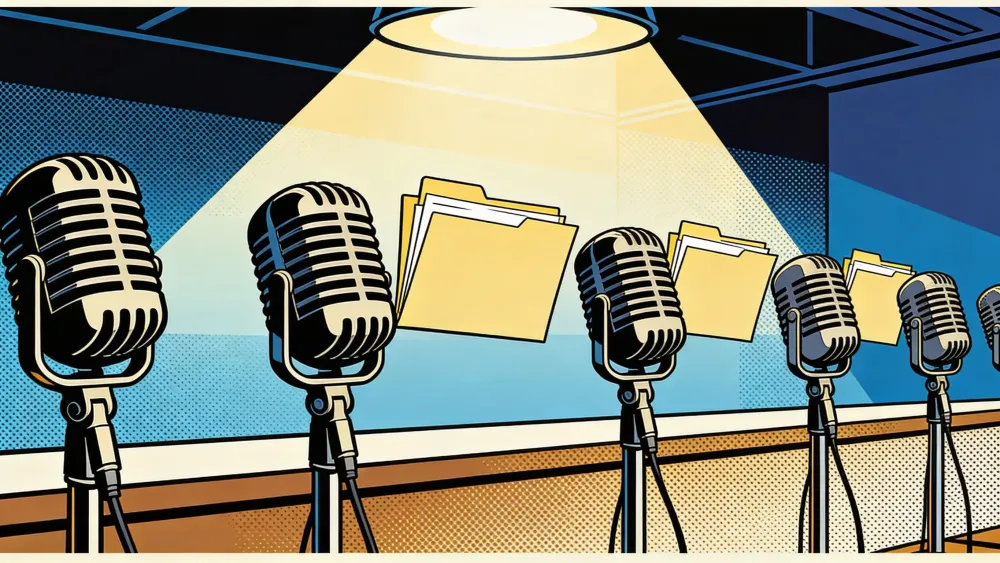
OpenAI's purchase of Weights.gg, the voice-cloning startup whose Replay catalog hosted models for Taylor Swift, Samuel L. Jackson, President Trump and dozens of other named figures, looks less like an acqui-hire than a takedown. The company already has voice-cloning capability through Voice Engine. Open-weight models like Voxtral and SWivid's F5-TTS can clone a voice from short reference clips on consumer hardware. What OpenAI bought, by all available evidence, was the removal of a public catalog of unauthorized celebrity voices, ahead of an expected public listing later this year.
The deal was first reported on Friday by The New York Times's Mike Isaac, who cited two people familiar with the agreement. OpenAI acquired the six-person team and the intellectual property; terms were not learned. Weights.gg, which had raised roughly $4 million in venture capital per PitchBook, shut down its hosted services on March 31, several weeks before the public reporting. The team has been dispersed across multiple OpenAI groups rather than kept together to build a follow-on product, the sources said. OpenAI is unlikely to release a similar product, they added. OpenAI did not respond to a request for comment.
As of OpenAI's most recent public statement, Voice Engine remains restricted to a small group of trusted partners on safety grounds, a position the company has held since its March 2024 Voice Engine blog post, which remains live at openai.com.
Key Takeaways
- OpenAI quietly bought voice-cloning startup Weights.gg earlier this year, transferring the six-person team and the IP, The New York Times reported Friday.
- Weights.gg's Replay catalog hosted voice models for Taylor Swift, Samuel L. Jackson, President Trump and others before its hosted services shut down March 31.
- OpenAI keeps Voice Engine in 'limited preview' on safety grounds, even as the Realtime API has continued shipping voice features to developers through the spring.
- OpenAI is targeting a public-company listing by the end of 2026, per NYT's April 24 reporting.
AI-generated summary, reviewed by an editor. More on our AI guidelines.
Capability isn't the constraint
Multiple vendors are shipping voice cloning at consumer-grade prices in 2026. xAI shipped Custom Voices in May from reference clips of up to 120 seconds, per VentureBeat. ElevenLabs has been one of the best-known paid voice-cloning providers since 2023. Voxtral, released March 26 under a CC BY-NC 4.0 license, and SWivid's F5-TTS can clone a voice from 5-to-15-second samples on a consumer GPU.
Capability is commodity. The constraint is catalogs, what a company controls and what it has retired. Weights.gg's repository, per the Times, hosted voice models for Taylor Swift, Kanye West, Samuel L. Jackson, members of Blackpink, Bugs Bunny, Daffy Duck, President Trump and former President Joseph R. Biden Jr. Swift filed a series of trademark applications for her voice and likeness with the U.S. Patent and Trademark Office in April, per Variety. Jackson has publicly objected to his voice being cloned with the technology.
Get Implicator.ai in your inbox
Strategic AI news from San Francisco. No hype, no "AI will change everything" throat clearing. Just what moved, who won, and why it matters. Daily at 6am PST.
No spam. Unsubscribe anytime.
The Realtime API moves the voice surface inside consent contracts
On May 7, TechCrunch reported, OpenAI launched GPT-Realtime-2 (speech-to-speech with what the company calls GPT-5-class reasoning), GPT-Realtime-Translate (more than 70 input languages and 13 output languages) and GPT-Realtime-Whisper (live streaming transcription). All three are billed through the Realtime API. Translate and Whisper price by the minute; GPT-Realtime-2 prices by token consumption. The Realtime API runs under OpenAI's standard usage policies, which prohibit impersonation without explicit consent and require developers to disclose AI-generated voices to listeners, according to OpenAI's policy page.
Weights.gg's Replay catalog had no equivalent consent requirement, the Times said. The acquisition takes that catalog off the open web. Any IP OpenAI retained from the deal would presumably fall under the same Realtime API usage policies that govern developer access.
The pre-IPO context
OpenAI has made several Hollywood-facing moves this year. The company hired Instagram's former celebrity partnerships lead, Charles Porch, in February to manage relationships with talent and studios, per Hollywood Reporter. OpenAI announced the Sora consumer-app shutdown on March 24 amid cost and strategy pressure, per WSJ reporting; the app and web experience went dark on April 26, while the Sora API continues to run until September 24. The company is preparing to begin trading as a public company by the end of 2026, per The New York Times's April 24 reporting.
An S-1 filing against that timeline could require disclosure of material acquisitions and IP-related risks, depending on how OpenAI characterizes the Weights.gg purchase.
What to watch
Whether the office grants or denies registration for her voice and likeness will shape how the rest of the industry frames consent contracts.
Expected before year-end. How it discloses, or omits, the Weights.gg terms will signal how OpenAI is characterizing the IP it acquired.
Especially any custom-voice deployments and the consent records that come with them.
Frequently Asked Questions
What did OpenAI buy from Weights.gg?
OpenAI acquired the six-person engineering team and Weights.gg's intellectual property, two sources told The New York Times. Terms of the deal were not learned. Weights.gg had raised about $4 million in venture capital, according to PitchBook. The company is unlikely to release a similar product, the sources said.
When did Weights.gg shut down?
Weights.gg's hosted services were wound down on March 31, 2026, several weeks before the OpenAI acquisition was publicly reported by The New York Times's Mike Isaac on May 15.
Whose voices were in the Weights.gg catalog?
The Replay catalog hosted voice models for Taylor Swift, Kanye West, Samuel L. Jackson, members of Blackpink, Bugs Bunny, Daffy Duck, President Trump and former President Joseph R. Biden Jr., per NYT reporting. Swift filed trademark applications for her voice and likeness with the USPTO in April 2026. Jackson has publicly objected to his voice being cloned.
What is OpenAI's stated position on voice cloning?
OpenAI's March 2024 Voice Engine blog post said the technology is too risky for general release. The company limits Voice Engine to a small group of trusted partners working on speech therapy, language learning, customer support, video game characters and AI avatars, per TechCrunch's March 2025 reporting.
How does this fit with OpenAI's planned IPO?
OpenAI is preparing to begin trading as a public company by the end of 2026, per The New York Times's April 24 reporting. An S-1 filed against that timeline could require disclosure of material acquisitions, including the Weights.gg purchase, depending on how OpenAI characterizes it.
AI-generated summary, reviewed by an editor. More on our AI guidelines.

Marcus Schuler
Editor-in-Chief and founder of Implicator.ai. Former ARD correspondent and senior broadcast journalist with 10+ years covering tech. Writes daily briefings on policy and market developments. Based in San Francisco. E-mail: editor@implicator.ai