IMPLICATOR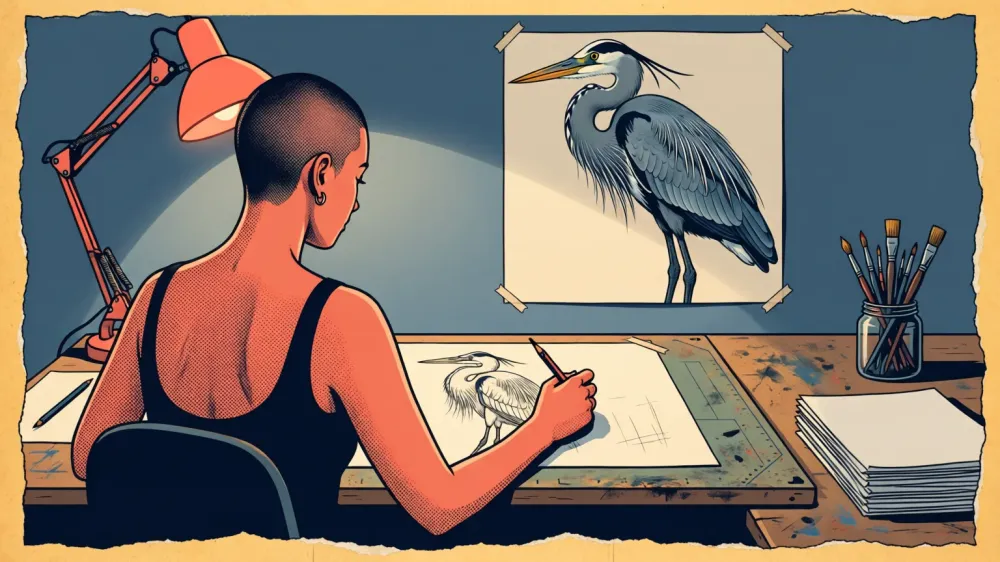
OpenAI released ChatGPT Images 2.5 on Tuesday, September 8, 2026. The company says image generation latency is down by as much as 50% compared with Images 2.0. The update comes as Microsoft moves more of its own products onto in-house image models.
What Changed
- OpenAI released ChatGPT Images 2.5 on September 8, 2026, saying image generation latency is down by as much as 50% compared with Images 2.0.
- Sketch turns a drawing made inside ChatGPT into a reference for a finished image, alongside new templates, inline comments on images and prompt sharing.
- Two API models ship with it: GPT-Image-2.5 Flare as the default at 50% lower latency than GPT-Image-2, and Sunburst trading longer generation times for editing precision.
- On OpenAI's own adversarial test set, Flare presented unsafe generations on 1.41% against Sunburst's 1.09% and a 1.64% Images 2.0 baseline, though OpenAI says no unsafe-shown difference reached statistical significance.
AI-generated summary, reviewed by an editor. More on our AI guidelines.
Drawing and editing
The new Sketch tool opens when a user types “@Sketch” and turns a drawing made inside ChatGPT into a reference for a finished image. Templates offer starting points for formats including posters and merchandise. Users can place comments directly on an image to mark an edit and share the prompt behind an image. The update is rolling out to ChatGPT, ChatGPT Work and Codex users across all tiers on desktop, mobile and the web.
OpenAI says Images 2.5 preserves subjects from reference photos more reliably, makes earlier changes more likely to stay consistent across repeated edits and keeps image quality from degrading over time. In one early hands-on test, a cat doodle drawn with a computer mouse was turned into a realistic photo, and an inline comment was then used to change the cat’s eye color. Other tests covered a logo, a cat-photo genre conversion and a tattoo design.
Developers get two API models. GPT-Image-2.5 Flare is the default and has 50% lower latency than GPT-Image-2. GPT-Image-2.5 Sunburst trades longer generation times for more precise editing.
Microsoft’s in-house push
Microsoft put MAI-Image-2.5-Pro into public preview in July 2026. Bing Image Creator now runs entirely on Microsoft’s MAI-Image-2.5, the first time the consumer tool has operated end to end on an in-house model.
FREE · ABOUT FIVE MINUTES
Follow what AI image models can actually do.
Implicator cuts the flood to the developments worth your attention, with concise reporting on what changed and why it matters. Delivered every weekday at 4:45 a.m. Pacific, 7:45 a.m. Eastern.
From San Francisco. No spam. Unsubscribe anytime.
Microsoft says MAI-Image-2.5 cuts GPU costs in PowerPoint by up to 84% compared with GPT-Image-2. That is Microsoft’s own figure and has not been independently measured. The base MAI-Image-2.5 model launched at No. 2 for image editing on Arena.
Microsoft is “beginning to route traffic across our first-party surfaces to MAI whenever our models match or outperform frontier alternatives,” Satya Nadella wrote. ChatGPT Images 2.0 had scored 1,512 on LM Arena when it launched on April 21, 2026, leading Google’s Nano Banana 2 by 242 points. No equivalent Arena figure has been published for Images 2.5.
What the safety test found
A system card published on September 8, 2026 says Flare presented unsafe generations on 1.41% of a fixed adversarial test set, compared with 1.09% for Sunburst and a 1.64% Images 2.0 baseline.
On nonviolent and violent wrongdoing prompts, Flare presented unsafe images on 3.27% of the test set and Sunburst on 2.86%, both above the Images 2.0 baseline of 2.45%. On violence and gore prompts, Flare’s 1.93% matched the Images 2.0 baseline.
Know someone who'd find this useful? ✉️ Email it to a friend in one click, or they can subscribe free here.
None of the unsafe-shown differences reached statistical significance at p < 0.05 under a two-sided exact McNemar test. OpenAI states that the minor regressions are not statistically significant and that the adversarial set is “not representative of how often such prompts arise in production traffic.” The figures do not establish that either new model regressed in use.
The artist objection
Ina Fried, the Axios reporter who got an exclusive first look at the model, wrote that generative image systems “were trained on the work of real artists, famous and otherwise, usually without consent or compensation.” She has heard from friends “who now find themselves competing with systems built, in part, on uncompensated creative labor.”
“The sketch tool and these templates are kind of an attempt to make people more engaged in the process of creation, rather than them being a passive force,” said Adele Li, OpenAI’s product lead on images.
“I don’t want to be able to see ChatGPT in the world,” Li said. “I want people to be able to generate and express their own individualism.”
Frequently Asked Questions
What is new in ChatGPT Images 2.5?
OpenAI says image generation latency is down by as much as 50% compared with Images 2.0. The model preserves subjects from reference photos more reliably, makes earlier changes more likely to stay consistent across repeated edits and keeps image quality from degrading over time. New tools include Sketch, templates, inline comments on images and prompt sharing.
What is Sketch and how do you use it?
Sketch lets a user draw inside ChatGPT and use that drawing as a reference for a finished image. It opens when a user types @Sketch. In one early hands-on test, a cat doodle drawn with a computer mouse was turned into a realistic photo, and an inline comment was then used to change the cat's eye color.
What is the difference between GPT-Image-2.5 Flare and Sunburst?
Both are new API models. Flare is the default and has 50% lower latency than GPT-Image-2. Sunburst trades longer generation times for more precise editing.
What did OpenAI's safety testing show?
A system card published the same day says Flare presented unsafe generations on 1.41% of a fixed adversarial test set, against 1.09% for Sunburst and a 1.64% Images 2.0 baseline. On nonviolent and violent wrongdoing prompts both new models scored above the 2.45% baseline. OpenAI states that none of the unsafe-shown differences reached statistical significance.
Who can use ChatGPT Images 2.5?
It is rolling out to ChatGPT, ChatGPT Work and Codex users across all tiers on desktop, mobile and the web. Developers can reach the two new models through the API.
AI-generated summary, reviewed by an editor. More on our AI guidelines.
Free AI briefing · Weekdays
The AI stories that matter, sourced and explained.
Join the Morning Briefing. It goes out every weekday at 4:45 a.m. Pacific, with later sends for the East Coast, Berlin and Tokyo.
Free when you sign up: The Paperclip Compendium, our tested guide to running AI agents.
Free. Unsubscribe in one click.

Marcus Schuler
Editor-in-Chief and founder of Implicator.ai. Former ARD correspondent and senior broadcast journalist with 10+ years covering tech. Writes daily briefings on policy and market developments. Based in San Francisco. E-mail: editor@implicator.ai