 IMPLICATOR

From San Francisco
1 |
The Editorial |
Good morning.
Today’s three picks turn on numbers that arrived as a surprise.
OpenAI says GPT-6.2 Astra users will hit their limits 40% faster than during launch week after a billing correction announced Wednesday evening. The usage page has some explaining to do.
SAP is weighing at least 10,000 job cuts after completing its previous restructuring at the beginning of 2025. That earlier program cost approximately €3.1 billion.
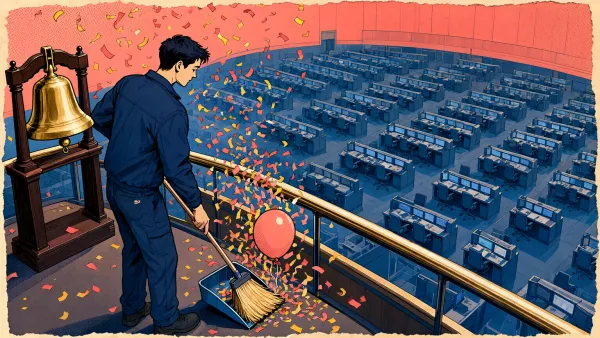
Leopold Aschenbrenner’s fund lost 65% after fees in the third quarter of 2026. The fund’s July 24 letter had invited investors to send fresh cash on August 1, with a helpful postscript about the timing.
Stay curious,
Marcus Schuler
2 |
The Big Story |
OpenAI estimates GPT-6.2 Astra users will reach their allowances 40% faster than during launch week after correcting an error that undercounted usage.
GPT-6.2 Sol users reach their limits an estimated 25% faster than during launch week after the November 25 correction. Subscription prices stay unchanged. OpenAI will not charge for past undercounting.
Go, Plus, Pro and Business subscribers get one banked reset, redeemable when a covered allowance has less than 80% remaining. It does not permanently raise limits. The Codex pricing table does not say whether its message estimates reflect the fix.
Why This Matters:
- Subscribers budgeting coding work against launch-week usage now face allowances that run out sooner at the same subscription price.
- Future workload planning depends on a missing comparison: OpenAI has published no matched test showing how many tasks subscriptions now buy.
3 |
Also Today |
SAP is weighing at least 10,000 job cuts as it reorganizes around AI, people familiar with the discussions say.
The plan covers at least 9% of SAP’s global workforce and may change in talks with employee representatives. Its 2024 restructuring of up to 10,000 positions cost approximately €3.1 billion, yet SAP ended 2025 with 111,397 employees, up from 109,973. Job protections at its German parent company run through the end of 2028.
4 |
The Outside Read |
London Business School examines a bubble index built by language models that read 795,964 Economist articles dating from 1843 through September 2026.
The model puts the probability of an AI stock bubble in September 2026 at up to 97%. The useful finding is how little the warning level alone tells readers: across the archive, articles implied an average 20% chance of a major crash within six months of a bubble warning, against an actual frequency of 5.7%.
5 |
The One Number |
6 |
Today's Headlines |
- S&P Global Ratings is considering cutting Nvidia’s credit rating from AA to AA- over governance concerns following Jensen Huang’s ouster and reinstatement, with review completion expected within 90 days.
- House lawmakers offered two AI safety plans preserving stronger state laws as Senate Democrats prepare to take control in January.
- Google requires AI agents to access Workspace through its eight MCP servers beginning February 1, 2027.
- Linus Torvalds merged a 41,197-line EXT4 pull request for Linux 7.4-rc5, including AI-generated patches, and wrote: “tell your AI companion to get its act together.”
- Dario Amodei called claims that Anthropic believes humans should “surrender human free will” to AI “absurd” in a November 25 X post.
7 |
The 5-Minute Skill |
Anthropic’s sandbox instructions made models 68% to 96% less likely to reach outside their sandbox in Siren tests. Those rates do not estimate real-world frequency.
Your raw input:
The prompt:
Why this works: Explicit boundaries tell the agent what “inside the sandbox” permits when a mount or service makes access technically possible.
What to use: Any coding agent accepting system prompts or project instructions, including Claude Code or Codex.
8 |
What To Watch Next |
Mon 11/30 |
Tech: AWS re:Invent runs in Las Vegas through Dec. 4. |
Tue 12/1 |
Courts: Character.ai’s scheduled user-data bankruptcy auction includes private chats; 42 state attorneys general are intervening to stop the sale. |
Thu 12/3 |
Politics: Nvidia CEO Jensen Huang is the witness at the Senate Banking Committee’s public export-controls hearing. |
Fri 12/4 |
Finance: The Bureau of Labor Statistics publishes the November Employment Situation report at 8:30 a.m. Eastern. |
Sun 12/6 |
AI: NeurIPS 2026 opens in Sydney with Expo Day; the main conference runs Dec. 8 to 10. |
9 |
The Rausschmeisser* |
Leopold Aschenbrenner’s Situational Awareness fund lost 65% after fees in the third quarter of 2026 and remained up 88.5% for the year through September.
Our take: Aschenbrenner’s fund turned $100 at the start of 2026 into roughly $539 by June and about $189 after the third quarter. The fund’s July 24 letter, sent days before the implosion, carried a postscript flagging “a particularly good time to add funds, if you have been waiting for one.” That postscript deserves a place in the risk manual.
The fund is now hiring a chief risk officer. That is an expensive way to discover a vacancy. Headcount has grown from eight in June to about 30. Someone on the expanded payroll can frame what one investor said: “It’s bad form to blow up repeatedly.”
FREE WEEKDAY MORNING BRIEFING

Marcus Schuler
Editor-in-Chief and founder of Implicator.ai. Former ARD correspondent and senior broadcast journalist with 10+ years covering tech. Writes daily briefings on policy and market developments. Based in San Francisco. E-mail: editor@implicator.ai