Implicator
OpenAI's blog post announcing Codex plugins uses the word "marketplace" 41 times. Forty-one mentions in a single product announcement. That is not the language of a company launching a feature. It's the language of a company staking a claim on territory it does not yet own.
Then you talk to actual developers. David Gewirtz, a senior contributing editor at ZDNet who uses both tools daily, was blunt. "Every programmer I talk to uses Claude Code. So far, of all the programmers I've talked to in the general programming populace, not one has said they're a Codex user." Ars Technica's Samuel Axon reported the same thing. "If you talk to developers, you'll find a lot more Claude Code users than Codex users."
The gap between corporate ambition and developer reality is the entire story here.
Key Takeaways
- OpenAI's Codex plugins bundle existing capabilities into a governance framework aimed at enterprise IT teams, not individual developers.
- Claude Code holds a $2.5 billion run rate and dominant developer mindshare, while Codex's 2 million users reflect reach without the same loyalty.
- OpenAI's enterprise-down strategy, from Astral acquisition to plugin governance, bets that organizations can override individual developer preference.
- Developer tools historically win bottom-up, and Codex's closed plugin directory with no third-party publishing weakens the platform play.
Bundles, not breakthroughs
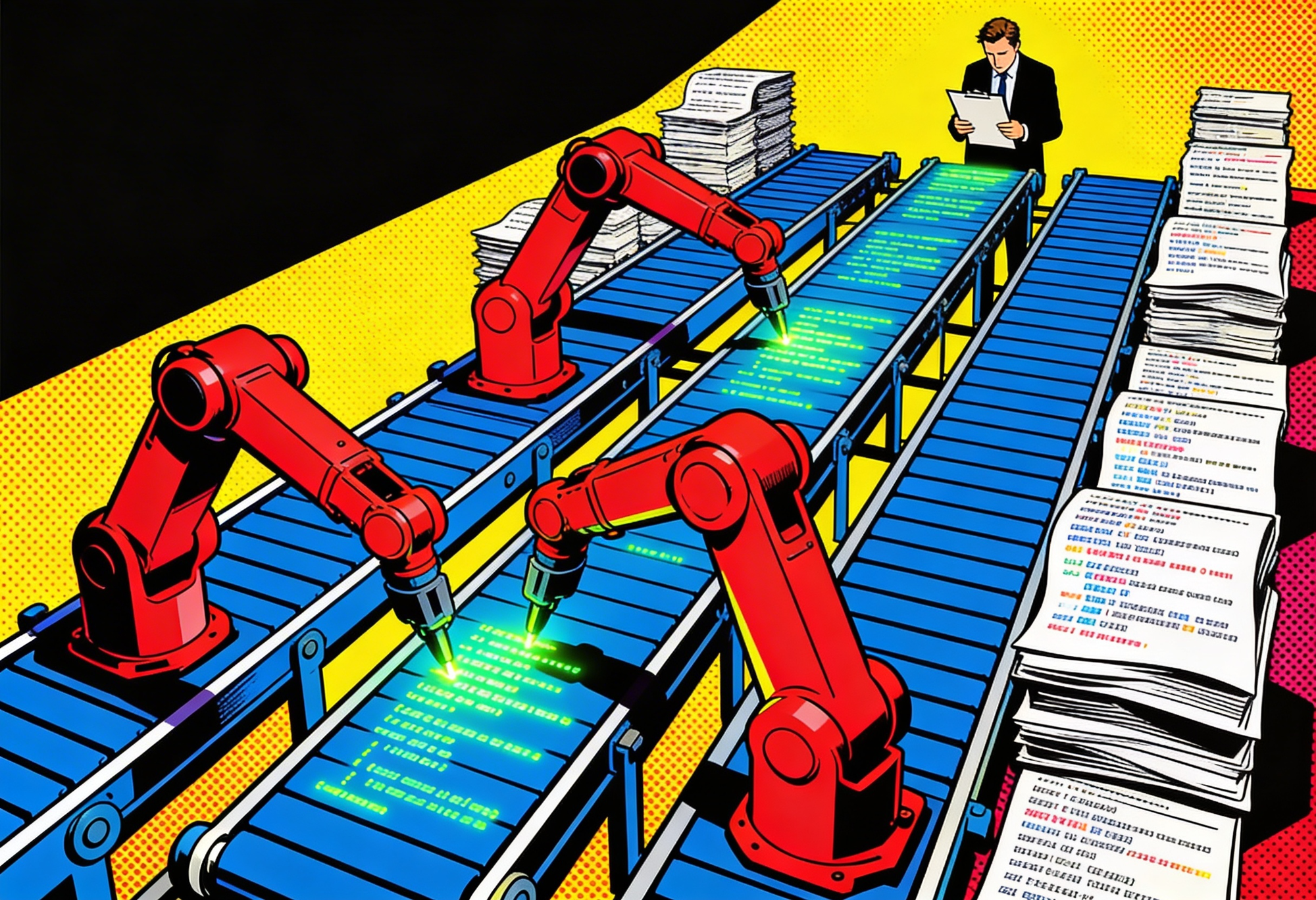
The plugins are bundles. Not code extensions in the traditional sense. Each packages prompt-based workflows, app integrations (Slack, Figma, Gmail, Google Drive, Notion), and MCP server configurations into installable units. Twenty-plus ship at launch across the Codex app, CLI, and IDE extensions. Version 0.117.0 treats them as a "first-class workflow" with remote sync and policy controls.
This is not new capability. Axon noted that power users could already assemble the same functionality through custom instructions and MCP servers. The plugin system wraps existing features in a distribution layer. What matters is not what it does. What matters is who it's for.
The governance tell
Look at the policy layer. Organizations define plugin catalogs in JSON files. Each entry carries installation statuses: INSTALLED_BY_DEFAULT, AVAILABLE, NOT_AVAILABLE. IT administrators push, restrict, or block plugins across an entire developer workforce.
Charlie Dai, VP and principal analyst at Forrester, told InfoWorld the system "aligns AI agents with existing IT governance models." He drew a sharp line from competitors. "Compared with GitHub Copilot or Cursor, OpenAI is extending beyond policy enforcement into behavioral standardization. Competitors focus primarily on permissions and guardrails; Codex begins to formalize execution patterns at scale."
Behavioral standardization. That phrase should make you pay attention. OpenAI is not selling a coding assistant here. It is selling managed infrastructure for how AI agents behave inside your company. That is a CIO pitch. Not a developer pitch.
Two million users and a loyalty problem
Codex has 2 million weekly active users, per CNBC, tripling since January after the GPT-5.3 Codex launch. Weekly token usage grew fivefold. Impressive growth. But the number hides a deeper divide.
Claude Code reached a $2.5 billion annualized run rate by early 2026, according to industry tracking by Getpanto. Anthropic's broader revenue sits at roughly $14 billion, with five hundred customers spending more than $1 million annually. Some 135,000 GitHub commits per day flow through Claude Code, roughly 4% of all public commits, per MorphLLM's developer analysis.
Codex's numbers measure reach. Claude Code's numbers measure commitment. That's the tell.
Business Insider documented what the industry started calling "Claude Christmas." Over the 2025 holidays, engineers discovered Claude Code and adoption cascaded through teams organically. Nobody mandated it. Nobody ran a procurement cycle. Engineers tried it, told other engineers, and by January the growth curve looked like a consumer app launch, not an enterprise rollout.
Eighty-four percent of developers now use AI tools, according to Stack Overflow's 2025 survey. But adoption rates alone tell you nothing about loyalty. And Gewirtz at ZDNet pointed to another divide: price. He gets his work done on Claude Code's $100-per-month Max plan. Codex starts at $200. When the cheaper tool is also the one developers prefer, the more expensive option needs a different sales pitch entirely.
Companies with the highest AI coding adoption merge 2.2 pull requests per engineer per week, nearly double the 1.12 at lower-adoption companies, per Jellyfish data from 700 organizations. Tools like Claude Code, adopted bottom-up by individual engineers, powered much of that shift. Not because a CIO selected them. Because developers did.
The enterprise play reveals the anxiety
OpenAI feels exposed in the developer market and is responding with an enterprise-layer strategy. The company acquired Astral, a Python toolmaker, to fold developer tooling into Codex. It bought Promptfoo for security. It hired former Slack CEO Denise Dresser as chief revenue officer. And it reportedly plans to merge Codex and ChatGPT into a single desktop "superapp."
Get Implicator.ai in your inbox
Strategic AI news from San Francisco. No hype, no "AI will change everything" throat clearing. Just what moved, who won, and why it matters. Daily at 6am PST.
No spam. Unsubscribe anytime.
Each move builds enterprise infrastructure. Plugin governance, developer-facing acquisitions, a CRO from the collaboration software world. The pattern reads less like confidence and more like anxiety about where individual developers already placed their loyalty.
OpenAI does have enterprise traction. Cisco reported pull request review times falling by as much as 50% after deploying Codex. Nvidia, Ramp, Rakuten, and Harvey have rolled it out across engineering teams. Thibault Sottiaux, head of Codex product, told Fortune the tool is "becoming the standard agent" for enterprise deployments.
But Anthropic has not been standing still. Claude Cowork, launched earlier this year, brings plugin-style workflow automation beyond coding into marketing, finance, and operations, with more than a dozen prepackaged plugins already available. Claude Code supports sub-agents, specialized automation workflows that OpenAI's plugin system cannot yet match. SiliconANGLE reported that OpenAI may be planning to add that capability. For now it is a gap, and it matters: sub-agents let developers build layered automation that goes well beyond what a bundled prompt workflow can do.
The timing tells its own story. Anthropic shipped its plugin system five months ago. OpenAI is arriving late to a category its competitor defined.
Developer tools don't work top-down
You have seen this pattern before. Git won because developers loved it. VS Code won because developers chose it. Docker spread through enthusiasm, not procurement. Top-down mandates create resentment and shadow IT in engineering organizations.
Claude Code's advantage is structural, not just technical. It runs in your terminal, on your machine, in your actual environment. You configure it with markdown files. The tool reads your project, understands your codebase, and stays in the loop while you steer. No intermediary cloud, no isolated container. Just your shell. Anthropic built for the individual first and added enterprise controls later. OpenAI is attempting the reverse, betting that organizations will override individual preference. In developer tools, that bet almost never pays.
The benchmarks complicate the narrative without resolving it. On SWE-bench Verified, Claude scores 80.8% to Codex's 64.7%, per Leanware's March comparison. Codex leads on Terminal-Bench 2.0 at 77.3% versus 65.4%. On SWE-bench Pro, the two tools land within two percentage points of each other. Competitive, not identical. But the revealing metric sits elsewhere: Codex uses roughly three times fewer tokens per task, making it cheaper at scale. That appeals to finance departments. The engineer choosing a tool at midnight does not compare token costs. She cares about whether the thing works.
Both survive. Only one gets loved.
The AI code tools market will reach $91 billion by 2035, according to Precedence Research, growing at 27.6% annually from $7.9 billion in 2025. That is large enough for coexistence. A hybrid workflow has already emerged among experienced teams: Claude Code for planning and generation, Codex for review and autonomous execution. "Design with Claude, build with Codex" is the shorthand making rounds on developer forums.
But the plugin marketplace will only become a durable moat if outside developers actually build for it. OpenAI controls the curated directory and has not announced revenue sharing for third-party builders. GitHub's Copilot Extensions has welcomed external developers since early 2025. Cursor lists more than 30 partners. Codex's directory holds only OpenAI's own plugins.
Dai at Forrester was direct about the risk. "Without this external ecosystem, Codex risks limited extensibility beyond core engineering use cases."
The marketplace model works when developers feel ownership over the platform. Apple's App Store, VS Code's extension library, npm itself. Each succeeded because builders wanted to be there, not because a policy file told them to install something. OpenAI has not yet created that pull.
OpenAI said "marketplace" 41 times in a single blog post. The word it should be tracking is the one developers keep telling each other in Slack channels and conference hallways.
Have you tried Claude Code?
Frequently Asked Questions
What are OpenAI's new Codex plugins?
Codex plugins are installable bundles that package prompt-based workflows (skills), app integrations like Slack and Figma, and MCP server configurations into shareable units. They wrap existing capabilities in a distribution and governance layer, letting IT administrators control which plugins developers can use across an organization.
How does Codex compare to Claude Code in developer adoption?
Codex has 2 million weekly active users, but Claude Code holds a $2.5 billion annualized run rate and generates roughly 135,000 GitHub commits daily. Industry observers note far more developers actively prefer and use Claude Code for daily work, with adoption driven bottom-up rather than through enterprise mandates.
What is the 'Design with Claude, build with Codex' workflow?
A hybrid pattern emerging among experienced developer teams. They use Claude Code for planning, architectural reasoning, and code generation, then switch to Codex for code review, debugging, and autonomous execution tasks. Each tool plays to its relative strengths rather than replacing the other.
Why is OpenAI focusing on enterprise governance features?
OpenAI's plugin system includes installation policies, admin controls, and marketplace definitions in JSON files, targeting CIOs and IT departments. Forrester analyst Charlie Dai noted this extends beyond permissions into 'behavioral standardization,' positioning Codex as managed infrastructure rather than just a coding assistant.
Does Codex's plugin marketplace have third-party developers?
Not yet. OpenAI controls a curated directory of about 20 plugins, all built by OpenAI itself. Self-serve publishing is listed as 'coming soon.' By comparison, GitHub's Copilot Extensions marketplace has been open to third parties since early 2025, and Cursor lists more than 30 external partners.



Harkaram Grewal
Maps the India–Germany–U.S. AI triangle from New Delhi. Background in cross-market operations and business development. Writes about supply chains, enterprise adoption, and talent—the unsexy forces that actually move global AI.