IMPLICATOR
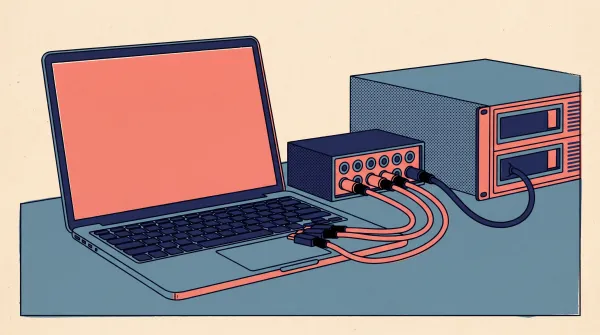
On September 13, 2026, Implicator's automated test sent the same small Python repair down two coding routes. One ran Qwen3.8-27B on an Apple Mac Studio. The other used a hosted Claude Sonnet 4.6 route. The process then repeated with a newline-delimited JSON exporter and a timezone-window repair. Each route received the same task text and access to the same four-tool harness. Each job was run twice, and every submitted program then faced a separate final evaluation that included eight test methods the coding agent could not inspect.
The practical question is whether avoiding a hosted inference charge still looks economical after the machine, electricity, maintenance, review time, and fallback calls enter the calculation. The measurements cover task outcomes, elapsed time, and API charges. The worksheet leaves equipment, electricity, and human review costs for readers to measure.
The local model used Ollama's documented tool-calling interface to list and read files, replace one source file, and run visible tests. The jobs were synthetic and fully specified. They contained no production code, member data, package installation, a shell tool, or open network connection. The benchmark tasks and harness were created with AI assistance and calibrated against working and deliberately faulty solutions. A separate agent later inspected the frozen artifacts and cost arithmetic without rerunning the candidates.
Subscribers receive the outcomes, all per-run timings and hosted cost estimates, the limits of those figures, and a worksheet for testing the same question on their own accepted work and purchasing assumptions. The files make the purchasing judgment inspectable without turning three synthetic functions into a universal model ranking.

Marcus Schuler
Editor-in-Chief and founder of Implicator.ai. Former ARD correspondent and senior broadcast journalist with 10+ years covering tech. Writes daily briefings on policy and market developments. Based in San Francisco. E-mail: editor@implicator.ai