Implicator
San Francisco | March 17, 2026
Jensen Huang held up a chip yesterday in San Jose. Then he held up six more. Nvidia's Vera Rubin platform ships seven processors as one organism, backed by $1 trillion in orders through 2027. The lock-in runs from silicon to software to agent platform. Nobody on stage asked what happens when customers build alternatives.
Meanwhile, OpenAI told its staff to stop chasing "side quests." The timing is revealing. Anthropic now wins 70% of new enterprise deals, per Ramp's March spending data. Claude Code generates $2.5 billion in annualized revenue. OpenAI's Codex manages $1 billion.
The side quests were never the problem. The customers were.
Stay curious,
Marcus Schuler
OpenAI Restructures After Anthropic Captures 70% of New Enterprise Deals

Fidji Simo told OpenAI's entire staff to stop chasing distractions. The enterprise market had already made its choice.
OpenAI's CEO of applications used the phrase "side quests" in an all-hands meeting last week, according to remarks reviewed by The Wall Street Journal. Top leaders including Sam Altman were "actively looking at which areas to deprioritize." The admission is blunt for a company valued at more than half a trillion dollars.
The numbers explain the urgency. Ramp's March 2026 AI Index, tracking spending across 50,000 businesses, shows Anthropic wins roughly 70% of new enterprise deals in direct matchups. A year ago, one in 25 businesses on Ramp paid for Anthropic. Today it is nearly one in four. Claude Code generates $2.5 billion in annualized revenue, double since year-end. OpenAI's Codex brings in just over $1 billion.
OpenAI's enterprise share dropped from 50% in 2023 to 27% by end of 2025. Anthropic surged past 60%. The company is preparing a potential Q4 2026 IPO, and public markets price enterprise contract velocity and margins, not consumer downloads. OpenAI's gross margin fell to 33%, with projected annual burn of $57 billion by 2027. Anthropic targets breakeven by 2028, two years ahead.
Why This Matters:
- OpenAI's restructuring confirms enterprise was neglected during a consumer blitz that included Sora, Atlas browser, and a Jony Ive hardware device
- The 70% enterprise win rate gives Anthropic compounding switching-cost advantages that restructuring alone cannot reverse before IPO
Reality Check
What's confirmed: Anthropic wins 70% of new enterprise deals per Ramp March 2026 data. Claude Code at $2.5B annualized. OpenAI enterprise share fell to 27%.
What's implied (not proven): OpenAI cannot recover enterprise position before its Q4 2026 IPO filing.
What could go wrong: OpenAI's Frontier Alliances with BCG, McKinsey, and PE firms could create a distribution channel that bypasses direct sales entirely.
What to watch next: Ramp's April spending data. If Anthropic's share keeps climbing past 70%, OpenAI's IPO valuation takes a direct hit.

The One Number
8 minutes — Average daily time enterprise developers actually spend interacting with AI coding assistants, according to Retool's State of AI survey. Companies are paying $19-39 per seat per month for tools that get used less than a coffee break. GitHub reports 1.8 million Copilot subscribers. The productivity gains everyone is measuring depend on eight minutes of input per developer per day.
Source: Retool State of AI Report
Nvidia Unveils Seven-Chip Vera Rubin Platform and $1 Trillion Order Book at GTC

Jensen Huang held up a chip on Monday. The seven-chip platform behind it matters more than any single processor.
Nvidia's GTC 2026 keynote revealed Vera Rubin, a platform of seven chips working as a single system: the Vera CPU, Rubin GPU, NVLink 6 Switch, ConnectX-9 SuperNIC, BlueField-4 DPU, Spectrum-6 switch, and the Groq 3 LPU. All seven are in production. Nvidia paid $20 billion for Groq barely two months ago. The chip already ships.
The real play sits above the silicon. NemoClaw, Nvidia's enterprise distribution of the OpenClaw agent framework, installs with a single command and bundles Nemotron models, the Dynamo inference engine, and OpenShell security runtime. Cisco, CrowdStrike, Google, and Microsoft signed on. The dominant open-source agent platform now defaults to Nvidia hardware at every layer.
Huang projects $1 trillion in purchase orders through 2027, double last year's forecast. Roche deployed 3,500+ Blackwell GPUs for drug discovery. Uber plans Nvidia-powered robotaxis in 28 cities by 2028. The Space-1 Module delivers 25x more AI compute for orbital data centers.
Why This Matters:
- Nvidia now controls every layer from silicon to agent platform, making the software lock-in harder to escape than the hardware dependency
- The Nemotron Coalition with Mistral, Cursor, LangChain, and Perplexity co-developing open models on DGX Cloud extends the CUDA ecosystem into model development itself

AI Image of the Day

Prompt: a cinematic photo of a lone figure in a small dark weathered wooden rowboat facing an enormous colossal white whale during a storm at sea with a dramatic and intense scene dominated by deep blues grays and whites creating a sense of cold peril and grandeur the man stands in the boat holding an oar in his right hand wearing a dark weathered jacket and pants looking upwards and towards his right with a tense posture the whale is immense breaching from the water with its head and body visible above the churning sea water cascading off its body creating a powerful spray the sea has violent foamy waves and whitecaps with a deep dark blue color transitioning to lighter blues and whites where the waves break the sky above has dark heavy storm clouds filling the upper portion with the overall atmosphere chaotic and unforgiving
🧰 AI Toolbox
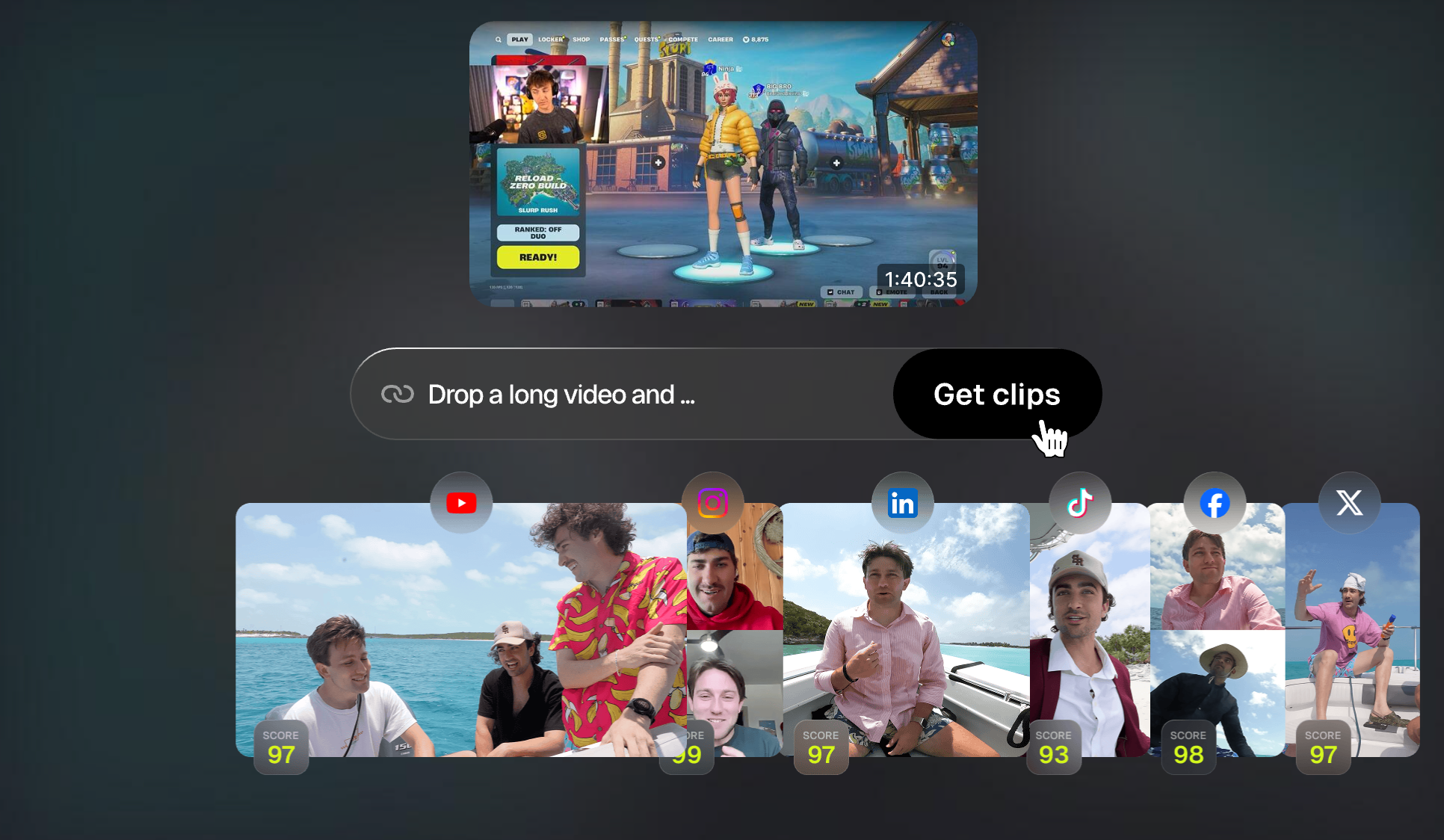
How to Turn Long Videos Into Viral Short Clips Automatically with Opus Clip
Opus Clip takes a long video, finds the most engaging moments, and turns them into short-form clips ready for TikTok, YouTube Shorts, and Instagram Reels. Paste a link or upload a file, and the AI identifies hooks, punchlines, and high-engagement segments, then adds captions, reframes for vertical, and scores each clip by virality potential. Used by over 5 million creators. Free tier includes 3 clips per month.
Tutorial:
- Go to opus.pro and create a free account
- Paste a YouTube, Zoom, or podcast URL, or upload a video file up to 3 hours long
- The AI analyzes the full video and generates multiple short clips ranked by virality score
- Review each clip with auto-generated captions, speaker tracking, and vertical reframing
- Edit captions, adjust clip boundaries, or pick a different highlight from the timeline
- Choose an aspect ratio and export format for the platform you are posting to
- Download the clips or schedule them directly to social media from the dashboard
URL: https://opus.pro
What To Watch Next (24-72 hours)
- Nvidia Financial Analyst Q&A: Today at 1 PM PT. After yesterday's keynote, analysts push Huang on inference chip margins, Blackwell delivery timelines, custom silicon competition from Google TPU and Amazon Trainium, and whether the $50 billion backlog is accelerating or plateauing. Guidance language moves the stock more than the keynote did.
- Federal Reserve: FOMC rate decision tomorrow at 2 PM ET. Markets expect a hold, but the dot plot and Powell's commentary on AI-driven capital spending will signal whether the $200 billion infrastructure buildout gets cheaper or harder to finance this year.
- GTC Developer Sessions: More than 900 sessions run through Thursday across AI infrastructure, robotics, healthcare, and autonomous vehicles. Watch for partner announcements from cloud providers and enterprise software companies building on Nvidia's new platform. The deals announced this week often matter more than the keynote.
🛠️ 5-Minute Skill: Turn a Conference Keynote Into Talking Points for Your Team
Your CEO watched a major keynote yesterday. She wants your team briefed by standup. You have the livestream recap, a few tweets, and 20 minutes.
Your raw input:
GTC keynote highlights (from live blog + X posts):
- New inference chip announced, "10x faster than Blackwell"
- Robotics platform update, foundation models for industrial robots
- 900+ sessions this week, 30K attendees
- Partnership announcements with [cloud providers]
- CEO quote: "The age of inference has begun"
- Stock up 3% after-hours
The prompt:
From these conference keynote notes, produce exactly:
1. Three talking points my team needs to know by standup
   (what changed, what it means for us, what to watch)
2. One question we should answer this week
3. One thing that sounds big but probably isn't

Keynote notes: [paste]

Keep each talking point to two sentences. No hype language.
What you get back:
Talking points:
1. Nvidia launched a dedicated inference chip, signaling the market is shifting from training to deployment. If pricing holds, our inference costs drop 40-60% within 12 months.
2. The robotics platform update means industrial AI is moving from research to product. Our manufacturing clients will start asking about this by Q3.
3. Stock moved 3% on the announcement. Watch the financial analyst Q&A today for guidance that shows whether demand is real or aspirational.
Question for this week: Do we accelerate our migration off GPU-based inference, or wait for benchmarks?
Sounds big, probably isn't: "The age of inference has begun" is a tagline, not a product. The chip ships later this year, which means production deployments are 2027.
Why this works
The prompt separates signal from spectacle. Conference keynotes are designed to impress, not inform. Requiring "one thing that sounds big but probably isn't" forces the AI to cut through the marketing.
What to use
Claude: Best at identifying what's missing from the announcement.
ChatGPT: Tighter on the two-sentence constraint per talking point.
AI & Tech News
EU Sanctions Iranian and Chinese Hacking Groups Over Cyberattacks on European Targets
The European Union imposed sanctions on Iran's Emennet Pasargad, the group behind the 2023 Charlie Hebdo cyberattack, and two Chinese firms providing hacking services. The coordinated measures signal a harder stance against state-linked cyber operations targeting European institutions and media.
Mastercard to Acquire Stablecoin Infrastructure Firm BVNK for Up to $1.8 Billion
Mastercard will buy UK-based stablecoin payments startup BVNK in a deal worth up to $1.8 billion, including $300 million in contingent payments. The acquisition positions the payments giant at the center of cryptocurrency transaction infrastructure.
SK Group Chairman Warns Global Memory Chip Shortage Will Persist Until 2030
SK Group's Chey Tae-won says basic wafer supply lags behind demand by more than 20%, and capacity expansion cannot close the gap before the end of the decade. The prolonged deficit raises costs for every company building AI infrastructure.
KKR and Blackstone Walk Away From Data Center Debt Over Natural Disaster Insurance Gaps
Major investors including KKR and Blackstone have declined to finance certain data center deals because the facilities lack sufficient coverage against natural disasters. The pullback creates a new bottleneck for the AI-driven data center buildout.
Nebius Plans $3.75 Billion Convertible Debt Raise After Meta Partnership
Amsterdam-based AI data center developer Nebius Group will raise $3.75 billion in convertible debt to expand operations and acquire customized AI chips. The fundraising follows a deal with Meta and signals aggressive scaling of AI infrastructure capacity.
Google Explores Chinese Suppliers for Data Center Liquid Cooling Equipment
Alphabet's Google is in talks with China's Envicool and other Chinese firms to purchase liquid cooling equipment for its data centers. The move highlights how global demand for AI cooling hardware is pushing major companies beyond traditional supply chains.
UK Announces £1 Billion Investment in Quantum Computing Research and Trials
Britain will invest more than £1 billion ($1.3 billion) in quantum computing research over four years, funding trials across pharmaceuticals, financial services, and energy. The commitment positions the UK as a serious contender in the global quantum race.
Gecko Robotics Wins $71 Million US Navy Contract for Robotic Ship Maintenance
Pittsburgh-based Gecko Robotics secured a $71 million Navy contract to deploy robots that cut repair times on aging warships. The deal reflects Washington's broader push to modernize defense infrastructure through automation.
Surf AI Emerges From Stealth With $57 Million for Agentic Cybersecurity Platform
Surf AI launched with $57 million in combined seed and Series A funding for an AI-driven platform that helps security teams interpret signals across identity, cloud, and enterprise tools. The startup enters a crowded cybersecurity market at the intersection of AI agents and threat detection.
Jensen Huang Discusses CUDA, AI Reasoning, and China Strategy in Stratechery Interview
In a wide-ranging conversation with Ben Thompson, Nvidia's CEO addressed the centrality of CUDA, competitive threats from custom silicon, and Nvidia's approach to China amid export restrictions. Huang also pushed back on AI safety concerns and outlined where CPUs fit in the accelerated computing stack.
🚀 AI Profiles: The Companies Defining Tomorrow
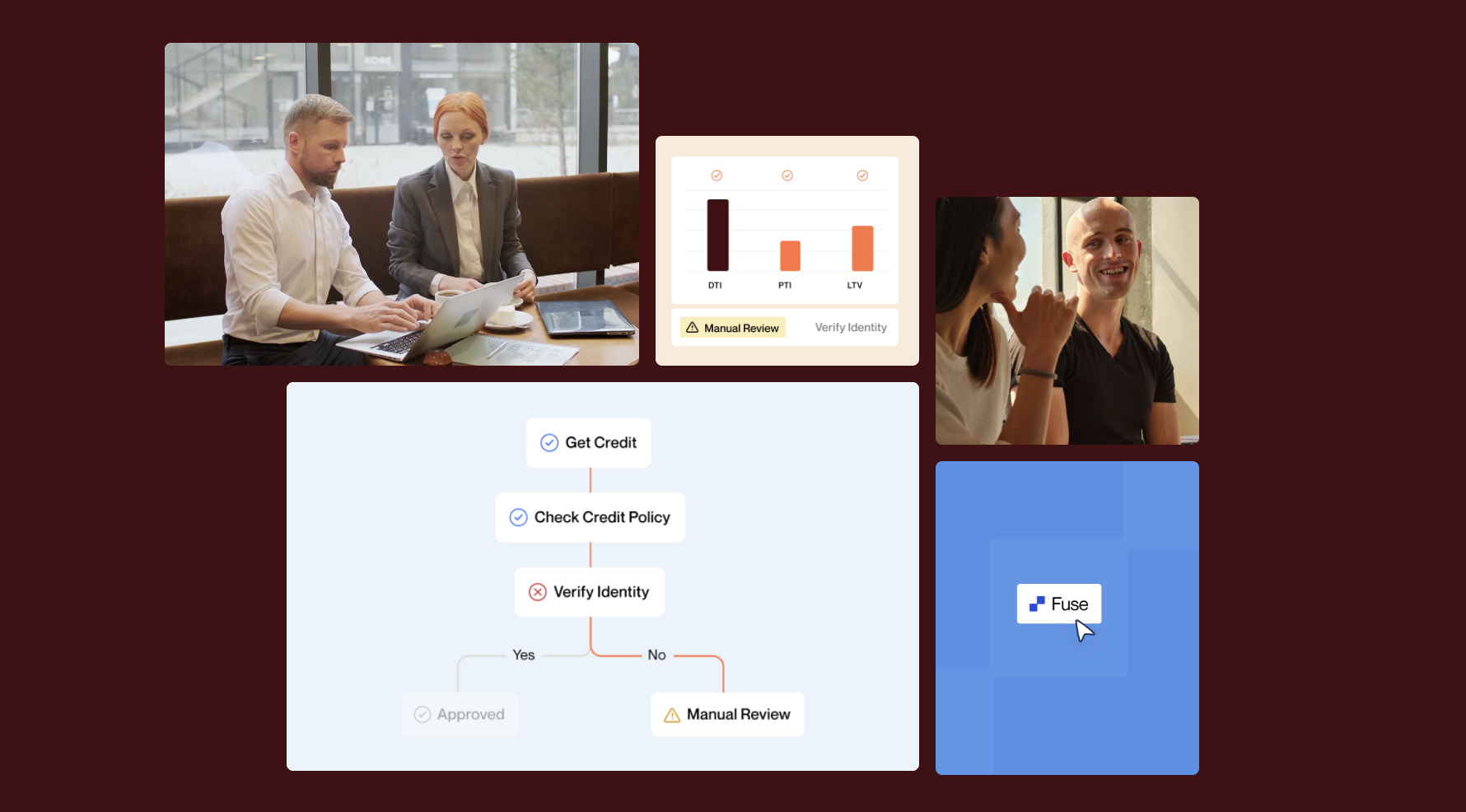
Fuse replaces the loan origination software that credit unions have been stuck with for decades. The startup built an AI-native system that automates underwriting and loan processing, then set aside $5 million to pay credit unions' switching costs.
Founders
Andres Klaric and Marc Escapa met as MBA classmates at Harvard Business School and co-founded Fuse in 2020. Klaric, a Bolivian native, spent a decade on Wall Street investing in tech and business services before taking the leap. Escapa, a Spanish immigrant, is a repeat founder. They started with a consumer auto-lending product, then realized the technology they built to process loans was more valuable than the loans themselves. Lenders kept asking how they moved so fast. In 2023, they pivoted fully to selling the engine.
Product
An AI-native loan origination system that handles applications, underwriting, approval, and disbursement. Where legacy vendors charge six-figure implementation fees and take up to a year to integrate, Fuse claims deployment in weeks. AI agents automate document reading, fraud verification, and borrower communications. The company reports customers hitting 71% automation within their first year. The platform also handles account opening and works across auto, consumer, and small business lending. Over 100 financial institutions use it today.
Competition
nCino is publicly traded and embedded across large banks. MeridianLink, now private-equity-owned, dominates mid-market credit unions with its LoansPQ product. Both charge heavily for configuration changes and lock customers into multi-year contracts. Startups Casca and Glide target the same AI-native LOS space. Fuse differentiates on speed of deployment and a $5 million "rescue fund" offering 50 credit unions free platform access until their legacy contracts expire, a direct attack on the switching costs that keep incumbents entrenched.
Financing 💰
$25 million Series A led by Footwork, with Primary Venture Partners, NextView Ventures, and Commerce Ventures. FJ Labs also participated. Total raised exceeds $25 million. Footwork's portfolio includes investments in Chime and OpenAI.
Future ⭐⭐⭐
The US has over 4,000 credit unions, and fintech lenders have grown from 5% to nearly 40% of loan market share in five years. The number of federally insured credit unions has declined more than 30% in the past decade. Fuse is betting that the survivors need modern software to compete, and that the private-equity playbook of locking them into expensive contracts creates an opening for a startup willing to absorb the switching cost. A hundred customers is real traction. The $5 million rescue fund is half marketing, half customer acquisition subsidy. The question is whether 100 credit unions become 1,000 before nCino and MeridianLink decide to modernize their own platforms. Legacy vendors move slowly until they don't. 🏦
🔥 Yeah, But...
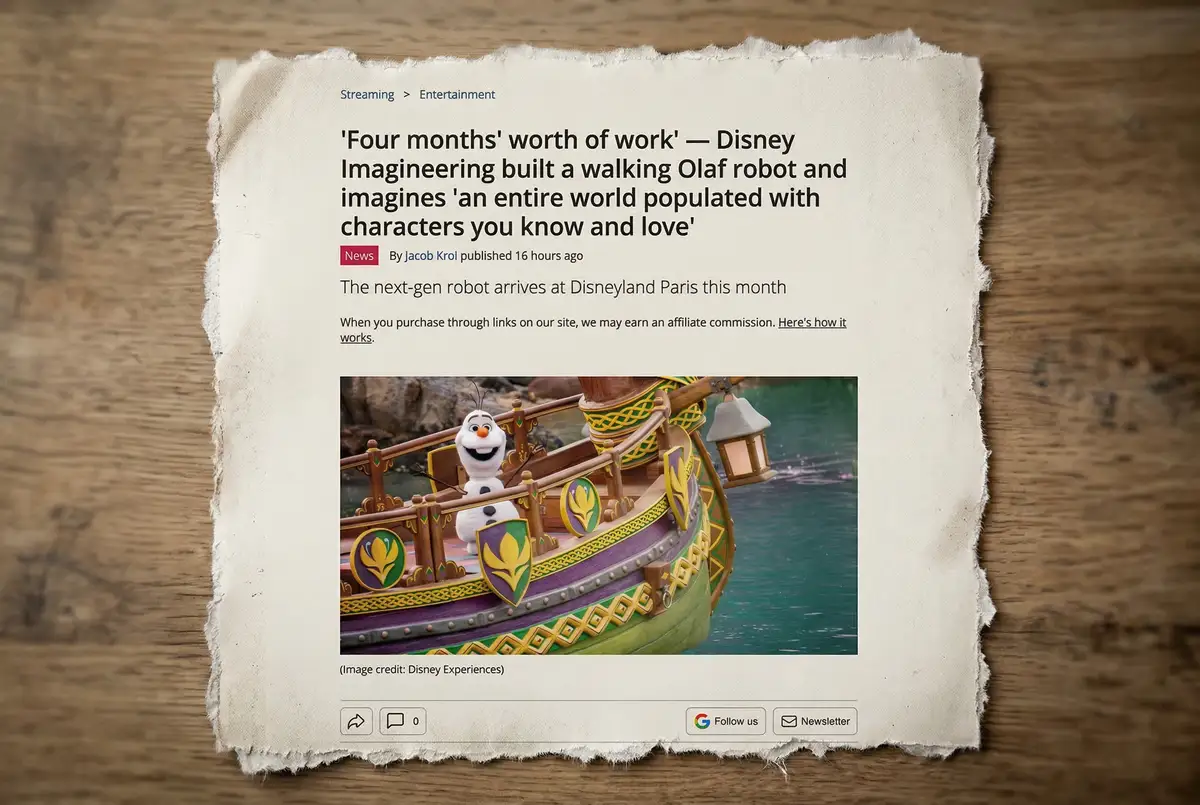
Walt Disney Imagineering built a walking, self-balancing Olaf robot using reinforcement learning and animation rigs borrowed from Walt Disney Animation Studios. The robot adjusts its posture in real time, minimizes footstep noise, and manages motor heat autonomously. It debuts at Disneyland Paris on March 29, performing on a moving boat. It is operated by a human with a remote control.
Sources: TechRadar, March 16, 2026
Our take: Disney built a robot that uses reinforcement learning to teach itself how to walk, balances on a moving boat using real-time sensor data, and throttles its own motor heat to avoid shutting down mid-performance. Then it handed the controls to a person with a joystick. Four months of AI training to produce a puppet with better posture.
The engineers solved problems no one outside Imagineering would ever notice: footstep volume, gait accuracy, neck torque from a disproportionately large head. The SVP of R&D described the vision as "an entire world populated with characters you know and love." The characters will be autonomous. Someday.
For now, the most advanced bipedal robot Disney has ever built does exactly what a performer tells it to, which is also what the person inside the Goofy suit does, just with more press coverage.

Marcus Schuler
Tech translator with German roots who fled to Silicon Valley chaos. Decodes startup noise from San Francisco. Launched implicator.ai to slice through AI's daily madness—crisp, clear, with Teutonic precision and sarcasm. E-Mail: [email protected]