IMPLICATOR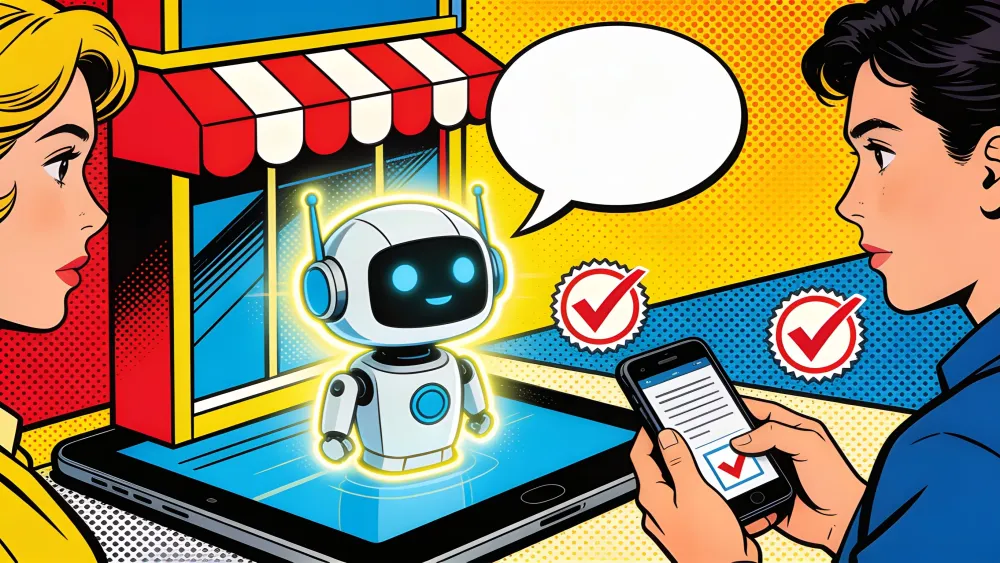
“People used to build websites for other people,” WordPress VIP CTO Brian Alvey said in a June 16 release for the company’s Future of the Web survey. “Now you have to build websites for AI agents acting on behalf of those people.”
That sounds like the next distribution channel marketers can optimize the way they once optimized Google. But WordPress VIP’s survey, which polled 800 enterprise decision-makers and CMOs and 1,200 U.S. adults in April, points to a harder problem: 60% of consumers said using “AI” in brand messaging is a turnoff, while 60% of enterprise respondents said traffic from AI search engines and answer platforms increased over the past year.
Key Takeaways
- WordPress VIP found 60% of consumers view AI brand messaging as a turnoff.
- Enterprise marketers are still increasing AI-search work as referrals grow.
- Consumers often verify AI answers through Google, sources or brand websites.
- The trust gap makes owned sources more important, not less.
AI-generated summary, reviewed by an editor. More on our AI guidelines.
The marketing budget makes the channel hard to ignore. WordPress VIP found that 74% of enterprise decision-makers now consider AI discoverability and attribution a main or significant priority, and TechRadar reported from the same research that 30% now plan to prioritize investments across AI engines, compared with 17% for conventional owned websites.
Yext’s consumer search data gives marketers a reason to spend there. The company’s 2026 report put recent AI use for local-business search at 47% of U.S. adults. It also found high stated confidence among AI users, with 74% rating their trust in AI recommendations at 4 or 5 out of 5. That is enough for an answer engine to affect the first cut of brands a shopper considers.
The bear case for the trust thesis is narrower: consumers may distrust AI answers enough to verify them, but still use them when the recommendation path is useful. Yext’s own figures support that argument. More than nine in 10 AI users still take a verification step, but 62% search Google immediately after an AI recommendation, 58% visit the business’s website directly and 52% click a cited source.
Still, the verification path is the point. WordPress VIP said 86% of consumers always or sometimes explore the original source after receiving an AI-generated summary, and 33% named the ability to see and click a source as their top trust signal. Its press release put the sharper number next to the marketing bet: 42% of consumers said they trusted AI-generated answers without clear attribution less than airline fees, confusing privacy policies and medical bills.
Stay ahead of the AI trust shift
Strategic AI news from San Francisco. No hype, no "AI will change everything" throat clearing. Just what moved, who won, and why it matters. Daily at 6am PST.
No spam. Unsubscribe anytime.
The problem gets worse when the brand and the AI answer disagree. Skyword, citing a survey of 1,000 U.S. consumers, found that when AI-generated information conflicts with a brand’s own messaging, 54% look to outside sources, 29% trust the brand and 12% trust the AI answer. “AI search is often framed as a visibility issue, but the larger challenge is authority,” Skyword CEO Andrew Wheeler said.
Know someone who'd find this useful? ✉️ Email it to a friend in one click, or they can subscribe free here.
Alvey told CX Today about a product whose upper pricing tiers sold less when AI was emphasized, then sold more after the company removed the term while leaving the feature in place. eMarketer cited Klaviyo and Datalily research that points in the same direction: when consumers noticed AI-generated marketing, 31% trusted the brand less and 7% trusted it more.
“If your site’s content isn’t legible to AI, you are invisible to a growing share of how people search,” Alvey said in WordPress VIP’s release. The survey’s workload figure shows companies have heard that message. Enterprise teams already spend an average of 16.6 hours a week improving AI visibility, while consumers report hitting bot fatigue after 40 minutes online.
Idea Grove’s verification study puts a floor under that risk. The firm surveyed 1,000 U.S. consumers and found almost no appetite for buying an unfamiliar AI-recommended brand on the AI answer alone: 2% said they would do it. Most respondents checked Google, reviews, the company site or another source before deciding.
That leaves marketers with a narrower win than the AI-search pitch implies. The answer engine can introduce the brand. The source page still has to pass the trust check that follows.
Frequently Asked Questions
What did WordPress VIP’s survey find about AI messaging?
Sixty percent of U.S. consumers said AI in brand messaging is a turnoff, while 86% said they do not fully trust AI answers and still explore original sources.
Why are brands chasing AI search visibility?
Sixty percent of enterprise respondents said traffic from AI search engines and answer platforms increased over the past year, according to WordPress VIP.
Do consumers trust AI search recommendations?
Trust is conditional. Yext said 74% of AI users rate trust highly, but more than 93% still take at least one verification step before acting.
What happens when AI and brand information conflict?
Skyword found 54% of consumers look to outside sources, while 29% trust the brand and 12% trust the AI answer.
What should brands do with AI visibility?
Treat AI visibility as distribution, not proof. Structured content helps answer engines cite a brand, but the owned source still has to earn trust.
AI-generated summary, reviewed by an editor. More on our AI guidelines.


Free AI briefing · Weekdays
The AI stories that matter, sourced and explained.
Join the Morning Briefing. It goes out every weekday at 4:45 a.m. Pacific, with later sends for the East Coast, Berlin and Tokyo.
Free when you sign up: The Paperclip Compendium, our tested guide to running AI agents.
Free. Unsubscribe in one click.

Marcus Schuler
Editor-in-Chief and founder of Implicator.ai. Former ARD correspondent and senior broadcast journalist with 10+ years covering tech. Writes daily briefings on policy and market developments. Based in San Francisco. E-mail: editor@implicator.ai