IMPLICATOR
San Francisco | Wednesday, April 15, 2026
OpenAI shipped GPT-5.4-Cyber to thousands of verified defenders on Tuesday, exactly one week after Anthropic restricted Mythos Preview to roughly forty vetted organizations. Two rival cyber models, two opposite bets on who gets to hold them. The variant adds binary reverse engineering, the capability that lets analysts read compiled malware without source code.
Meanwhile,on Anthropic quietly unbundled Claude Code from enterprise seat fees, moving its biggest customers to per-token billing. Retool's founder already switched to OpenAI, saying the model was worse and the uptime was better. The compute crunch is eating the subsidy.
And Google turned repeated Gemini prompts into reusable Chrome Skills. We built a tutorial for the three workflows worth keeping.
Stay curious,
Marcus Schuler
Know someone drowning in AI noise? Forward this briefing. They can subscribe free here.
OpenAI Ships GPT-5.4-Cyber to Thousands of Defenders, Adds Binary Reverse Engineering
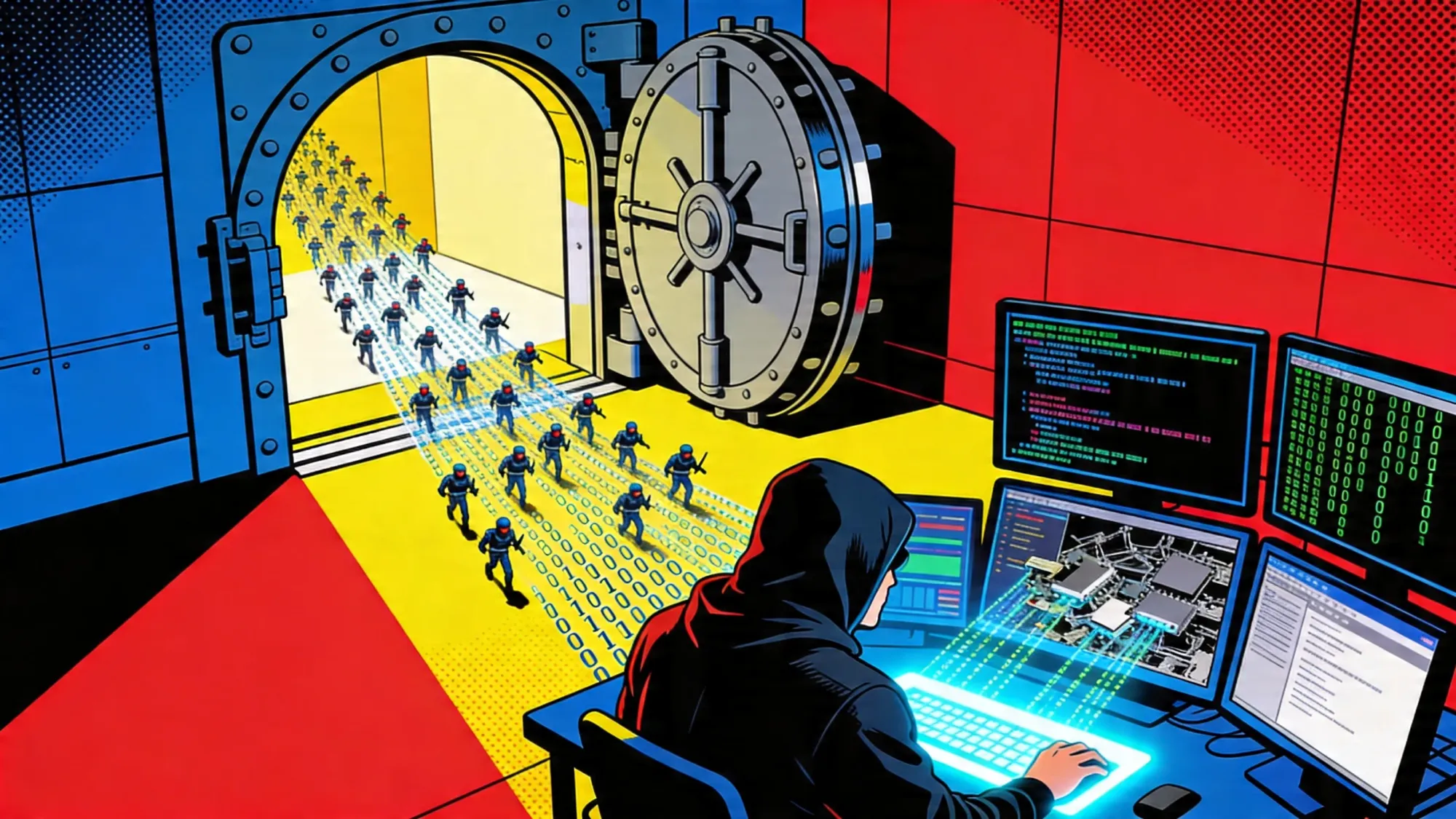
OpenAI launched GPT-5.4-Cyber on Tuesday, a cyber-permissive variant of its flagship model, and scaled Trusted Access for Cyber to thousands of verified defenders. The rollout adds binary reverse engineering. It lands exactly one week after Anthropic restricted access to Mythos Preview to roughly 40 vetted organizations.
The variant lowers refusal boundaries on dual-use security queries and lets analysts examine compiled software for malware without source code access. Implicator traced the same capability curve last month, when Anthropic warned that its own model had found flaws in every major operating system and browser.
Where Anthropic hand-picked roughly 40 labs, OpenAI is betting identity verification beats capability restriction as a control surface. Individuals authenticate at chatgpt.com/cyber. Enterprises route through their OpenAI representative. Only top-tier customers get the full model. U.S. government agencies are excluded for now.
Why This Matters:
- Identity verification as the control surface shifts frontier security from capability gating to access auditing, and every lab shipping a next-generation model will have to pick a side.
- OpenAI's public benchmark for "sufficient safeguards" puts pressure on Anthropic's Project Glasswing secrecy framing and may force disclosure of real-world incident data.
Reality Check
What's confirmed: GPT-5.4-Cyber shipped Tuesday. Trusted Access for Cyber expanded from a February pilot to thousands of verified individual defenders and hundreds of teams.
What's implied (not proven): Broader access improves defense outcomes more than tight restriction. That is the bet, not the evidence.
What could go wrong: Identity verification is an automated funnel. Compromised credentials or contractor misuse would hand cyber-permissive capability to exactly the wrong operator.
What to watch next: Approval rates inside Trusted Access, and whether OpenAI ever publishes post-deployment incident data.

The One Number
20% — Apple's stake in Globalstar, the 35-year-old satellite operator that Amazon agreed Tuesday to acquire for $11.6 billion in cash or stock. At the deal price, Apple's position is worth roughly $2.3 billion on an investment it made in 2022 when it launched iPhone emergency satellite messaging and locked in Globalstar as its exclusive partner.
Amazon has committed to keep powering Apple's emergency service through its Leo constellation, with direct-to-device launch planned for 2028. In an unusually public endorsement of a rival's deal, Apple marketing chief Greg Joswiak said the company looks forward to "building on that collaboration with Amazon Leo."
SpaceX's Starlink, via T-Mobile, is already doing to Apple what Apple was trying to do to the carriers. Apple now has a deep-pocketed second option, a larger constellation to plug into, and a check on the way.
Source: Bloomberg, April 14, 2026
Anthropic Unbundles Claude Code From Enterprise Seats, Moves to Per-Token Billing

Anthropic quietly restructured its enterprise plan to bill Claude, Claude Code, and Cowork separately from seat fees. Customers on older seat-based plans must migrate by next renewal. The flat-fee era is over.
Run rate tripled from $9 billion to $30 billion in four months. Claude API uptime sat at 98.95% over the 90 days ending April 8, roughly 92 hours of downtime a year, against the 99.99% enterprise standard.
Retool founder David Hsu told the Wall Street Journal the model was better, but the service kept dying, so he moved his company to OpenAI. Anthropic has been metering usage quietly for weeks. Session caps, cache TTL cuts, and OpenClaw meters all point the same direction. The open bar is closing.
Why This Matters:
- Every AI provider running agentic workloads will follow within six months. Flat pricing assumed chat, not Claude Code agents burning tokens at 200x a normal user.
- Buyers who budgeted flat fees face sharp jumps at renewal, reshaping enterprise AI procurement through H2.

AI Image of the Day

Prompt: The design features a black-and-white sketch of a donkey with large ears peeking out from a wooden fence. The donkey, holding a small yellow flower in its mouth, peeks out from the fence, adding a pop of color to the otherwise plain painting. The donkey's face is positioned playfully and curiously. --ar 2:3 --stylize 50
Google Ships Chrome Skills for Gemini, Turning Repeated Prompts Into Browser Workflows

Google launched Chrome Skills for Gemini in Chrome on Monday, letting users save prompts and rerun them against the current page or selected tabs. Think saved instruction, not automation.
Skills live inside the Gemini sidebar, triggered with / or a + control. The rollout is limited, so availability varies by account, device, and profile. Users who already type the same summary or comparison prompt repeatedly can turn it into a shortcut instead of retyping it.
Google's Gemini 2.5 computer-use agent bet on the browser last fall instead of the desktop. Skills sit one layer above that logic: not autonomous, but reusable. Our tutorial covers the three workflows worth saving and flags the ones to throw away.
Why This Matters:
- Reusable prompts compound. The best Chrome Skills replace the five prompts you actually type, not the fifty you might.
- Browser-scoped AI workflows avoid the authorization sprawl of full agent platforms while still saving real time per task.

🧰 AI Toolbox
How to Dictate Polished Writing into Any App on Any Device with Wispr Flow
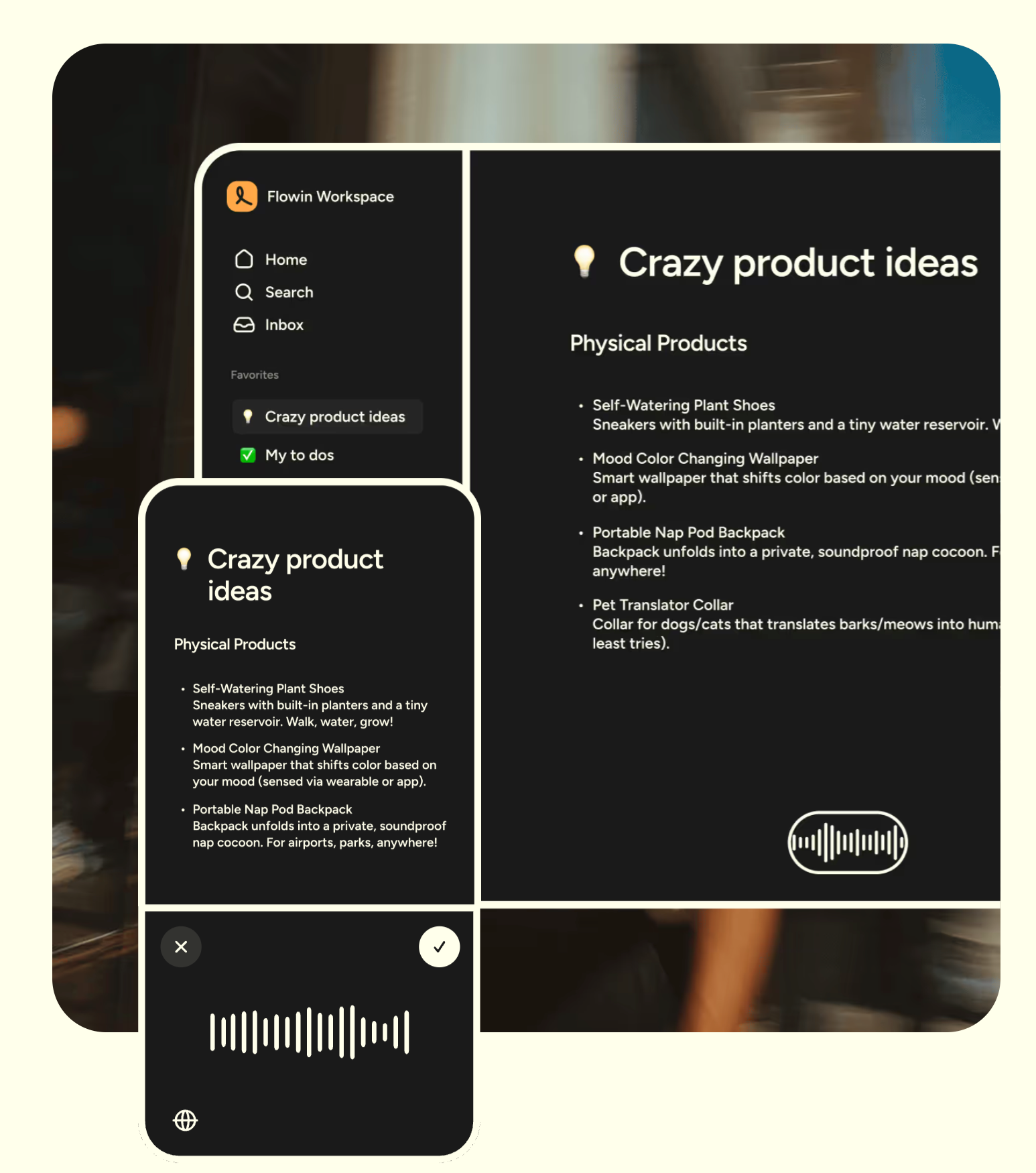
Wispr Flow is a system-wide voice dictation tool that turns natural speech into clean, formatted text in any application. Speak with filler words, mid-sentence corrections, and incomplete thoughts, and Flow strips the noise, adds punctuation, and inserts polished prose directly into your active text field. It works across Gmail, Slack, Google Docs, code editors, and every other app with a text input. Auto-detects over 100 languages. Free tier includes 2,000 words per week.
Tutorial:
- Download Wispr Flow from wisprflow.ai for Mac, Windows, iPhone, or Android
- Grant microphone and accessibility permissions so Flow can insert text into any app
- Click into any text field on your computer, hold the Fn key (Mac) or Ctrl+Win (Windows), and start speaking naturally
- Release the key and watch Flow convert your speech into formatted text with proper punctuation, paragraph breaks, and filler words removed
- Open an email compose window and dictate a reply. Flow adjusts tone automatically, writing more formally in email and more casually in chat apps
- Set up Snippets for text you repeat often: say a trigger phrase and Flow expands it into a full scheduling link, canned response, or FAQ answer
- Try Whisper Mode in a shared office by speaking quietly. Flow picks up low-volume speech and processes it the same way
URL: https://wisprflow.ai
What To Watch Next (24-72 hours)
|
||
|
||
|
💡 The 5-Minute Skill: Turn a Tarot Spread Into the Decision You Have Been Avoiding
You are 24 hours from a call you have been ducking for three weeks. Take the offer, kill the project, fire the cofounder. Spreadsheets did not help. Friends are tired of the question. You buy a tarot deck on Amazon, throw three cards on the kitchen table, take a photo with your phone.
Your raw input:
Photo of three cards face up on a wood table:
The Tower (reversed), Eight of Swords, The Star.
Decision on the line: should I shut down the side project
I have been bleeding nights into for nine months.
The prompt:
I am deciding whether to [your decision]. Here are three tarot
cards. Do not tell me whether to do it. Read each card as if it
is a hard question my therapist would ask. Then list the three
things I am avoiding admitting to myself. End with the one fact
I would need to know to make this call. No horoscope language.
The output:
Tower reversed: What collapse have you already noticed but refused to name?Eight of Swords: Whose permission are you waiting for that nobody is going to give you?The Star: If this works, what do you stop being able to complain about?
The fact you need: What does one more quarter of indecision actually cost you, in time, money, and reputation?
Why this works:
Tarot is not magic. The cards are a randomizer that forces structured questions you would otherwise dodge. The AI is not reading your future, it is using the symbols as scaffolding to bounce your decision back as the questions a good board chair would ask.
What to use:
Gemini 3 Pro reads tarot card photos better than ChatGPT or Claude, it identifies the cards and their orientation cleanly from a single phone snap. Paste your decision underneath, run the prompt. Works with a coin, a deck of UNO cards, or anything else you can throw and photograph.
📖 AI Alphabet
|
F
|
📖 AI Alphabet Fine-Tuning Fine-tuning means taking a general model and training it further on a narrower set of examples. It helps the model get better at a specific task, tone, or domain. |
AI & Tech News
SoftBank Asks More Banks to Join $40 Billion OpenAI Loan Facility
SoftBank is inviting additional lenders to commit roughly $5 billion each to its $40 billion syndicated loan backing a $30 billion OpenAI stake. The expansion signals unease about the scale of debt behind Masa Son's biggest AI bet to date.
Snap Cuts 16% of Workforce as $400 Million Perplexity Deal Collapses
Snap will lay off about 1,000 employees, roughly 16% of staff, as CEO Evan Spiegel pushes for profitability. The restructuring lands the same week a $400 million AI search licensing deal with Perplexity fell through, stripping a key revenue line from the pitch.
Uber Commits $10 Billion-Plus to Lock In Robotaxi Supply
Uber plans to spend over $7.5 billion buying autonomous vehicles and more than $2.5 billion taking equity stakes in robotaxi developers, according to the FT. The strategy pivots Uber from software marketplace to vertically integrated mobility operator.
ASML Beats Q1 Estimates, Raises 2026 Sales Outlook to €36-40 Billion
ASML reported €8.8 billion in Q1 net sales and €2.8 billion in profit, both beating estimates, while lifting full-year guidance by €2 billion at both ends. EUV demand from TSMC, Samsung, and Intel is holding firm despite the tariff overhang.
US Late-Stage VC Funds Raise Record $23.6 Billion Year to Date
Growth and late-stage venture capital funds have raised $23.6 billion YTD in 2026, more than triple the $7.4 billion raised in the same window last year, per PitchBook. The AI boom is pulling capital past any comparable first-half total in 12 years.
Asia Startup Funding Surges 93% to $27.4 Billion in Q1
Venture funding across Asia hit $27.4 billion in the first quarter, a 93% year-over-year jump and the strongest quarter since Q1 2023, Crunchbase data shows. China led with $16.5 billion and India followed at $3.8 billion.
Democrats Warned Not to Cross $300 Million Pro-AI Lobby Before Midterms
Democratic operatives are cautioning candidates against alienating a roughly $300 million pro-AI lobbying bloc even as internal polling shows public demand for stricter rules, the FT reports. The tension sets the frame for the 2026 midterm AI policy debate.
ByteDance Rolls Out Seedance 2.0 to 100-Plus Countries, Skipping the US
ByteDance expanded its Seedance 2.0 enterprise video model to clients in more than 100 countries this week, leaving the US market out amid unresolved regulatory disputes. The launch extends the February China debut through ByteDance's cloud unit.
Google DeepMind Ships Gemini Robotics-ER 1.6 With Upgraded Spatial Reasoning
Google DeepMind released Gemini Robotics-ER 1.6, an upgrade to its robotic reasoning model that the lab says significantly improves spatial and physical understanding over version 1.5. The advance pushes robots further from scripted tasks toward adaptive decision-making.
Judge Orders Anna's Archive to Pay $322 Million in Spotify Scraping Case
A federal judge awarded Spotify and the three major labels a $322.2 million judgment against Anna's Archive, which scraped Spotify's catalog to power its music index. The ruling is largely symbolic because the site's operators remain anonymous.
🚀 AI Profiles: The Companies Defining Tomorrow
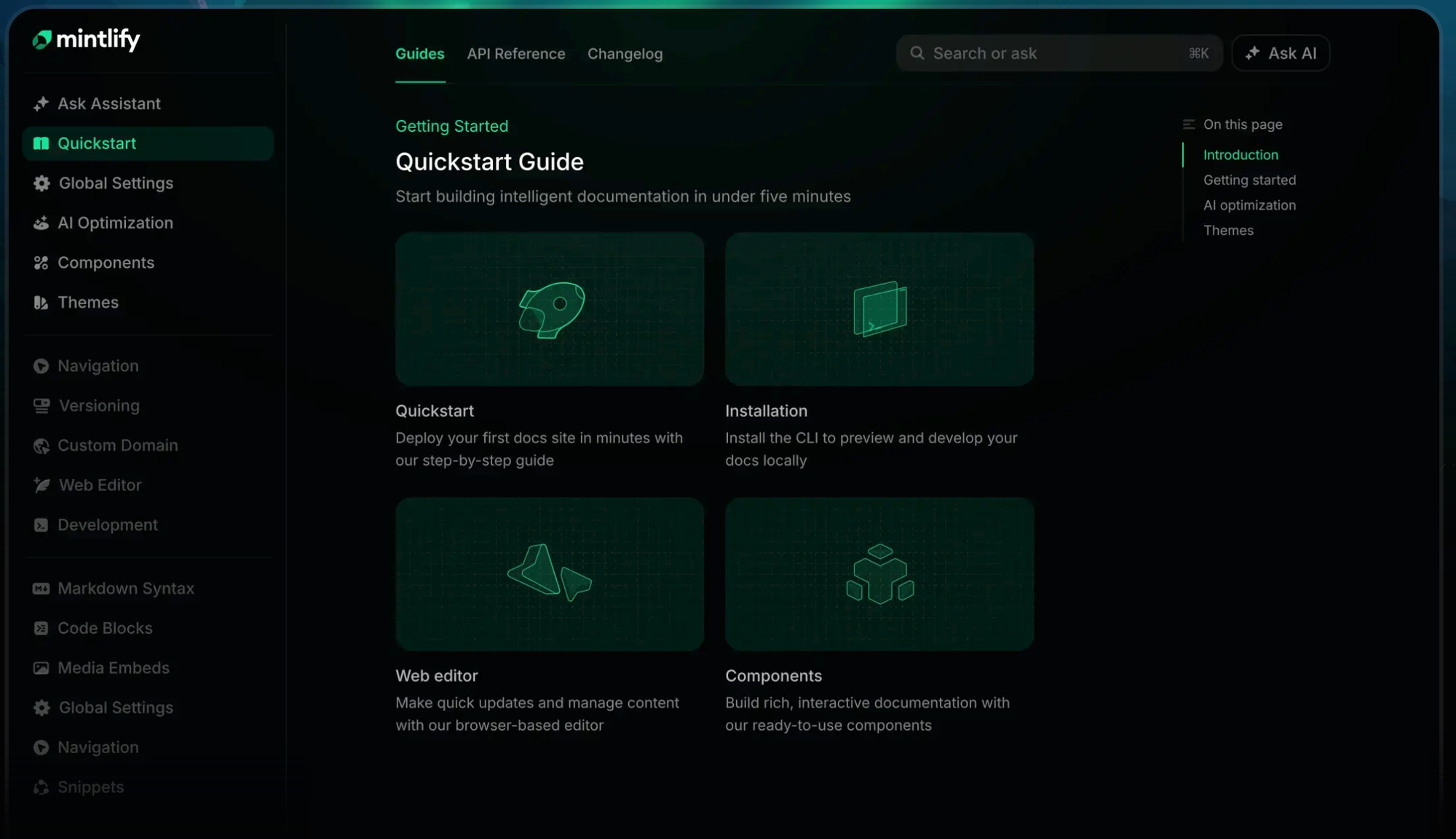
Mintlify generates and maintains software documentation with AI, and Anthropic is one of 20,000 customers leaning on it to explain Claude Code. 📚
Founders
Cornell grads Han Wang (CEO, 25) and Hahnbee Lee (26) launched Mintlify in late 2022 after pivoting eight times through other product ideas. Both spent their early engineering years frustrated by sparse, inaccurate developer documentation. Headquartered in San Francisco, the duo made the Forbes 30 Under 30 list last year.
Product
Mintlify ingests source code and produces user guides, FAQs, and technical overviews that update automatically whenever a product ships. A hosted chatbot embeds on customer sites to answer product questions in natural language. CEO Han Wang says 50% of documentation views across all customers now come from AI agents rather than humans, which makes accurate machine-readable docs a prerequisite for agent-driven software. Anthropic uses the system to keep up with the 50-plus Claude Code updates it pushed in the last two months. Other customers include PayPal, Coinbase, Microsoft, and Amazon.
Competition
ReadMe, GitBook, Stoplight, and open-source Docusaurus hold the incumbent docs market. AI-native rivals Kapa.ai and Inkeep chase the same agent-era thesis. Mintlify's edge is scale: 20,000 paying companies and a wedge built around automatic code-to-docs generation rather than retrofitted search.
Financing 💰
$45 million Series B at a $500 million valuation announced April 14, co-led by Andreessen Horowitz and Salesforce Ventures, with Bain Capital Ventures, Y Combinator, and DST Global participating. Revenue crossed eight figures in early 2026, mostly from usage-based pricing on the embedded chatbot.
Future ⭐⭐⭐⭐
If agents really do become the dominant readers of software documentation, Mintlify owns the pipes. The risk is commoditization: turning code into docs is exactly the kind of task frontier labs keep absorbing into their base models. 📚
🤨 Yeah, But...
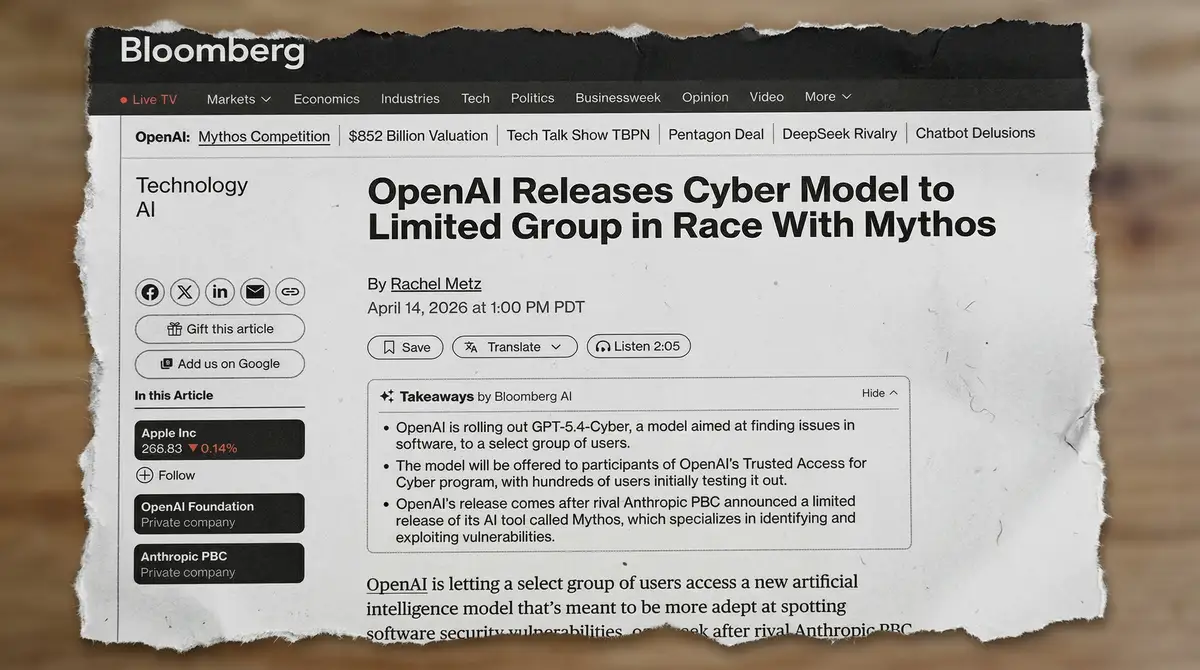
OpenAI is rolling out GPT-5.4-Cyber, a model tuned to find software vulnerabilities, to select participants of its Trusted Access for Cyber program. The company said the new model places "fewer constraints" on the ways users can probe it for offensive tasks.
The rollout starts with hundreds of testers and expands to thousands in the coming weeks. The announcement arrives exactly one week after Anthropic shipped Mythos to Amazon, Apple, and Microsoft, a model that specializes in identifying and exploiting vulnerabilities across operating systems and browsers, and days after Treasury Secretary Scott Bessent and Fed Chair Jerome Powell summoned Wall Street leaders to warn them to take Mythos seriously. The Treasury Department's own technology team has since asked Anthropic for access.
Sources: Bloomberg, April 14, 2026; background: Implicator.ai, March 27, 2026
Our take: The press release reads beautifully. GPT-5.4-Cyber is going out to the Trusted Access for Cyber program, with "fewer constraints" on how users can probe it, because sometimes a model needs a little more room to find the flaws.
Anthropic shipped the same idea on April 7.
OpenAI shipped its version on April 14.
The gap would have been shorter, but one assumes the paperwork took a minute. Treasury Secretary Bessent has been running what is effectively an IT briefing for the largest banks in the country, explaining that an AI model can break software, which he appears to find upsetting. The industry's solution to this unwelcome development is a second AI model that can also break software, offered under a program called Trusted Access.
The word "trusted" is doing quite a lot of work this quarter.
Free AI briefing · Weekdays
The AI stories that matter, sourced and explained.
Join the Morning Briefing. It goes out every weekday at 4:45 a.m. Pacific, with later sends for the East Coast, Berlin and Tokyo.
Free when you sign up: The Paperclip Compendium, our tested guide to running AI agents.
Free. Unsubscribe in one click.

Marcus Schuler
Editor-in-Chief and founder of Implicator.ai. Former ARD correspondent and senior broadcast journalist with 10+ years covering tech. Writes daily briefings on policy and market developments. Based in San Francisco. E-mail: editor@implicator.ai