IMPLICATOR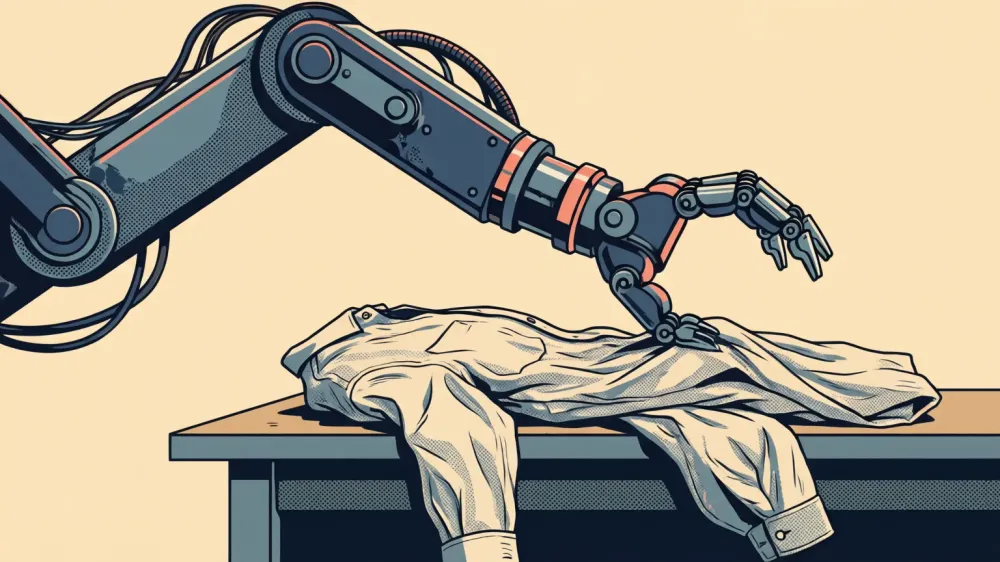
Wang Xingxing, the founder of Unitree, said the humanoid robot industry's "ChatGPT moment" could take as long as 10 years. The breakthrough depends on robots learning to handle unfamiliar tasks without being retrained from scratch. His forecast came one day after Unitree's Shanghai debut closed 460% above its offer price.
What Changed
- Wang Xingxing said the humanoid industry's "ChatGPT moment" could arrive in two to three years at the fastest or five to 10 at the slowest, a wider range than the under-five-years he gave at the same conference in 2025.
- Unitree's stock closed at 687 yuan on August 20 after falling 18.7%, about 86% above the 370-yuan price target Nomura attached to its new buy rating the day before.
- Morgan Stanley counts about 19,000 global humanoid shipments in the first half of 2026, up 272% from a year earlier, with roughly 65% going to entertainment, education, research and data collection rather than productive work.
- An industry report released at the conference puts China's own first-half shipments above 40,000, more than double Morgan Stanley's worldwide count for the same period.
AI-generated summary, reviewed by an editor. More on our AI guidelines.
A later forecast
At the World Robot Conference in Beijing on Thursday, August 20, Wang defined the breakthrough as a robot placed in an unfamiliar home and able to complete about 80% of tasks through voice or text commands alone. The moment could "arrive in two to three years if things move fast, or five to 10 years if they move slowly," he said.
At the same conference in 2025, Wang put the wait at less than five years. The wider range followed Unitree's August 19 listing, which raised $905 million at a 150.80-yuan offer price.
Unitree's stock fell 18.7% on August 20 to close at 687 yuan. Nomura initiated coverage on August 19 with a buy rating and a 370-yuan price target. The August 20 close was 317 yuan, or about 86%, above Nomura's target. The brokerage estimates Unitree's gross margin widened to 60% in 2025 from 44% in 2022.
The work gap
Wang said Unitree's robots remain less efficient than human workers. Each new task requires training from the beginning, and the machines can plan broad movements but fail at "the last few centimeters or millimeters."
Unitree is pursuing a "self-evolving development loop" in which AI models write and test control code, score the results and feed them into the next round.
The conference floor supplied a household test. At one booth, a robot spent several minutes trying to fold a shirt and could not finish. Other machines have moved into narrower jobs. DexForce robots have packed mobile phones at a Lens Technology factory since early 2026, working with millimeter-level accuracy and correcting errors such as a phone placed at an angle.
"In theory, human beings are the most dexterous," DexForce official Nicole Yang said. "But many workers in factories are unwilling to do this kind of boring work."
FREE WEEKDAY MORNING BRIEFING
Don’t miss the next AI story that matters.
The Implicator Morning Briefing filters the AI news cycle to the stories worth your attention and explains their consequences. From San Francisco, every weekday at 4:45 a.m. Pacific, 7:45 a.m. Eastern.
About five minutes. No hype. No spam.
Conflicting shipment counts
Global humanoid shipments reached about 19,000 units in the first half of 2026, up 272% from a year earlier, with Chinese makers accounting for 97%, Morgan Stanley said. About 65% of those shipments went to entertainment, education, research and data collection rather than productive commercial work.
An industry report released at the conference says China alone shipped more than 40,000 humanoids in the first half of 2026, also equal to 97% of the global total. Both figures cannot be right. The conference report's China count is more than double Morgan Stanley's worldwide count for the same period.
Know someone who'd find this useful? ✉️ Email it to a friend in one click, or they can subscribe free here.
Georg Stieler, a robotics analyst who advises industrial companies in China, estimates that 50% to 70% of humanoids produced in 2026 could go to "data factories" that collect training data instead of doing paid work.
U.S. demand
The U.S. Federal Communications Commission last month added foreign-made advanced robotic devices, including humanoids and quadrupeds, to a list restricting imports, citing national security risks.
Jeff Burnstein, president of the Association for Advancing Automation, said few humanoids are used in the United States and the larger effect would fall on autonomous mobile robots. On customer demand, he said: "We don't care if it's a humanoid. We don't care if it's a traditional robot, a collaborative robot. We don't even care if it's a robot. We need a solution."
The next test
The second World Humanoid Robot Games opened in Beijing on Saturday, August 22, with 30 sports-like events and 20 work or job-scenario events among its 50 published events. Fully autonomous attempts receive full points, while teleoperated attempts receive half credit.
"Last year it was about whether they could run to the finish line," said Wang Peng of the Beijing Academy of Social Sciences. "This year it's about whether they can get the job done."
Frequently Asked Questions
What does Wang Xingxing say the humanoid "ChatGPT moment" requires?
A robot placed in an unfamiliar home that can complete about 80% of tasks through voice or text commands alone. Wang said that could arrive in two to three years if things move fast, or five to 10 years if they move slowly.
How did Unitree's Shanghai listing perform?
The August 19 debut closed 460% above its offer price. The listing raised $905 million at a 150.80-yuan offer price. The stock then fell 18.7% on August 20 to close at 687 yuan, about 86% above the 370-yuan target Nomura set with its buy rating.
Why do the humanoid shipment figures conflict?
Morgan Stanley counts about 19,000 humanoid shipments worldwide in the first half of 2026. An industry report released at the conference says China alone shipped more than 40,000 over the same period, also claiming 97% of the global total. Both figures cannot be right.
What can humanoid robots still not do?
Wang said Unitree's robots remain less efficient than human workers and must be retrained from the beginning for each new task. They can plan broad movements but fail at the last few centimeters or millimeters. At the conference, one robot spent several minutes trying to fold a shirt and could not finish.
How does the U.S. import restriction affect the market?
The Federal Communications Commission last month added foreign-made advanced robotic devices, including humanoids and quadrupeds, to a list restricting imports on national security grounds. Jeff Burnstein of the Association for Advancing Automation said few humanoids are used in the United States, so the larger effect would fall on autonomous mobile robots.
AI-generated summary, reviewed by an editor. More on our AI guidelines.
Free AI briefing · Weekdays
The AI stories that matter, sourced and explained.
Join the Morning Briefing. It goes out every weekday at 4:45 a.m. Pacific, with later sends for the East Coast, Berlin and Tokyo.
Free when you sign up: The Paperclip Compendium, our tested guide to running AI agents.
Free. Unsubscribe in one click.

Marcus Schuler
Editor-in-Chief and founder of Implicator.ai. Former ARD correspondent and senior broadcast journalist with 10+ years covering tech. Writes daily briefings on policy and market developments. Based in San Francisco. E-mail: editor@implicator.ai