 IMPLICATOR
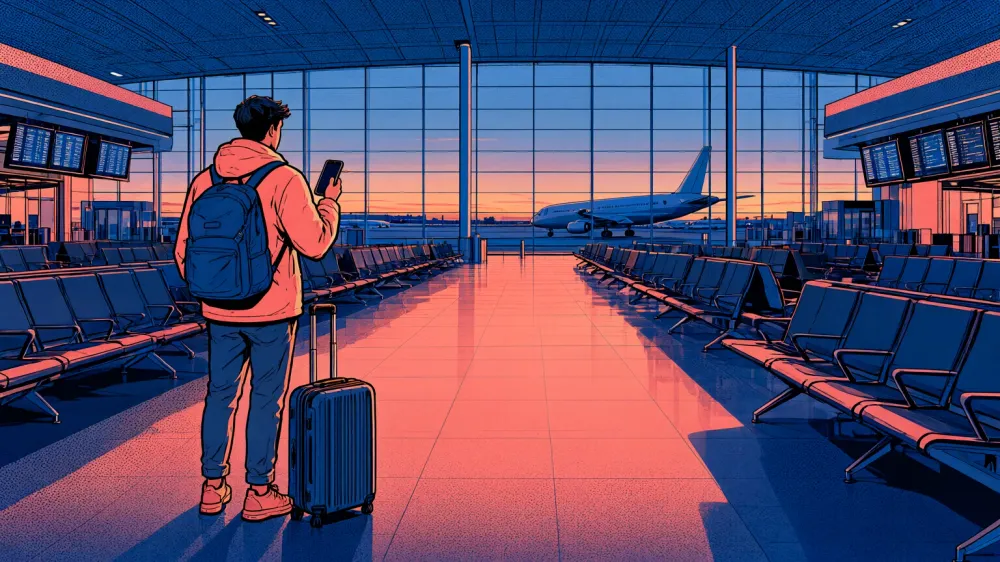
On Tuesday, Nov. 17, the voicemail line for National Security Agency employees carried a “code yellow” message. Non-emergency staff heading to Fort Meade, Maryland, were told to stagger their arrivals. Emergency personnel should report as usual. NSANet, the internal network used to communicate classified information, was down.
Later that day, Director of National Intelligence Jay Clayton said on Fox Business that the network had failed after a software patch for PHP vulnerabilities discovered last month.
Six outages hit large organizations between Nov. 12 and Nov. 17, disrupting Americans’ travel and leaving bank customers struggling to make payments, setting off panic buying and claims of a coordinated attack. Washington officials offered an explanation centered on repairs to AI-discovered flaws, while the NSA’s own statement cited scheduled maintenance and the FAA administrator said there was “zero evidence of anything AI-related.”
The week's five biggest outages
- FAA, Friday Nov. 13: Communications and radar problems hit 17 of the FAA’s 22 en route centers, prompting a nationwide ground stop; officials traced the disruption to excessive connection requests during a router upgrade.
- Microsoft 365 and Outlook, Nov. 12-13: More than 80% of Microsoft’s networking gateway servers became unresponsive during a worldwide outage; a July software bug surfaced under increased traffic and reduced capacity.
- JPMorgan Chase, Monday Nov. 16: More than 4,700 customer problem reports reached Downdetector by 2 p.m. ET, with Zelle payment delays reaching other banks; Chase cited a software bug in an on-premise hardware system.
- NSA, Tuesday Nov. 17: NSANet went offline, prompting code yellow on the agency’s three-level staffing scale; the NSA cited scheduled maintenance, while Clayton identified patching for PHP vulnerabilities.
- Apple, Tuesday Nov. 17: Apple’s status page listed the App Store, Apple Music, AppleCare, iCloud Mail and other services as down during the day, while store employees could not complete purchases; Apple cited an internal update.
What Happened
- Six outages hit the FAA, Microsoft, JPMorgan Chase, United Airlines, the NSA and Apple between Nov. 12 and Nov. 17.
- Director of National Intelligence Jay Clayton said the NSA's network failed after a patch for PHP flaws found last month with AI help; the NSA's own statement cited scheduled maintenance.
- Microsoft traced its outage to a bug from a July update, Chase to a software bug in an on-premise hardware system, Apple to an internal update.
- The FAA has reproduced the Arkansas router failure but has not found its root cause, and Duffy is asking Congress for $50.1 billion.
AI-generated summary, reviewed by an editor. More on our AI guidelines.
The patch explanation
Clayton said institutions were taking systems offline to fix known vulnerabilities, then encountering trouble when restarting them or passing work between systems. He said officials had found no signs of a coordinated cyberattack or state-sponsored activity.
“AI is making it possible to identify vulnerabilities across enormous numbers of systems at unprecedented speed, creating enormous pressure on companies and government agencies to patch those vulnerabilities immediately, often all at once, putting tremendous strain on systems that weren’t built to handle that pace of change,” said Mark Warner, a Virginia Democrat and vice chairman of the Senate Intelligence Committee.
The Washington Sun, citing three anonymous sources familiar with private conversations, said bank executives and NSA officials had told members of Congress that this week’s outages broadly were caused by attempts to patch AI-found vulnerabilities. One congressional official briefed on the matter said, “They’re trying to push through a lot of patches all at once, more than the system was designed for.” Microsoft’s and Chase’s public accounts identified other technical causes.
The two PHP flaws Clayton referred to, collectively called PHP2Shell, were disclosed on Oct. 21. Researchers at OpenAI, Wiz and Calif found them with AI help in PHP, the programming language powering about 70% of websites at the time of disclosure. The flaws could expose sensitive information, including passwords. The NSA urged organizations to apply patches.
Beyond Clayton’s account of the NSA failure, the public record does not establish a link between these outages and repairs to AI-found flaws.
What the companies say broke
Christiaan Beek of cybersecurity company Rapid7 said nothing in the public record suggested the latest outages resulted from rushed security updates. He also said outdated processes posed risks as AI-assisted discoveries increased the volume of flaws needing repairs.
“Complex systems fail in boring ways far more often than because of an adversary,” Beek said. “The boring reason isn’t harmless, though, and worryingly, it means the systems we rely on are fragile enough that we can bring them down ourselves, no attackers needed.”
Microsoft’s preliminary account reached back to an update deployed in July. A hidden bug became active when additional traffic arrived at its networking gateways while some server capacity was already unavailable. As servers stopped responding, traffic moved to others, which also failed. At its lowest, more than 80% of the gateway servers were unresponsive, Microsoft’s preliminary report said. Hospitals had turned to paper records, and some jails could not release prisoners during the disruption.
The company’s lab tests had missed the defect because they used weaker hardware with fewer processing cores than production machines. The problem grew worse on newer machines with more cores. Restarting servers did not immediately help: waiting requests overwhelmed them again.
Charles Lamanna, Microsoft’s executive vice president for Copilot, Agents and Platform, wrote that because the defect had been latent since July, the company’s normal rollback could not quickly revert it. Its automated recovery processes were not designed to restore service from such a widespread failure.
Lamanna described the cause in a post on X, and Microsoft separately apologized.
At Chase, spokesman Joe Evangelisti identified a software bug in an on-premise hardware system and said the problem was not cyber-related. Other banks experienced delays when their customers transacted with Chase. Zelle’s network itself remained operational.
Apple’s internal update disrupted its employee portal and internal sign-in tools as well as consumer services. Store employees could not finish sales or book appointments. Its public status page showed no outages by Tuesday evening.
The NSA said mission-critical capabilities remained operational. Its employee voicemail returned to code green Tuesday evening, restoring normal reporting instructions, although complete network recovery had not been confirmed.
Backup networks remained available to carry urgent intelligence to the president during his Asia trip, a current and a former U.S. official said. Intelligence sharing with allied countries was unaffected, according to a source from one of the Five Eyes countries and a former U.S. intelligence official. In 2000, a technical failure at the agency had interrupted intelligence processing and left computers down for nearly three days.
United Airlines also briefly delayed departing flights Monday after a system outage. Accounts of its cause differ.
Panic in the aisles
At Costco, purchases of water and nonperishable food surged, alongside demand for batteries. Analysts raised their price target for Costco shares to $1,150 from $1,100, citing panic buying. Most of Costco’s expensive generators were sold out online as of Sunday.
The weekend’s Saturday Night Live cold open put John Mulaney in a fictional CIA meeting, using the FAA and Microsoft failures as punchlines. Online, viral posts claimed a foreign government, or an extraterrestrial one, was mounting a coordinated attack. Others cast the outages as warnings of an unspecified catastrophe.
A Quinnipiac University poll released in September found 73% of Americans concerned that future AI systems could pose an existential threat to humanity.
President Donald Trump played down the outages while traveling in Asia on Tuesday.
“It’s going to be very much under control. It’s life,” he said. “When you’re big and powerful and you have all the money, things like that happen. It’s fine.”
Know someone who'd find this useful? ✉️ Email it to a friend in one click, or they can subscribe free here.
Homeland Security Secretary Markwayne Mullin said the failures were not cyberattacks. The FBI separately warned that criminals and state-backed hackers were seeking to use AI tools to automate attacks worldwide.
House Minority Leader Hakeem Jeffries, a New York Democrat, said it was premature to conclude malicious activity was involved. He requested a congressional briefing from the administration on what happened and what steps were needed.
The FAA's bill
Friday’s failure began during work to replace copper telecommunications lines with fiber in El Dorado, Arkansas. A router flooded the network with excessive connection requests, interrupting communications and radar signals at 17 of the FAA’s 22 en route centers.
The FAA paused new Juniper router installations and disabled the relevant functionality on existing devices after the ground stop. Investigators were testing routers at contractor L3Harris’s laboratory. Hewlett Packard Enterprise, Juniper’s owner, said the device “functioned as it was configured to by the installer.”
FAA Administrator Bryan Bedford said there was “zero evidence of anything AI-related.”
For airlines, the damage already had a price. Bernstein estimated in a Monday research note that Friday’s ground stop and the weekend recovery cost American, Delta, United and Southwest a combined $345 million.
Transportation Secretary Sean Duffy sought $50.1 billion from Congress on Tuesday for air transportation upgrades, while only about $1 billion of the $12.5 billion Congress provided last year had been spent, Democratic Representatives Rick Larsen and André Carson said, with additional money committed to projects.
The new request included about $10 billion for air traffic control modernization, alongside funding to renovate air traffic control towers, grants to improve airport runways and terminals, and money to replace or renovate certain airport terminals. Texas Republican Ted Cruz, chairman of the Senate committee overseeing aviation, said some of the proposed spending was unrelated to safety.
Duffy has implied that more funding would have prevented the stoppage. Tom Lintner, a former FAA air traffic program manager, disputed the funding explanation.
“That’s not what caused Friday,” he said. “Four decades of procrastination and poor program management is what caused Friday.”
“We’ve been able to recreate what happened in El Dorado,” Duffy said. “But the root cause of what happened, we don’t have clarity yet.”
Frequently Asked Questions
Were the outages a cyberattack?
Officials say no. Director of National Intelligence Jay Clayton said there were no signs of a coordinated cyberattack or state-sponsored activity, and Homeland Security Secretary Markwayne Mullin said the failures were not cyberattacks. Microsoft, Chase, Apple and the NSA each described a technical cause.
What does AI have to do with the outages?
Clayton said the NSA outage followed patching for PHP2Shell, two PHP flaws disclosed Oct. 21 that researchers found with AI help. Sen. Mark Warner said AI-driven vulnerability discovery is pressuring organizations to patch all at once. Beyond Clayton's account of the NSA, the public record does not establish that link.
What caused the Microsoft 365 outage?
Microsoft's preliminary report traced it to a bug in a July update to its networking gateway servers, triggered by extra traffic while some capacity was offline. At its lowest, more than 80% of the gateway servers were unresponsive. Lab tests missed the defect because they used weaker hardware.
What caused the FAA ground stop?
A router installed during copper-to-fiber work in El Dorado, Arkansas, flooded the network with connection requests, disrupting communications and radar at 17 of the FAA's 22 en route centers. Duffy said investigators reproduced the failure but have not found the root cause.
How did the public react?
Analysts raised Costco's price target to $1,150 from $1,100 on panic buying of water, food and batteries, and most of Costco's generators sold out online. Viral posts claimed a coordinated attack, and President Trump called the outages "life."
AI-generated summary, reviewed by an editor. More on our AI guidelines.

Marcus Schuler
Editor-in-Chief and founder of Implicator.ai. Former ARD correspondent and senior broadcast journalist with 10+ years covering tech. Writes daily briefings on policy and market developments. Based in San Francisco. E-mail: editor@implicator.ai