Implicator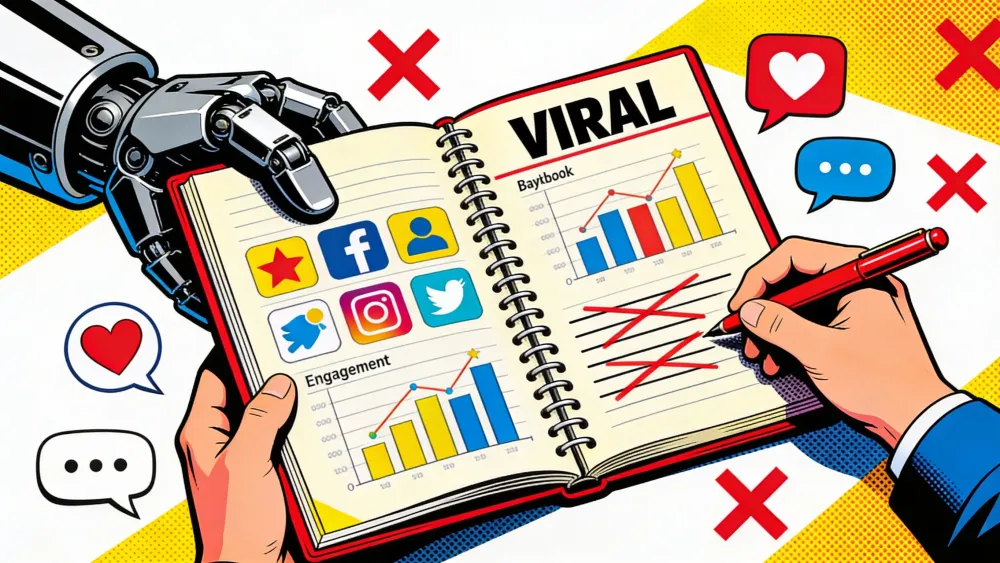
Implicator PRO Briefing #011 / 17 Feb 2026
Four AI research agents ran simultaneously across Twitter, LinkedIn, Instagram, and Facebook. Seven minutes later, they had extracted recurring structural patterns from thousands of high-performing posts, platform by platform, signal by signal. The resulting playbook is genuinely useful.
But the experiment also surfaced something the agents themselves could never articulate: they can identify the patterns behind high-performing content, but they cannot reliably produce it without human judgment. A new academic benchmark confirms that this gap is not a bug. It is a feature of how large language models process procedural knowledge. And it changes how every content team should think about deploying AI in 2026.
Here is what the agents found. Here is what they missed. And here are the prompts you can steal to put both halves to work.

Marcus Schuler
Tech translator with German roots who fled to Silicon Valley chaos. Decodes startup noise from San Francisco. Launched implicator.ai to slice through AI's daily madness—crisp, clear, with Teutonic precision and sarcasm. E-Mail: [email protected]