IMPLICATOR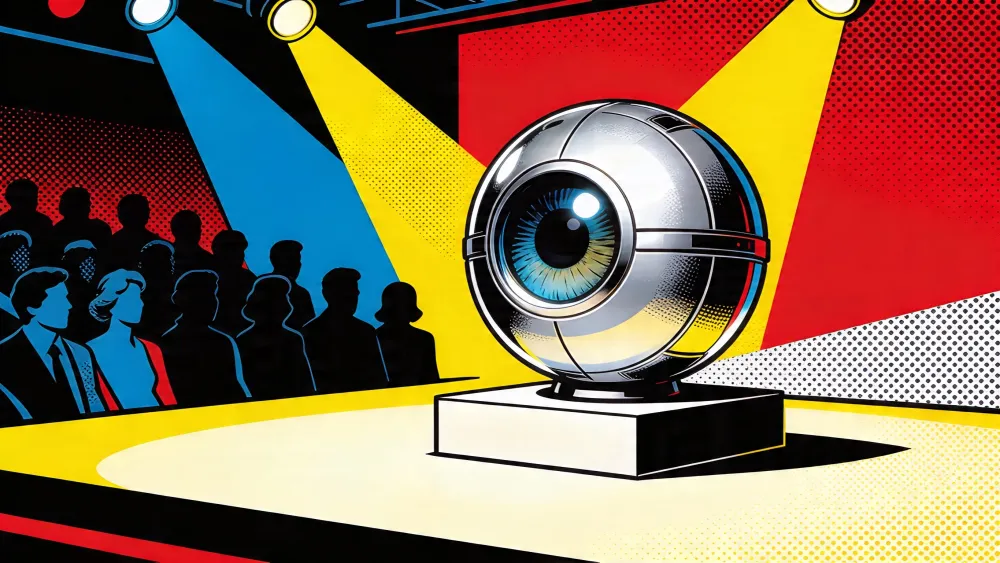
World unveiled World ID 4.0, the next-generation version of its proof-of-human protocol, at the company's Lift Off event in San Francisco on Friday, announcing launch integrations with Tinder, Zoom, Docusign, Okta, Vercel, and VanEck. Chief product officer Tiago Sada said more than 18 million people have verified with an Orb across 160 countries and used their human credentials more than 150 million times, up from about 12 million verified users a year ago. The World App, the company's consumer wallet, now counts nearly 39 million users. The upgrade introduces an account-based architecture for a portable proof of human across apps, along with key rotation, multi-device sessions, single-use nullifiers for anonymity, and an open-source SDK for any developer, Tools for Humanity said.
On the floor
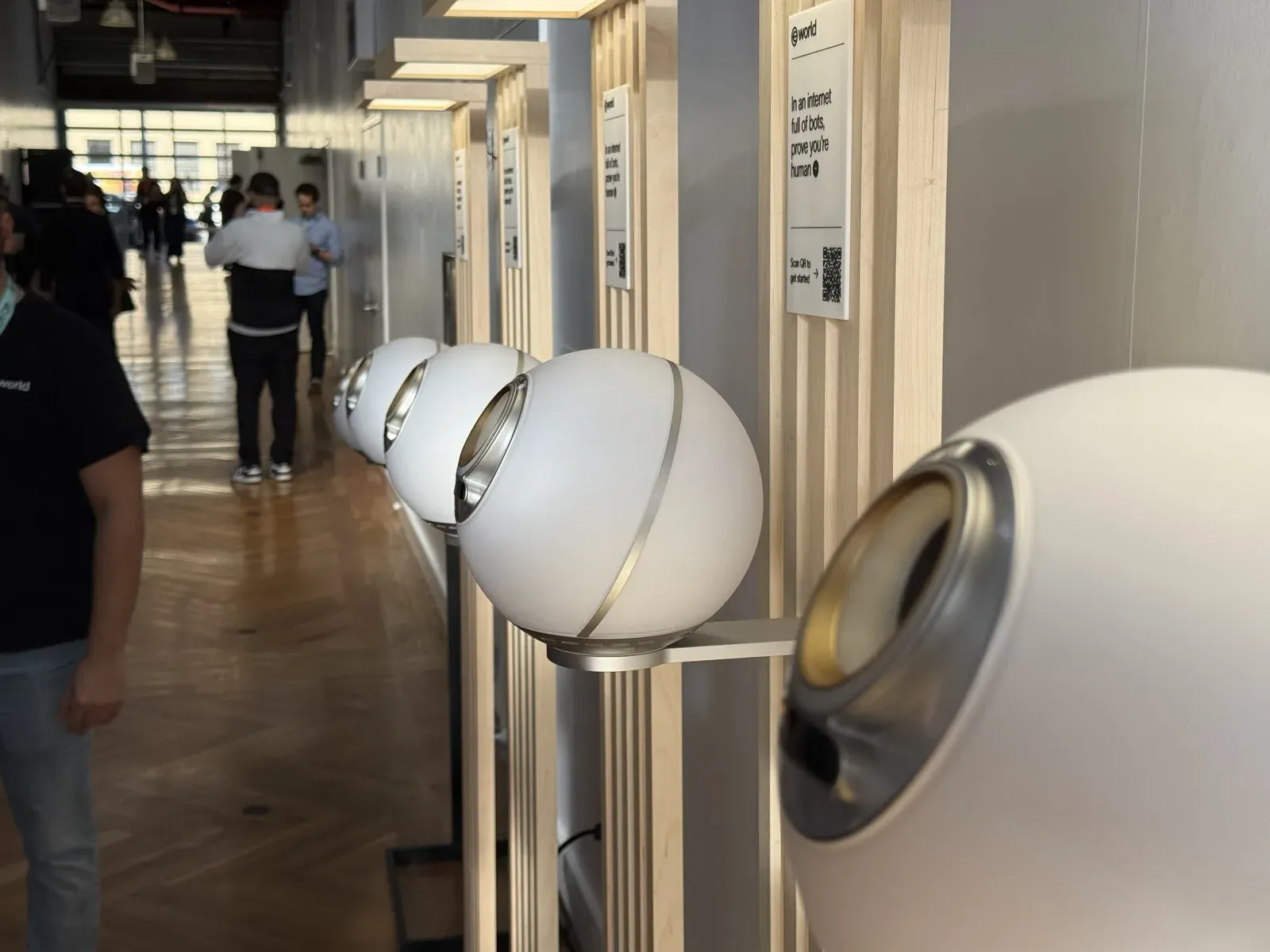
Rows of Orb scanners line the entrance hallway, each mounted on a minimalist wooden frame with its own QR-code placard reading, "In an internet full of bots, prove you're human." The housing leans Apple-ish. Soft white shell, gold inner lens, chrome accent ring, "Tools for Humanity" etched around the aperture. Self-serve first, staffed second.
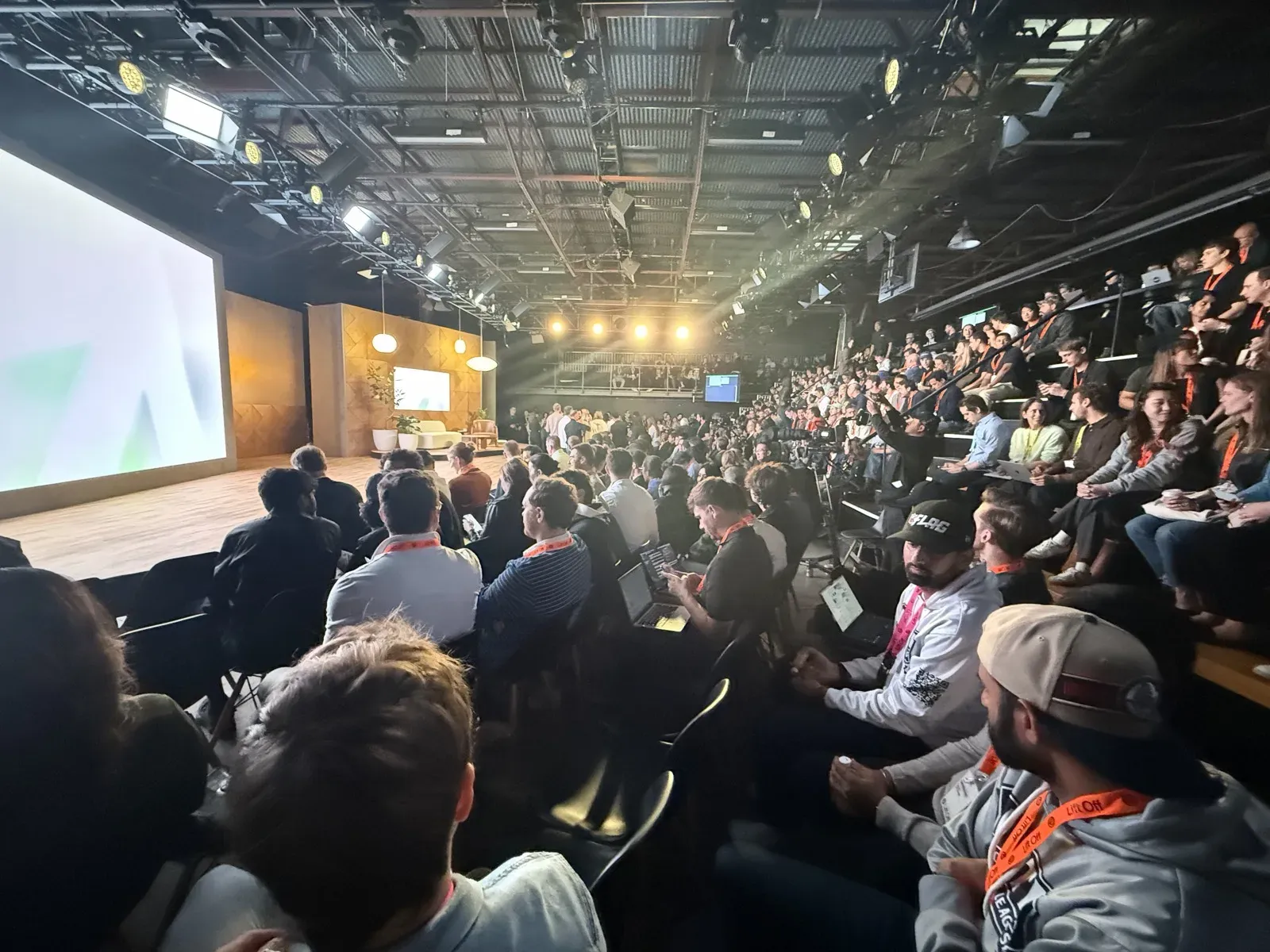
Inside the main hall, roughly 600 seats are full and the lights are coming down.
Key Takeaways
- World unveiled World ID 4.0 at Lift Off in San Francisco, with launch integrations across Tinder, Zoom, Docusign, Okta, Vercel, and VanEck
- The new protocol adds an account-based design, key rotation and recovery, multi-device sessions, single-use anonymity nullifiers, and an open-source SDK for any developer
- Tinder expands World ID verification from a Japan pilot to global today with five free profile "boosts" as an incentive; Razer, Mythical Games, and Reddit also sign on or begin testing; Concert Kit debuts with the Bruno Mars world tour
- Zoom bakes Deep Face into meetings with a waiting-room gate and mid-call verification; Docusign adds proof-of-human to document signing; Okta plans Human Principal for verifying the human behind an AI agent
- 18 million people have verified across 160 countries with 150 million credential uses to date; the World App now counts nearly 39 million users; a developer AgentKit lets AI agents carry a verified human identity
AI-generated summary, reviewed by an editor. More on our AI guidelines.
What changed in the protocol
"Today I'm very excited to introduce you to World ID 4.0," Sada said from the stage, calling it the product of more than 18 months of work with the World Foundation. The goal, he told the room, is to get proof-of-human into "every website and app" on the open internet. Sada joined Tools for Humanity after co-founding the financial services app Flinto, which sold to micromobility company Grin.
World ID 4.0 moves to an account-based design that carries a single, portable proof of human across apps and services. Key rotation and recovery land too, alongside multi-key and session support for cross-device sign-in. Single-use "nullifiers" let relying parties trust each interaction ties back to a unique verified human while preserving anonymity. A fresh open-source SDK lets any developer integrate World ID, or run as an authenticator themselves.
Sada went out of his way to underline the privacy stack. "It is for starters open source, and all of your personal data gets stored only on your personal device," he said. "It uses cutting-edge cryptography, like AMPC and ZKPs, to ensure that nobody can track you or your usage." AMPC refers to asynchronous multi-party computation. ZKPs are zero-knowledge proofs.
Daniel, the engineer who followed Sada on stage, framed 4.0 as "a complete soup-to-nuts re-engineering of the stack," built on the premise that "humans should have a right to exceptional privacy and security" when they prove they are human online.
Consumer: Tinder goes live in the US, Bruno Mars tour gets verified tickets
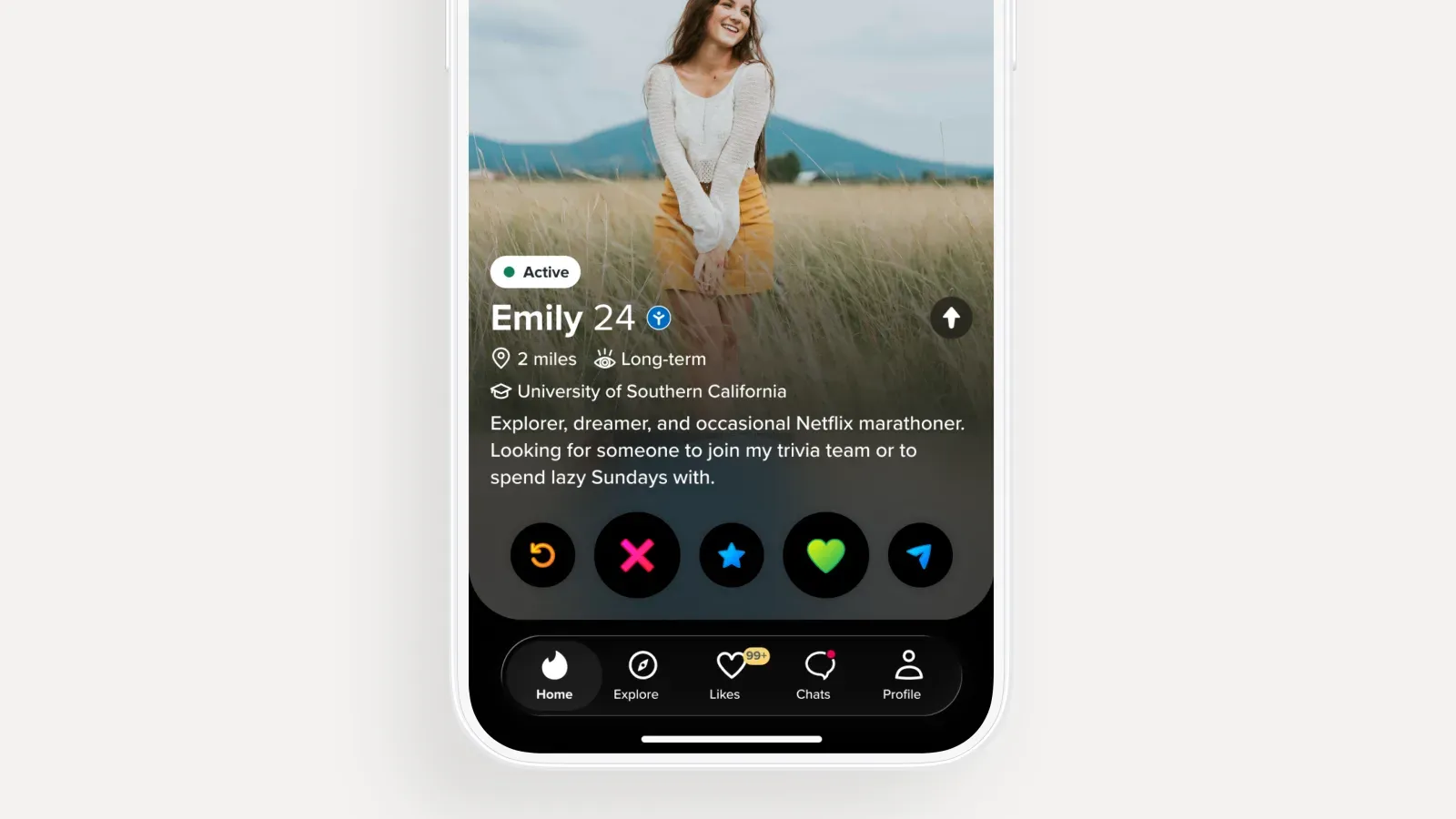
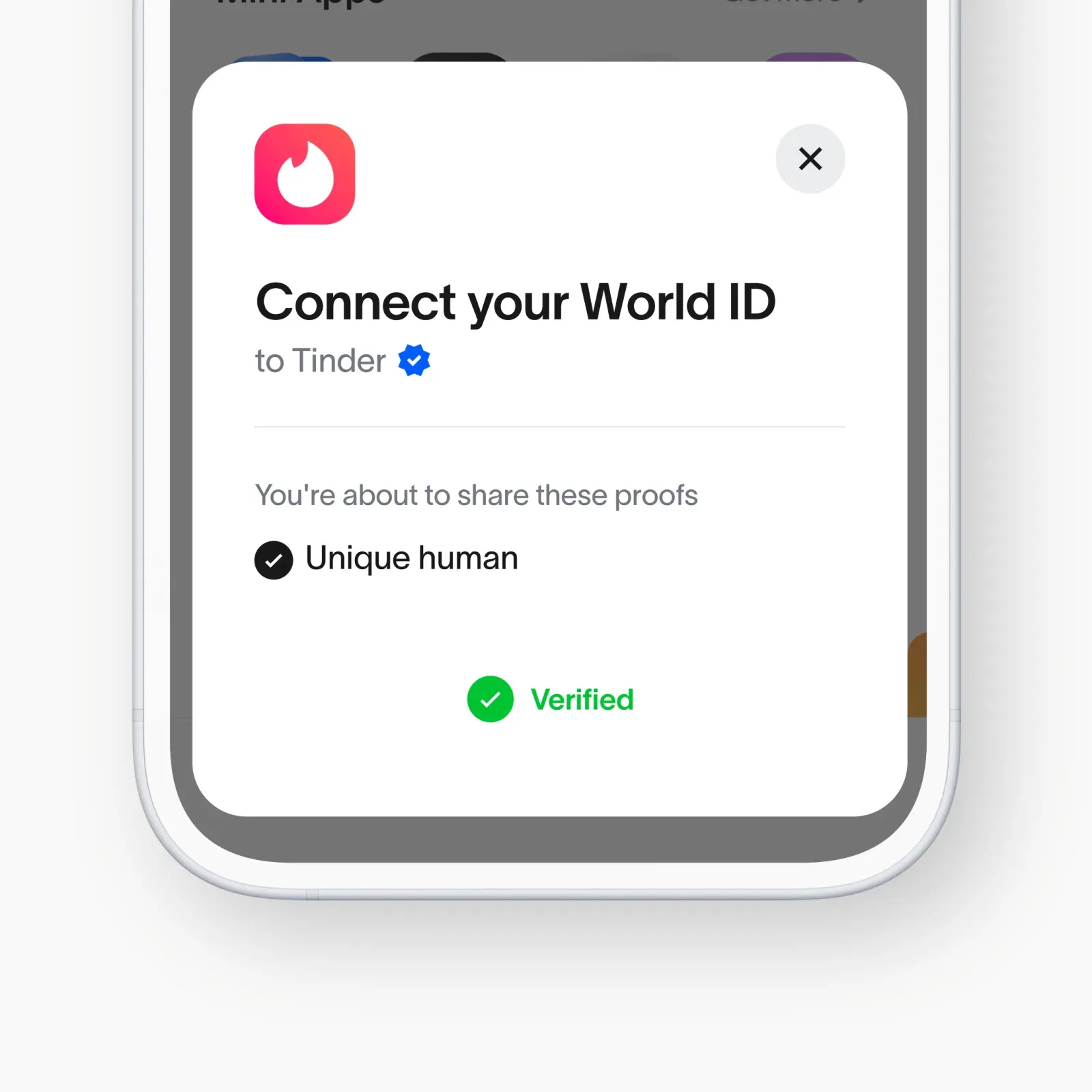
After a Japan pilot run with Match Group last year, Tinder is rolling out World ID verification in the United States and globally starting today. Users verify once with an Orb and get a "Verified Human" badge on their profile, signaling to matches that a real, unique person sits on the other side of the screen. Tinder users who verify with World ID also get five free "boosts," a paid feature that can lift a profile's visibility by up to 10x for 30 minutes.
World also introduced Concert Kit, a new product that lets artists reserve tickets for verified humans, aimed at the bot-driven scalping problem that has dogged Ticketmaster and its peers. The launch partner is Bruno Mars's world tour, with a verified-humans-only San Francisco show on Friday night by Anderson .Paak, performing under his DJ Pee .Wee alias.
Gaming is next. Razer and Mythical Games are using World ID to filter real users from bots across their titles, a pitch aimed at matchmaking fairness and anti-cheat. Reddit is also testing World as a way to identify authentic users and lift the quality of conversations.
Enterprise: Zoom and Docusign add proof-of-human to meetings and documents
Zoom is the first communications platform to bake World's Deep Face directly into its meeting product. The integration runs a three-way match: the cryptographically signed image captured during the user's original Orb verification, a real-time face-auth liveness selfie taken on the participant's device, and the live video feed other participants see on screen. When all three align, the system confirms with high confidence that the person on the call is the expected verified human. Only video is analyzed, not audio.
Hosts can enable a Deep Face waiting room to require every participant to verify before joining, and anyone on a call can request that another participant verify mid-meeting. World argues that frame-by-frame deepfake detection gets less reliable as video models improve, which is why it cross-references signed registration imagery instead. The threat is not theoretical. Engineering firm Arup lost about $25 million in early 2024 after a Hong Kong employee authorized wire transfers on a video call where every face besides his own was an AI-generated deepfake, per CNN.
Zoom founder Eric Yuan joined the Lift Off stage remotely, appearing via Zoom on the main screen alongside other participants to walk through the integration.
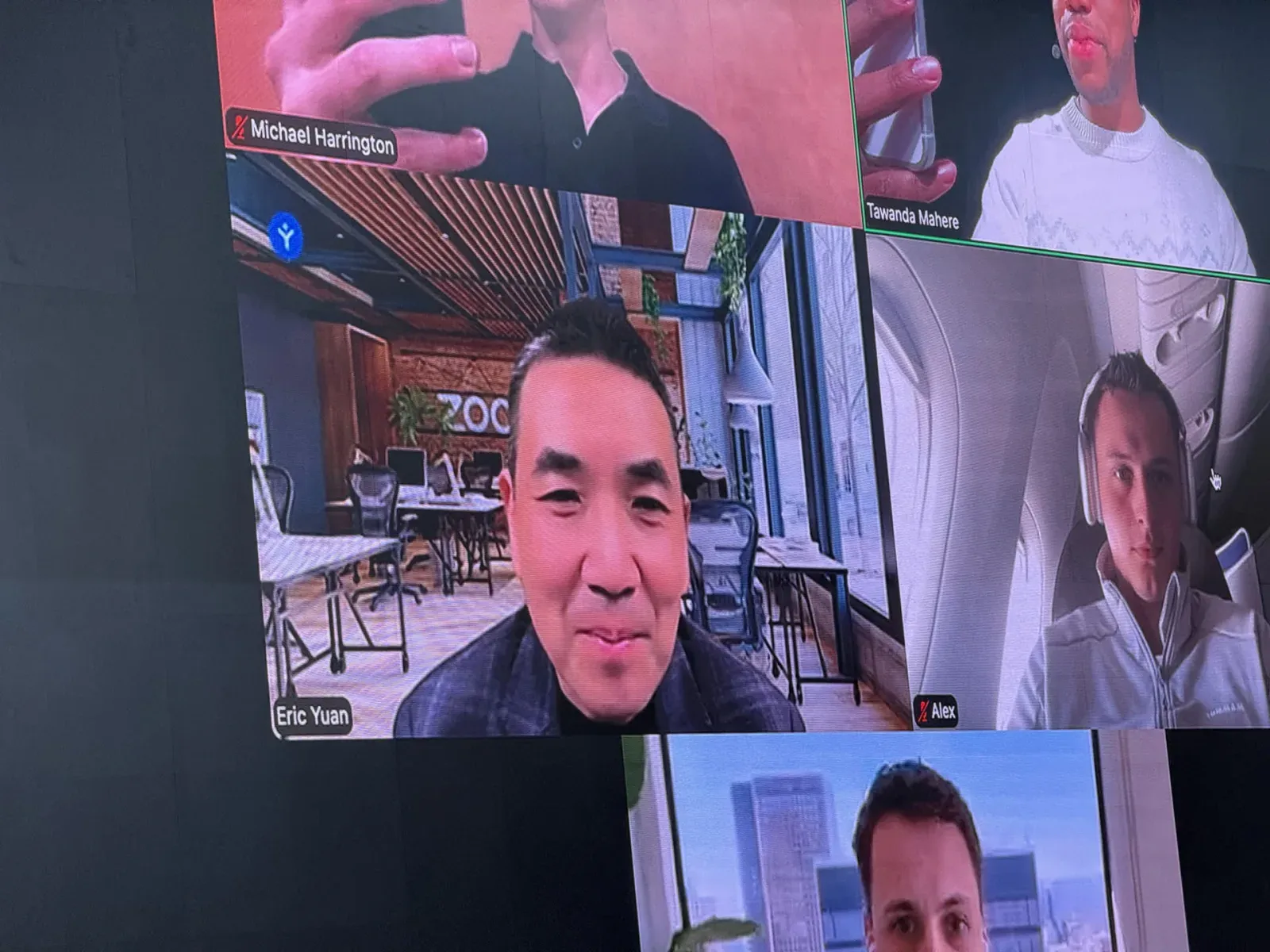
"We are building AI and data across the platform because people see the value that it can bring," Yuan told the room. "But in meetings, you really want to know who the humans are. So if I come here on a stage today, I want you to know it's a real Eric, it's real me." He added, on the verification step itself, "we're expecting that you all verified that."
Docusign is adding World ID to its document signing trust model. Signers can prove they are humans (not bots) and optionally attest to specific claims about themselves. The result is a verifiable link between a real person and every signed action, whether executed directly or delegated.
Agents: Vercel and Okta build humans into automated workflows
Vercel and World are shipping a human-in-the-loop feature for developers, built on Vercel's new open-source Workflow SDK. Developers can add a verification step to any workflow or agent run. Each check is auditable within the workflow execution. It ships today and installs via npm.
Okta is planning a new product called Human Principal. It lets API developers verify that a human stands behind an agent's action and enforce policy accordingly. Users authenticate through their preferred verification method, receive a device-bound cryptographic proof, and reuse it across products without starting over. World ID is slated as one of the first Human Principal integrations. The public beta waitlist is open at humanprincipal.ai.
Combined, the two products back per-human rate limits on agents, fraud protection for free tiers, and simpler onboarding for agents acting on behalf of verified humans.
World also introduced AgentKit, a developer toolkit for building AI agents that carry a verified human identity behind them, request verifiable approval from that human, and transact on the human's behalf.
Market backdrop
WLD traded near $0.32 heading into the event, up about 9% in the prior 24 hours. The token is still down more than 90% from its March 2024 peak above $11. Bots now account for roughly 58% of global web requests, Eightco Holdings said, citing the figure as the core thesis behind proof-of-human infrastructure. Eightco, the largest publicly disclosed institutional WLD holder with 277 million tokens, sent board member Tom Lee and CEO Kevin O'Donnell to the event.
Get Implicator.ai in your inbox
Strategic AI news from San Francisco. No hype, no "AI will change everything" throat clearing. Just what moved, who won, and why it matters. Daily at 6am PST.
No spam. Unsubscribe anytime.
The event follows a $65 million OTC token sale that closed in March at an average price of $0.27. Proceeds are earmarked for Orb hardware manufacturing and R&D.
What to watch
A flagship social platform partner beyond Reddit's early test would be the next shoe to drop. A concrete integration with OpenAI, long rumored and still unsigned, would land even louder. More updates as speakers take the stage.
Frequently Asked Questions
What is World ID 4.0?
World ID 4.0 is the new version of Tools for Humanity's proof-of-human protocol, unveiled at the Lift Off event in San Francisco on April 17, 2026. It moves to an account-based design for a portable credential across apps, adds key rotation and recovery, multi-device sessions, single-use anonymity nullifiers, and an open-source SDK for any developer to integrate.
Which partners launched with World ID 4.0?
Launch integrations include Tinder (verification rolling out in the US today), Zoom (Deep Face baked into meetings), Docusign (proof-of-human on document signing), Okta (via the planned Human Principal product), Vercel (a human-in-the-loop step in its Workflow SDK), and VanEck (a verified wallet experience). World also introduced Concert Kit for verified-fan tickets, launching with Bruno Mars's world tour.
How does Zoom's Deep Face integration work?
Zoom runs a three-way match to confirm the person on camera is the verified human expected on the call. It compares the cryptographically signed image captured at the original Orb verification, a real-time face-auth liveness selfie on the participant's device, and the live video feed other participants see. Only video is analyzed, not audio. Zoom is the first communications platform to integrate Deep Face directly.
How many people have verified with World ID?
More than 18 million people across 160 countries have verified with an Orb, and those credentials have been used more than 150 million times across applications, chief product officer Tiago Sada said on stage. World's pitch is that proof-of-human is becoming infrastructure, not a single product, as bot traffic reaches roughly 58% of global web requests.
What is Human Principal from Okta?
Human Principal is a planned Okta product that verifies a real human stands behind an AI agent's action and lets developers enforce policy on that basis. Users authenticate through a preferred method, receive a device-bound cryptographic proof, and reuse it across products. World ID is slated as one of the first integrations. A public beta waitlist is open at humanprincipal.ai.
AI-generated summary, reviewed by an editor. More on our AI guidelines.


Free AI briefing · Weekdays
The AI stories that matter, sourced and explained.
Join the Morning Briefing. It goes out every weekday at 4:45 a.m. Pacific, with later sends for the East Coast, Berlin and Tokyo.
Free when you sign up: The Paperclip Compendium, our tested guide to running AI agents.
Free. Unsubscribe in one click.

Marcus Schuler
Editor-in-Chief and founder of Implicator.ai. Former ARD correspondent and senior broadcast journalist with 10+ years covering tech. Writes daily briefings on policy and market developments. Based in San Francisco. E-mail: editor@implicator.ai