Implicator
San Francisco | Tuesday, March 24, 2026
The FCC blacklisted every consumer router manufactured outside the United States on Monday. Not just Chinese brands. Netgear builds in Taiwan, Eero assembles in Asia, Google Nest ships from overseas. All locked out of future product launches unless they commit to building American factories. Netgear stock jumped 16.7%.
Anthropic handed Claude direct control of Mac desktops. Mouse, keyboard, screen. The safety lab that fought the Pentagon over weapons restrictions now lets an AI browse your files. OSWorld benchmark scores jumped from under 15% to 72.5%.
Google is quietly rewriting publisher headlines in search results with no disclosure. The last time it called something "a small experiment," it went permanent in four weeks.
Stay curious,
Marcus Schuler
Implicator Pro — Free This Week
The Intelligence Arbitrage Is Closing
AI token prices dropped 99% in three years. The companies that sold intelligence as a product are watching their margins evaporate. Value is migrating to infrastructure, orchestration, and data flywheels. If your strategy still assumes AI access is a competitive advantage, this analysis explains why that window just shut.
Read the Full Analysis →FCC Blocks All Foreign-Made Consumer Routers From US Sale in Security Sweep

The FCC blacklisted every consumer router manufactured outside American borders on Monday, freezing new product launches from Netgear, Eero, and Google Nest alongside Chinese brands. Netgear stock jumped 16.7% in after-hours trading.
The order goes beyond Beijing. Any router built outside the US loses its shot at FCC equipment authorization, the certification required before a device can be imported or sold. Companies can apply for a Conditional Approval, but the fine print demands full supply chain disclosure and a concrete plan to build American factories.
China and Taiwan produce 60% to 75% of the world's routers. The US accounts for roughly 10%. Among the few consumer routers reportedly built on American soil is SpaceX's Starlink WiFi router. The FCC cited the Volt Typhoon, Flax Typhoon, and Salt Typhoon intrusion campaigns as justification, but left millions of already-installed foreign routers completely untouched. That is a security order that locks the front door while leaving every window open.
Why This Matters:
- Every major router brand except SpaceX faces a frozen product pipeline and potential factory relocation costing billions in capital expenditure
- The order mirrors the drone ban playbook from December, where only non-Chinese manufacturers received exemptions within three months
Reality Check
What's confirmed: FCC added all foreign-made consumer routers to Covered List. Existing models unaffected. Netgear stock up 16.7%.
What's implied (not proven): US-headquartered companies will receive exemptions faster than Chinese-origin competitors like TP-Link.
What could go wrong: Legal challenges from companies building in US-allied nations like Taiwan could undermine the blanket approach.
What to watch next: Whether TP-Link's US subsidiary receives Conditional Approval or follows DJI's path to full market exclusion.

The One Number
75% — Nvidia's gross margin last quarter on record sales of $68 billion. The company whose customers collectively lose tens of billions annually on AI is now the industry's kingmaker, investor, and creditor. It spent $20 billion acquiring Groq alone and routinely outbids AMD for key startup deals.
Source: Wall Street Journal
Anthropic Gives Claude Direct Control of Mac Desktops in Agent Push

Anthropic launched computer use for Mac on Monday, giving Claude direct control of mouse, keyboard, and screen for Pro and Max subscribers. The feature shipped four weeks after the company acquired desktop-automation startup Vercept AI.
Claude works through a three-tier fallback: app connectors first, then Chrome, then raw screen interaction. OSWorld benchmark scores jumped from under 15% to 72.5%, which Anthropic calls "approaching human-level." Financial and trading apps are blocked by default.
The release sharpens a split in agent strategy. Google emphasizes browser-first workflows. OpenAI acquired Mac assistant Sky but has not shipped full desktop control. Anthropic took the widest swing, and the largest attack surface. Claude sees everything visible on screen via screenshots, including data from other open apps.
Why This Matters:
- First major AI lab to ship direct desktop control, putting pressure on OpenAI and Google to match the capability
- The safety lab that fought the Pentagon over weapons restrictions now hands an AI full access to users' screens

AI Image of the Day

Prompt: A luxury burger designed in the style of Louis Vuitton monogram, the top and bottom buns are made of dark brown monogrammed leather with golden LV monogram patterns and a large 3D golden LV logo embossed on the top bun, between the buns are fresh green lettuce, thick green pickles, bright red tomato slices, a juicy grilled beef patty, and melted golden cheese dripping down the front, set against a solid bright yellow background, hyper-realistic 3D render, cinematic lighting, sharp focus, high detail, product photography aesthetic, glossy textures, clean composition
Google Tests AI-Rewritten Headlines in Search With No Publisher Disclosure
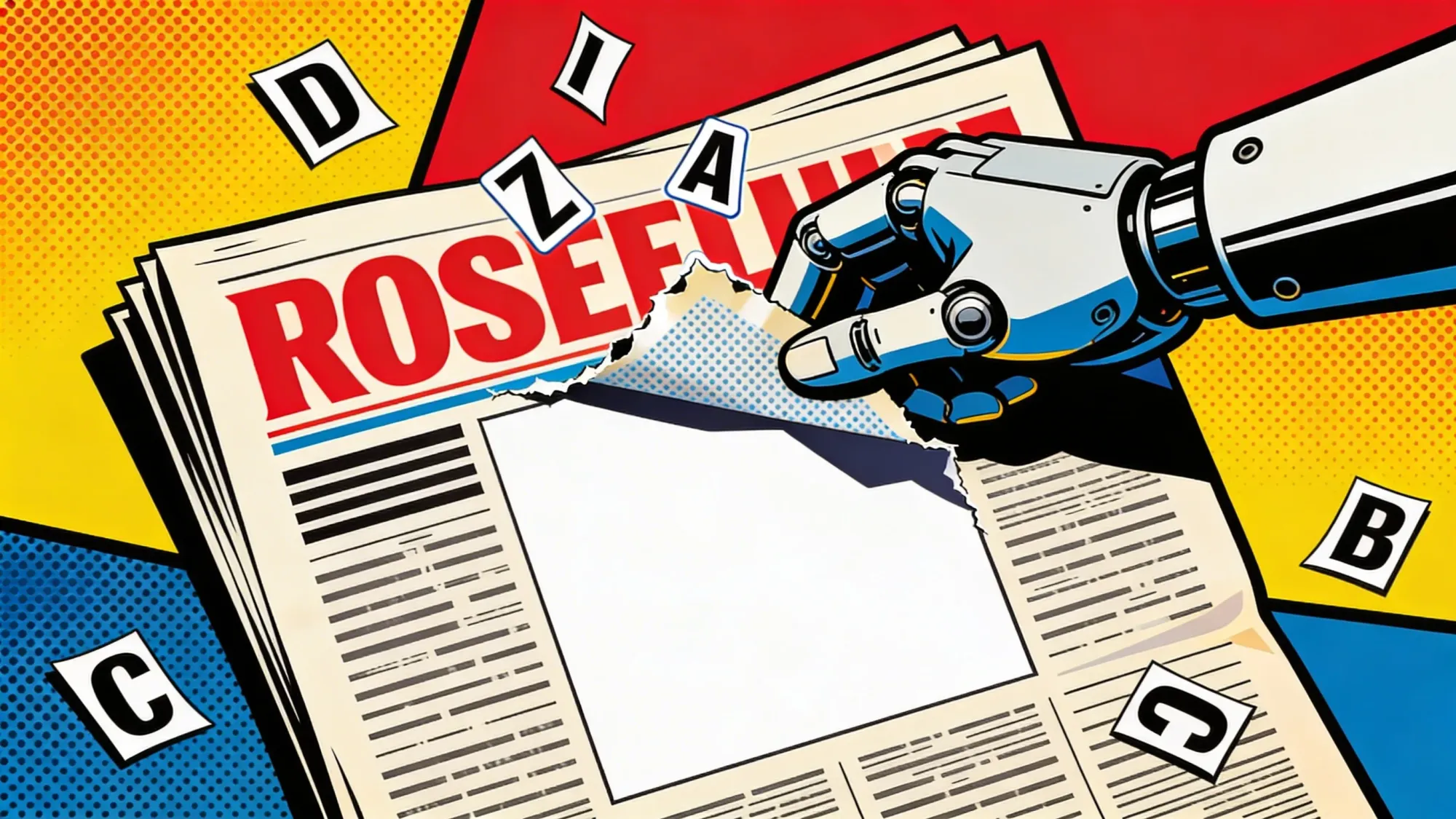
Google is testing an AI system that rewrites publisher headlines in search results without any disclosure. The Verge's skeptical review of an AI tool appeared in search stripped of its context and judgment.
Google called it "a small and narrow experiment." It used nearly identical language in December when introducing headline rewriting in Google Discover. That test became permanent within four weeks. Publishers have already lost 34% of Google search referrals. Now the headlines themselves are being replaced by machine-generated alternatives that sometimes alter the original meaning entirely.
No asterisk, no label, no disclaimer appears alongside the rewritten text. The AI versions sit in the same position and formatting as real headlines, making them indistinguishable from what the publisher actually wrote.
Why This Matters:
- Publishers who lost a third of Google referrals now risk losing editorial control over how their remaining stories appear in search
- Google's pattern of testing-to-permanent suggests this feature will roll out broadly, not quietly disappear
🧰 AI Toolbox
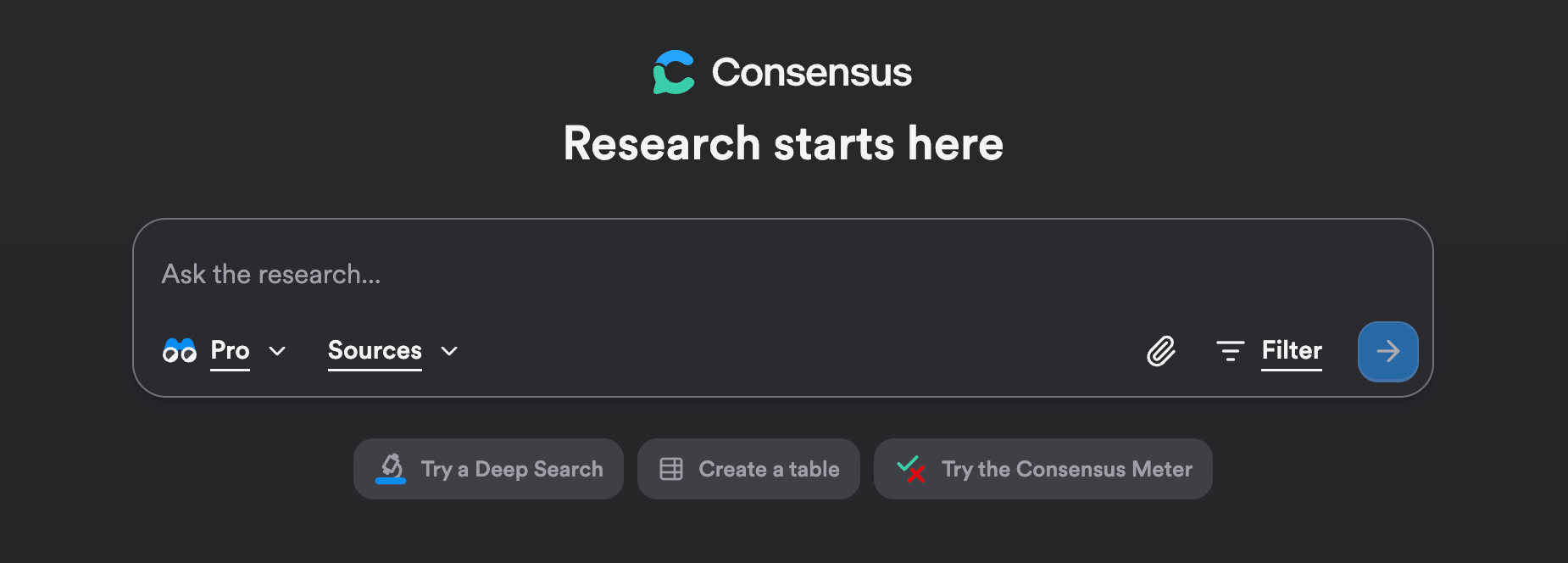
How to Search 200 Million Academic Papers and Get Evidence-Based Answers with Consensus
Consensus is an AI search engine built on peer-reviewed research. Ask a yes-or-no question and it reads thousands of papers, then shows you what the scientific literature actually says with a meter displaying agreement levels. Results link to the original studies with extracted conclusions. No jargon filtering required. Free tier gives 20 AI-powered searches per month.
Tutorial:
- Go to consensus.app and create a free account
- Type a question the way you would ask a researcher: "Does intermittent fasting improve metabolic health?"
- Consensus searches peer-reviewed papers and displays a consensus meter showing how strongly evidence agrees or disagrees
- Read extracted conclusions from individual studies, each linked to the full paper
- Click "Synthesize" to generate a summary paragraph citing multiple studies with references
- Use filters to narrow results by study type, sample size, or journal quality
- Save searches to your library and export citations for reports or presentations
What To Watch Next (24-72 hours)
- HumanX: Registration opens tomorrow for the April 6-9 AI conference in San Francisco. More than 6,500 attendees expected at VP level or above, with Fei-Fei Li, Andrew Ng, and AWS CEO Matt Garman among 350 speakers. Becoming the premier gathering for enterprise AI strategy.
- Senate Commerce Committee: Chairman Ted Cruz convenes a full executive session Wednesday at 10 AM ET, days after the White House pushed Congress to preempt state AI laws with a federal framework. The response shapes the trajectory for US AI regulation.
- RSA Conference: AI security vendor announcements and product launches peak Wednesday and Thursday at Moscone Center. After a year of AI-enabled attacks and the Super Micro export control indictment, spending decisions made this week set enterprise security budgets through 2026.
🛠️ 5-Minute Skill: Turn a Podcast Transcript Into a LinkedIn Post
Your CEO appeared on an industry podcast. The recording is 45 minutes. Marketing needs a LinkedIn post by noon.
Your raw input:
Podcast transcript, 6,200 words. CEO discusses hiring strategy,
why the company stopped requiring degrees, and the metric that
changed the policy (attrition dropped 40% in non-degreed hires).
The prompt:
From this podcast transcript, write one LinkedIn post. Lead with
the most surprising data point. Under 150 words. End with a
question, not a CTA. No hashtags.
What you get back:
We stopped requiring degrees 18 months ago. Attrition in those hires dropped 40%.
The conventional wisdom was that non-degreed candidates would churn faster. Our data says the opposite. They stay longer, ramp at the same speed, and outperform on internal mobility.
The policy change started as a recruiting experiment. It became a retention strategy.
What hiring requirement at your company has never been tested against actual performance data?
Why this works
Podcasts bury the lead in minute 22. The prompt forces extraction of one data point and builds the post around it.
What to use
Claude: Better at preserving the CEO's actual voice.
ChatGPT: Punchier hooks for LinkedIn's scroll speed.
AI & Tech News
AWS Bahrain Region Hit by Drone Disruption Amid US-Iran Conflict
Amazon confirmed its Bahrain data center region has been disrupted by drone activity linked to the ongoing US-led war with Iran, marking the second such interruption in a month. The repeated outages expose the vulnerability of critical cloud infrastructure to military conflicts in the Middle East.
Warren and Banks Push to Suspend Nvidia AI Chip Export Licenses to China
US Senators Elizabeth Warren and Jim Banks urged the Commerce Department to halt export licenses for Nvidia's advanced AI chips to China and Southeast Asia. The bipartisan call follows the indictment of Supermicro co-founder Wally Liaw over alleged diversion of restricted semiconductors.
Alibaba Unveils XuanTie C950, Claims World's Fastest RISC-V Server CPU
Alibaba's DAMO Academy unveiled the XuanTie C950, a 5nm server processor clocking at 3.2 GHz that the company calls the highest-performing RISC-V CPU in the world. The chip signals China's deepening commitment to open-source chip architecture amid US export controls.
SK Hynix Commits $8 Billion to ASML for Advanced EUV Chipmaking Equipment
SK Hynix will spend approximately 11.9 trillion won on EUV lithography tools from ASML through 2027. The spending reflects intensifying competition with Samsung for leadership in DRAM and high-bandwidth memory markets driven by AI demand.
OpenAI Petitions UK Regulator to Join Google's Mandated Search Choice Screen
OpenAI filed a petition with the UK's CMA requesting that AI chatbots be included in the default search engine choice screen Google must present on Chrome and Android. The move could give millions of UK users the option to select ChatGPT as their default search tool.
Palantir Becomes Campaign Liability as Six Lawmakers Refuse Donations Over ICE Ties
Six US lawmakers have publicly refused further campaign contributions from Palantir over the company's work with ICE in support of the Trump administration's immigration crackdown. The backlash reflects growing political toxicity for firms linked to federal enforcement operations ahead of midterms.
Nintendo Cuts Switch 2 Production by One-Third After Weak US Holiday Sales
Nintendo plans to reduce Switch 2 quarterly production from 6 million to approximately 4 million units after the $450 console missed sales expectations in the US market. The pullback signals early challenges for the next-generation gaming device.
🚀 AI Profiles: The Companies Defining Tomorrow
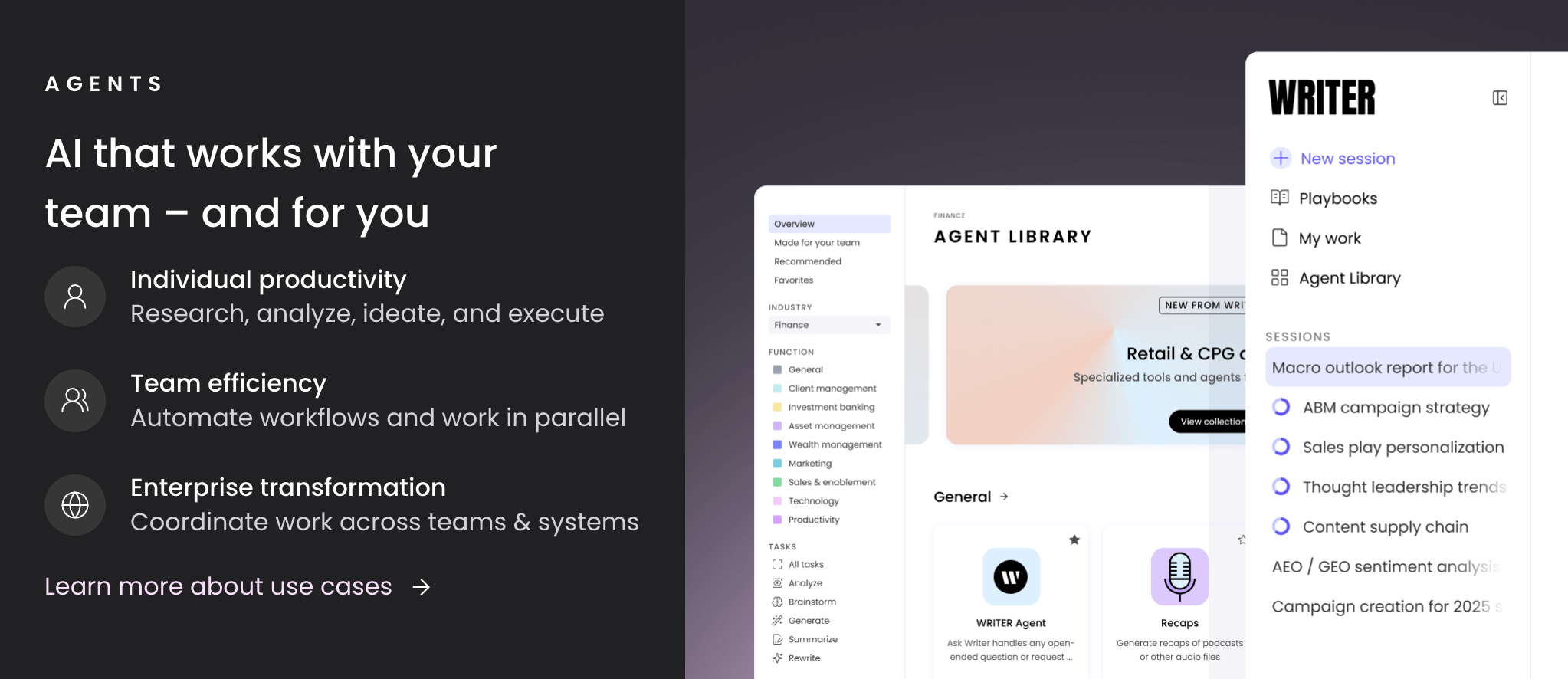
Writer builds enterprise AI from its own foundation models instead of renting from OpenAI. The San Francisco company's Palmyra family of LLMs powers content, compliance, and knowledge agents for Fortune 500 firms. 🏢
Founders
May Habib and Waseem AlShikh co-founded Writer in 2020. Habib spent a decade in financial services and media, including strategy roles at Xceedance. AlShikh led AI research at Microsoft and NSSOL before building Writer's model stack. The company employs over 200 people in San Francisco.
Product
Writer trains its own Palmyra large language models rather than wrapping third-party APIs. Enterprise customers get data isolation, on-premises deployment, and customization that API-dependent competitors cannot match. AI Studio lets non-technical teams build agents for content generation, regulatory compliance, and knowledge retrieval. Graph-based RAG connects to company data. Customers include L'Oreal, Vanguard, Accenture, and Intuit.
Competition
Jasper pivoted from marketing copy to enterprise but lost ground when ChatGPT arrived. Microsoft Copilot ships inside Office. Google embeds Gemini across Workspace. Writer differentiates by owning its model stack: no third-party token costs, full on-prem options, and fine-tuning without sending data outside the perimeter. The risk: OpenAI and Anthropic keep dropping API prices, narrowing the cost advantage of private models.
Financing 💰
$200M Series C co-led by Premji Invest, Radical Ventures, and ICONIQ Growth, with Adobe Ventures, IBM Ventures, Salesforce Ventures, and Workday Ventures. Valued at $1.9 billion. Total raised: $326 million.
Future ⭐⭐⭐⭐
Writer made the contrarian bet: build your own models when everyone else rents. Two years later, every enterprise buyer asking about data sovereignty proves Habib right. L'Oreal and Vanguard logos suggest the strategy works at scale. The question: does owning the model stack still matter when frontier models get cheaper by the quarter? If enterprise procurement keeps demanding on-prem, Writer's architecture is the answer. If API economics win, $326 million buys a lot of runway to pivot. 🏗️
🔥 Yeah, But...
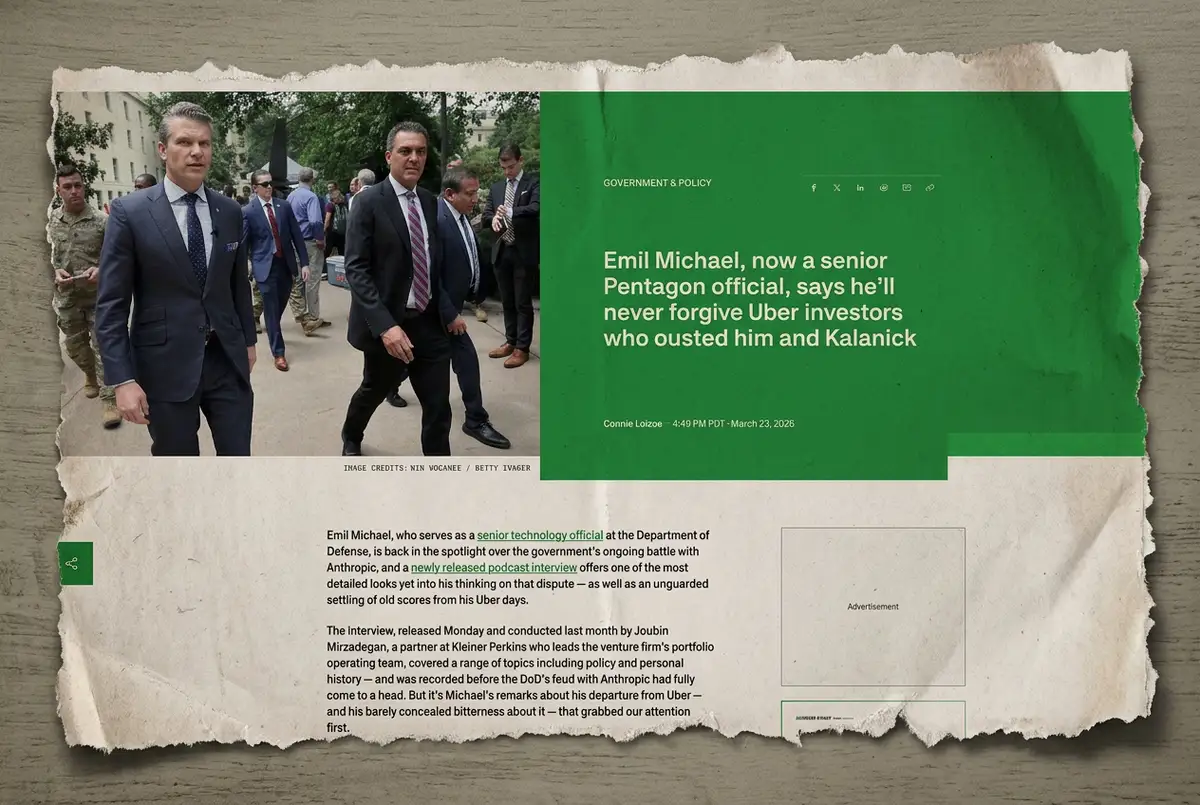
Emil Michael, the senior Pentagon official leading the government's legal campaign against Anthropic, told a podcast last month he will "never forget, nor forgive" the Uber investors who pushed him out alongside Travis Kalanick in 2017. He then spent the next twenty minutes explaining why Anthropic's safety restrictions constitute an "Orwellian" threat to national security. A hearing in the case is scheduled for today in San Francisco.
Sources: TechCrunch, March 23, 2026
Our take: The man orchestrating the Pentagon's legal assault on Anthropic used a venture capital podcast to announce he still hasn't forgiven the people who fired him from Uber eight years ago.
He then called Anthropic's two guardrails "Orwellian." The through-line requires no decoder ring: people who tell Emil Michael no become problems to solve. Uber's investors thought the company needed new leadership. Anthropic thinks military AI needs two restrictions. Both groups said no.
Michael told the podcast host he and Kalanick were right about autonomous driving. He sounds equally certain about this.

Marcus Schuler
Tech translator with German roots who fled to Silicon Valley chaos. Decodes startup noise from San Francisco. Launched implicator.ai to slice through AI's daily madness—crisp, clear, with Teutonic precision and sarcasm. E-Mail: [email protected]