IMPLICATOR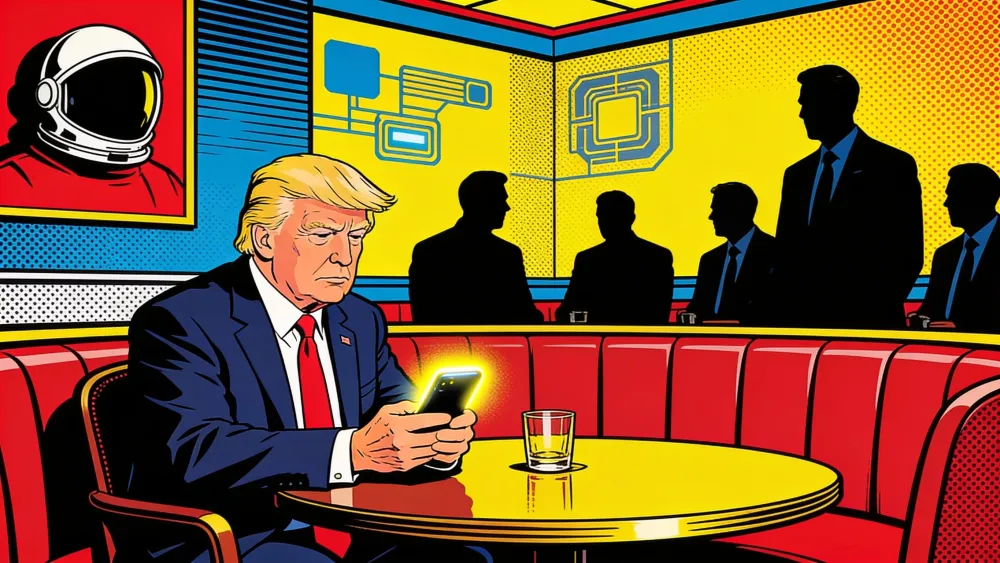
The safe read of Silicon Valley's Trump reset is that executives appeared to seek calmer relations through dinners, donations and a softer public posture. But the episodes in Regime Change show access can make executives more exposed, not less, when the person they court treats their private overtures as political inventory.
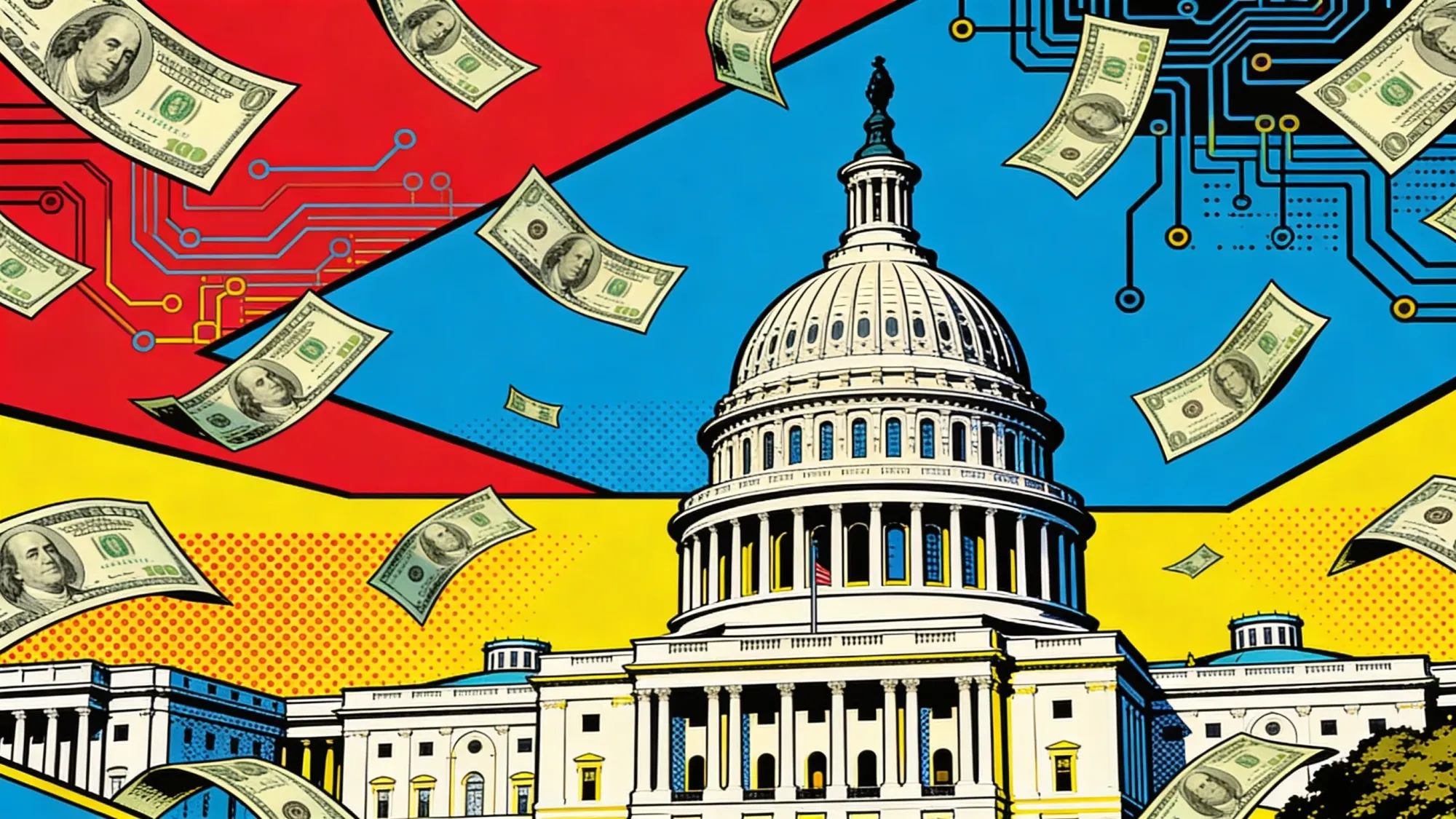
A quick look at the calendar might suggest the opposite. WIRED reported Thursday that the forthcoming Maggie Haberman and Jonathan Swan book says Trump showed guests texts from Mark Zuckerberg and Jeff Bezos after the 2024 election, while The New York Times published its own takeaways from the 464-page book. The courtship also coincided with an unusually large inaugural fundraising haul. Trump's inaugural committee received more than $245 million, up from $88 million for his 2017 inauguration and $61.8 million for Joe Biden's 2021 committee, according to the Brennan Center.
Key Takeaways
- Haberman and Swan report Trump mocked private outreach from Zuckerberg and Bezos after the 2024 election.
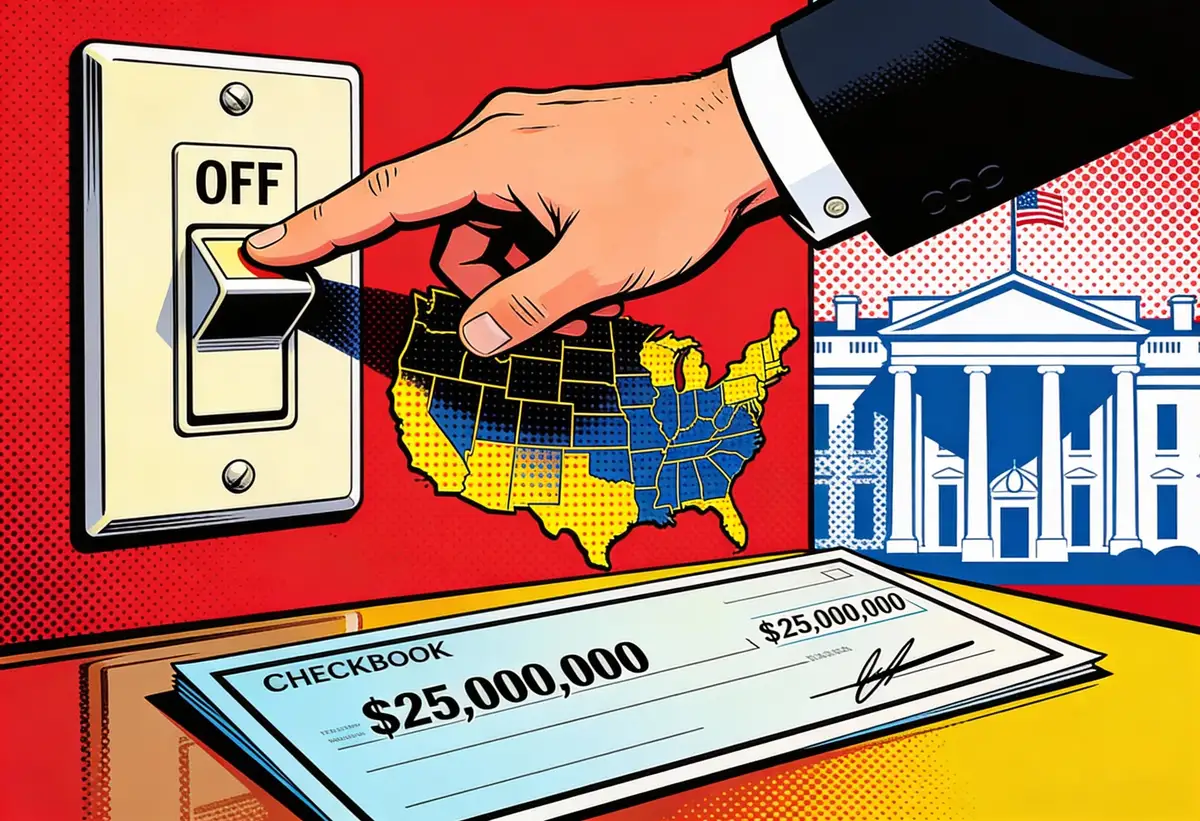
- Amazon appears in FEC records with a $1 million cash contribution and an $888,893.52 in-kind line.
- Meta ended U.S. third-party fact-checking after Trump threatened Zuckerberg during the campaign.
- Bezos later sought help for Blue Origin against SpaceX, according to the book.
AI-generated summary, reviewed by an editor. More on our AI guidelines.
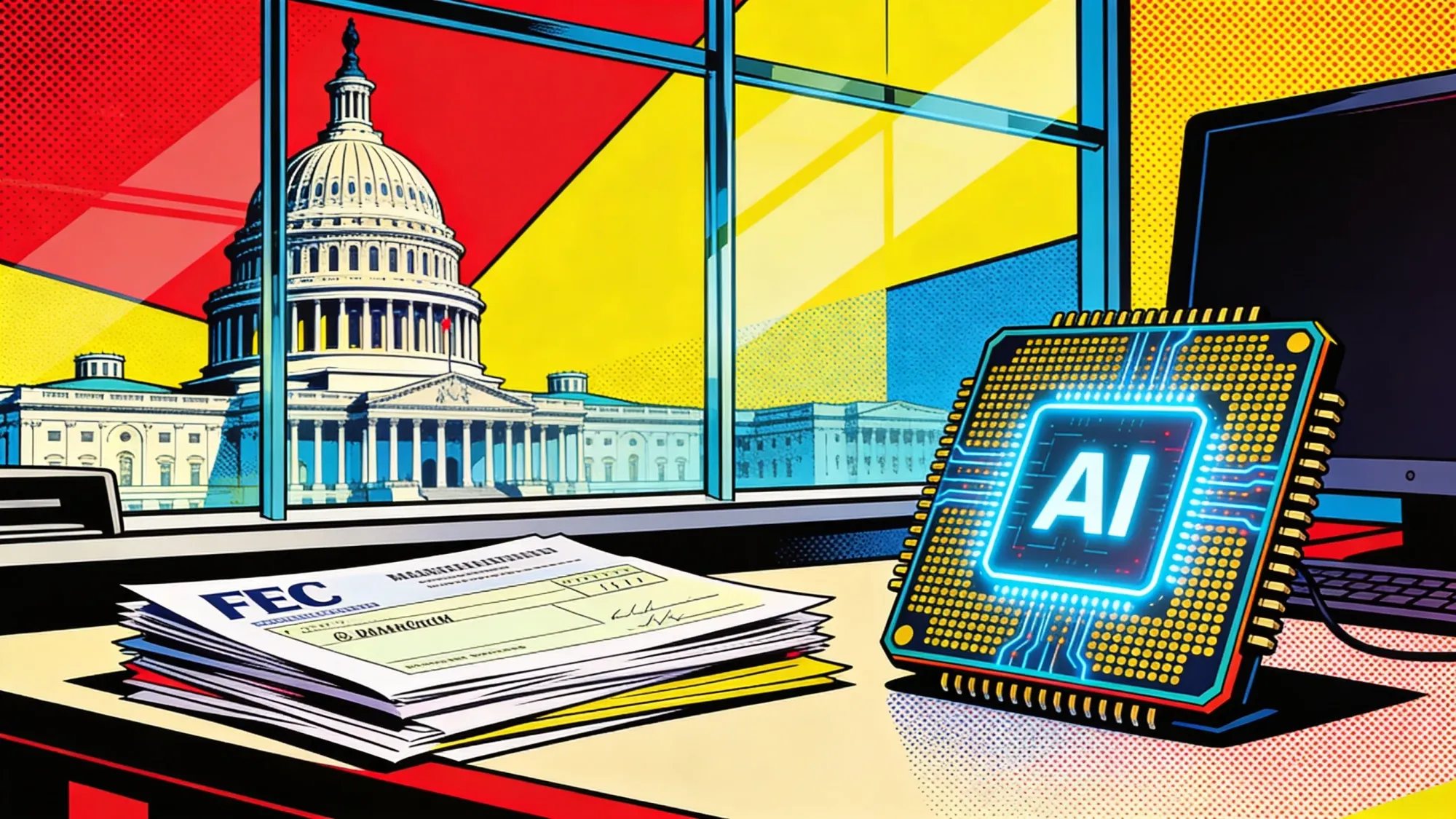
The concrete detail is in the filing. A Federal Election Commission CSV for the Trump Vance Inaugural Committee lists Amazon with a $1,000,000 contribution dated Dec. 23, 2024, plus an $888,893.52 in-kind line on Jan. 20, 2025 for "digital services & advertising." AP reported that Meta and Amazon each gave $1 million to the fund. That is normal corporate Washington, but it is not the same as control.
Haberman and Swan's reporting, as excerpted by WIRED, turns the usual access story inside out. Trump is quoted telling guests, "You would not believe the texts I got from these tech guys. I've got to show you," weeks after the meetings. He described Zuckerberg and Bezos as "kissing my ass," according to the book. In a conversation with Elon Musk, Trump reportedly said, "Think of where these guys were in 2016. They hated me. They were doing everything they could to knock me down. And look at them now." Musk's reply, according to the book, was shorter: "First-class groveling."
The bear case for that reading is fair. Presidents deal with large employers, cloud providers, media owners and defense contractors, and companies with regulatory exposure have to work with whoever holds power. A person familiar with the Bezos episodes told WIRED that Bezos has worked with every president since Bill Clinton and intended to work with the next one too. The White House did not directly address the book's reporting; spokesperson Kush Desai told WIRED that Trump was committed to working with American businesses and business leaders. Meta framed its January 2025 moderation shift as a product and speech-policy change, saying the prior program too often became "a tool to censor."
Get the next Silicon Valley power read
Strategic AI news from San Francisco. No hype, no "AI will change everything" throat clearing. Just what moved, who won, and why it matters. Daily at 6am PST.
No spam. Unsubscribe anytime.
But the sequence around Meta raises an obvious problem for the insurance theory. In January 2025, Meta said it would end its U.S. third-party fact-checking program and move to Community Notes. AP reported that Trump praised the move hours later and, when asked whether Zuckerberg had acted because of Trump's threats, answered, "Probably." That matters because Trump had threatened in his 2024 coffee-table book that Zuckerberg could spend "the rest of his life in prison" if he did anything illegal in the election, according to Platformer and AP.
Know someone who'd find this useful? ✉️ Email it to a friend in one click, or they can subscribe free here.
Bezos's case is easier to trace because the book moves from flattery to a later business ask. At the December 2024 dinner, the book says, he called The Washington Post his worst investment and said of the paper's business side, "The people there are terrible." Months later, Haberman and Swan write, he asked Trump for help for Blue Origin. Bezos argued that SpaceX's hold on U.S. space infrastructure, including Space Launch Complex 37 at Cape Canaveral, created a national-security risk, and suggested Trump tell Deputy Defense Secretary Steve Feinberg to encourage "contractor diversity" in contracts. The April numbers framed the ask: SpaceX had won a $5.9 billion Space Force contract for 28 launches, while Blue Origin received $2.4 billion for seven, the Journal account cited by Breitbart said.
Trump gave Meta a friendlier public signal after it ended fact checks. Bezos got meetings, and Blue Origin kept pressing for more government work. The Implicator has made a similar argument about OpenAI's Washington spending, where political access and policy outcomes appeared to move in the same direction.
Haberman and Swan's account leaves the bargain at Mar-a-Lago, where Trump showed visitors what Zuckerberg and Bezos had sent him. Zuckerberg's child's letter, Bezos's dinner remarks and private texts became material in that retelling. The last useful quote is Trump's, because it describes what access became in his hands: "I've got to show you."
Frequently Asked Questions
What is the article arguing?
It argues that private access to Trump can create exposure as well as protection when executives court him for regulatory or business reasons.
What did the Haberman and Swan book report?
The book says Trump showed visitors texts from Mark Zuckerberg and Jeff Bezos and mocked their efforts to win him over after the election.
What did the FEC filing show about Amazon?
The FEC filing lists Amazon with a $1 million cash contribution to the Trump Vance Inaugural Committee and an $888,893.52 in-kind line.
How does Meta fit into the story?
Meta ended its U.S. third-party fact-checking program in January 2025, and AP reported Trump answered "Probably" when asked whether threats had influenced Zuckerberg.
What did Bezos reportedly seek for Blue Origin?
The book says Bezos argued that SpaceX dominance posed a national-security risk and suggested Trump push contracting officials toward "contractor diversity."
AI-generated summary, reviewed by an editor. More on our AI guidelines.

Marcus Schuler
Editor-in-Chief and founder of Implicator.ai. Former ARD correspondent and senior broadcast journalist with 10+ years covering tech. Writes daily briefings on policy and market developments. Based in San Francisco. E-mail: editor@implicator.ai