IMPLICATOR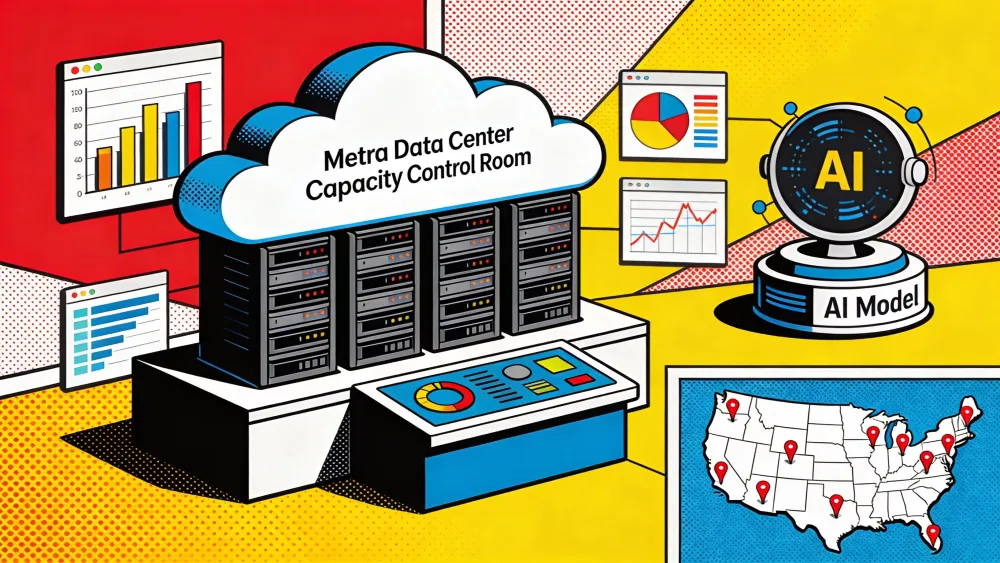
San Francisco | Thursday, May 28, 2026
Meta is no longer only buying compute for its own feeds, agents and ads machine. Zuckerberg told shareholders a cloud business is "definitely on the table" if the company overbuilds, a remark attached to a 2026 capex guide now as high as $145 billion and a new Meta Compute org.
That answer gives Wall Street a second ledger for the AI buildout: internal demand for Meta products, then outside customers willing to rent spare capacity at a premium.
Down the stack, Magnific is bundling creative models into one subscription while Erin Brockovich turns AI data centers into a complaint map for towns staring at power, water and zoning votes.
Stay curious,
Marcus Schuler
Know someone drowning in AI noise? Forward this briefing. They can subscribe free here.
Meta Opens the Cloud Option on $145 Billion in AI Capex
Mark Zuckerberg told shareholders Wednesday that Meta could enter cloud computing if it ends up with spare data-center capacity. "It's definitely on the table," he said at the company's annual meeting, adding that outside companies approach Meta nearly every week about buying compute at a premium.
The comment lands alongside Meta's April capex guidance of $125 billion to $145 billion for 2026, up from $115 billion to $135 billion. CFO Susan Li pinned the increase on component costs and data-center expansion, while the newly formed Meta Compute organization, led by Santosh Janardhan and Daniel Gross, is planning tens of gigawatts of capacity this decade.
Meta also confirmed it will test paid AI subscriptions next month in Singapore, Guatemala and Bolivia, with tiers at $7.99 and $19.99 a month.
Why This Matters: The cloud comment turns Meta's biggest cost line into a potential revenue stream. Wall Street has been asking every hyperscaler the same question: show us the return on $600 billion in combined 2026 capex. Zuckerberg now has an answer, though it is conditional on overbuilding first.
Reality Check: A cloud business needs customers, contracts and utilization rates, none of which Meta has disclosed. Amazon, Microsoft and Google already own the relationships Meta would need to win.

Quick survey nudge: If you have two minutes, tell me what Implicator should cover next. Eight questions, no login, every answer comes straight to me. Take the survey →
The One Number
2,716 - community-reported AI data center locations logged on Erin Brockovich's new reporting map, according to Tom's Hardware and the project site. The official facilities are only one layer of the story. The faster signal is local complaint volume around power, water, noise and siting.
Source: Tom's Hardware, May 27, 2026
💰 Fresh Funding
Cognition raises more than $1B at $25B pre-money valuation
TechCrunch reported Wednesday that Cognition, maker of the Devin coding agent, raised more than $1 billion in a round led by Lux Capital and General Catalyst. The company said Devin reached a $492 million annualized revenue run rate after it acquired the remaining Windsurf assets last year.
Visit Cognition →Stord raises $250M to build physical AI for commerce
TechCrunch reported Tuesday that Stord raised $250 million at a $3 billion valuation in a Series F led by Strike Capital. Stord also launched Stord Labs to test robotics, agentic AI and automation against live fulfillment data from a network that processes more than $15 billion in annual gross merchandise value.
Visit Stord →OpenRouter raises $113M as model routing grows
OpenRouter announced Tuesday that it raised a $113 million Series B led by CapitalG, Alphabet's growth fund, with NVentures, ServiceNow Ventures, MongoDB Ventures, Snowflake Ventures and Databricks Ventures also participating. The company said its model exchange handles 25 trillion tokens a week, and the round puts strategic backers behind routing, governance and failover rather than one model provider.
Visit OpenRouter →Magnific Bets Creative Teams Want 30-Plus AI Models on One Bill
Magnific, the Málaga company that rebranded from Freepik in April, now sells one subscription that runs more than 30 image and video models from Google, OpenAI, Runway and ByteDance alongside a 200-million-asset stock library and its own upscaling technology.
CEO Joaquín Cuenca told Fortune the business reached $230 million in annual recurring revenue without venture capital.
Plans run $10 to $280 a month, metered in credits that expire each cycle. A Business tier at $69 a seat adds team workspaces, an API and single sign-on. Named users include the BBC, Puma and Amazon Prime Video.
The model catalog depends on outside providers that can change prices or access, and Magnific's terms decline to guarantee copyright on AI output. For marketing teams already paying Midjourney, Runway and a stock subscription, the single-bill pitch is the draw. Whether the credit meter and support gaps hold up under production workloads is the nearer question.

📸 AI Image of the Day

Prompt: This image features a woman sitting against a weathered green door. She has an intense gaze and is adorned with various pieces of jewelry including earrings, a necklace, and a choker. Her attire is eclectic and bohemian, composed of a mix of textures and colors, featuring a blend of reds, greens, and earth tones draped in a layered, textured fashion. Her hair is styled in loose waves, and she has subtle tattoos on her arms and torso. The setting gives a rustic, vintage feel, complementing her free-spirited aesthetic.
Erin Brockovich Turns Her PG&E Playbook on AI Data Centers
"Future litigation around data centers is coming," Erin Brockovich wrote on April 28, the day after she launched a website where residents log complaints about AI facilities near them. By May 24 the map had gathered 2,716 reports from 49 states, with water the most common worry, ahead of electricity and health.
The activist helped build the case that ended in a $333 million settlement with Pacific Gas & Electric. Her newsletter tells residents to "document everything."
The reports cluster hard: 297 of Texas's 612 come from Sulphur Springs, where a 3-gigawatt complex is rising across 1,600 acres. Nationally, Data Center Watch counts more than 140 local groups that have blocked or delayed upward of $64 billion in projects. Charlotte's city council and Nassau County, Florida, both vote on data center measures June 8. The map is ordinary tooling. The person behind it turns complaint volume into a legal record.

🧰 AI Toolbox
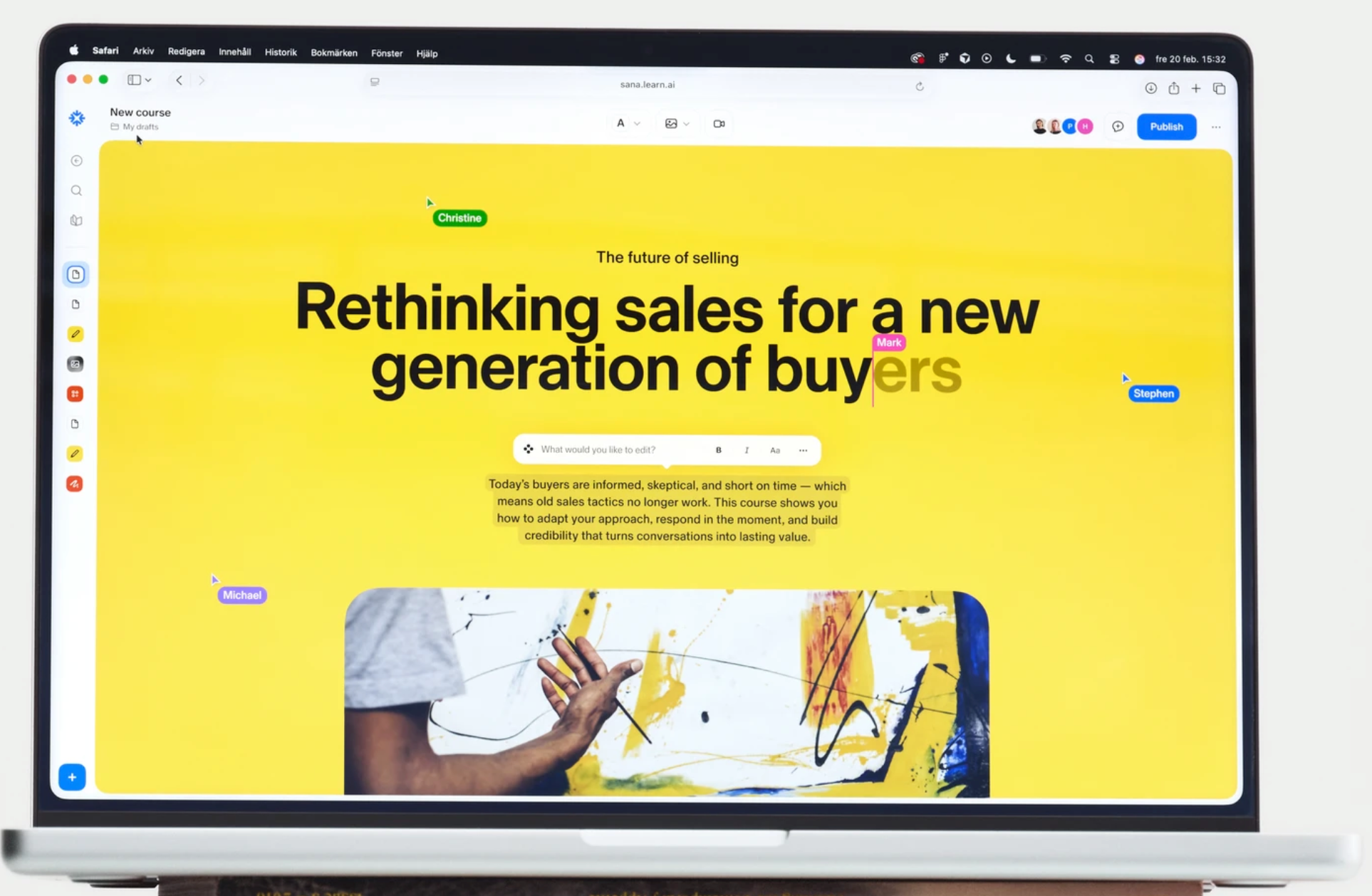
How to Make Your Company's Knowledge Searchable by Every Employee and Agent with Sana
Sana is an all-in-one AI platform built for companies that want one assistant across knowledge, learning, and workflow automation. It connects to the apps your team already uses, indexes the documents, conversations, and recordings inside them, and serves up answers, briefings, and structured agents that act on your behalf. Used by Polestar, Merck, and Svenska Spel. Enterprise pricing with a guided trial through sales.
Tutorial:
- Request a demo at sanalabs.com and connect your first data sources during onboarding (Google Drive, Slack, Notion, Salesforce, Confluence)
- Open Sana's assistant and ask a cross-app question: "Summarize the last three customer calls about onboarding friction and link to the relevant tickets"
- Use Sana Learn to convert any document, video, or recording into an interactive course with quizzes and progress tracking
- Build a custom agent in the no-code workbench: "Every Friday, scan new product docs, draft a release-notes summary, and post to #product-launches"
- Set role-based access policies so employees only see and ask about the data they should
- Connect Sana to your CRM and let agents trigger workflows (create deals, update contacts, send follow-ups) from natural language
- Use the analytics dashboard to see which knowledge gaps your employees ask about most often and prioritize what to document next
What To Watch Next
|
||
|
||
|
||
|
||
|
⏱️ The 5-Minute Skill
Turn an AI Agent Access Request Into Guardrails Before It Touches Money
Thursday, 8:18 a.m. An app now wants to let an AI agent trade, buy things, or both. Before you click connect, make the model write the house rules for the model.
Your raw input:
Tool: AI agent can access a separate brokerage account and a virtual credit card. Goals: monitor semiconductor stocks, buy travel under $600, find restaurant openings. Risks: impulsive trades, hidden fees, fake facts, wrong vendor, private data leakage. Need: rules before I connect anything.
The prompt:
Act like a cautious consumer-finance operations lead. Turn this agent access plan into guardrails I can actually use. Give me allowed actions, banned actions, approval triggers, spending and trading limits, data the agent may never see, a daily review checklist, and one emergency disconnect rule. Separate convenience from financial risk. No investment advice.
The output:
Allowed: price monitoring, watchlist alerts, reservation searches and purchases below the cap. Banned: options, crypto, margin, primary-card access and trades based on unverified social posts. Approval trigger: any trade, any purchase over $150, any new merchant and any request involving personal documents. Emergency rule: disconnect the agent after one unexplained transaction or one fact error tied to money.
Why this works:
Agent access feels safe when every permission is in a separate box. This prompt forces the model to define the boxes before money moves, then gives you a review habit and a disconnect rule.
What to use:
Claude is strongest for turning messy constraints into policy language. ChatGPT is faster for making a checklist you can paste into Notes. Keep the line "no investment advice" in the prompt. Otherwise the model starts auditioning for a brokerage license it does not have.
📖 AI Alphabet
|
P
|
📖 AI Alphabet Precision Precision measures how often a model's positive predictions are actually correct. It matters most when false alarms are costly, such as fraud detection or medical screening. |
AI & Tech News
GCHQ Says Russia and China Are Raising the Cyber Tempo
GCHQ chief Anne Keast-Butler warned that Russia and China are increasing cyber operations against the UK and its allies, CNBC reports. She pointed to daily Russian hybrid activity and said governments have a narrowing window to improve defense.
Illinois Passes a Third-Party AI Audit Bill
Illinois lawmakers passed SB 315, a bill that would require annual independent safety audits for leading AI developers, NBC News reports. The measure now moves to the governor, and a signature would put a stricter state-level rulebook on AI release practices.
Dell Wins a $9.7 Billion Pentagon Software Deal
The Defense Department awarded Dell a five-year, $9.7 billion contract for cloud services and software licensing, CNBC reports. The agreement puts Microsoft 365 and related tools into a large modernization channel for military users.
Prosecutors Charge a Google Engineer Over Polymarket Bets
Federal prosecutors charged Google engineer Michele Spagnuolo with using confidential company data to place Polymarket wagers, ABC News reports. The case puts prediction markets inside an insider-information frame, with search trend data as the alleged edge.
Quick survey nudge: If you have two minutes, tell me what Implicator should cover next. Eight questions, no login, every answer comes straight to me. Take the survey →
Amazon Takes Over Apple's Globalstar Stake
Amazon will take over Apple's 20% Globalstar stake as part of its $11.6 billion acquisition of the satellite company, PCMag reports. Apple keeps continuity for emergency satellite features as Amazon gains cleaner control of the underlying assets.
Snowflake Jumps on Revenue Beat and $6 Billion AWS Pledge
Snowflake reported $1.39 billion in first-quarter revenue and announced a five-year $6 billion commitment to AWS, CNBC reports. The stock jumped after hours, giving investors a cloud-demand signal outside the hyperscaler earnings calls.
Salesforce Puts a Number on Agentforce
Salesforce reported first-quarter revenue of $11.13 billion, ahead of estimates, CNBC reports. Agentforce reached $1.2 billion in annual recurring revenue, giving Marc Benioff a concrete number to attach to the company's AI push.
Kuaishou Says Kling AI Revenue Jumped 300%
Kuaishou said Kling AI video revenue rose more than 300% year over year to $96 million, SCMP reports. The unit reached about a $500 million annualized revenue run rate by March, making paid generative video a live business inside a major Chinese platform.
Amazon MGM Funds AI-Animated Series
Amazon MGM Studios launched a GenAI Creators' Fund and greenlit three AI-animated series for Prime Video, Variety reports. The studio is also building an AWS-linked production platform, giving Hollywood a studio-backed AI workflow with distribution attached.
HP Beats Estimates as Memory Costs Rise
HP reported $14.4 billion in quarterly revenue and guided profit above analyst estimates, Bloomberg reports. Memory costs are still climbing, so HP's outlook gives another read on whether hardware vendors can pass AI-era component inflation to buyers.
🚀 AI Profiles: The Companies Defining Tomorrow
Lotus Health AI
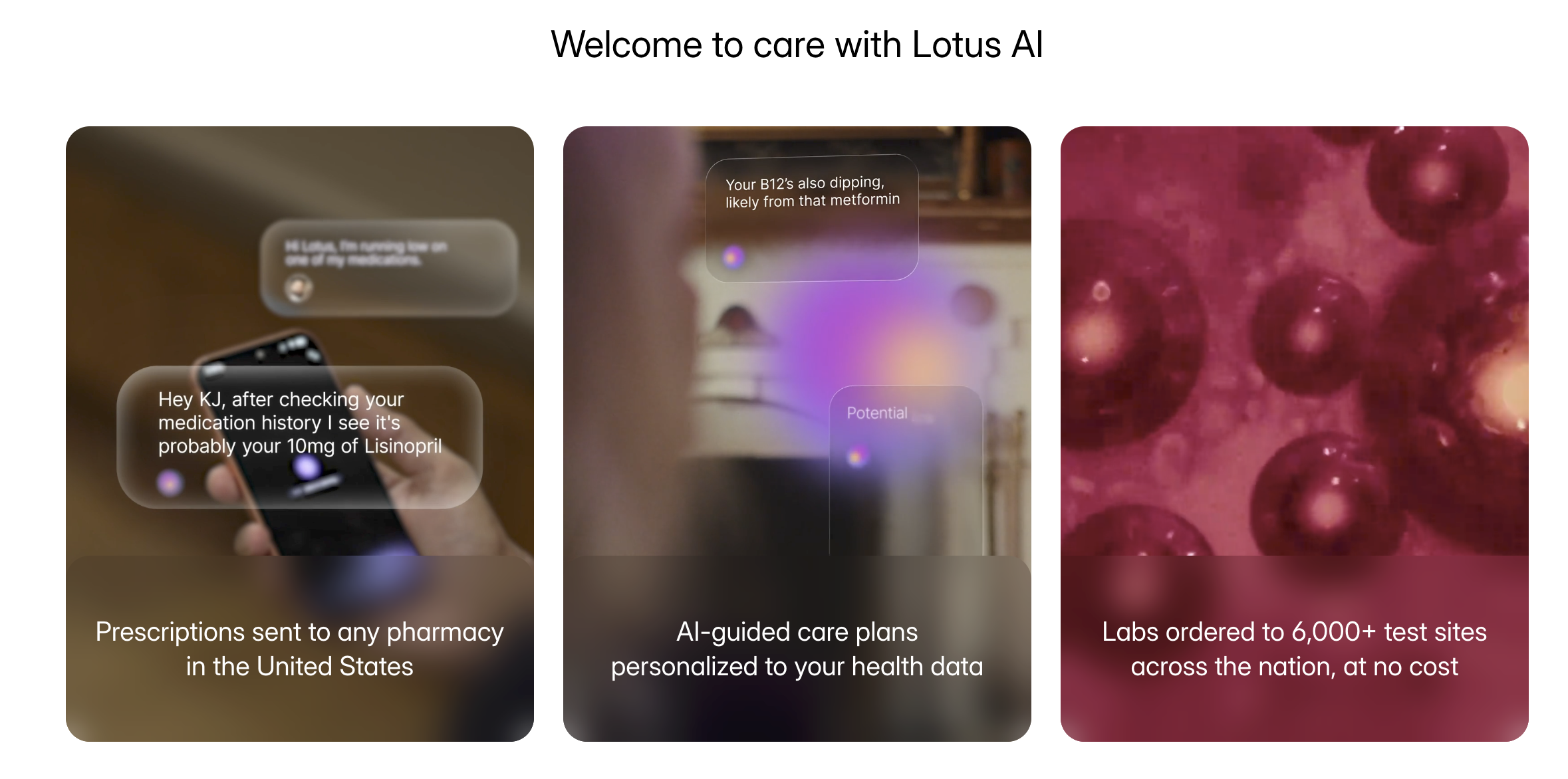
Lotus Health AI is an AI-powered primary care practice that pairs autonomous AI clinicians with physician oversight from Stanford, Harvard, and UCSF. The company raised a $35 million Series A to scale a model that promises a doctor-quality first touch without the wait, with humans on the loop where the call gets harder. 🩺
Founders
Lotus Health AI's founding team includes clinicians and operators recruited from Stanford, Harvard, and UCSF medical networks, with the AI engineering core built around the constraint that clinical recommendations must be auditable end-to-end. Specific founder names were not detailed in the initial coverage.
Product
The product offers AI-driven primary care intake, triage, follow-up, and routine prescription work, with a licensed physician reviewing and signing off on any clinical recommendation that exceeds defined autonomy thresholds. Patients interact through a chat or voice interface; the AI captures structured history, runs decision-support models, and either resolves the visit or hands off to a clinician within minutes rather than days.
Competition
The primary-care AI space is crowded: Forward (now shut down) tried the high-touch version, Omada and Lark focus on chronic care, and incumbents like One Medical and Tia bundle AI on top of in-person clinics. Lotus's wedge is the explicit AI-clinician hybrid, sold as a faster alternative for routine care rather than a replacement for complex care.
Financing 💰
$35 million Series A, with backers and lead investors as reported in coverage early February 2026. Lotus has not detailed total funding to date.
Future ⭐⭐⭐
Primary care is where AI can move the needle if the unit economics close, because triage is repetitive and access is the binding constraint for most patients. Lotus wins if the AI-plus-physician model proves equally safe at lower cost; it stalls if either side of that equation breaks down. Insurance contracts will decide whether this becomes the new front door or a high-end concierge service. 🏥
Quick survey nudge: If you have two minutes, tell me what Implicator should cover next. Eight questions, no login, every answer comes straight to me. Take the survey →
✋ Yeah, But...

The Wall Street Journal reported Wednesday that Robinhood is launching a feature that lets customers connect AI agents such as Claude or Cursor to dedicated investment accounts and virtual Gold credit cards. Executives said agents can place stock trades, monitor reservations or make purchases within user-set limits, with options, crypto and event contracts planned later.
(Wall Street Journal, May 27, 2026)
Our take: Robinhood has discovered the missing layer between impulse and consequence: a chatbot with permissions. The company that made stock trading feel like checking Instagram now wants software doing the tapping, with a notification afterward so everyone can call it control. Consumer finance loves this magic trick: put the dangerous thing in a separate box and name the box safety. The customer then gets to remember which box the robot is using at 11:47 p.m. The agent may be obedient, but every margin call also began as a perfectly legible rule somebody accepted before it became educational.
Free AI briefing · Weekdays
The AI stories that matter, sourced and explained.
Join the Morning Briefing. It goes out every weekday at 4:45 a.m. Pacific, with later sends for the East Coast, Berlin and Tokyo.
Free when you sign up: The Paperclip Compendium, our tested guide to running AI agents.
Free. Unsubscribe in one click.

Marcus Schuler
Editor-in-Chief and founder of Implicator.ai. Former ARD correspondent and senior broadcast journalist with 10+ years covering tech. Writes daily briefings on policy and market developments. Based in San Francisco. E-mail: editor@implicator.ai