


San Francisco | January 16, 2026
The story at Thinking Machines was never about ethics. It was about a company that raised $2 billion without agreeing on what to build. Barret Zoph's firing triggered the visible exodus, but the cracks were already there. The $50 billion funding round has stalled. John Schulman is the last original research leader standing. Three founders have already gone back to OpenAI.
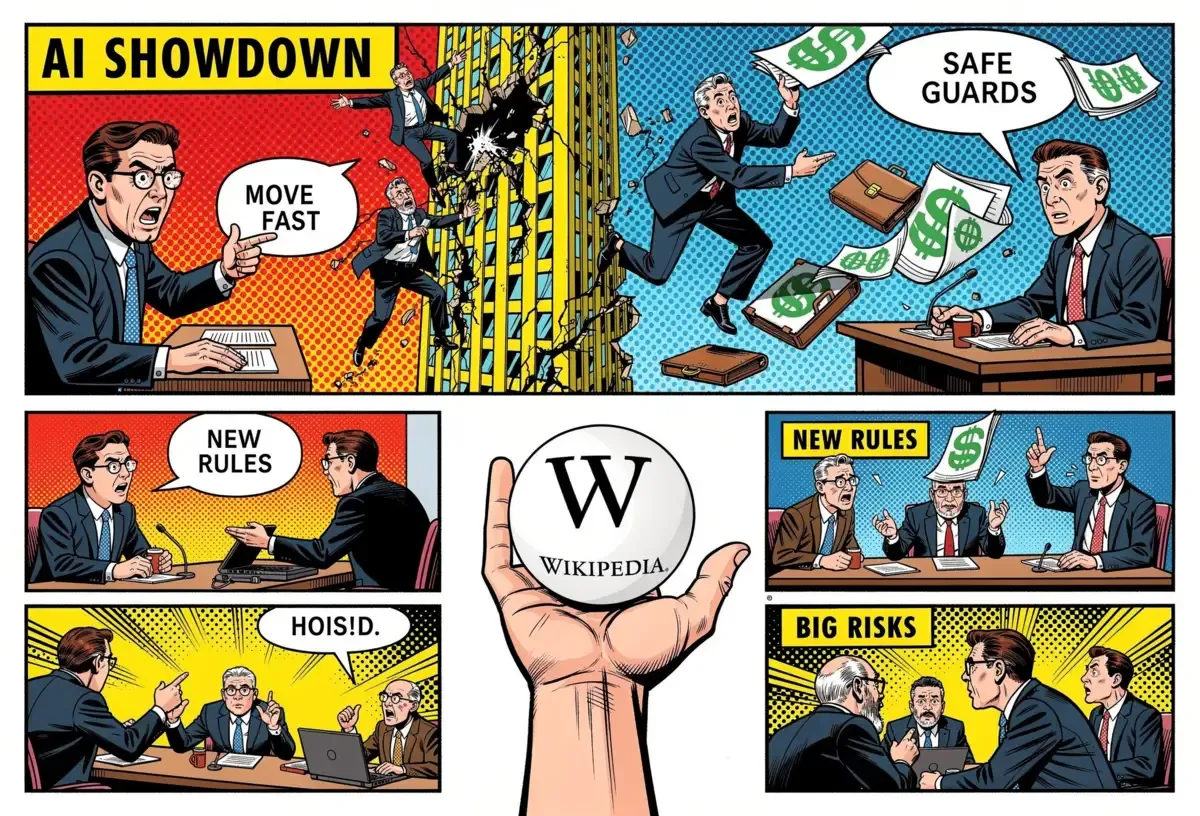
Wikipedia turned 25 yesterday and celebrated by sending invoices. Microsoft, Meta, Amazon, Perplexity, and Mistral AI are now paying for enterprise access. The Wikimedia Foundation won't say how much. That silence tells you the numbers are either embarrassingly small or politically radioactive.
And Replit just made iOS development as easy as describing what you want. Security researchers found critical vulnerabilities in the output within hours.
Stay curious,
Marcus Schuler
Thinking Machines Exodus Deepens: The Founders Never Agreed on What to Build

The public story is about ethics. The internal story is about a company that never decided what it wanted to be. Multiple employees resigned after Thursday's all-hands meeting. Some left before the Q&A started.
Barret Zoph's removal as CTO for "unethical conduct" was the match. The kindling had been stacking for months. Thinking Machines raised $2 billion at a $12 billion valuation six months ago. It has shipped exactly one product: Tinker, a fine-tuning API. No foundation model. No clear roadmap.
The proposed Series B, targeting a $50-60 billion valuation, has stalled. Investors are asking questions that leadership cannot answer. Hours after the all-hands, Zoph and two other researchers rejoined OpenAI.
John Schulman is now the sole original research leader remaining. Three founders have already returned to Sam Altman's orbit.
Why This Matters:
- A $2 billion seed-stage company backed by Andreessen Horowitz, Nvidia, and AMD faces existential doubt about its product direction
- The exodus pattern suggests the ethics narrative is covering for deeper strategic misalignment among founders
✅ Reality Check
What's confirmed: CTO Zoph was removed for "unethical conduct." Multiple resignations followed Thursday's all-hands. Three researchers rejoined OpenAI within hours. The $50B funding round has stalled.
What's implied (not proven): The departures stem from fundamental disagreement about product strategy, not just the ethics incident.
What could go wrong: If Schulman leaves, the research credibility collapses entirely. No foundation model means no differentiation from dozens of well-funded competitors.
What to watch next: Whether the Series B closes at any valuation, and whether Thinking Machines ships a foundation model before the next wave of departures.

Wikipedia Found a Way to Make Big Tech Pay. The Question Is Whether It's Enough.
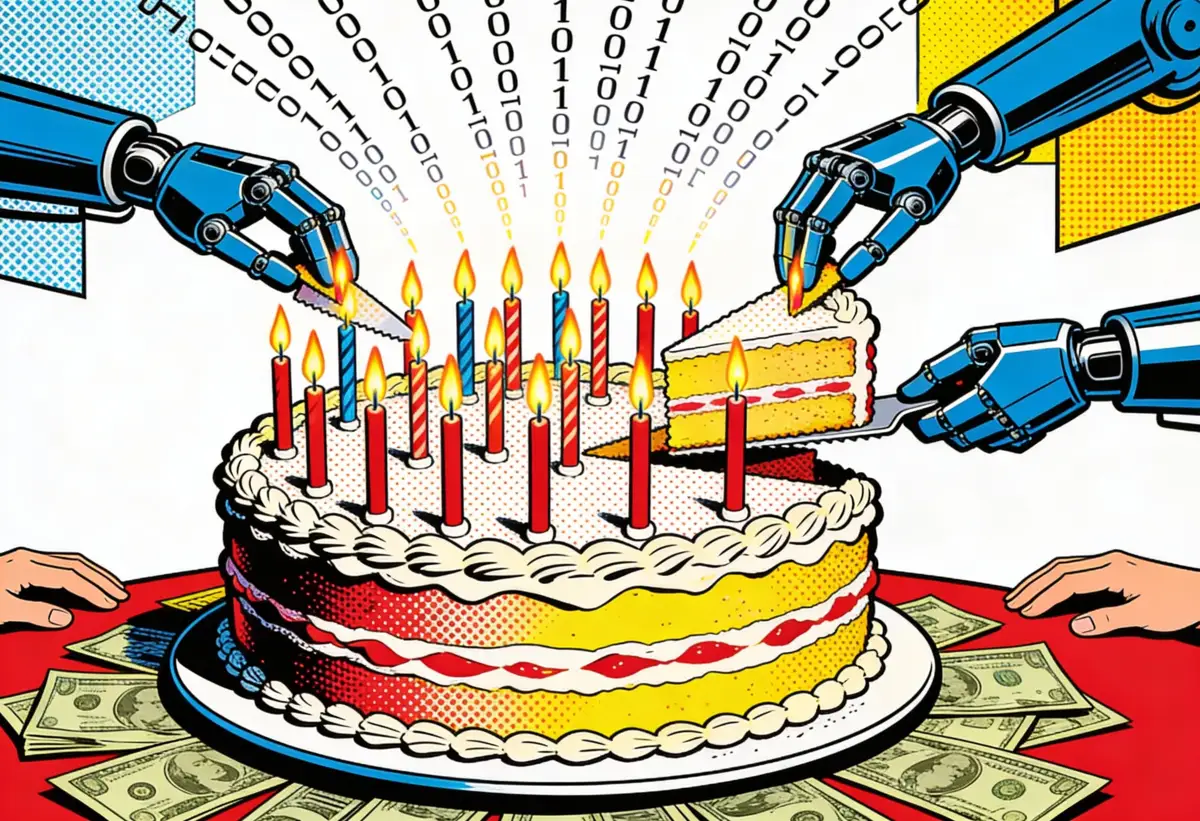
Wikipedia turned 25 yesterday and sent Big Tech the bill. Microsoft, Meta, Amazon, Perplexity, and Mistral AI are now paying for enterprise access. Google was already a customer. The Wikimedia Foundation won't disclose the amounts.
For a quarter century, tech companies scraped Wikipedia's content for free. Search engines built knowledge panels from it. AI companies trained models on it. The volunteer-written encyclopedia became infrastructure nobody paid to maintain.
The silence around payment terms is telling. Either the deals are too small to brag about, or they're structured in ways that would anger one constituency or another. The Foundation is also fighting an 8% traffic decline and a volunteer exodus.
Enterprise licensing is new territory for a nonprofit that has survived on donations and idealism. The question isn't whether Big Tech should pay. It's whether these payments move the needle.
Why This Matters:
- This sets precedent for how AI companies compensate training data sources, a fight playing out across publishing and creative industries
- If Wikipedia's model works, expect other open knowledge projects to follow with their own enterprise tiers
Replit Bets That Software's Last Moat Is an Illusion

Replit shipped a feature Thursday that lets anyone describe an iOS app and get a submission-ready package. No Xcode. No provisioning profiles. No developer account paperwork. Security researchers found critical vulnerabilities within hours.
Amjad Masad built Replit on one idea: friction is the enemy. The company hit $3 billion in valuation with 15x year-over-year revenue growth by removing every barrier between intent and execution. Mobile Apps is the logical endpoint.
"It's just intent," Masad said. "You describe the vibe, and the AI handles the architecture."
The architecture, it turns out, includes exploitable security holes. Researchers documented critical flaws in "vibe-coded" applications almost immediately. The safeguards Masad dismissed as friction, the provisioning profiles and code reviews and architectural patterns, existed for reasons.
Democratizing development is a real achievement. But the security findings suggest some gates aren't bureaucratic overhead. They're load-bearing walls.
Why This Matters:
- If AI genuinely replaces technical expertise, the economics of software development collapse for millions of professional developers
- The security vulnerabilities suggest a new category of risk: apps built by people who don't understand what they shipped

AI Image of the Day

Prompt: Editorial Makeup
🧩 Workflow of the Day
Workflow of the Day: "Turn a 50-page report into a 10-slide deck in 2 hours"
Who: Analyst or consultant who needs to present dense research to executives who won't read the full document.
Problem: Synthesizing 50 pages into a narrative deck takes 16+ hours. The deadline is tomorrow.
Workflow (with Claude + Gamma.app):
- Upload the report to Claude with: "Extract the 5-7 most important findings. For each, give me a headline (under 10 words) and one supporting data point."
- Review Claude's output for accuracy. Cut anything that doesn't survive scrutiny.
- Ask Claude to write a narrative thread connecting the findings (2-3 sentences explaining the "so what").
- Paste findings + narrative into Gamma.app and select a professional template.
- Review auto-generated slides, adjust visuals, add your company logo.
- Export as PDF or present directly from Gamma.
Payoff: Deck done in 2 hours instead of 16. Stakeholders get the story, not a data dump.
Gotcha: Gamma's auto-layouts work best with clear headlines. Vague findings produce vague slides.
Better Prompting... Today: Learning Complex Topics Fast
Textbooks teach you what to know. These prompts teach you how experts actually think.
The Concept Inversion
"Explain [complex topic] by telling me what it's NOT. What do beginners always confuse it with? What's the most common misconception that even intermediate practitioners fall for? Start with the mistakes, then show me the truth."
Best on: Claude (precise conceptual distinctions) or ChatGPT (broad knowledge base)
The Expert Shortcut
"If a senior [professional in field] had 10 minutes to teach a smart newcomer the one mental model that took them years to learn, what would it be? Not the basics. The shortcut that changes how you see everything else."
Best on: Claude (excels at distilling expertise) or Gemini (can pull from recent expert content)
The Failure Curriculum
"Teach me [skill/topic] through the five most common failures. For each: what it looks like when you're doing it, why it feels right in the moment, and the specific correction. I learn faster from mistakes than from best practices."
Best on: Claude (strong at pedagogical framing) or ChatGPT (good at generating realistic scenarios)
The fastest learners don't study more. They study the gaps between what beginners think and experts know.
🧰 AI Toolbox
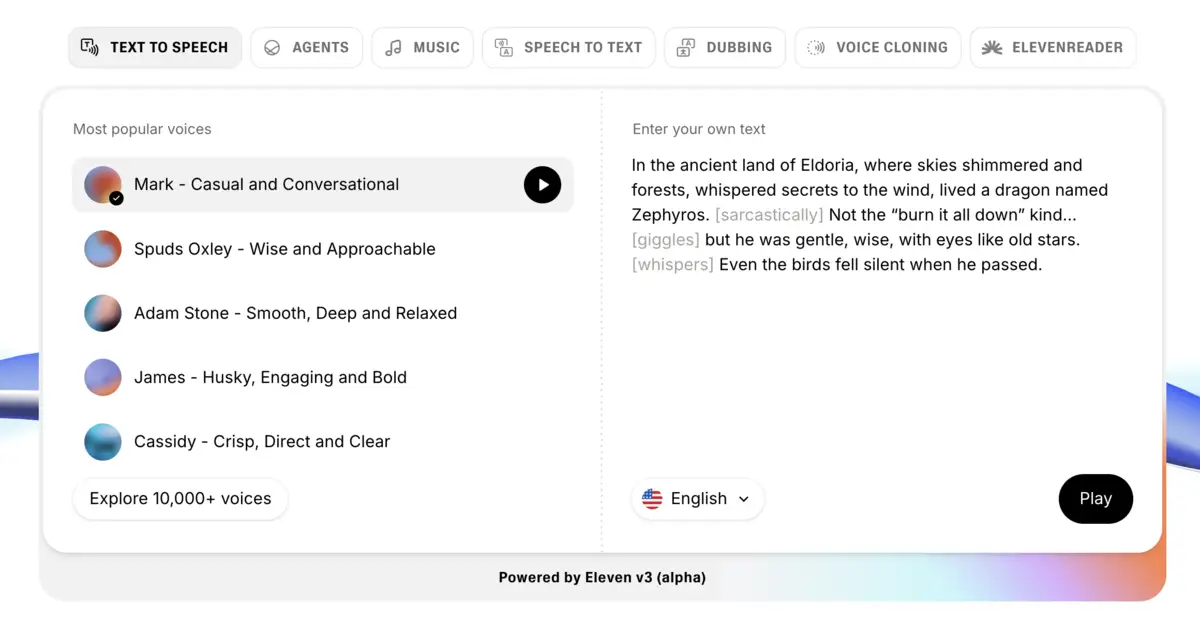
How to Clone Your Voice for Any Project with ElevenLabs
ElevenLabs creates a digital clone of your voice from just a few minutes of audio samples. Use it for podcasts, audiobooks, videos, or any content where you want your voice without recording every word.
Tutorial:
- Sign up at elevenlabs.io and navigate to "Voice Lab"
- Click "Add Voice" and choose "Instant Voice Cloning"
- Upload 1-3 minutes of clean audio samples of your voice (no background noise)
- Name your voice clone and let the system process it
- Go to "Speech Synthesis" and select your cloned voice
- Type or paste any text and generate audio in your voice
- Download as MP3 or use the API to integrate into your workflow
AI & Tech News
Trump Administration Plans Emergency Grid Auction for AI Power Demands
President Trump and Northeastern governors have agreed to direct PJM, a major US grid operator, to hold an emergency wholesale electricity auction to address surging AI infrastructure power needs. The initiative would let tech companies directly fund new power plant construction.
Chinese AI Firms Seek Overseas Compute as US Chip Restrictions Bite
Chinese AI companies including Zhipu and Alibaba are pursuing deals to rent computing power in Southeast Asia and the Middle East to access Nvidia's latest chips. Both companies warn the technology gap with American rivals is widening as US competitors secure priority access to cutting-edge hardware.
Australia Removes 4.7 Million Social Media Accounts Under New Minor Ban
Australia's eSafety Commissioner announced that platforms have removed access to 4.7 million accounts following the country's ban on social media for children under 16. The landmark legislation, which took effect in December, is being watched globally as a potential model.
Cloudflare Acquires AI Data Marketplace Human Native
Cloudflare has acquired Human Native, an AI data marketplace, to build a payment system for AI training content creators. The deal aims to establish a framework enabling AI developers to compensate creators whose work trains their models.
OpenAI Expected to Hire More Researchers from Thinking Machines
OpenAI is poised to recruit at least two additional researchers from Thinking Machines Lab following its recent hiring of two cofounders, according to sources cited by Wired. The ongoing talent competition has left some researchers expressing exhaustion over the industry's persistent drama.
Musk's Partner Sues xAI Over Alleged Deepfake Images
Ashley St. Clair, who shares a child with Elon Musk, has filed a lawsuit against xAI alleging that Grok repeatedly generated sexualized deepfake images of her. The legal action comes amid ongoing custody disputes with Musk.
Meta Shuts Down Workrooms VR Collaboration Platform
Meta is discontinuing Workrooms, its virtual reality workplace meeting platform, with the service ending February 16. The company will also stop selling Quest headsets and Horizon services to business customers starting February 20.
Google Settles $8.25 Million Children's Privacy Lawsuit
Google agreed to pay $8.25 million to settle a class-action lawsuit accusing the company of illegally collecting data from children under 13 through its AdMob SDK. The settlement highlights ongoing concerns about tech companies' data practices involving minors.
Fintech VC Funding Rebounds 27% in 2025
Global venture capital funding for fintech startups reached $51.8 billion in 2025, a 27% year-over-year increase surpassing pre-pandemic levels. The total still trails the 2021 peak of $141.6 billion.
YouTube Expands Monetization for Sensitive Content
YouTube updated its ad-friendly guidelines to allow full monetization on nongraphic videos covering abortion, self-harm, suicide, and abuse. The policy revision is expected to increase revenue for creators producing educational content on controversial topics.
SiFive to Integrate Nvidia NVLink for RISC-V AI Chips
SiFive will integrate Nvidia's NVLink Fusion interconnect into its RISC-V processor platforms, enabling direct high-speed communication between SiFive silicon and Nvidia GPUs. The partnership expands the ecosystem of processors that can work alongside Nvidia's dominant AI hardware.
🚀 AI Profiles: The Companies Defining Tomorrow

Reflection AI wants to build America's open frontier lab. The New York company combines autonomous coding agents with large-scale model training, pitching "open intelligence" as a counterweight to closed systems. 🗽
Founders
Misha Laskin and Ioannis Antonoglou built reputations at DeepMind in reinforcement learning. They launched Reflection in 2024 with a sharp critique: models trained on the internet hit a ceiling. Real progress requires agents that can act, not just predict. Their product wedge: autonomous coding agents. Their long game: frontier model development.
Product
Two intertwined bets. The coding agent (Asimov) reads repos, proposes changes, runs tests, and iterates. If it reduces time-to-merge, it creates obvious ROI. The model-building mission uses reinforcement learning and Mixture-of-Experts architectures to train competitive open-ish models. RL gives agents planning capability beyond next-token prediction.
Competition
Everyone. OpenAI, Anthropic, and Google DeepMind ship coding assistants. DeepSeek and other open-weight labs compete on cost. Meta and Mistral push open releases. The race splits into agent usability and model quality. Reflection must win at least one convincingly. Distribution complicates: incumbents already sit inside IDEs.
Financing 💰
$2B in October 2025 at an $8B valuation. Nvidia led. TechCrunch framed it as a bid to challenge DeepSeek. The size implies a compute thesis: frontier training requires GPU clusters and data pipelines at massive scale. Nvidia's involvement signals hardware makers view model labs as strategic partners.
Future ⭐⭐⭐⭐
Reflection has the pedigree, capital, and thesis. The risk is overreach. Frontier training burns cash fast. The company is named after a learning technique: using outputs to improve itself. It must ship, learn from usage, and iterate faster than competitors. The hardest part was never the model. It was the product. 🚀


