IMPLICATOR
Good Morning from San Francisco,
Enterprise AI hit profitability this week. Companies celebrate returns while cutting the training budgets that got them there. Wharton surveyed 800 leaders. Three quarters report positive ROI. Same leaders slashed skill development by 8 percentage points. They discovered extraction beats investment, at least until the talent well runs dry.
Meanwhile, nobody switches browsers for AI. OpenAI and Perplexity built their own. Chrome kept 66% market share. Five extensions now deliver what new browsers couldn't. Users get AI without migration headaches. Extension makers get behavioral data worth more than subscriptions.
Stay curious,
Marcus Schuler
Enterprise AI hits profitability as training budgets shrink

Wharton's third annual survey of 800 enterprise leaders reveals AI's extraction model.
82% use Gen AI weekly (up from 37% in 2023), with 74% reporting positive ROI. Yet training investment fell 8 percentage points as 43% see skill atrophy emerging.
The budget knife tells the story. 11% now fund AI by cutting elsewhere, up from 4% last year. Legacy IT and HR take the hits. Meanwhile, 30% of AI tech budgets flow to internal R&D, building proprietary systems while human development withers.
Mid-market beats scale. Tier 2 firms ($250M-$2B) show 80% positive ROI versus 57% for Fortune 500s. Smaller players integrate cleaner. Giants drown in complexity.
The bind crystallizes: companies discovered they can harvest AI value without building AI capability. Like running factories on maintenance deferrals, it works until it doesn't.
Why this matters:
• Skill erosion during adoption surge creates delayed crisis. Productivity today, capability collapse tomorrow.
• Agility trumps resources. Mid-sized firms deliver better returns with less.
 Maria Garcia
AI Image of the Day

Prompt:
A young woman with dark brown wavy hair wearing Ukrainian traditional dress stands in the middle of a field. She looking straight at camera.The sky above her is covered with clouds. Realistic but mysterious photo, 4K,
🇺🇦 Slava Ukraini
Chrome extensions retrofit AI into your existing browser

OpenAI launched ChatGPT Atlas. Perplexity shipped Comet. Yet Chrome holds 66% market share. The bind: users want AI everywhere but won't switch browsers.
Five extensions solve this. Sider aggregates GPT-4o, Claude, Gemini for free—replacing $60/month in subscriptions. HARPA AI connects AI to Zapier without code. Trupeer turns screen recordings into training videos automatically. Tactiq adds live AI to meetings as a sidebar, not a creepy participant. SaveDay transforms bookmarks into semantic knowledge graphs.
Google could kill them tomorrow with Manifest V3 restrictions. They have 18-24 months before platforms squeeze them out or acquire them.
Why this matters:
• Browser adoption friction beats feature innovation. Extensions prove retrofitting wins over rebuilding.
• AI monetization emerges at extension scale: free users subsidize premium, data subsidizes everything.
 Marcus Schuler
🧰 AI Toolbox
How to Clone and Generate AI Voices
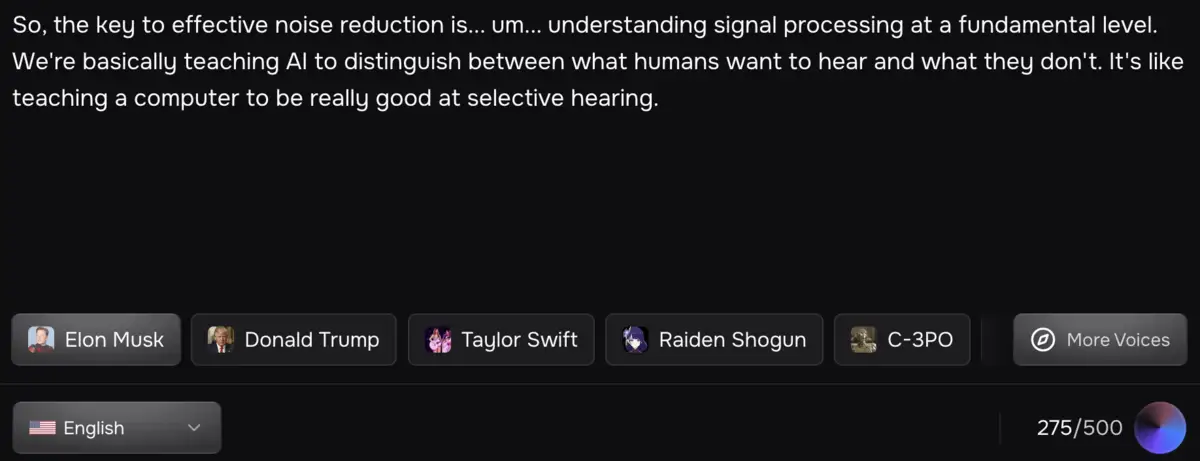
Fish Audio creates realistic AI voice clones and text-to-speech synthesis. Upload voice samples to create custom AI voices, or choose from a library of pre-made voices to generate natural-sounding speech in multiple languages.
Tutorial:
- Go to the Fish Audio website
- Create an account or browse the voice library
- Upload voice samples (30 seconds to several minutes) to create your AI voice clone
- Enter or paste the text you want to convert to speech
- Select your cloned voice or choose from community voices
- Adjust parameters like speed, pitch, and emotion
- Generate and download high-quality audio files for your projects
URL: https://fish.audio/
Better prompting...
Today: Budget Flight Routing Optimization
Find the most cost-effective flights from [CITY A] to [CITY B] for [specific dates or date range in MONTH], optimizing for:
Route Discovery:
Direct flights from primary airports
Multi-stop itineraries (including non-obvious routing through hub cities)
Alternate departure airports within [X miles/km] of CITY A
Alternate arrival airports within [X miles/km] of CITY B
Mixed-airline combinations that booking sites might not surface
Price Factors:
Base fare comparison across major booking platforms (Google Flights, Skyscanner, Kayak, airline direct)
Budget carriers (Spirit, Frontier, Ryanair, etc., depending on region)
Total cost including baggage fees, seat selection, and booking fees
Flexible date comparison (+/- 3 days) to identify price patterns
One-way vs. round-trip pricing arbitrage
Provide:
Top 3 cheapest options with total cost breakdown
Best value option (balancing price, duration, and convenience)
Any counterintuitive routing (e.g., flying to a nearby city then taking ground transport)
Booking strategy (when to book, which platform, any current deals/promo codes)
Constraints to consider: [Add any: max layover time, preferred airlines, loyalty programs, time-of-day preferences]
AI & Tech News
Amazon Posts $9.5B Gain from Anthropic Investment in Q3
Amazon reported a substantial $9.5 billion pre-tax gain from its investment in AI company Anthropic during the third quarter, significantly boosting the company's financial performance. The massive gain was recorded as non-operating income, highlighting the growing value of Amazon's strategic investments in artificial intelligence technology.
Amazon CEO Attributes 14,000 Layoffs to Organizational Culture Changes
Amazon CEO Andy Jassy explained that the company's recent elimination of approximately 14,000 corporate positions was primarily driven by efforts to improve organizational culture and streamline internal structure by removing bureaucratic layers. According to Jassy, these layoffs were not motivated by artificial intelligence implementation or financial cost-cutting measures, but rather by the company's focus on increasing operational agility.
Cloudflare Beats Q3 Expectations with 31% Revenue Growth
Cloudflare reported third-quarter revenue of $562 million, representing a 31% year-over-year increase and beating analyst estimates of $544.6 million. The internet infrastructure company also provided optimistic guidance for Q4 2025, forecasting revenue of $589 million compared to Wall Street expectations of $580 million, driving the stock (NET) up more than 9% in after-hours trading.
Twilio Beats Q3 Estimates, Stock Surges on Strong Forecast
Twilio reported third-quarter revenue of $1.3 billion, a 15% year-over-year increase that exceeded analyst estimates of $1.25 billion, while also posting adjusted earnings of $1.25 per share for the period ending September 30. The cloud communications company's strong performance included forecasting fourth-quarter sales above expectations and announcing an agreement to acquire identity platform Stytch, driving TWLO shares up more than 8% in after-hours trading.
Gloo Seeks $873M Valuation in IPO with Ex-Intel CEO Pat Gelsinger
Gloo Holdings, a technology company that develops artificial intelligence tools for Christian churches, has filed for a U.S. initial public offering seeking a valuation of up to $873.4 million. The religious-oriented tech firm is led by former Intel CEO Pat Gelsinger, who serves as the company's head of technology.
Chinese researchers ship agent that finds tools within reasoning stream
Chinese researchers from Renmin University and Xiaohongshu released DeepAgent, an AI system that discovers and uses tools dynamically within its reasoning stream rather than following predetermined workflows, achieving 89% success on complex tasks where the best competing models reach 55%. The performance gap reveals that rigid scaffolding around reasoning models constrained Western agents more than model capabilities, with Chinese labs now leading autonomous tool use by accessing 16,000+ APIs while OpenAI limits its agents to search, code, and browsing.
Samsung and Nvidia Partner on Massive AI Manufacturing Initiative
Samsung Electronics has announced a major partnership with Nvidia to construct an "AI Megafactory" that will integrate artificial intelligence directly into semiconductor manufacturing processes. The ambitious project will deploy over 50,000 of Nvidia's most advanced GPUs to transform how Samsung produces computer chips, representing one of the largest AI implementations in manufacturing to date.
OpenAI Introduces Paid Credits for Sora Video Generation Tool
OpenAI has launched a paid credit system for its Sora AI video generation tool, offering users 10 additional video generations for $4 through Apple's App Store. The platform currently provides 30 free video generations per day, but the company is moving toward expanded monetization as it develops its AI video technology for power users.
Navan IPO Stumbles as Shares Drop 20% on Market Debut
Corporate travel and expense management software company Navan saw its shares tumble 20% to $20 in its public market debut, reducing the company's valuation from its IPO price to $5 billion. The company and existing shareholders successfully raised $923.1 million in the initial public offering, which initially valued Navan at $6.2 billion before the post-IPO decline.
YouTube Transforms TV App to Compete with Netflix
YouTube is overhauling its television application to resemble premium streaming services like Netflix by organizing content into seasons and episodes rather than individual videos. This strategic redesign aims to blur the distinction between professional television content and user-generated videos, positioning YouTube as a more direct competitor to traditional streaming platforms in the living room viewing experience.
UK Regulator Demands Social Media Companies Prove Algorithms Protect Minors
Ofcom chief executive Melanie Dawes has warned social media companies they must demonstrate their algorithms effectively protect users under 18 from harmful content or face potential enforcement action under the Online Safety Act. The UK communications regulator revealed that Dawes has been holding meetings with major US artificial intelligence firms as part of the regulatory oversight process.
🚀 AI Profiles: The Companies Defining Tomorrow

Gloo Holdings
Gloo stitches church operations, donor campaigns, and AI assistants into one vertical platform. Former Intel chief Pat Gelsinger now bets his second act on "values-aligned" technology for ministry.
1. The founders
Scott and Theresa Beck incorporated Gloo in 2013 out of Boulder, Colorado. Scott built Blockbuster, Boston Market, Einstein Bros. The playbook: roll up fragmented markets, add infrastructure. Gelsinger joined as executive chairman and head of tech in March 2025 after years on the board. Employee count undisclosed, though 57,000 paying customers suggest meaningful ops scale.
2. The product
Four pillars bundle what churches buy piecemeal. Gloo360 delivers managed IT and analytics to denominations. Workspace handles messaging, workflows, and broadcasts (freemium to $49/month). The Outreach family supplies media, e-commerce, donor tools. Gloo Media Network monetizes the audience. AIChat, Network Assistants, and Flourishing AI wrap the stack in "values-aligned" guardrails tied to Harvard's human-flourishing research. Strength: integration saves pastoral teams from stitching tools. Risk: breadth over depth invites specialist competitors.
3. The competition
Clearstream and Text In Church own church texting. Planning Center, Tithe.ly, Rock RMS dominate management systems. Media and fundraising scatter across boutique agencies. AI assistants proliferate as LLMs commoditize chatbots. Gloo's moat, if it forms, sits in cross-sell density. 57,000 customers paying for comms can upsell media, AI, managed services. Data plus standards (Flourishing AI) differentiate from generic providers. Privacy critiques linger around targeting and campaigns.
4. Financing
$164 million raised through 2025, including a $110 million growth round mid-2024 and $23 million follow-on in January. IPO terms set October 30: 9.1 million shares at $10–$12, seeking $109 million. Proposed valuation: $801–873 million. Roth Capital books the deal. Ticker: GLOO on Nasdaq. Revenue hit $41 million over 12 months ended July 2025. Net loss: $69.8 million in six months. Growth eats margin for now.
5. The future ⭐⭐⭐
Faith markets consolidate slowly, churn runs high, and unit economics remain unproven. But fragmentation creates opening. If Gloo converts free users, widens wallet share through media, and makes AI boring-reliable, the flywheel spins. Gelsinger adds gravity. Execution beats evangelism. Investors want receipts, not sermons.

Marcus Schuler
Editor-in-Chief and founder of Implicator.ai. Former ARD correspondent and senior broadcast journalist with 10+ years covering tech. Writes daily briefings on policy and market developments. Based in San Francisco. E-mail: editor@implicator.ai