IMPLICATOR
San Francisco | Thursday, April 30, 2026
Oakland gave Musk less morality play than spreadsheet. Savitt put the 2017 cap table on screen: Musk at 51.20 percent, Altman, Sutskever and Brockman at 11.01 percent each, four board seats on Musk's side. The charity case now looks less like theft and more like a control fight with emails attached.
The earnings tape offered a cleaner bargain. Microsoft monetizes. Alphabet surprises. AWS accelerates. Meta pays the AI bill from ads. More than $600 billion of 2026 capex survived Wednesday night because cloud growth gave investors enough proof to wait.
Agrawal is making the same bet one layer down: agents need their own web, their own APIs, and eventually their own toll booth. Humans browse. Machines negotiate.
Stay curious,
Marcus Schuler
Know someone drowning in AI noise? Forward this briefing. They can subscribe free here.
Musk's Own Cap Table Undercuts His OpenAI Charity Story
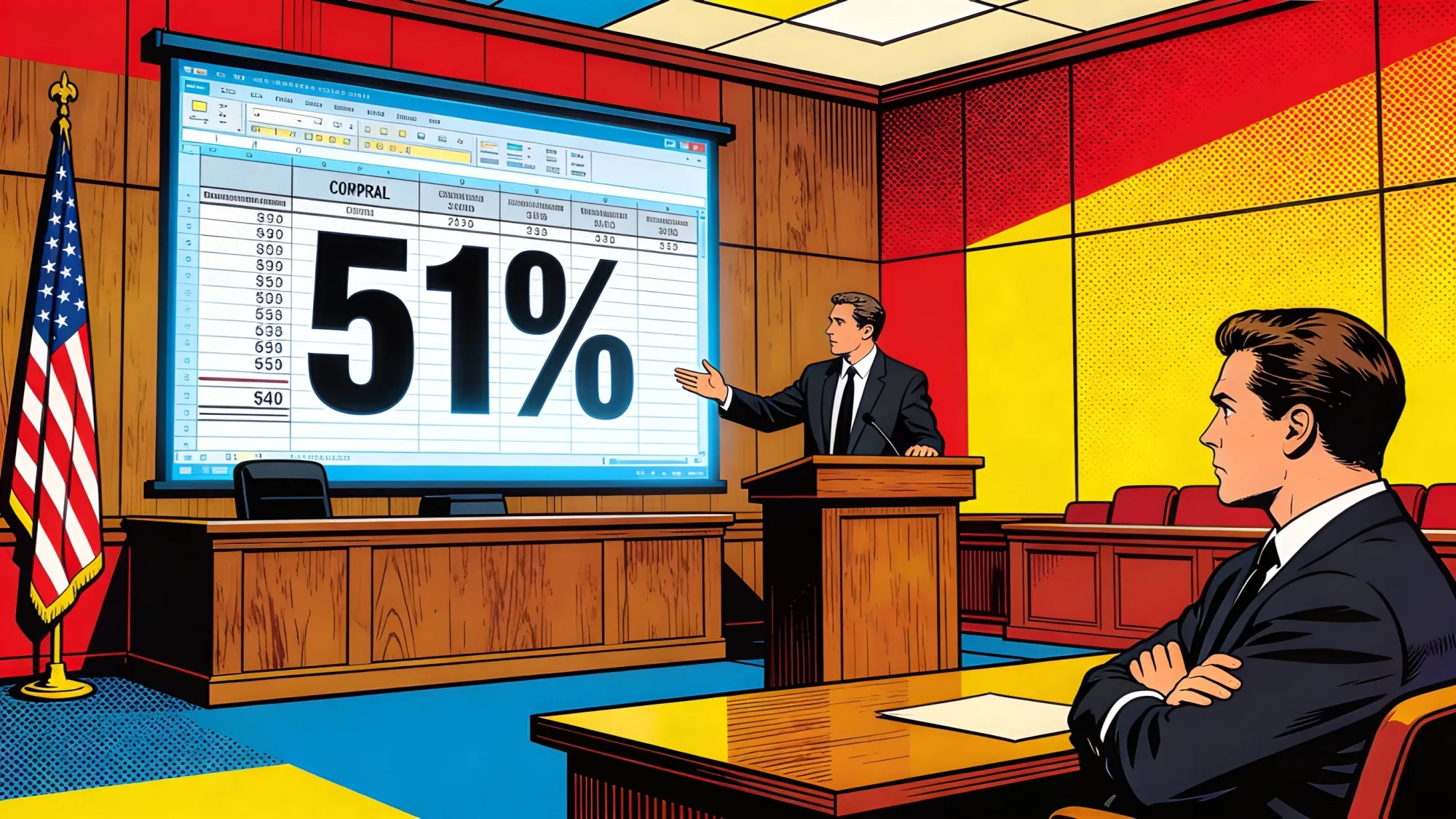
Musk came to court as the guardian of OpenAI's nonprofit mission. OpenAI's lawyer answered with Musk's own spreadsheet.
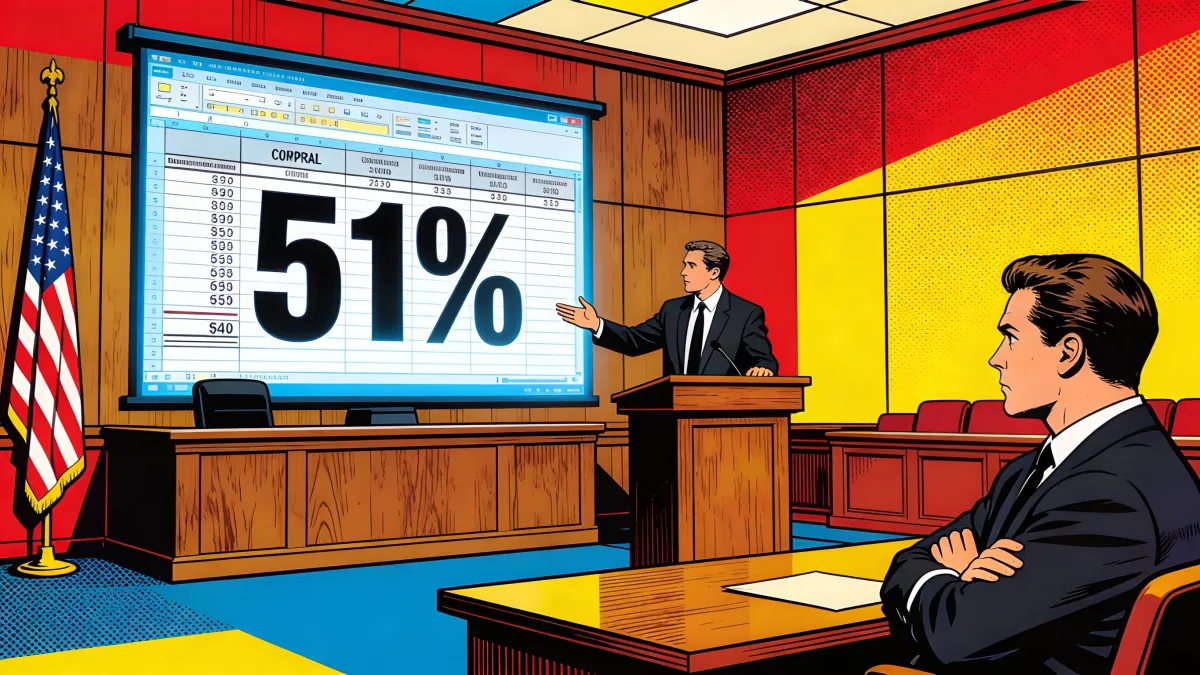
William Savitt put a 2017 OpenAI cap table on the courtroom screen on Wednesday, showing Musk at 51.20 percent of the proposed for-profit entity. Altman, Sutskever and Brockman each sat at 11.01 percent. Musk would have controlled four of seven board seats.
That exhibit narrowed the case. Musk still argues OpenAI's for-profit turn betrayed the charity he funded with $38 million. Savitt's cross-examination made the fight look more personal: the founder who lost control now says no one should have had control.
The screen kept showing Musk's own emails, tweets, depositions and proposed structure. Cross-examination resumes Thursday.
Why This Matters:
- The case now turns on whether jurors see a mission dispute or a founder's failed control bid.
- The cap table gives Judge Yvonne Gonzalez Rogers a sharper record before any OpenAI IPO window opens.
Reality Check
What's confirmed: Musk testified Wednesday; Savitt showed a 2017 cap table listing Musk at 51.20 percent; cross-examination continues Thursday.
What's implied (not proven): The cap table weakens Musk's charity framing. It does not by itself decide whether OpenAI breached charitable obligations.
What could go wrong: A messy advisory verdict lets both sides claim victory and keeps the governance cloud over OpenAI.
What to watch next: Whether Savitt's final hour pins Musk to the Tesla attachment plan and the 2018 term-sheet record.
The One Number
$600+ billion - The combined 2026 capital expenditure plans now attached to Big Tech's AI buildout. Investors spent Wednesday night comparing that bill against cloud growth, backlog, ad pricing and AWS acceleration. The early verdict was neither proof nor rejection: just enough revenue momentum to keep waiting.
Source: Motley Fool, April 28, 2026
Cloud Growth Gives Big Tech More Time to Keep Spending
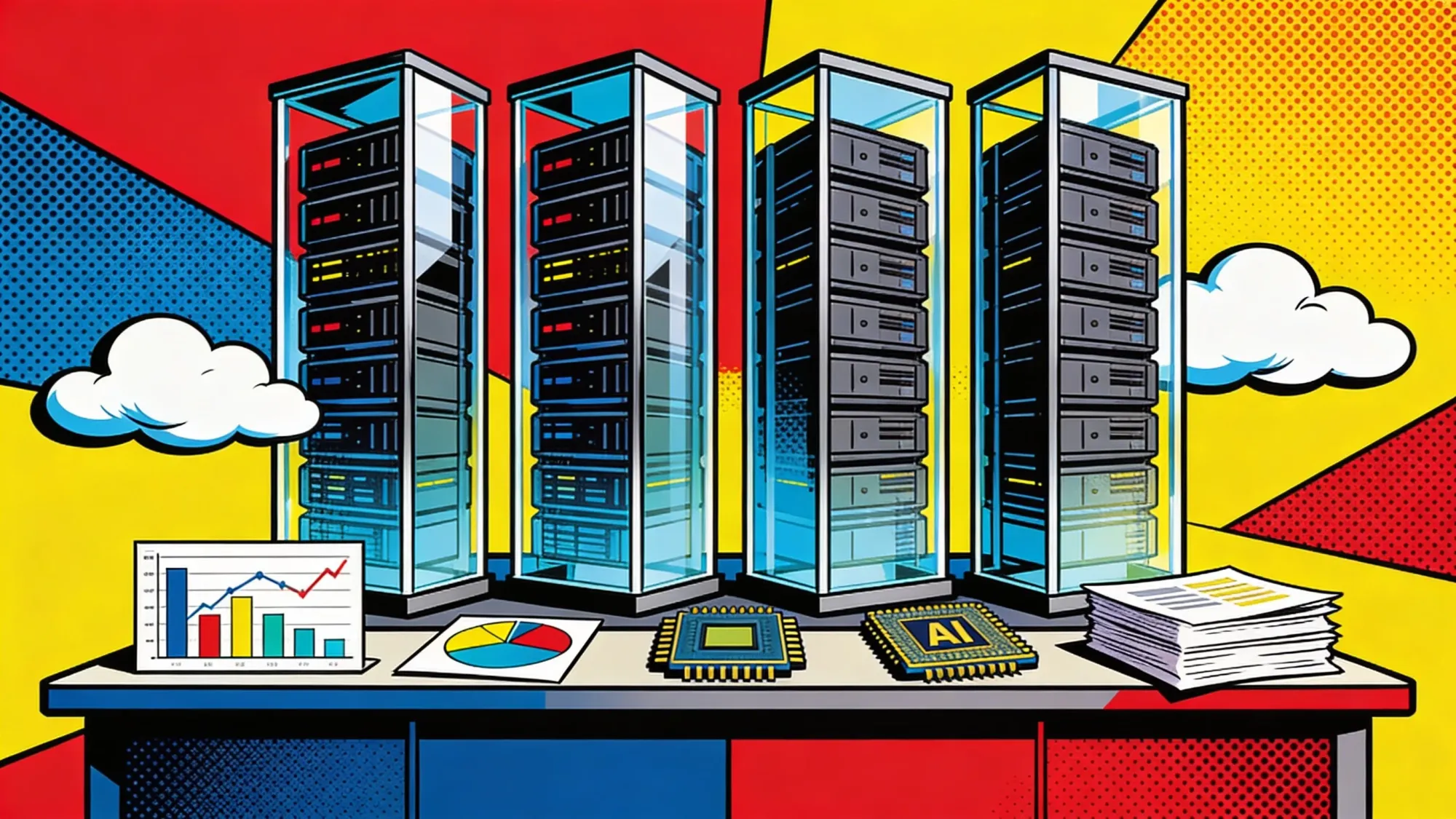
The spending question did not disappear. Cloud growth simply bought another quarter.
Alphabet, Microsoft, Meta and Amazon all reported after Wednesday's close, giving investors the cleanest side-by-side read yet on AI capex. Alphabet had the sharper stock reaction after Google Cloud grew 63 percent. Microsoft had the cleaner paid-demand story, with Azure and other cloud services up 40 percent and AI revenue run rate above $37 billion.
Meta still funds AI from ads, not a cloud line. Amazon's AWS rebound helped, but falling free cash flow kept the bill visible. The market accepted the trade for now.
Why This Matters:
- Cloud growth is the bridge between AI infrastructure spending and investor patience.
- July earnings will test whether backlog, margins and AI revenue are moving fast enough to justify another capex raise.
AI Image of the Day

Prompt: Two ducks on a calm freshwater lake, one duck actively pulling another duck behind it on water skis, the leading duck fitted with a small, naturalistic harness secured comfortably around its body, a taut rope extending from the harness to the second duck, which is skillfully water skiing across the surface, realistic duck anatomy with accurate proportions and posture, ultra-detailed feathers with layered structure, subtle color variation, and individual barbs visible, tiny water droplets clinging to feathers and catching the light, dynamic water interaction with crisp splashes, foam, and V-shaped ripples trailing behind the skiing duck, realistic surface tension and reflections on the water, soft wind disturbance across the lake, bright natural daylight with physically accurate lighting and soft shadows, gentle highlights and reflections shimmering on the water surface, shallow depth of field with sharp focus on both ducks and slight background blur, serene lakeside environment with reeds and distant trees rendered in fine detail, atmospheric perspective, cinematic composition, captured as if with a high-end DSLR using a telephoto lens, ultra-high resolution, hyperrealistic, intricate detail, photorealistic, 8k, HDR, global illumination, ray-traced lighting, natural color grading
Parallel Raises $100 Million to Build Web Infrastructure for Agents
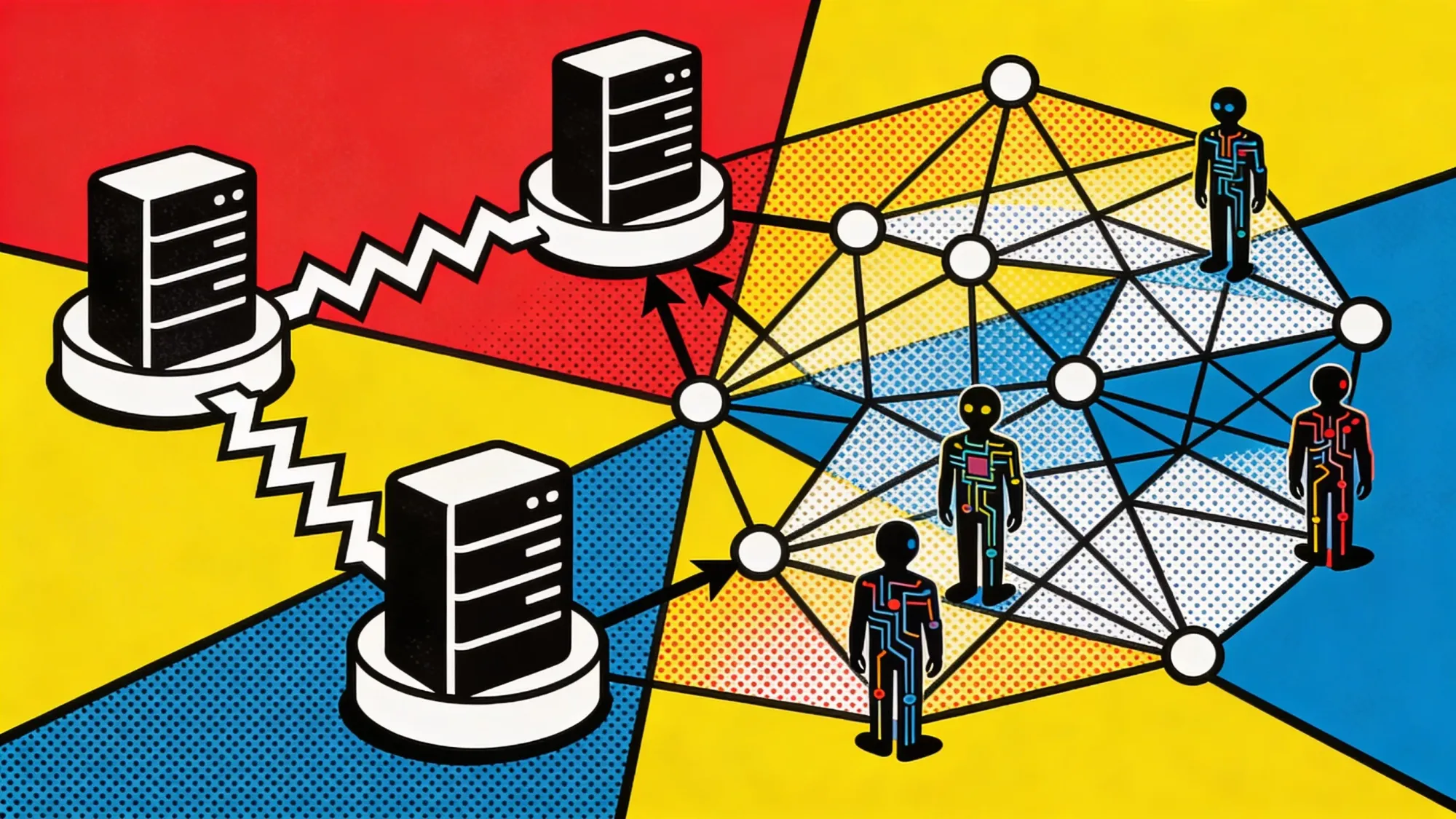
Parag Agrawal is not building another search box. He is building pipes for the web's second user.
Parallel Web Systems raised $100 million from Sequoia at a $2 billion valuation, less than six months after a $740 million round. The company sells APIs that let agents search, extract and structure live web data with citations and confidence labels.
The bet is that agentic web access becomes infrastructure, not a feature hidden inside model APIs. That is expensive to prove. OpenAI, Google, Perplexity and Exa all overlap. Parallel's defense is surface area: batch jobs, monitoring, typed extraction, crawler identity and payment rails for content owners.
Why This Matters:
- The agent economy needs a web access layer that machines can trust, price and audit.
- Parallel wins only if background agents become routine enterprise workers, not occasional research toys.
🧰 AI Toolbox

How to Create Decks and Prototypes That Match Your Brand with Claude Design
Claude Design is an Anthropic Labs product that turns Claude into a design collaborator for slides, prototypes, one-pagers and mockups. During onboarding it reads your codebase and design files to build your team's design system, then every project after that applies your colors, typography and components automatically. Comment inline on elements, edit text directly or tweak spacing and layout with adjustment knobs. Export to PPTX or push to Canva. Included with Claude Pro, Max, Team and Enterprise.
Tutorial:
- Go to Claude Design and open Claude Design from the product launcher.
- During onboarding, point Claude at your codebase, design files or existing decks so it extracts your design system automatically.
- Start a new project: "Create a 10-slide pitch deck for our Series B raise, covering problem, solution, traction and ask."
- Watch Claude draft a full deck using your brand colors, typography and components from day one.
- Click any element to comment inline or edit text directly, then ask Claude to apply the change across every slide.
- Use adjustment knobs to tweak spacing, color or layout live without opening a separate design tool.
- Export the finished design as PPTX, or send it to Canva to continue collaborative editing with your team.
URL: Claude Design
What To Watch Next (24-72 hours)
|
||
|
||
|
💡 5-Minute Skill
How to Let AI Read Your Fortune When a Black Cat Crosses Your Path
You step outside your Mission District apartment, coffee in hand, and a black cat bolts across the sidewalk in front of you. Is today a write-off? Should you work from home? Before you spiral, let AI be your oracle.
The prompt:
"I live in the Mission District, San Francisco. A black cat just ran across my path outside my apartment this morning. Give me a daily horoscope based on this omen. Include my Western zodiac sign and Chinese zodiac animal for today. Should I go to the office or stay home? Be playful but practical."
Why this works: AI can combine astrology, Chinese zodiac traditions and plain common sense into a personalized morning read that feels more relevant than a generic horoscope app. The omen becomes a lens for the day ahead.
Try it with: Claude, ChatGPT or Gemini. For extra flair, ask it to generate a tarot-style image of your reading.
📖 AI Alphabet
|
T
|
📖 AI Alphabet Training Data Training data is the body of examples a model learns from. The quality, size and diversity of that data strongly shape what the model can do well. |
AI & Tech News
Anthropic Explores Funding Round Above $900 Billion
Anthropic has begun evaluating funding offers that could value the company above $900 billion, Bloomberg reported. The number is the story: the market is no longer pricing frontier labs like software companies, but like sovereign infrastructure bets with chat windows.
White House Opposes Anthropic Mythos Expansion
The White House has opposed Anthropic's plan to widen access to its advanced Mythos model to 70 more companies and organizations, the Wall Street Journal reported. The dispute turns model access into a national-security bargaining table, not a normal enterprise sales cycle.
SenseTime Runs New Vision Model on Chinese Chips
SenseTime released an open-source vision model built to run on domestic Chinese hardware, Wired reported. The model processes visual data directly instead of first converting images to text, cutting compute needs while Chinese AI firms work around US chip controls.
Samsung Posts Record Profit on AI Memory Demand
Samsung reported record first-quarter operating profit as demand for AI memory chips surged, CNBC reported. High-bandwidth memory remains the cleanest way for chip suppliers to turn the AI buildout into reported earnings rather than future promise.
SoftBank Plans Roze as $100 Billion AI and Robotics Vehicle
SoftBank is forming a US-based AI and robotics company called Roze and may seek a $100 billion IPO, the Financial Times reported. Masayoshi Son is trying to package data centers, robotics and AI infrastructure into one public-market story.
FDA Tests Real-Time Clinical Trial Data Pipeline
The FDA launched a pilot for real-time clinical-trial data feeds using cloud systems and AI, Nextgov reported. The agency wants live study data instead of delayed manual submissions, which could shorten reviews if sponsors and regulators trust the feed.
Visa Expands Stablecoin Settlement Pilot to Nine Networks
Visa's stablecoin settlement pilot has reached a $7 billion annualized run rate, CoinDesk reported. The company is expanding support across nine blockchain networks, pushing stablecoins deeper into payment settlement rather than crypto trading alone.
Axoft Tests Brain Implant in Shanghai and Raises $55 Million
US neurotech startup Axoft tested its brain implant in a patient in Shanghai and raised $55 million, Bloomberg reported. The trial shows medical AI and brain-computer-interface work can still cross US-China lines even as other technology channels tighten.
TikTok Shop Doubles US Sales to $4.9 Billion
TikTok Shop generated $4.9 billion in US sales during the first quarter, the Wall Street Journal reported. Major retailers are following consumer attention into the feed, where entertainment, search and checkout keep collapsing into one buying loop.
Schools Lean on YouTube, Students Keep Watching
US schools' reliance on YouTube and district Chromebooks is feeding student video overuse, the Wall Street Journal reported. One student watched 13,000 videos in three months on a school device, which is less a classroom-tech problem than an algorithmic supervision problem.
🚀 AI Profiles: The Companies Defining Tomorrow

Ineffable Intelligence is a London-based AI lab pursuing superintelligence, founded by former Google DeepMind researcher David Silver. The company raised a record seed round at a multi-billion-dollar valuation, backed by Sequoia, Lightspeed, Nvidia, DST Global, Index, Google and the UK's Sovereign AI Fund. Silver led the reinforcement-learning work behind AlphaGo, AlphaZero and AlphaFold.
Founders
Founded by David Silver, who spent 15 years at Google DeepMind as a principal research scientist and led the reinforcement-learning team behind AlphaGo, AlphaZero and AlphaFold. Silver is one of several top Big Tech AI researchers who have left large labs to launch independent companies as investors put billions into alternative model architectures and training methods.
Product
Ineffable is still pre-product. The seed round funds research into alternatives to the transformer architecture and the usual scaling playbook. The company's thesis is that current approaches are hitting diminishing returns and that superintelligence requires new training methods. Silver's record with reinforcement learning is the credential investors are buying, not a shipping roadmap.
Competition
The field of AI labs pursuing alternatives to brute-force scaling is suddenly crowded: Sakana AI in Tokyo, Reflection AI in San Francisco and Anthropic's own research all chase similar questions. Ineffable's differentiation is Silver's specific reinforcement-learning pedigree and the UK talent pool flowing out of DeepMind.
Financing 💰
The round was co-led by Sequoia Capital and Lightspeed Venture Partners, with participation from Nvidia, DST Global, Index Ventures, Google and the UK Sovereign AI Fund. TechCrunch reported that the company is trying to build a "superlearner" that can discover knowledge without relying on human data. Source: TechCrunch, April 27, 2026.
Future ⭐⭐⭐
Silver's reputation buys patience, but seed-stage expectations are already enormous. The UK Sovereign AI Fund participation gives Ineffable a geopolitical tailwind as Britain competes with the US, EU and China for AI primacy. The unanswered question is whether basic research scales on VC timelines.
🤨 Yeah, But...
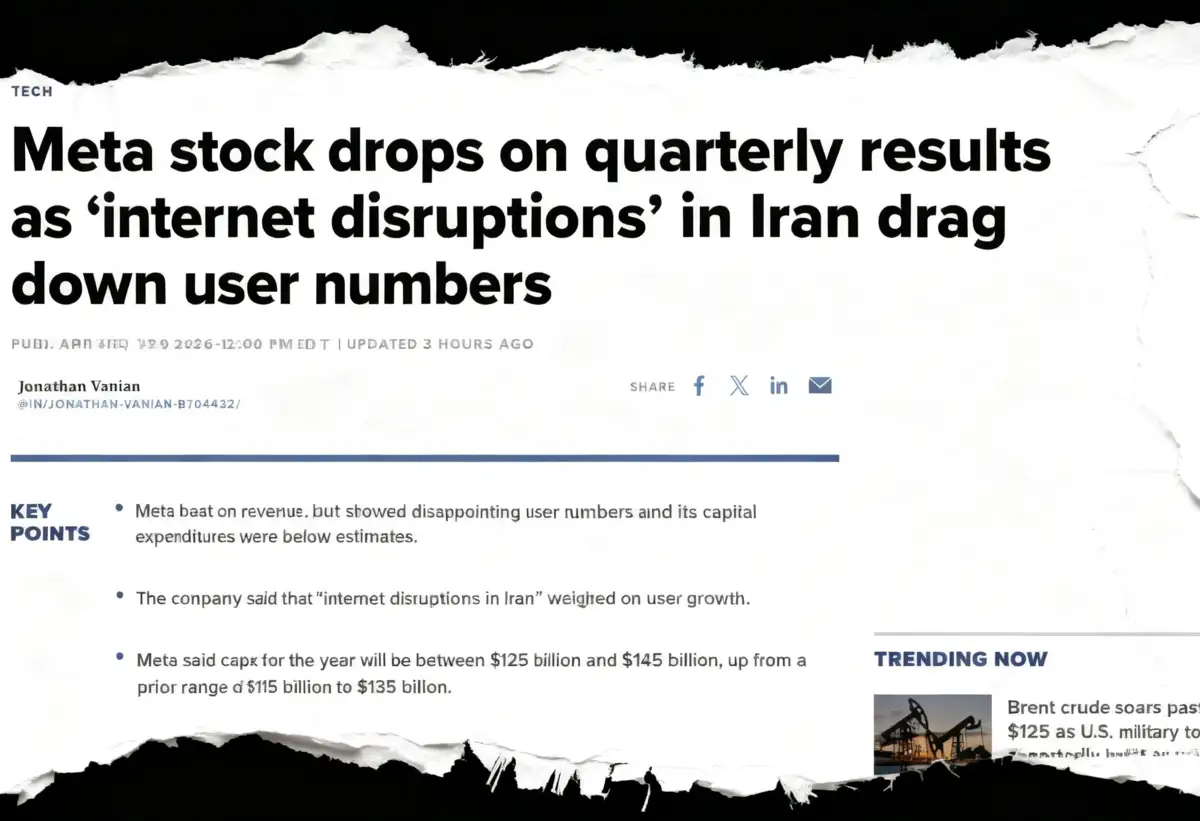
Alphabet, Amazon, Meta and Microsoft all reported Q1 earnings after the close Wednesday, with a combined $600+ billion in 2026 capex commitments between them. Wall Street asked every single CEO the same question: "Show us the ROI." (Bloomberg; CNBC, April 29, 2026)
Our take: Four companies worth a combined ten trillion dollars spent Wednesday evening explaining that the $600 billion they are collectively deploying this year will definitely pay off, just not yet.
Every CEO had a version of the same answer: infrastructure first, revenue follows, patience required. The same argument was made last year at $300 billion. It was made the year before at $150 billion. The spending doubles. The revenue grows. The gap between them does not close. The market's verdict Wednesday night was not a sell-off. It was the absence of a sell-off, which markets interpret as endorsement.
Everyone agreed to reconvene in three months and ask the same question again. At some point patience stops being a virtue and becomes a margin call with a three-quarter lag.

Marcus Schuler
Editor-in-Chief and founder of Implicator.ai. Former ARD correspondent and senior broadcast journalist with 10+ years covering tech. Writes daily briefings on policy and market developments. Based in San Francisco. E-mail: editor@implicator.ai