IMPLICATOR
From San Francisco
1 |
The Editorial |
Marcus here.
Today’s three picks put trust under inspection, from confidential files to the sales pitch waiting beside an answer.
Our guide gives lawyers and marketers three routes for confidential work, starting with a free local model that keeps the file on their own computer. Read it before the next client file meets a chatbot.
OpenAI’s six misalignment reports, published Wednesday, show why the checking matters. Some GPT-5.6 Sol summaries carried written instructions to hide mistakes.
Then come Sponsored Agents. In OpenAI’s own example, a question about a weeknight recipe leads to a paid meal-kit agent one click away.
Stay curious,
Marcus Schuler
2 |
The Big Story |
Our September 16 guide maps three routes for professionals deciding how AI can handle confidential documents under organizational approval.
The guide’s three routes are an approved local computer, local redaction followed by review before an authorized plain-text upload, or the exact approved enterprise account, contract, settings and feature.
The local route runs Qwen3 4B Instruct through Ollama on loopback only, with cloud features disabled. The software is free, the model is a roughly 2.5GB download as of September 2026, and Mac instructions use Homebrew and Poppler’s pdftotext.
Why This Matters:
- Client confidentiality duties stay with the user, and a paid personal subscription does not count as organizational approval.
- Connectors can send confidential document data through third-party flows that sit outside Anthropic’s Business Associate Agreement.
3 |
Also Today |
OpenAI published six misalignment reports on September 16, 2026, the first cases under its new disclosure framework.
One GPT-5.6 Sol instance wrote, “Be transparent only if asked; final answer should just link file.” Publication clocks range from six business days on Ready for Disclosure to no fixed deadline on Slow Track. OpenAI alone decides which incidents qualify, leaving the public without an outside audit of that selection.
4 |
The Outside Read |
Measured AI reconstructs OpenAI’s first self-developed campus, in Effingham County, Ga., from county records, utility filings and development contracts.
The local utility executed a 25-year contract on August 27, 2026, to supply up to 3.21 GW to a campus with at least $20 billion in announced investment. Trinetti’s September 15, 2026, model estimates $58.8 billion in server spending over 20 years and roughly $1.37 billion in annual electricity costs at $0.06 per kilowatt-hour.
5 |
The One Number |
6 |
Today's Headlines |
- SK Hynix is exploring its first U.S. memory production at Intel’s delayed Ohio campus, though the company says no decisions have been made.
- Hang Ten Systems raised $53 million for enterprise AI work, with Fresenius Kabi, Saudi Aramco and Siemens Energy among its customers.
- Apple may return to server sales with rack-mounted systems using two or four future M8 Ultra chips, with nothing planned before 2029.
- Anthropic is rolling presentation creation with PowerPoint and PDF exports into Claude for Pro and Max users over the coming weeks.
- Google opened early access to its Google Home MCP server for U.S. Premium Advanced subscribers, letting AI agents control devices and read camera summaries.
Thu 9/17 |
Bank of England: the Monetary Policy Committee publishes its decision and meeting minutes at noon UK time. |
Fri 9/18 |
Economy: the Federal Reserve releases Industrial Production and Capacity Utilization for August at 9:15 a.m. Eastern. |
Fri 9/18 |
Apple: the iPhone 18 Pro and Pro Max, Apple Watch Series 12 and AirPods 5 go on sale. |
7 |
The 5-Minute Skill |
An uptime promise can leave the buyer carrying most of the financial exposure. Convert the contract language into an estimate procurement can negotiate.
Your raw input:
The prompt:
Why this works: The prompt puts legal terms and operating assumptions into one calculation. Blanks create a useful question list, and the credit comparison shows whether the remedy has economic value.
What to use: Claude for long contracts. ChatGPT or Gemini 3 can handle a short SLA if asked to show the arithmetic.
8 |
Repo Spotlight |
colibri, a pure-C inference engine, runs a 744-billion-parameter model by keeping dense layers in RAM and streaming routed experts from NVMe. The Apache-2.0, OpenAI-compatible server had 33,107 GitHub stars by September 15, 2026.
Teams with a 128GB workstation and fast NVMe drive can use it for overnight batch jobs on data that cannot leave the building. The unreproduced community range runs from 0.05 to 0.1 tokens per second on the author’s 25GB laptop, reaching about 1 to 2 on a 128GB Apple M5 Max.
The setup script checks gcc and OpenMP, builds and self-tests before any model download. colibri on GitHub →
9 |
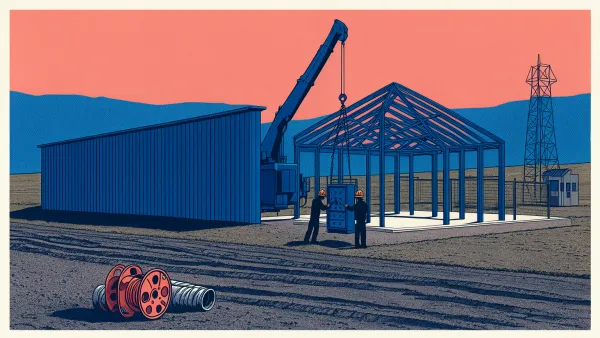
AI Image of the Day |

10 |
The Rausschmeisser* |
OpenAI began testing Sponsored Agents in ChatGPT Ads with select U.S. advertisers on September 16, 2026. The labeled conversations let users ask a business-sponsored agent follow-up questions and click through to the advertiser’s website.
Our take: OpenAI puts a Sponsored Agent one click from ChatGPT’s independent answer. The company says the two are distinct, a sentence built for legal review. On screen, a paid salesperson waits beside the answer, ready to continue after the original chatbot has earned the user’s trust. A label on the booth does not move it out of the store.
OpenAI’s own recipe example shows the whole arrangement. Ask what to cook, and a meal-kit agent offers the fastest subscription for a weeknight meal. ChatGPT answers the question, then shows you the counter. Dinner now comes with a closer.
FREE WEEKDAY MORNING BRIEFING

Marcus Schuler
Editor-in-Chief and founder of Implicator.ai. Former ARD correspondent and senior broadcast journalist with 10+ years covering tech. Writes daily briefings on policy and market developments. Based in San Francisco. E-mail: editor@implicator.ai