IMPLICATOR
Britain gained access to Ukraine’s five-million-frame Avengers Labs battlefield dataset, becoming the first international partner admitted to the platform. The platform held that volume as of August 10, 2026, and the access came through an artificial-intelligence agreement signed in Kyiv on August 24, 2026, by Prime Minister Andy Burnham and President Volodymyr Zelenskyy. The deal gives British researchers and technology companies training material gathered during active combat.
What Changed
- Britain became the first international partner admitted to Ukraine’s Avengers Labs battlefield-data platform.
- Avengers Labs held five million annotated combat frames as of August 10, 2026; the public materials do not disclose the validation method behind Ukraine’s 70 percent detection claim.
- The partnership includes buried fiber-optic sensing and low-power AI-chip pilots involving three British startups.
- UK parliamentary evidence and Human Rights Watch identify dataset quality, automation bias and opaque model behavior as unresolved risks.
AI-generated summary, reviewed by an editor. More on our AI guidelines.
The data inside Avengers Labs
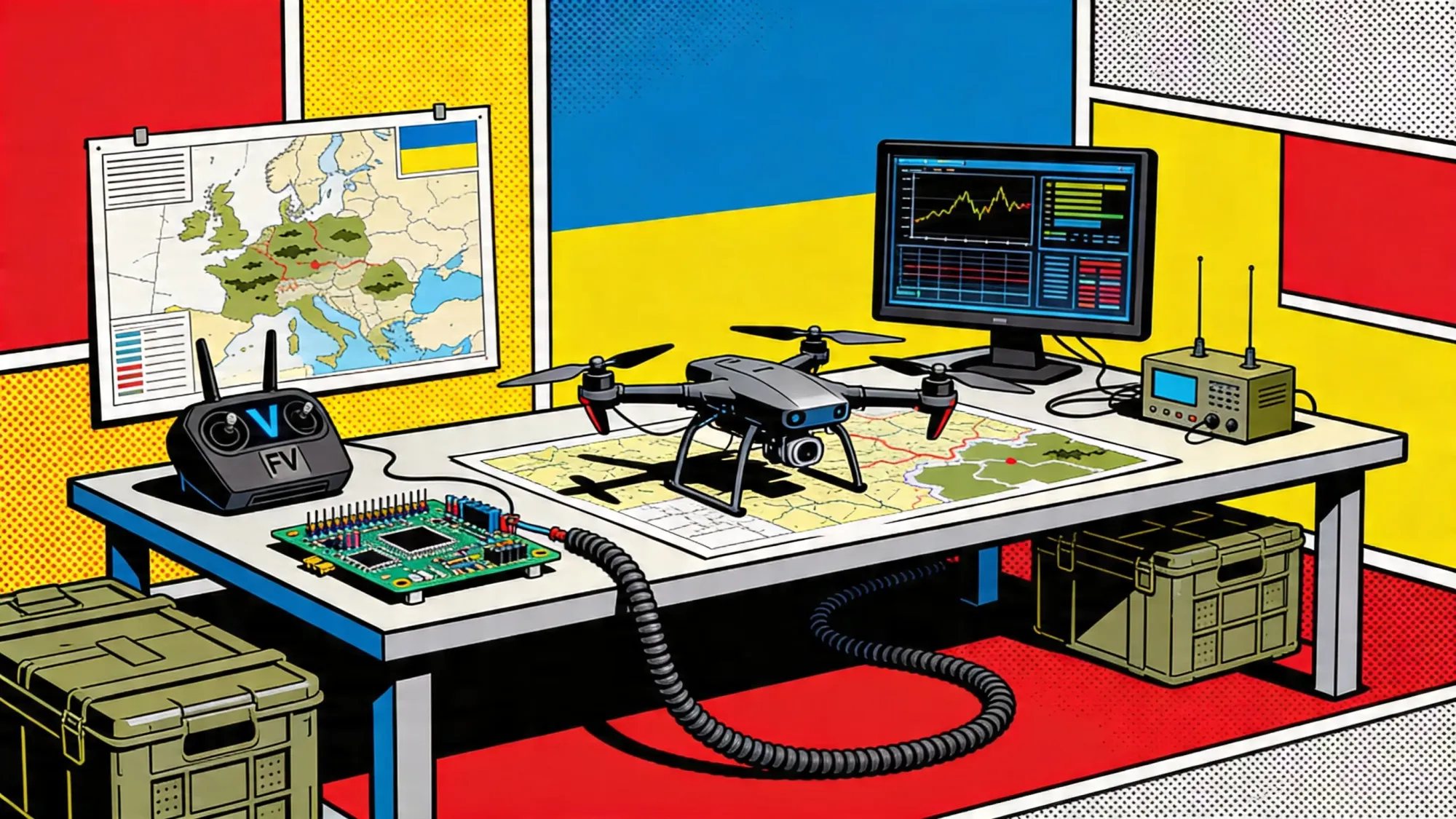
Avengers Labs collects images from daylight cameras, infrared sensors, drones and other battlefield sensors. Its labels cover tanks, artillery, air-defense systems, infantry, Shahed drones and reconnaissance drones. Ukraine’s Ministry of Defence built the platform so approved partners can train models without direct access to DELTA’s sensitive databases.
The security framework follows standards from the U.S. National Institute of Standards and Technology and receives annual audits from Big Four consulting firms, Deputy Defense Minister Lt. Col. Yuriy Myronenko said in February 2026. The agreement does not make public the exact controls applied to British users or the portions of the dataset they will be allowed to use.
“High-quality, labelled battlefield data is one of the biggest constraints on developing reliable AI for autonomous systems,” said Misha Nestor, chief product officer at Ukrainian drone-software company Swarmer. Foreign rivals’ computer-vision models were often trained on synthetic data and did not perform as well in combat.
British projects ready for the data
The partnership includes pilot work using buried fiber-optic cables as AI-enabled sensors around military facilities. It also covers research into low-power AI chips for drones, robotics and autonomous systems. The initial projects include three British startups: Bristol’s Sintela, Oxford’s Mind Foundry and London’s Skyral.
Britain’s Defence Science and Technology Laboratory already runs related programs. Its ANVIL computer-vision system was designed to identify targets and adjust to changed conditions within 24 hours, as described by the laboratory on July 27, 2026. Project VANAHEIM put counter-drone equipment from 13 suppliers into realistic light-infantry exercises in Germany and Poland during summer 2025.
FREE WEEKDAY MORNING BRIEFING
Don’t miss the next AI story that matters.
The Implicator Morning Briefing filters the AI news cycle to the stories worth your attention and explains their consequences. From San Francisco, every weekday at 4:45 a.m. Pacific, 7:45 a.m. Eastern.
About five minutes. No hype. No spam.
What changed in the agreement
Britain and Ukraine had already agreed on June 23, 2025, to feed frontline technology datasets into British production lines, initially for drone-based air defense. The new agreement names British access to Avengers Labs and adds joint AI research.
Britain is the first international partner admitted to that platform, not Ukraine’s first foreign battlefield-data partner. Ukraine and Germany signed a defense-data memorandum in April 2026 that covered combat information from DELTA and other military systems.
Know someone who'd find this useful? ✉️ Email it to a friend in one click, or they can subscribe free here.
The testing gap
Ukraine’s Ministry of Defence said on August 10, 2026, that models trained with Avengers data process more than 100,000 drone video streams each month and detect about 70 percent of enemy targets in real time. The 70 percent figure is reported by Ukraine’s Ministry of Defence, and the cited public materials do not disclose the underlying validation method, while the agreement does not disclose which data British researchers will receive or how models trained on it will be tested before deployment.
Dr Elke Schwarz, Reader in Political Theory at Queen Mary University London, warned in a House of Lords committee report that autonomous weapon systems may be trained on limited, synthetic, or inappropriate samples and that battlefield complexity cannot be modeled accurately. Human Rights Watch warned in June 2026 that automation bias and opaque model behavior can erode human judgment and leave accountability gaps when AI contributes to targeting.
Danylo Tsvok, head of Ukraine’s Defense Artificial Intelligence Center, described the intended boundary in April 2026: “It’s not about reaching 100% autonomy, it’s about being efficient on the battlefield.”
Frequently Asked Questions
What is Avengers Labs?
Avengers Labs is a Ukrainian military platform for training AI models on annotated battlefield data. Its five million frames include tanks, artillery, air-defense systems, infantry and drones, with much of the material drawn from the DELTA combat system.
What access did Britain receive?
Britain became the first international partner admitted to Avengers Labs under an AI agreement signed in Kyiv on August 24, 2026. The public agreement does not specify the exact data subsets or access controls available to British users.
What will Britain and Ukraine build with the data?
Initial work includes turning buried fiber-optic cables into AI-enabled sensors and researching low-power AI chips for drones, robotics and autonomous systems. Bristol’s Sintela, Oxford’s Mind Foundry and London’s Skyral are involved in the pilots.
How accurate is Ukraine’s target-detection system?
Ukraine’s Ministry of Defence says Avengers-trained models process more than 100,000 drone video streams a month and detect about 70 percent of enemy targets in real time. The public materials do not disclose the validation method behind that figure.
What risks come with battlefield-trained military AI?
Evidence presented to a House of Lords committee warned that autonomous weapons can learn from limited or inappropriate samples. Human Rights Watch also identifies automation bias, opaque model behavior and weakened human judgment as risks when AI contributes to targeting.
AI-generated summary, reviewed by an editor. More on our AI guidelines.

Free AI briefing · Weekdays
The AI stories that matter, sourced and explained.
Join the Morning Briefing. It goes out every weekday at 4:45 a.m. Pacific, with later sends for the East Coast, Berlin and Tokyo.
Free when you sign up: The Paperclip Compendium, our tested guide to running AI agents.
Free. Unsubscribe in one click.

Marcus Schuler
Editor-in-Chief and founder of Implicator.ai. Former ARD correspondent and senior broadcast journalist with 10+ years covering tech. Writes daily briefings on policy and market developments. Based in San Francisco. E-mail: editor@implicator.ai