IMPLICATOR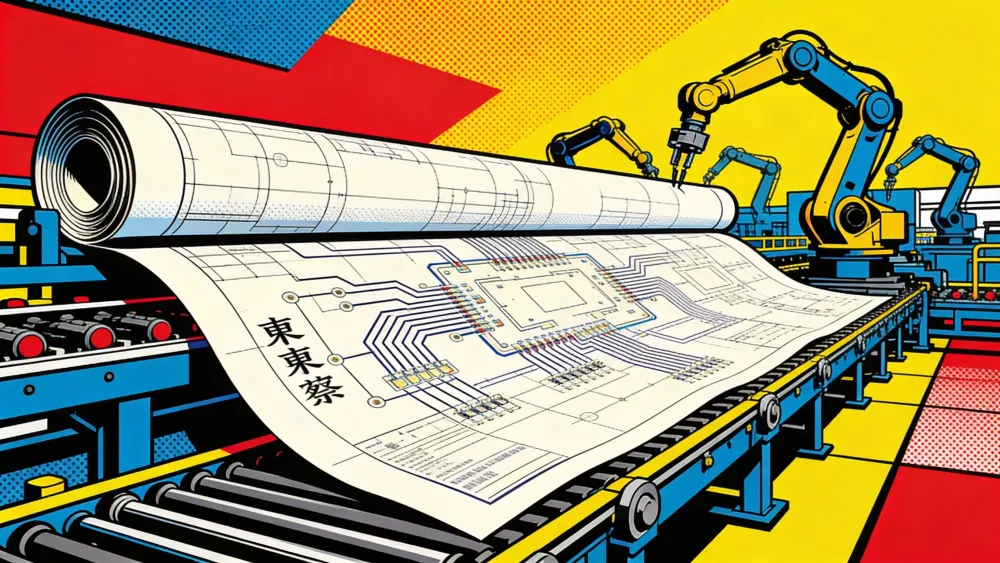
Beijing released its 141-page 15th Five-Year Plan on Thursday inside the Great Hall of the People, embedding artificial intelligence into every section of the country's economic blueprint for 2026 through 2030. The document mentioned AI more than 50 times and introduced a sweeping "AI+ action plan" covering manufacturing, logistics, education, and healthcare, Reuters reported. Li Qiang's government work report opened with technology. Not GDP. Not employment. Technology, or what Beijing has taken to calling "new quality productive forces." He read it to nearly 3,000 delegates packed into the National People's Congress, and the positioning tells you where the leadership's head is at.
Beijing looks emboldened. The previous five-year plan was about building walls, stockpiling self-sufficiency against American export controls. This one reads differently. The 15th version pushes for deployment at scale, shoving laboratory wins onto factory floors across the world's second-largest economy. "If the last Five-Year Plan's innovation policy was largely defensive, this one is much more proactive," said Yue Su, principal economist for China at the Economist Intelligence Unit. Growth target? Down to a range of 4.5% to 5%, from "around 5%" last year. Slower growth, faster rewiring. That's the trade.
The Breakdown
- China's 141-page 15th Five-Year Plan mentions AI over 50 times and introduces a sweeping 'AI+ action plan' across the economy
- GDP growth target lowered to 4.5%-5% for 2026 as Beijing shifts from defensive self-sufficiency to scaled deployment
- R&D spending target set at 7% annual growth through 2030; last year already hit $565B with an 8% jump
- No hard consumption target despite household spending stuck at 40% of GDP, 15 points below global average
From breakthroughs to production lines
The plan names specific technologies for accelerated investment. Quantum computing. 6G communications. Embodied AI, the systems powering humanoid robots. Machine-brain interfaces. It pledges "key breakthroughs in nuclear fusion technologies" and a reusable heavy-load rocket, plus a space-earth quantum communication network and feasibility studies for a lunar research station. None of these appeared with this level of specificity in the previous blueprint.
But the real change sits lower in the document, in the operational details. Beijing committed to building "hyper-scale" computing clusters backed by cheap electricity. It endorsed open-source AI communities, a first for a Chinese government work report. "Open source wasn't mentioned in previous reports, and this is also a key difference between the Chinese and American AI approaches," said Tilly Zhang, a technology and industrial policy analyst at Gavekal Dragonomics. China is betting on open models while Washington's own deregulation-first AI policy favors the closed approach championed by OpenAI.
Specific measures include deploying robots in sectors with labor shortages and rolling out AI agents capable of operating with minimal human supervision. "Beijing's goal is to use AI and robotics to boost productivity and performance in a wide range of sectors, from manufacturing and logistics to education and healthcare," said Kyle Chan, a fellow in Chinese technology at the Brookings Institution.
Beijing's spending is real, even if its claims aren't
Here's what the execution looks like on paper: twenty growth targets spanning the economy, technology, healthcare, and national security, according to the South China Morning Post. A hundred and nine major projects across six areas, seven more than the previous plan. R&D gets a 7% annual growth target through 2030. Last year the country already beat that, spending more than five hundred sixty-five billion dollars on research, an 8% jump.
A separate state-planning report piled on, claiming the country now "leads the world" in AI and quantum technology and that homegrown chip efforts had scored breakthroughs. Standard Communist Party boosterism. But the cash underneath those claims is harder to dismiss, and a target pushing "core digital economy industries" to 12.5% of GDP from an unspecified baseline would reshape investment flows across the entire economy over the next five years.
One thing you won't find in the 141 pages: a multi-year GDP growth target. Same omission as the 14th plan. Wall Street noticed. Morgan Stanley wrote that 2026, as the opening year of a fresh blueprint, "requires faster growth to anchor confidence." EIU put the year at 4.6%. Most forecasters expect the corridor to hover between 4.5% and 5% for the rest of the decade.
Join 10,000+ AI professionals
Strategic AI news from San Francisco. No hype, no "AI will change everything" throat clearing. Just what moved, who won, and why it matters. Daily at 6am PST.
No spam. Unsubscribe anytime.
The demographic engine behind AI adoption
Forget the geopolitics for a second. Read the plan as a labor document and it makes more sense. China has lost population for four years running, and the factory towns feel it worst. Robots and AI agents aren't aspirational additions to the economy. They're filling seats that stayed empty.
Factory managers in Guangdong and logistics operators in Zhejiang have watched it happen in real time. Applicant pools thinning out, wages going up, same production targets on the wall. That pressure is why the plan loads up on embodied AI, the category covering humanoid robots and industrial automation. State planners want machines on the lines where humans stopped showing up. Workforce training shows up in the plan too, because a factory full of robots still needs someone who can fix them when they break.
Brian Wong, a fellow at the University of Hong Kong's Center on Contemporary China and the World, described the shift as moving away from "the zealous pursuit of technological breakthroughs for the sake of innovation, towards identifying and developing more sophisticated applications and diffusion architecture." A nervous Washington should pay attention to that framing. Beijing is done chasing breakthroughs for prestige. It wants them wired into every assembly line and shipping dock in the country.
What's missing from the blueprint
The plan promised a "notable" increase in household consumption. No figures attached. Economists had been pushing for a hard number, something concrete that would show Beijing means it when it talks about shifting away from exports. They got a vague pledge instead. Chinese households still spend only about 40% of GDP. In most other economies, consumers account for 55% or more. That fifteen-point shortfall is not a rounding error. It's a structural problem, and the plan barely touches it.
Every yuan Beijing pours into AI labs and chip fabs is a yuan that doesn't go toward getting Chinese families to spend more. The two goals fight each other. State-directed investment crowds out the consumer stimulus that would actually rebalance things. Last year's trade surplus, a record $1.2 trillion, was built on the same export machine this plan says it wants to move past. The math doesn't work both ways.
"There is a widening gap between Beijing's targets and the actual capacity of China's policymakers to support domestic demand with the tools at their disposal," said Logan Wright, a partner at U.S.-based research firm Rhodium Group. China's financial system keeps lending to unproductive local governments and state-owned enterprises to prevent collapse, Wright added. Private-sector investment stays weak.
When Beijing previewed this plan's direction last October, the emphasis was on self-reliance as a shield against American pressure. Five months later, the final document goes further. AI is no longer a defensive priority. It's the operating system Beijing wants running underneath the entire economy. The 15th Five-Year Plan bets everything on that wiring job. A country running a 4% budget deficit, fighting deflation, and losing workers faster than it can train replacements now has until 2030 to prove the bet pays off.
Frequently Asked Questions
What is China's AI+ action plan?
A sweeping policy framework embedded in the 15th Five-Year Plan that aims to integrate artificial intelligence across manufacturing, healthcare, education, and logistics. The plan also calls for deploying AI agents with minimal human supervision and robots in sectors facing labor shortages.
Why did China lower its GDP growth target?
Beijing set a range of 4.5% to 5% for 2026, down from 'around 5%' last year. The lower target gives policymakers room to redirect resources toward technology transformation and structural reforms rather than chasing headline GDP growth.
What specific technologies does the plan prioritize?
Quantum computing, 6G communications, embodied AI (the systems powering humanoid robots), machine-brain interfaces, nuclear fusion, reusable rockets, and a space-earth quantum communication network. Beijing also committed to 'hyper-scale' computing clusters and open-source AI communities.
Why does the plan emphasize robotics and embodied AI?
China's population has declined for four consecutive years. Factory towns face acute labor shortages with shrinking applicant pools and rising wages. Humanoid robots and industrial automation are positioned as replacements for workers who aren't showing up.
What is the consumption gap problem in the plan?
Chinese households spend only about 40% of GDP, compared to 55% or more in most other economies. The plan promised a 'notable' consumption increase but attached no figures. State investment in AI and chips crowds out the consumer spending needed to rebalance the economy.
Free AI briefing · Weekdays
The AI stories that matter, sourced and explained.
Join the Morning Briefing. It goes out every weekday at 4:45 a.m. Pacific, with later sends for the East Coast, Berlin and Tokyo.
Free when you sign up: The Paperclip Compendium, our tested guide to running AI agents.
Free. Unsubscribe in one click.

Marcus Schuler
Editor-in-Chief and founder of Implicator.ai. Former ARD correspondent and senior broadcast journalist with 10+ years covering tech. Writes daily briefings on policy and market developments. Based in San Francisco. E-mail: editor@implicator.ai