IMPLICATOR
San Francisco | Thursday, June 4, 2026
Claude-Mem, an open-source memory layer for coding agents, has drawn 80,253 GitHub stars since launch. Hooks intercept Claude Code tool use, compress sessions into dated observations, and store them in SQLite and Chroma so the next session retrieves project history instead of re-reading the repo. Creator Alex Newman relicensed to Apache 2 last week.
Napkin AI has pushed past 2 million users on a narrower pitch than the full-deck generators crowding the space. Founder Pramod Sharma told VentureBeat the Los Altos startup works backwards from what it takes to create a single graphic.
The Lancet published the sharpest clinical deskilling signal yet, as experienced endoscopists lost 6 percentage points of unassisted adenoma detection after routine AI exposure. A Wharton working paper found the same split: GPT handed students 48% practice-score gains, then a 17% penalty on unaided exams.
Stay curious,
Marcus Schuler
Know someone drowning in AI noise? Forward this briefing. They can subscribe free here.
Claude-Mem Turns Session Logs Into Searchable Project Memory

Claude-Mem, an open-source memory layer for coding agents, now counts 80,253 GitHub stars and 6,910 forks just weeks after launch. Creator Alex Newman relicensed it from AGPL-3.0 to Apache 2.0 last week, turning agent memory from a Claude Code plug-in into a primitive any host can adopt.
Under the hood, hooks capture SessionStart, UserPromptSubmit, PostToolUse, and Stop events. A Bun CLI feeds an Express worker that writes observations to SQLite and Chroma, exposing recall through an MCP server. The production guide reports 3,400 observations across two servers and eight projects over 23 days of use.
The install path is npx or the Claude Code marketplace. The docs warn that npm install -g installs only the SDK, not the hooks or worker, and that Gemini and OpenRouter can generate observations but may truncate the init prompt that carries output formatting. Newman told a YouTube interviewer the project is moving to Apache 2 "so that anybody can take it and build the primitives into their systems."
Why This Matters:
- For developers running multi-session agent workflows, Claude-Mem replaces the rebuild-from-scratch loop where each new chat re-reads the entire repository before contributing a single line.
- The Apache 2 relicensing signals that agent memory is becoming infrastructure rather than a feature, the same arc that turned logging from a library into a product category.
Reality Check
What's confirmed: Claude-Mem has 80K+ stars, 6,910 forks, and a published production guide tracking 3,400 observations over 23 days at roughly 24 MB/month SQLite growth.
What's implied (not proven): The claim that this memory layer works across all 7+ supported hosts equally, when adapters for Cursor and OpenCode-style agents still describe event-shape requirements rather than shipping solutions.
What could go wrong: Unbounded transcript growth. One issue report hit 6.1 GB across 287 JSONL files, including a single 1.9 GB file that would break recall latency in a busy project.
What to watch next: Whether Claude-Mem ships a compaction or retention policy before the first enterprise team hits the transcript-size ceiling in production.

The One Number
$80 billion - Alphabet's planned equity raise to fund AI infrastructure, including a $10 billion Berkshire Hathaway private placement. The raise sits below Alphabet's $180 billion to $190 billion capex range for 2026. Cloud demand is now large enough to make even Google sell shares to buy compute.
Source: Reuters, June 1, 2026
💰 Fresh Funding
💰 Fresh Funding
Raises $26M: Gigaton replaces industrial control software with AI
Tech.eu reported Wednesday that London-based Gigaton raised a $26 million Series A led by Plural, with 2150, Semapa Next and existing climate-tech investors participating. The former Carbon Re sells autonomous control software for cement, steel, glass and chemical plants, where small tuning changes can cut fuel cost and emissions without waiting for new factories.
Visit Gigaton →Raises $10M: ZeroDrift builds a compliance firewall for AI
TechCrunch reported Tuesday that ZeroDrift raised a $10 million seed round from a16z speedrun, Reign Ventures, PitchDrive Ventures, U&I Ventures and other backers. The New York startup places a compliance layer between AI systems and outgoing messages so banks, insurers and asset managers can catch policy violations before they reach customers.
Visit ZeroDrift →Raises $13M: Gradient Labs expands financial-services AI agents
Tech.eu reported Monday that Gradient Labs raised a $13 million Series A extension led by Octopus Ventures and CommerzVentures, doubling its Series A to $26 million. The ex-Monzo team sells AI agents for regulated customer operations such as lending, disputes and KYC, where financial firms need automation with audit trails.
Visit Gradient Labs →Napkin AI Bets on the Single Graphic, Not the Full Deck

Napkin AI, the Los Altos startup that launched in August 2024 with $10 million from Accel and CRV, crossed 2 million users within months by selling a narrower tool than the full-deck builders around it. The product turns selected work text into editable diagrams, charts and slide graphics that drop into existing presentations.
Co-founders Pramod Sharma and Jerome Scholler built Napkin after selling their children's learning company Osmo to Byju's in 2019. Sharma told VentureBeat the team works backwards from what it takes to create one good graphic rather than forwards from what an image model can generate. The pitch goes after the marketers and engineers Sharma calls professionals in the business of selling ideas, the people who need a chart faster than a designer can turn one around.
The restraint is deliberate. Napkin does not try to build the whole deck, only the visual that carries the argument, and Sharma sets a high bar for it. "In a graphic, good is not enough," he told VentureBeat. "It has to be really, really great." A content strategist who used the tool for eight months across blog posts, LinkedIn carousels and flowcharts said it stayed her go-to.
The limits show on thin inputs. TechCrunch's hands-on review found that vague text produced visuals not grounded in the paragraph, including pros and cons the source never mentioned. Napkin is free for 500 AI credits a week, with paid tiers from $9 a month, a price that undercuts the full presentation suites it is trying to sit beside rather than replace.

AI Image of the Day

Credit: Midjourney
Prompt: PORTRAIT OF a large duck's head facing forward --ar 3:4 --seed 17669397 --sref 5328650200 7606051984 6226232126 8118248660 --profile gedty9d --hd --v 8.1
Three New Studies Narrow the AI Deskilling Debate

A Lancet study, a Wharton working paper and a Harvard tutoring trial published in recent weeks all converge on the same finding: substitutive AI use erodes skill, while scaffolded AI tutoring improves it. The evidence draws a sharper line than the headline panic suggests.
Experienced endoscopists' unassisted adenoma detection fell from 28.4% to 22.4% after routine AI exposure across 1,443 colonoscopies. Turkish high-school students given standard ChatGPT raised practice scores 48% then scored 17% lower on unaided exams, while a tutor version that withheld answers produced 127% gains with no penalty. A Harvard physics tutor with pedagogical scaffolding delivered 0.73 to 1.3 standard deviations of learning gain over an active-learning class.

🧰 AI Toolbox
How to Get AI Code Reviews That Actually Understand Your Codebase Using Cubic
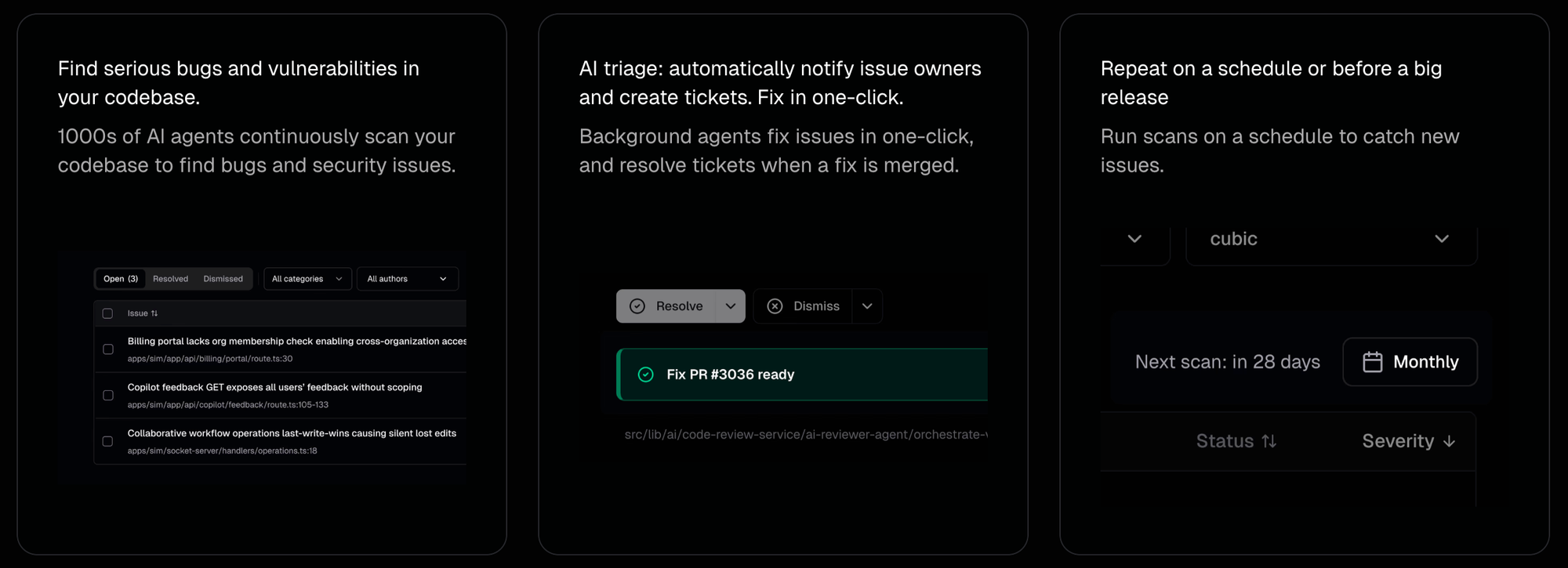
Cubic is an AI code review platform built for codebases too large for a model to load in one shot. It indexes your repo, learns your conventions, and reviews every pull request against the rest of the code, catching bugs, security issues, and consistency problems that linters miss. Comments arrive inside GitHub or GitLab in seconds, with suggested fixes you can apply in one click. Free for open source and small teams.
Tutorial:
- Sign up at cubic.dev and install the GitHub or GitLab app on your repo
- Let Cubic index your codebase once; the job runs in the background and finishes in minutes
- Open a pull request as you normally would, and Cubic posts a structured review with categorized comments
- Click "Apply suggestion" on any comment to commit the fix directly from the PR
- Configure project-specific rules in
.cubic.ymlto enforce conventions, security policies, or framework patterns - Use Cubic's chat to ask questions about your repo: "Where do we validate auth tokens?" or "Show me every place we call the Stripe API"
- Connect Cubic to Slack so reviewers get a digest of new PRs with severity scores and recommended approvers
What To Watch Next
|
||
|
||
|
||
|
💡 5-Minute Skill
Turn AI Tool Sprawl Into a One-Page Usage Rule
Thursday, 9:18 a.m. The team has ChatGPT, Claude, Gemini, Copilot and three "just testing" browser extensions. Security asks where customer data is going. You need a rule people can follow before the next accidental screenshot.
Your raw input:
Tools: ChatGPT Team, Claude Pro, Gemini Enterprise, Copilot and two browser extensions. Data types: public research, customer emails, contracts, source code, sales decks, screenshots and PII. Current habit: people paste into whichever tool answers fastest. Need: one-page rule for what can go where and when to ask Security.
The prompt:
Act like an AI operations lead writing a practical usage rule for a 90-person company. Turn this messy tool list into: allowed use, blocked use, approval-needed use, safest default and one Slack message announcing the rule. Sort by data sensitivity, not by favorite model. Use plain language. No legal caveats unless they change the action.
The output:
Safest default: public research and drafts can use approved chat tools. Customer emails, contracts, PII and screenshots stay inside Gemini Enterprise or approved internal systems unless Security signs off. Source code goes to Copilot or the repo-approved assistant only. Browser extensions are blocked for work data. Slack post: "Quick AI tool rule: if it names a customer, shows a contract, includes PII or exposes source code, use the approved internal path or ask Security first. Public research and generic drafts can use approved chat tools. Browser extensions stay out of work data."
Why this works:
Tool policies fail when they rank models instead of risk. This prompt makes the model sort by data sensitivity and turns the answer into an announcement people can paste into Slack.
What to use:
Claude is best if you paste policy notes, vendor terms or internal examples. ChatGPT is fine for a quick first pass. Ask for "approval-needed use" every time. That category catches the messy middle where most tool mistakes start.
📖 AI Alphabet
|
F
|
📖 AI Alphabet Fine-Tuning Fine-tuning means taking a general model and training it further on a narrower set of examples. It helps the model get better at a specific task, tone, or domain. |
AI & Tech News
U.S. and Five Eyes Allies Accuse China of Targeting Security Personnel Through Fake Job Listings
The United States, Canada, the UK, Australia and New Zealand accused China of operating a coordinated campaign that uses fake profiles and deceptive job offers on online employment platforms to target current and former government and military personnel. Intelligence agencies warn the operations aim to harvest sensitive information and identify recruitment vulnerabilities by exploiting trust in career platforms.
OpenAI and Anthropic CEOs Sign Open Letter Urging DNA Tracking to Curb AI Bioweapon Risk
Sam Altman and Dario Amodei joined scientists and executives urging U.S. lawmakers to strengthen oversight of synthetic DNA sequences that AI could use in bioweapon development. The letter calls for tracking and screening at DNA synthesis providers before AI-generated pathogen designs outrun existing safeguards.
SpaceX Files for Record $75 Billion IPO at $1.77 Trillion Valuation
SpaceX filed to raise $75 billion by selling 555.6 million shares at $135 each, the largest IPO in history, with proceeds earmarked for AI-driven satellite and launch initiatives including Starlink expansion and Starship development. The filing sets up the most consequential tech listing of the year.
Nvidia Acquires Enterprise AI Startup Kumo for More Than $400 Million
Nvidia bought Kumo AI, a five-year-old startup specializing in predictive AI software for enterprises, in a deal valued above $400 million. Kumo had raised $37 million in 2022 at a $250 million valuation, and its technology for building and deploying predictive models fills a gap in Nvidia's AI software stack.
Broadcom Q2 Revenue Rises 48% but AI Semiconductor Outlook Disappoints
Broadcom reported Q2 revenue of $22.19 billion, a 48% year-over-year increase driven by data center and networking demand, but projected Q3 semiconductor revenue from AI to fall short of analyst expectations. Shares slid more than 12% after hours, signaling that even strong AI infrastructure growth now faces a higher bar.
Meta Considers $200 Per Month Pricing for 'Hatch' AI Agent Platform
Meta is developing tiered pricing for Hatch, a consumer AI agent tool inspired by OpenAI's OpenClaw, with a premium subscription potentially costing $200 per month, according to internal documents cited by The Information. The plan reflects a push to monetize advanced agent capabilities beyond ad-supported models.
Google Ships Gemma 4 12B, an Open Multimodal Model That Runs Locally on 16GB Laptops
Google released Gemma 4 12B, an open multimodal AI model that processes audio and video without an encoder and runs locally on devices with 16GB of VRAM or unified memory. The release marks a push toward on-device AI that does not phone home, contrasting with cloud-heavy enterprise offerings.
Quantinuum Raises $1.68 Billion in Oversubscribed IPO at $15.6 Billion Valuation
The Honeywell-backed quantum computing company priced its IPO above the marketed range, selling 28 million shares at $60 each after signaling $53 to $55. The listing establishes Quantinuum as the most valuable pure-play quantum company and tests whether quantum attracts its own premium separate from AI infrastructure.
Lila Sciences in Talks to Raise $2 Billion at $8.5 Billion Valuation
The AI-driven life sciences startup is nearing a Series B round of roughly $2 billion, which would value the company at $8.5 billion, Bloomberg reported. The round, led by new and existing investors, aims to accelerate its AI platform for drug development and materials science.
CrowdStrike Beats Q1 Estimates, Guides Higher, Then Sees Shares Drop 9%
CrowdStrike reported Q1 revenue of $1.39 billion, up 26% year-over-year and above the $1.36 billion consensus, and guided Q2 revenue to roughly $1.44 billion against a $1.43 billion expectation. Shares fell more than 9% after hours anyway, reflecting a market that has priced in AI security demand and now wants upside surprise.
🚀 AI Profiles: The Companies Defining Tomorrow

Mark is the AI-powered physical bookmark that lets you highlight passages and record thoughts while reading paper books, then builds a searchable knowledge base from what you captured. The Mark II launch raised $1 million on a viral release video that crossed 6 million views in 48 hours, putting the device in the small but real category of AI hardware that solves an actual reader's problem. 📖
Founders
Mark was founded by a small product team focused on the intersection of reading and personal knowledge management. The product launched out of a hardware-focused accelerator.
Product
The Mark II is a highlighter-shaped device that scans text from physical books, captures spoken notes through a built-in microphone, and syncs everything to a companion app that organizes captures by book, theme, and date. The app's AI clusters related highlights from different books, surfaces patterns in what you have been thinking about, and answers questions across your entire reading history. The device works offline; sync happens when it next connects.
Competition
The closest competitors are Readwise (digital highlights from Kindle and apps), the Boox e-reader line (which does in-device highlighting), and a long line of failed digital pens (Livescribe, NeoSmartpen). Mark's wedge is being purpose-built for paper books and pairing the capture device with a serious AI organization layer.
Financing 💰
Mark raised $1 million around the Mark II launch in May 2026, on the strength of a viral release video. Specific investors were not detailed in the coverage.
Future ⭐⭐
Hardware on a $1 million round is a difficult path: manufacturing, returns, and distribution eat margin even when the product is loved. Mark's upside is a defensible niche (heavy readers who keep paper books) and the chance to become the canonical capture device for a generation of book annotators. The downside is the long list of beautiful note-taking hardware that never scaled past first-batch buyers. 🔖
🤨 Yeah, But...
Meta is developing a $200 per month premium tier for Hatch, its consumer AI agent tool built on OpenAI's OpenClaw protocol, The Information reported Wednesday. The same company that runs the largest ad machine in the world, which depends on keeping billions of people inside free products, now wants $2,400 a year to automate their calendars.
(The Information, June 3, 2026)
Our take: The math is either genius or delusional. A company that earns a few dozen dollars a year from the average user's attention is betting a subset will hand over $2,400 for an AI agent that reminds them about the dentist. The uncomfortable logic underneath: if Meta cannot make agent revenue work at ad-scale economics, the alternative is a subscription price that makes Netflix look like pocket change. Consumer agents cannot cost more than the value of the tasks they automate, and we are a long way from anyone paying $200 a month for a better Doodle poll.
Free AI briefing · Weekdays
The AI stories that matter, sourced and explained.
Join the Morning Briefing. It goes out every weekday at 4:45 a.m. Pacific, with later sends for the East Coast, Berlin and Tokyo.
Free when you sign up: The Paperclip Compendium, our tested guide to running AI agents.
Free. Unsubscribe in one click.

Marcus Schuler
Editor-in-Chief and founder of Implicator.ai. Former ARD correspondent and senior broadcast journalist with 10+ years covering tech. Writes daily briefings on policy and market developments. Based in San Francisco. E-mail: editor@implicator.ai