



San Francisco | Monday, March 9, 2026
Donald Knuth spent weeks on a combinatorics problem he couldn't crack. Claude Opus 4.6 solved it in an hour. Knuth proved the construction correct by hand, then wrote "Hats off to Claude," words the most exacting mind in computer science almost never offers. GPT models closed the remaining cases days later. The field watched machines produce original mathematical research with a legend co-signing the result.
Washington's operations in Iran and Venezuela stripped 22% of China's crude imports in 87 days. The fallout runs through TSMC's fabs, where $690 billion in AI capex rides on chips manufactured 100 miles off the Chinese coast.
And Nscale closed Europe's largest startup round at $2 billion. Sheryl Sandberg joined the board. IPO next.
Stay curious,
Marcus Schuler
Claude Opus 4.6 Solves Open Math Problem That Stumped Knuth for Weeks

Anthropic's Claude Opus 4.6 solved an open combinatorics problem that Donald Knuth worked on for weeks. The Stanford legend proved the construction correct by hand, then wrote: "Hats off to Claude."
The problem: decompose the arcs of a directed graph with m-cubed vertices into exactly three Hamiltonian cycles. Knuth cracked the smallest case and posed the general version as an exercise for his upcoming volume of The Art of Computer Programming.
Filip Stappers fed Knuth's exact wording into Claude and coached it through 31 explorations in roughly one hour. Brute force failed. Gray code patterns delivered partial progress. Simulated annealing found solutions that refused to generalize. At exploration 30, Claude caught hidden structure in its own earlier output: the routing decision at each vertex depended on a single coordinate. One pass later, it had a construction for all odd values of m.
Knuth proved it. Kim Morrison formalized the proof in Lean by March 4. Of 11,502 Hamiltonian cycles for the base case, 760 valid decompositions sit within Claude's structural class. Claude landed on one of them.
The race widened from there. Ho Boon Suan pointed GPT-5.3-codex at the even-m case and got a construction for all values of 8 or greater, tested through m = 2,000, a graph with 8 billion vertices. GPT-5.4 Pro produced what Knuth called "a beautifully formatted and apparently flawless 14-page paper" proving the construction correct. No human editing. AI models working across different labs closed both halves of an open mathematical problem within days.
Knuth closed with a request: stop writing to him about this. He has a book to finish.
Why This Matters:
- Knuth's endorsement signals a shift among elite mathematicians toward AI as a genuine research collaborator, not a parlor trick
- Multiple AI systems solved complementary halves of the same open problem in days, a preview of multi-agent scientific research
Reality Check
What's confirmed: Claude found a valid construction for all odd m. Knuth proved it by hand. Morrison verified it in Lean. GPT models closed the even case with a 14-page proof.
What's implied (not proven): That AI can now routinely perform original mathematical research at the level of elite humans.
What could go wrong: Claude degraded after four hours on the even case. Stappers had to restart sessions and repeatedly remind the model to document its progress.
What to watch next: Whether Knuth uses AI tools in writing the remaining volumes of TAOCP. His adoption would shift academic norms faster than any benchmark.

The One Number
39% — How much more frequently workers experiencing "AI brain fry" made major errors, per a Harvard Business Review study of 1,488 U.S. employees. Intensive AI oversight required 14% more mental effort, and quit intent among affected workers jumped from 25% to 34%. Companies pushing harder AI oversight are getting the opposite of what they paid for.
Source: Harvard Business Review
U.S. Strikes Cut China's Oil Supply as $690 Billion AI Buildout Rides on TSMC
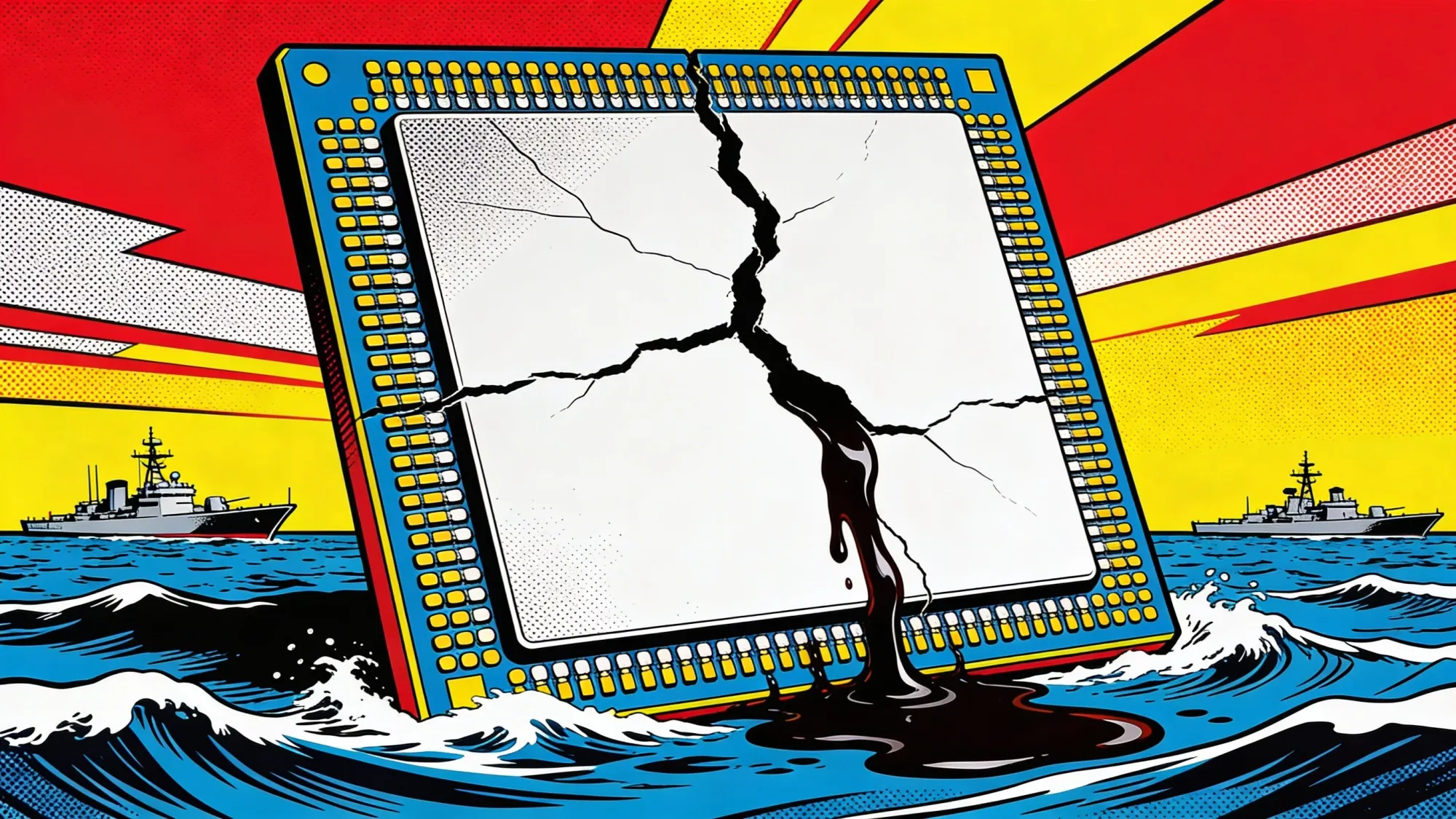
Washington's twin operations in Iran and Venezuela removed 22% of China's crude imports from sanctioned sources in 87 days. The fallout reaches TSMC, where every major AI chip is manufactured 100 miles off the Chinese coast.
Iran and Venezuela supplied 2.6 million barrels per day of discounted crude to Chinese refineries. Venezuelan exports to Asia collapsed 67% in February. The Strait of Hormuz, which carries a fifth of global oil and roughly half of China's crude imports, went dark after U.S.-Israeli strikes killed Khamenei and the IRGC declared it closed. Brent surged past $80. RBC's Helima Croft called it the biggest energy crisis since the 1970s oil embargo.
Beijing stockpiled 1.2 billion barrels in strategic reserves, roughly four months of net imports. But bypass pipeline capacity caps at 2.6 million bpd, and Russia's ESPO pipeline actually dropped 150,000 bpd last year. The cushion shrinks fast under sustained disruption.
The PLA ran three operations around Taiwan in 2025, each larger than the last. December brought 130 aircraft sorties, 90 crossing the median line, with projectiles landing in Taiwan's contiguous zone for the first time. The USS Abraham Lincoln got pulled from the Philippine Sea to the Middle East. "The fleet is not sufficient to keep a steady presence in every theater," Hudson Institute's Bryan Clark said.
Every thread terminates at TSMC's fabs in Hsinchu. Hyperscalers committed $635 to $690 billion in 2026 capex. Nvidia's fiscal 2026 revenue hit $215.9 billion. All of it depends on uninterrupted supply from a single island where rare earth controls sit at Beijing's discretion and carrier coverage stretches between two active theaters.
Why This Matters:
- Oil, military posture, and semiconductor supply form one connected system, and pressure on any front compounds across all three
- Four months of oil reserves and 54% of advanced chip capacity in Taiwan through 2027 leave minimal margin for miscalculation

AI Image of the Day

Prompt: basketball slam dunk, explosive jump, high speed action, player flying to the rim, arena lights, sports broadcast camera, strong motion blur, impact moment, realistic game, professional match, dynamic shot --ar 9:16 --raw
Nscale Closes $2 Billion Round, Adds Sandberg and Clegg Ahead of US IPO
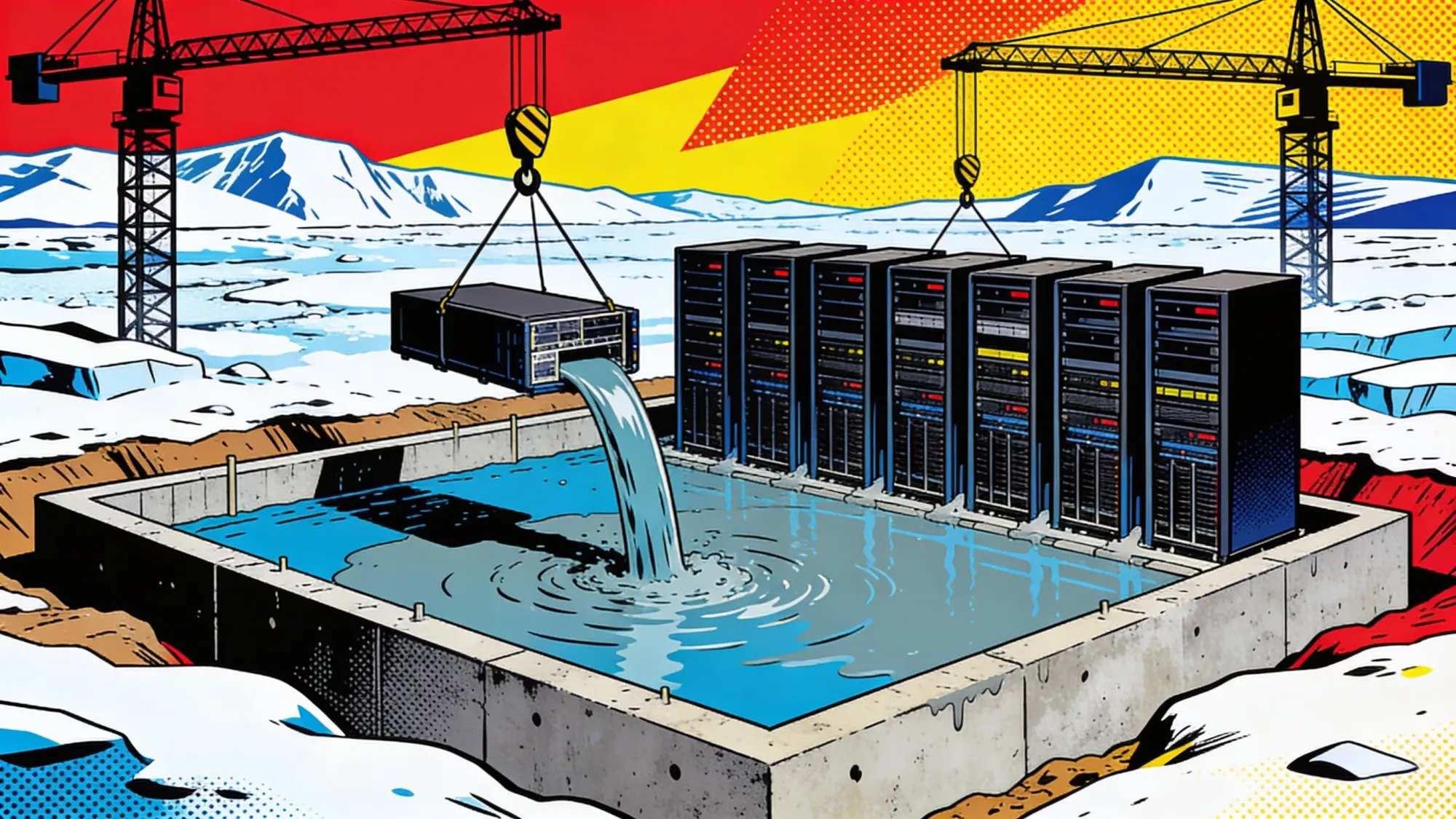
UK neocloud Nscale raised $2 billion in Europe's largest-ever startup round, valued at $14.6 billion. Sheryl Sandberg, Nick Clegg, and Susan Decker joined the board. An IPO could come this year.
Aker ASA and 8090 Industries led the Series C. Nvidia, Dell, Citadel, Jane Street, and Point72 also invested. Goldman Sachs and JPMorgan ran the placement, the same banks now serving as IPO underwriters.
CEO Josh Payne went from Australian coal mines to running data centers across six countries. Microsoft signed a contract Bloomberg estimated at $23 billion. OpenAI anchors the Stargate Norway project targeting 100,000 GPUs by year-end. ByteDance signed on. Total capital raised in six months approaches $6 billion.
The gap is the story. Nscale needs $45 billion over five years. Sandberg scaled Meta's ad business from $10 billion to hundreds of billions during 14 years as COO. Clegg ran Meta's global affairs operation, then joined Hiro Capital to invest in European AI. Decker sits on the Berkshire Hathaway board. These are governance hires meant to bridge the distance between a two-year-old startup and a public market listing.
The neocloud model carries concentrated risk. Average contracts run five and a half years. Data centers last 15. Board member Eriksen said Nscale could acquire struggling competitors "when the correction happens," the kind of language you rarely hear on a company's biggest fundraising day. The backers expect casualties. They plan to be the ones still standing.
Why This Matters:
- Nscale's board appointments and Goldman/JPMorgan hires sequence a US IPO that would price a two-year-old company at $14.6 billion
- The $45 billion five-year target means fundraising is just starting, not ending
🧰 AI Toolbox
How to Generate Videos with Synchronized Audio and Dialogue Using Seedance 2.0
Seedance 2.0 is ByteDance's AI video generator that produces 1080p video with native audio in a single pass. Describe a scene and the model generates synchronized dialogue, ambient sound, and sound effects matched to the visuals frame by frame. Upload a reference image to maintain character consistency across scenes. Free credits on signup.
Tutorial:
- Go to seed.bytedance.com/en/seedance2_0 and create a free account
- Choose your input: text prompt, reference image, or both
- Write a scene description that includes dialogue, movement, and environment: "A detective enters a rain-soaked alley and whispers into a radio"
- Select resolution (up to 1080p) and video length
- The model generates video with synchronized audio, including spoken dialogue, footsteps, and ambient sound, in one output
- Upload a reference image of a character to maintain visual consistency across multiple scenes
- Download your video or generate variations by adjusting the prompt details
URL: https://seed.bytedance.com/en/seedance2_0
What To Watch Next (24-72 hours)
- Oracle: Q3 fiscal 2026 earnings after close Tuesday. Cloud revenue expected up 40-44% year-over-year, with $50 billion in capex planned this fiscal year. The AI infrastructure spending bellwether after Broadcom's blowout last week.
- Adobe: Q1 fiscal 2026 earnings Thursday. Stock is down 20% this year. Firefly AI adoption and premium tier upgrades are the numbers that determine whether creative AI tools translate to revenue or remain a demo reel.
- SXSW: Main festival opens Thursday in Austin with more than 250 AI-focused sessions. Amy Webb delivers her annual Emerging Tech Trend Report. Steven Spielberg keynotes March 13.
🛠️ 5-Minute Skill: Turn a Quarterly Business Review Into a Board Update Email
Your team just ran a 90-minute QBR. The deck is 34 slides. The board meets Thursday and expects a one-page email update by end of day tomorrow. The CEO told you "just hit the highlights." The deck has 12 charts, three appendices, and a section on "strategic headwinds" that nobody agreed on during the meeting.
Your raw input:
Q1 2026 Business Review — SaaS Platform Division (excerpts)

Revenue:
- Q1 revenue: $14.2M (up 23% YoY, 4% above plan)
- ARR: $58.6M (up from $47.8M at Q1 2025)
- Net revenue retention: 118% (down from 124% last quarter)
- New logo revenue: $2.1M across 14 new customers
- Average deal size: $150K (up from $112K a year ago)

Product:
- Shipped v4.2 with AI-powered analytics (3 weeks late)
- 340 beta users on AI features, 62% weekly active
- Customer-reported bugs down 28% QoQ
- NPS: 47 (up from 41)

Go-to-Market:
- Pipeline: $32M (up 18% from Q4)
- Win rate: 34% (down from 38%)
- Sales cycle: 68 days (up from 52 days)
- Lost 2 enterprise deals to [Competitor] on pricing
- Hired 4 AEs, 1 left during ramp

Challenges:
- Net retention dip driven by 3 mid-market churns (total $1.8M ARR)
- AI feature adoption slower than projected (target was 80% WAU, actual 62%)
- Sales cycle lengthening — procurement adding AI security reviews
- Engineering velocity down 15% due to tech debt sprint

Headcount:
- Engineering: 42 (plan: 45, 3 open reqs)
- Sales: 18 (plan: 20, 2 open reqs)
- Total: 127 (plan: 134)
The prompt:
You are a chief of staff writing a board update email from a quarterly
business review deck. The board has 7 members. Three are operators,
two are investors, two are independents. None have time for 34 slides.

From this QBR data, produce:
1. Subject line (under 60 characters, includes quarter and one key
   number)
2. Opening line: one sentence with the single most important takeaway
3. Three sections, each 2-3 sentences:
   - Growth (revenue, pipeline, customers)
   - Product (shipping, adoption, quality)
   - Risks (what could go wrong and what you're doing about it)
4. Closing line: one ask or one decision needed from the board

QBR data:
[paste data here]

Rules:
- The email must fit on one phone screen. Board members read email
  on phones between meetings.
- Lead with good news, but don't bury bad news below the fold. Put
  risks in section 3, not a footnote.
- Numbers without context are noise. "$14.2M revenue" means nothing.
  "$14.2M revenue, 4% above plan" means something.
- Never say "we're monitoring." Say what you're doing.
- If a metric declined, say so and say why. Don't explain away.
- The tone should sound like the CEO wrote it, not a consultant.
What you get back:
Subject: Q1 2026: $14.2M Revenue, 23% YoY Growth, 4% Above Plan
Revenue hit $14.2M in Q1, 4% above plan and 23% ahead of last year. ARR crossed $58.6M.
Growth
Fourteen new customers added $2.1M in new logo revenue at an average deal size of $150K, up 34% from a year ago. Pipeline stands at $32M, up 18% from Q4. Win rate dipped from 38% to 34%, and sales cycles stretched from 52 to 68 days as procurement teams add AI security reviews to their process. We lost two enterprise deals to [Competitor] on pricing.
Product
v4.2 shipped three weeks late but landed with a 28% reduction in customer-reported bugs and NPS up 6 points to 47. AI-powered analytics has 340 beta users with 62% weekly active. That's below our 80% target. Adoption is slower than projected because onboarding requires manual setup that we're automating in v4.3.
Risks
Net revenue retention dropped from 124% to 118%, driven by three mid-market churns totaling $1.8M ARR. We've assigned a dedicated CSM to the next 10 accounts in that segment. We're 7 heads below plan across engineering and sales, which is compressing both shipping speed and pipeline coverage. Three engineering and two sales reqs are active.
Ask: We need board input on whether to match [Competitor] pricing on enterprise deals or hold and compete on product. Two more deals in the pipeline have flagged price as a concern. I'll bring a recommendation with data to the Thursday meeting.
Why this works
The prompt forces prioritization. A 34-slide deck has no hierarchy. Everything gets equal space. An email read on a phone between meetings forces you to pick what matters. The "one ask" at the end gives the board something to do, which separates a useful update from a status report nobody acts on.
Where people get it wrong: Pasting the entire QBR and asking for "a summary for the board." You'll get a compressed version of all 34 slides, which is exactly what the board doesn't want. The prompt specifies "one phone screen," which forces ruthless cuts. The board wants three things: are we winning, what shipped, and what could go wrong.
What to use
Claude (claude.ai): Best at honest risk framing. Won't sugarcoat the retention drop or hide the missed adoption target. The "Risks" section will be direct. Watch out for: May add qualifiers that soften the ask. "We need board input" is stronger than "it might be helpful to discuss."
ChatGPT: Strong at executive tone and concise formatting. The subject line will be clean. Watch out for: Tends to lead with positivity and bury the retention drop. Reorder if the bad news ended up in the last line.
AI & Tech News
Iran War Puts $300 Billion in Gulf AI Spending at Risk
The U.S.-led war in Iran threatens more than $300 billion in AI infrastructure commitments from Gulf nations, including data centers and chip procurement. Regional instability and shifting government priorities could derail one of the largest funding pipelines for AI development outside the United States.
OpenClaw Mania Sweeps China as Major Labs and Local Government Back Platform
Chinese software stocks surged Monday after Tencent and other major AI labs rushed to release OpenClaw tools while a Shenzhen district drafted policy encouraging free OpenClaw services. The platform is positioning itself as a cornerstone of China's AI ecosystem.
Crypto and AI Super PACs Amass $250 Million War Chest for US Midterms
Candidates running in the 2026 midterms are embedding AI and crypto buzzwords on campaign sites to court tech industry super PACs that entered the year with nearly $250 million earmarked for political spending. The strategy reflects how aggressively both sectors are working to shape the regulatory environment through direct campaign finance.
More Than Half of UK Adults Now Use AI Chatbots for Financial Advice
A Lloyds-commissioned survey of 5,000 people found more than half of UK adults have used generative AI platforms for financial guidance, with ChatGPT the most popular tool. The shift signals growing consumer trust in AI for retirement planning and money decisions over traditional advisers.
Luma AI Launches Uni-1, Tops Google and OpenAI on Logic-Based Image Benchmarks
Luma AI introduced Uni-1, an autoregressive transformer that merges image understanding and generation into a single model. It outperforms Nano Banana 2 and GPT Image 1.5 on logic-based benchmarks, positioning Luma alongside Google and OpenAI in multimodal AI.
Chinese AI Circuit Board Maker Victory Giant Plans $2 Billion Hong Kong IPO
Victory Giant Technology, a manufacturer of printed circuit boards for AI applications, plans a Hong Kong IPO as early as April after receiving regulatory approval last week. The listing would capitalize on surging demand for AI hardware components.
Box CEO Says AI Agents Will Replace Humans as Primary Software Users
Aaron Levie urged developers to adopt API-first design and build for "trillions of agents" rather than human users. The shift signals a fundamental rethinking of software architecture where autonomous AI agents become the primary consumers of digital products.
NEURA Robotics and Qualcomm Partner on Cognitive Robotics Platform
German humanoid robotics maker NEURA Robotics and Qualcomm announced a long-term strategic partnership to co-develop "brain and nervous system" reference architectures for cognitive robots. The deal pairs Qualcomm's Dragonwing processors with NEURA's full-stack robotics platform and Neuraverse cloud ecosystem, targeting on-device AI for industrial, service, and household robots.
Isembard Raises $50 Million to Build AI-Powered Factories for Defense and Aerospace
London startup Isembard raised a $50 million Series A to build a network of AI-powered manufacturing facilities targeting defense, aerospace, and robotics sectors. The company plans to use AI to transform how critical hardware components are produced for some of the most demanding industries.
Nasdaq Partners With Kraken to Bring Tokenized Stock Trading by 2027
Nasdaq and crypto exchange Kraken are developing tokenized stock trading that would allow blockchain-based buying and selling of listed securities around the clock. The collaboration targets a 2027 launch and tackles corporate governance challenges like proxy voting for tokenized shares.
🚀 AI Profiles: The Companies Defining Tomorrow
Arda wants to put AI inside factories, not chatbots. The startup, co-founded by OpenAI's former chief research officer Bob McGrew, is building a software platform that uses video models to train robots and coordinate entire production lines. The name comes from the fictional world in Lord of the Rings. 🏭
Founders
Bob McGrew co-founded Arda after leaving OpenAI in late 2024 during the wave of senior departures that included CTO Mira Murati and VP of Research Barret Zoph. McGrew spent eight years at OpenAI, where he led research on training robots to perform physical-world tasks. Before that, he was one of the earliest employees at Palantir. Co-founder Augustus Odena previously co-founded Adept AI, which built AI agents for desktop automation before licensing its technology to Amazon. Palantir alumni Jakob Frick and Alex Mark round out the founding team.
Product
A software platform combining a video model that analyzes factory floor footage with coordination software that manages machines and humans across the full production process. The system watches how a factory operates, then trains robots to replicate and optimize those operations autonomously. Arda covers the chain from product design and manufacturability analysis through to finished goods rolling off the line. No hardware. Software only.
Competition
Bright Machines raised $400 million to build "software-defined manufacturing" with robotic assembly cells. Instrumental uses computer vision for factory quality control. Sight Machine applies AI analytics to production data. Larger players like Siemens and Rockwell Automation embed AI into existing industrial platforms. Arda's differentiator: a founding team that trained some of the most capable AI systems ever built, now applying those techniques to physical production. The risk is that factory AI requires domain expertise that no amount of frontier model training provides.
Financing 💰
Raising $70 million at a $700 million valuation. Founders Fund and Accel co-lead, with Khosla Ventures and XYZ Venture Capital participating. The round has not yet closed.
Future ⭐⭐⭐
The pitch is compelling and well-timed: make Western manufacturing competitive with China by removing the labor cost gap through AI. Geopolitical tailwinds from tariffs and supply chain decoupling push companies to reshore production. But the gap between a video model that watches a factory and software that runs one autonomously is enormous. McGrew trained robots at OpenAI for years. OpenAI shut down its robotics team. Odena co-founded Adept, which ended up licensing its core technology rather than shipping product. The founding team has frontier AI credentials and two cautionary tales about bringing AI into the physical world. Factories are messier than chatbots. The $700 million valuation prices in execution that hasn't started yet. 🔧
🔥 Yeah, But...
A financially motivated hacker with "low-to-medium" technical skill used Claude and DeepSeek to breach more than 600 FortiGate firewall devices across 55 countries in five weeks, Amazon Threat Intelligence reported. The attacker used Claude to generate vulnerability assessment scripts and DeepSeek to write reconnaissance tools and extract device configurations. No advanced exploits were needed. The firewalls had weak passwords and exposed management ports.
Sources: Bleeping Computer, February 2026 | The Hacker News, February 2026
Our take: Six hundred firewalls across 55 countries in five weeks. No zero-days, no hacking team. One person with AI subscriptions and basic skills. The firewalls had weak passwords and management ports open to the internet. The AI didn't do anything a specialist couldn't. It just meant the specialist didn't need to exist. Amazon called the attacker "low-to-medium" capability. That label used to describe someone who defaces WordPress sites. It now describes someone who compromises critical infrastructure across 55 countries over lunch. The security industry spent years warning about AI-powered cyberattacks by nation states. Nobody mentioned the freelancer.


