IMPLICATOR
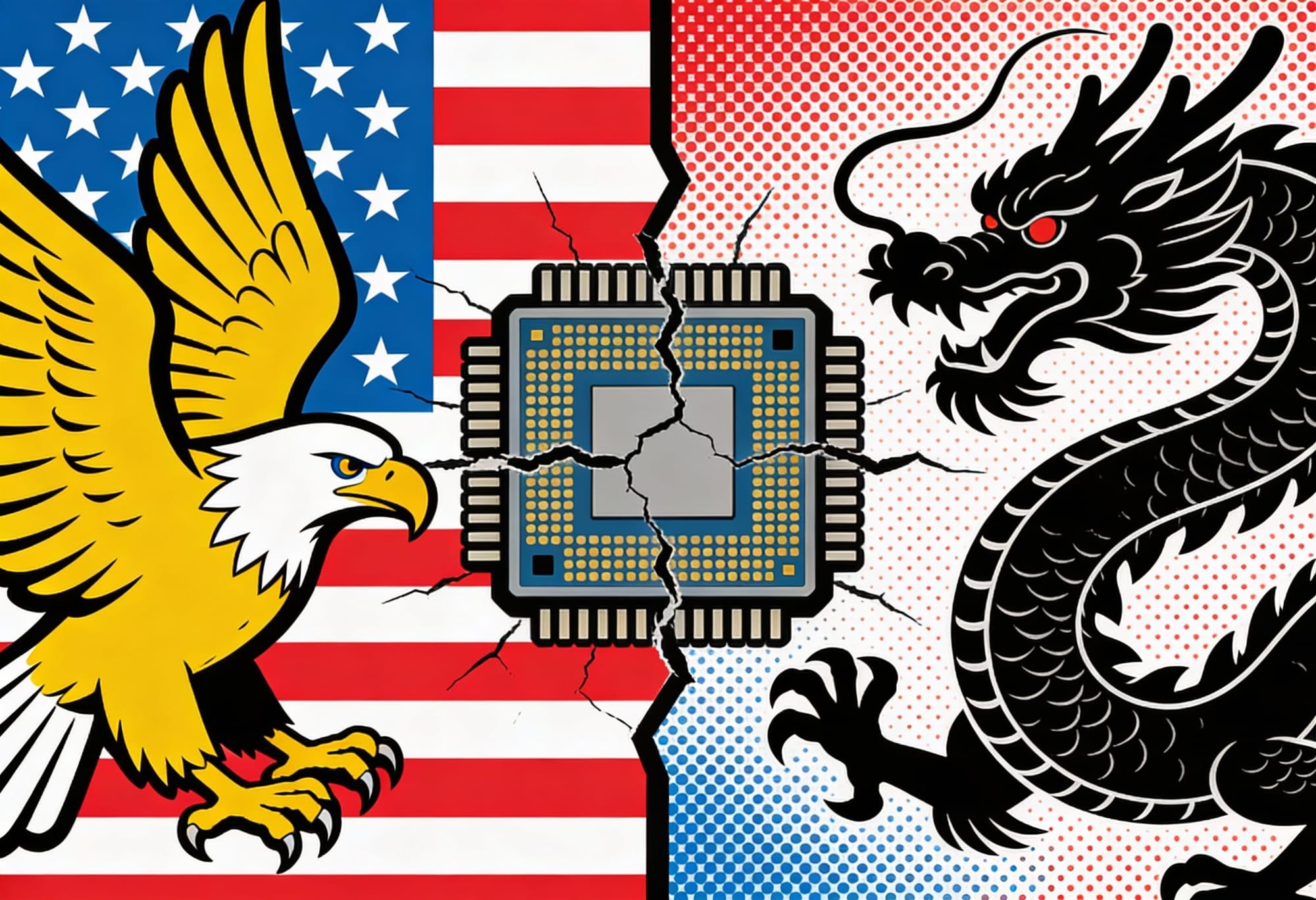
The U.S. Commerce Department has drafted regulations that would require government approval for virtually all exports of AI accelerator chips from Nvidia and AMD, according to Bloomberg and a document reviewed by Reuters. The proposed framework creates a tiered approval system based on order size, with the largest shipments requiring host governments to invest in U.S.-based AI infrastructure as a condition of purchase. The rules would be Washington's first sweeping global chip export strategy since the Trump administration scrapped its predecessor's AI diffusion framework last May.
What Changed
- Commerce Department drafted rules requiring US approval for virtually all Nvidia and AMD AI chip exports globally
- Tiered system: orders above 200,000 GPUs require host government investment in US AI infrastructure
- Framework modeled on existing UAE and Saudi Arabia chip deals from November 2025
- White House officials already pushing back, saying draft doesn't reflect Trump's export stance
A gatekeeper, not a ban
The draft isn't designed to block Nvidia's sales. It positions the U.S. government as gatekeeper for the global AI industry, controlling who gets access to the most coveted computing hardware on the planet and under what terms.
Right now, export controls cover roughly 40 countries. The new framework would extend that to every country, requiring Commerce Department sign-off for AI accelerator shipments anywhere outside the United States.
How much scrutiny you face depends on how many chips you want.
Small installations of fewer than 1,000 of Nvidia's latest GB300 GPUs would undergo a relatively simple review. Exporters could qualify for exemptions if they agree to monitor the chips and recipients install software preventing the processors from being linked into large computing clusters. Companies seeking up to 100,000 chips would need government-to-government assurances, the kind of diplomatic backstop the Trump administration already required Saudi Arabia to provide. That's a lot of paperwork. Installations approaching 200,000 chips could trigger visits from U.S. export control officials.
For truly massive deployments, more than 200,000 GB300s owned by one company in one country, the host government itself would have to negotiate directly with Washington. The price of entry at that tier: stringent security commitments and "matching" investments in American AI. The draft doesn't specify a ratio.
The Middle East template
This framework isn't theoretical. The Commerce Department built it on deals already in motion.
Last November, Washington approved chip exports to the UAE's G42 and Saudi Arabia's Humain. Both countries got access to advanced Nvidia hardware for domestic AI data centers. Both pledged to invest in America. Nervous about losing their spot in the AI race, they accepted Washington's terms. The UAE agreed to put $1 into the U.S. for every dollar it spent at home, though licenses didn't start flowing until months after the initial announcement.
"We successfully advanced exports through our historic Middle East agreements, and there are ongoing internal government discussions about formalizing that approach," the Commerce Department said in a statement posted on X.
The agency was blunt about what this isn't. "Today there was reporting that we were returning to the AI diffusion rule. We will not. It was burdensome, overreaching and disastrous."
Inside Washington, the distinction matters. Biden's diffusion rule would have capped chip exports based on country risk tiers and routed most purchases through a handful of U.S. cloud providers. Trump's team is proposing something different in form but potentially just as controlling, a licensing regime where officials decide how many chips each country gets and what it pays.
Already facing resistance inside the White House
The proposal hit turbulence before it went public. Officials inside the White House were already pushing back.
Stay ahead of the curve
Strategic AI news from San Francisco. No hype, no "AI will change everything" throat clearing. Just what moved, who won, and why it matters. Daily at 6am PST.
No spam. Unsubscribe anytime.
Axios reported that a White House official said the Commerce Department's draft "does not reflect what President Trump has said on export controls nor does it reflect the direction of the Trump administration on encouraging export of the American AI stack." Other federal agencies have been given roughly a week to respond, according to the Financial Times.
That tension tracks with a pattern anyone watching this administration recognizes. Trump has repeatedly said he wants the world running on American AI. But the mechanism his Commerce Department chose, a global licensing regime, hands bureaucrats the power to slow or condition that very expansion.
"We do not really like the idea of potentially tying AI access to trade negotiations, or to any other of Trump's assorted whims, which such a move clearly opens a door to," Bernstein chip analyst Stacy Rasgon wrote Thursday.
Saif Khan, a former national security official now at the Institute for Progress, was cautious. The rule could help address chip diversion to China and secure the buildout of powerful AI supercomputers, he told Reuters. "But the license requirements are overly broad, applying globally, raising concerns that the administration intends to use the controls as negotiation leverage with allies rather than for security."
What it leaves out
The draft has two conspicuous gaps.
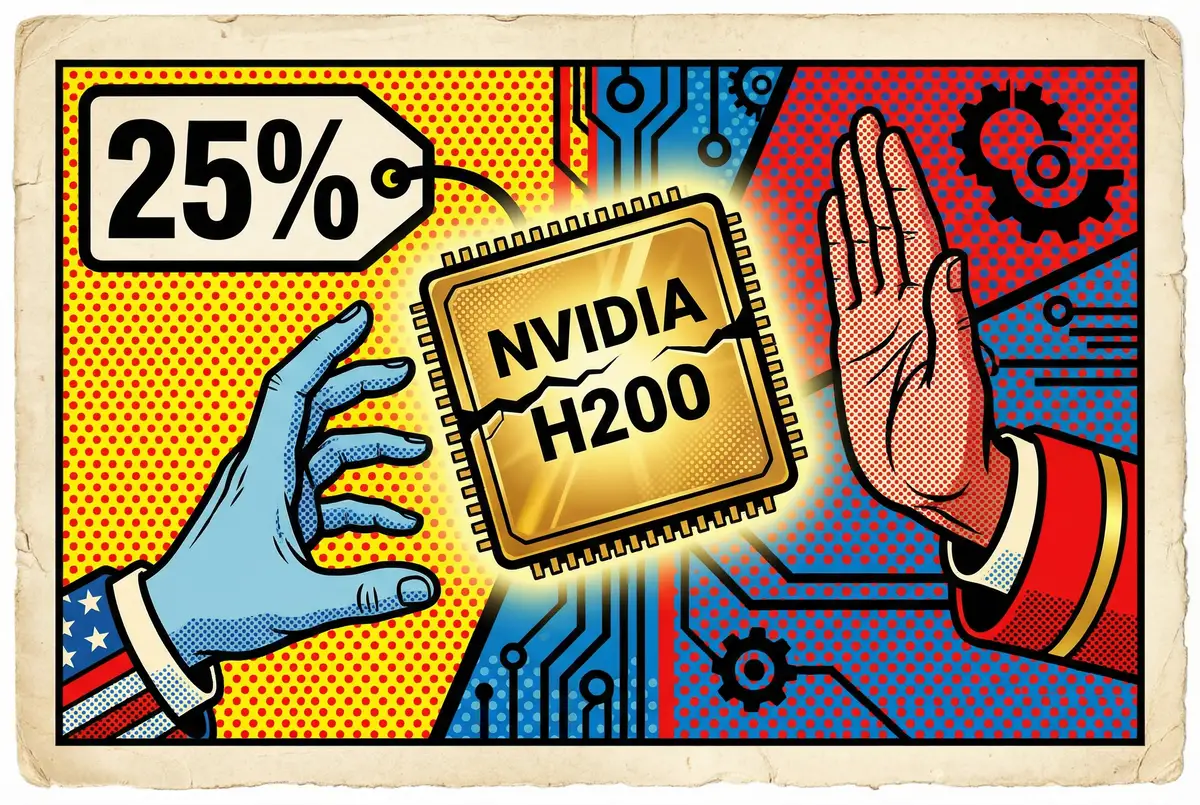
It doesn't touch China. Separate export controls govern that market, where the administration is still debating conditions for Nvidia's H200 sales. Jensen Huang convinced Trump months ago that keeping Chinese companies on American silicon would prevent Huawei from building the customer base to compete globally. As part of that arrangement, Nvidia agreed to hand the U.S. government 25 percent of H200 revenue from China.
And it doesn't address model weights, the numerical parameters that make AI systems valuable and that companies like OpenAI and Anthropic keep locked behind access controls on their own servers. Biden's framework included blanket restrictions on where companies could host frontier model weights. Trump's approach would handle that through individual licenses. More flexibility for officials. Less certainty for everyone else.
The only game in town
For foreign leaders, the math is uncomfortable. Nvidia controls roughly 80 percent of the AI accelerator market. The only real alternative is Huawei, and those chips are weaker, scarcer, and come with their own political baggage. Washington has told countries point-blank that deploying Huawei AI chips anywhere, even outside China, could put them on the wrong side of American trade law.
Not much of a choice.
If Washington processes applications quickly and attaches reasonable conditions, the global AI buildout continues with extra paperwork. Nobody panics. But if negotiations drag, or officials start treating licenses as bargaining chips in unrelated disputes, countries could find their AI ambitions held hostage to American trade politics.
France, India, and a dozen other nations have plans for gigawatt-scale data centers. None signed up to have their technology futures contingent on investment pledges to Washington. But the draft could still change substantially or be shelved entirely. Other agencies are reviewing it now.
For the moment, the Commerce Department has put its vision on paper: a world where every advanced AI chip sold anywhere requires an American signature.
Frequently Asked Questions
How does the tiered approval system work?
Small orders under 1,000 GPUs face simple review. Up to 100,000 chips require government-to-government assurances. Installations near 200,000 could trigger US official site visits. Above 200,000, the buyer's home government must negotiate directly with Washington, including security commitments and matching investments in American AI.
How is this different from Biden's AI diffusion rule?
Biden's rule capped exports based on country risk tiers and routed purchases through US cloud providers. Trump's proposal creates a case-by-case licensing regime where officials decide allocation country by country. The Commerce Department called Biden's approach 'burdensome, overreaching and disastrous.'
Does this affect chip exports to China?
No. China is governed by separate export controls. The administration is still debating conditions for Nvidia's H200 sales to China, where Nvidia agreed to give the US government 25 percent of revenue as part of that arrangement.
What are matching investments in American AI?
Countries seeking the largest chip deployments would need to invest in US-based AI infrastructure. The UAE previously agreed to invest $1 in the US for every dollar spent domestically on AI data centers. The draft doesn't specify a required investment ratio.
Could this rule hurt US chip companies?
Potentially. Bernstein analyst Stacy Rasgon warned about tying AI access to trade negotiations. If approvals are slow or politically motivated, foreign buyers may seek alternatives, though Nvidia's 80 percent market share makes switching difficult.

Free AI briefing · Weekdays
The AI stories that matter, sourced and explained.
Join the Morning Briefing. It goes out every weekday at 4:45 a.m. Pacific, with later sends for the East Coast, Berlin and Tokyo.
Free when you sign up: The Paperclip Compendium, our tested guide to running AI agents.
Free. Unsubscribe in one click.

Marcus Schuler
Editor-in-Chief and founder of Implicator.ai. Former ARD correspondent and senior broadcast journalist with 10+ years covering tech. Writes daily briefings on policy and market developments. Based in San Francisco. E-mail: editor@implicator.ai