IMPLICATOR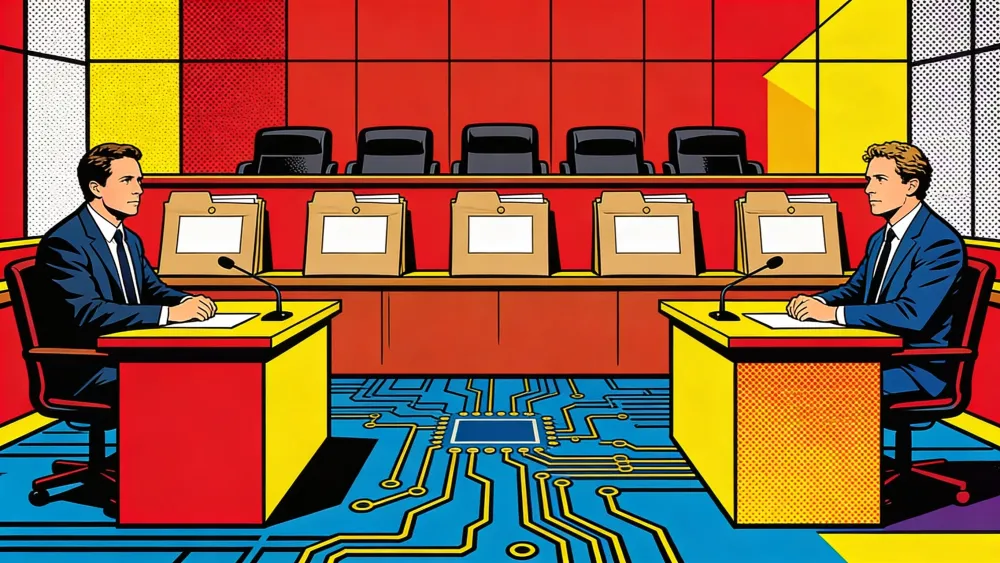
Elon Musk arrived at the Ronald V. Dellums U.S. Courthouse through a private entrance Tuesday morning, the Times reported. Lawyers and reporters waited in the normal line. Demonstrators gathered nearby. Sam Altman had been whisked through too, about 15 minutes earlier. Black suit. No greeting. In court, the two men sat through opening statements without a visible acknowledgment of one another.
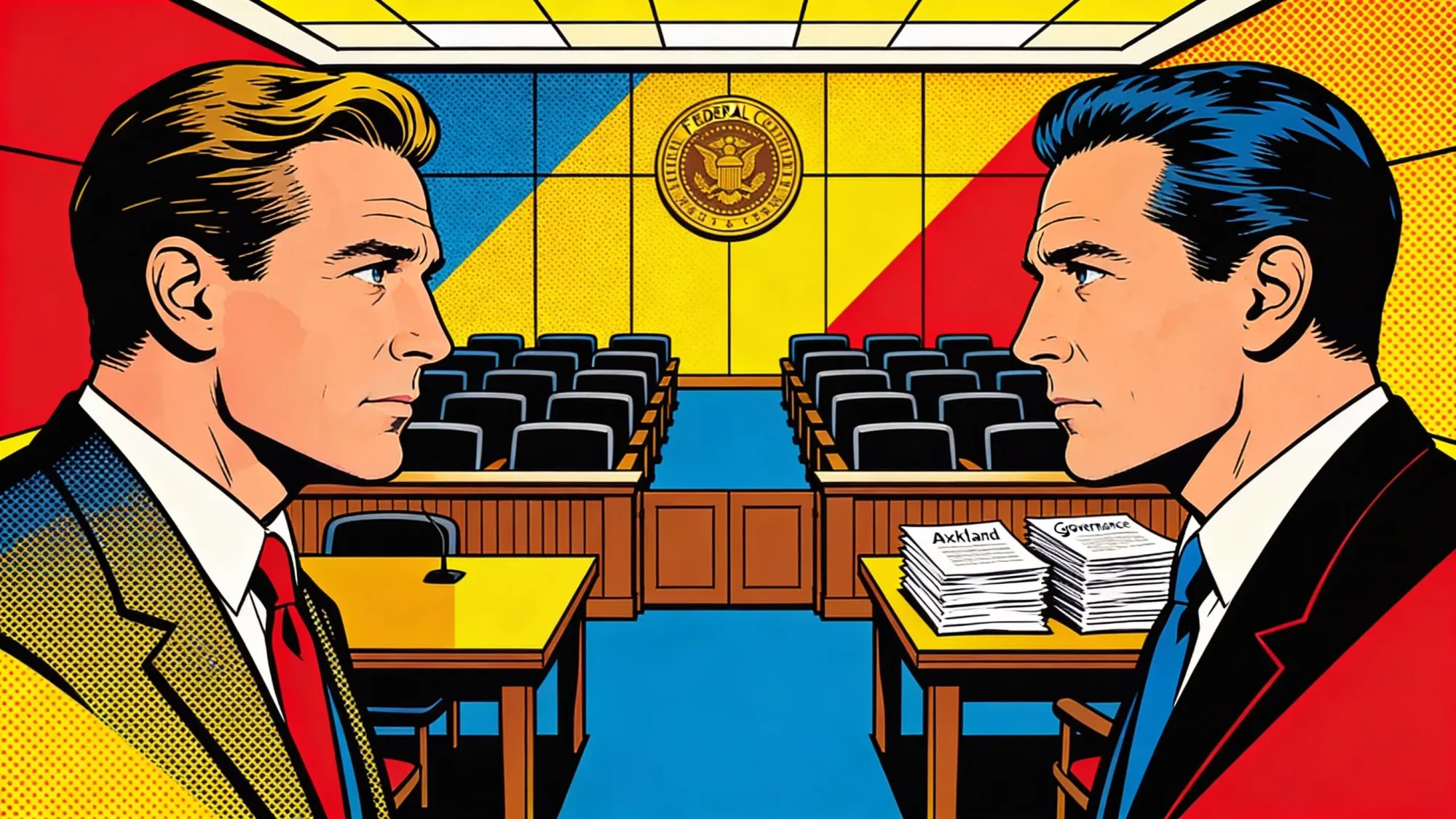
Musk v. Altman, 4:24-cv-04722, is less a trial about OpenAI's corporate paperwork than a fight over who gets to keep the founding story. A nine-person jury in the Northern District of California will hear Musk's claim that Altman and Greg Brockman stole a charity. OpenAI's answer is sour grapes: a rival founder lost control, then sued after the company became valuable, as the Journal reported. One story can anchor the origin myth of a company valued between $730 billion and $852 billion and trying to reach the public market this year.
Key Takeaways
- Musk and Altman opened trial with competing stories about who abandoned OpenAI's mission.
- The nine-person jury gives advisory findings while Judge Gonzalez Rogers keeps the final ruling.
- OpenAI points to Musk's control fight and delayed lawsuit after ChatGPT's success.
- The stakes include a $134 billion disgorgement demand and OpenAI's IPO story.
AI-generated summary, reviewed by an editor. More on our AI guidelines.
The charity that wanted to be a counterweight
Musk testified that he conceived of OpenAI during a late-night conversation with Google co-founder Larry Page, who he said was "not being sufficiently caring about the safety of AI." When Musk asked Page what would happen if AI wiped out humanity, Page replied that such an outcome would be "fine" as long as AI survived. Page then called Musk a "specieist." He meant someone who favors humans over digital life.
"The reason OpenAI exists is because Larry Page called me a 'specieist,'" Musk told the court.
OpenAI was founded in 2015 as a nonprofit "for the benefit of all mankind," with Musk donating approximately $38 million. OpenAI contends Musk promised $1 billion in funding and never came close after failing to secure full control. The mission statement, which Musk's lead attorney Steven Molo read to the jury, pledged to develop AI "unconstrained by a need to generate financial return." Molo told the jury: "It wasn't a vehicle for people to get rich."
By 2017, the math had shifted: OpenAI needed computing power that donations could not cover, and Google's DeepMind was not waiting. The founders held dozens of meetings about creating a for-profit arm, and Musk acknowledged on the stand that he participated, his position being that a for-profit was acceptable "as long as the tail did not wag the dog."
The sour grapes the jury has to weigh
OpenAI's lead counsel William Savitt opened with a different portrait. "We are here because Mr. Musk didn't get his way at OpenAI," he told the jury. "My clients had the nerve to go on and succeed without him. Mr. Musk did not like that."
Savitt displayed internal emails from 2017 in which Musk's chiefs of staff discussed giving him a 55% stake in the for-profit entity, with Altman getting 7.5%. When the other founders refused to hand over majority control, Savitt said, Musk "literally grabbed his stuff and stormed out of the discussions."
Musk left the board in 2018. Microsoft invested $1 billion the following year, the first tranche of what would become a $13 billion commitment. Musk did not object. He did not sue. ChatGPT launched in November 2022; Musk filed in 2024, nine years after helping start the lab.
Russell Cohen, Microsoft's lead counsel, pressed the same timeline: Musk never objected to anything Microsoft did, Cohen argued, until ChatGPT launched and became a success.
Track the AI trial that matters
Strategic AI news from San Francisco. No hype, no "AI will change everything" throat clearing. Just what moved, who won, and why it matters. Daily at 6am PST.
No spam. Unsubscribe anytime.
The numbers underneath the myth
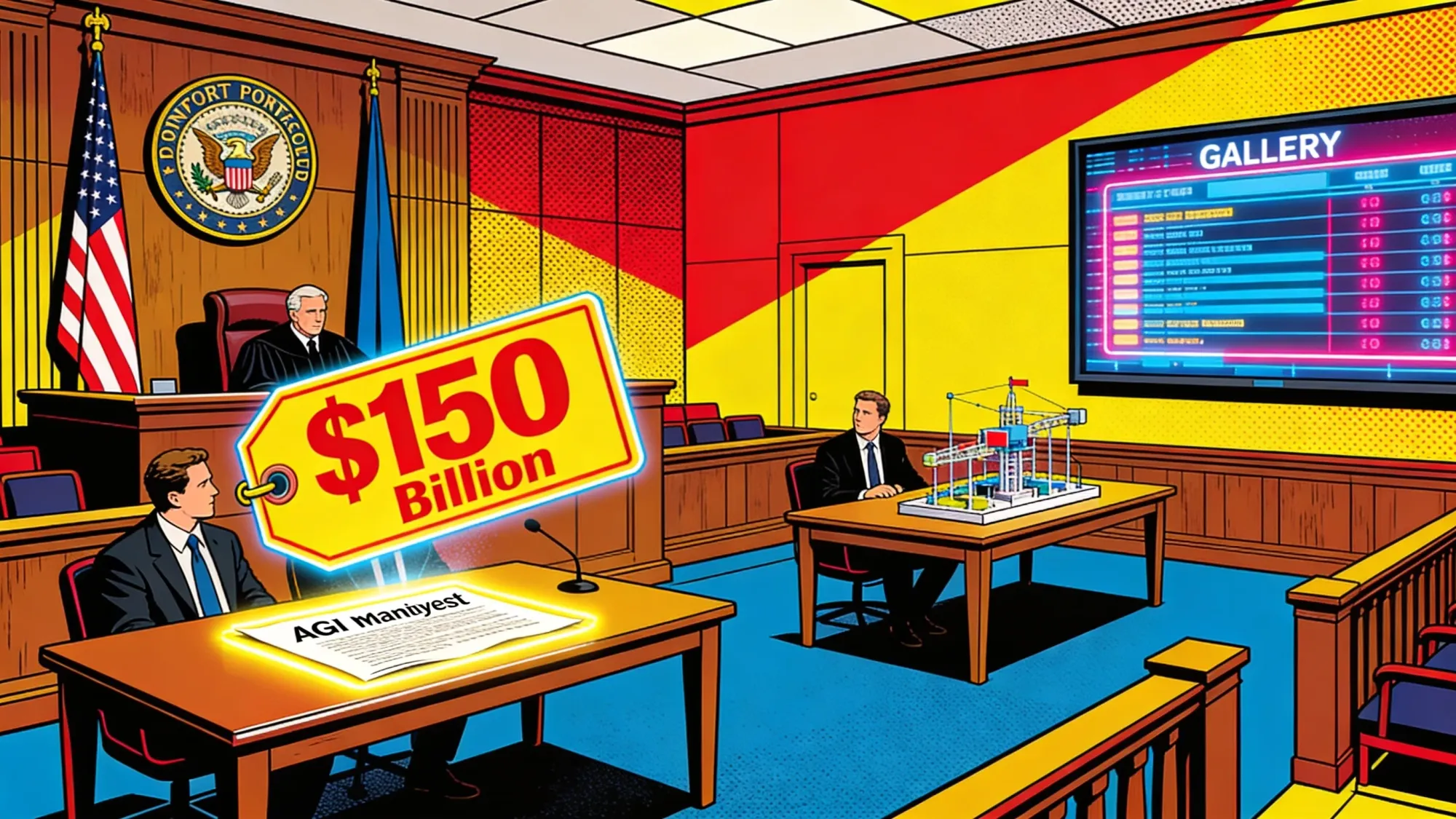
The damages tell their own story. Musk seeks up to $134 billion in disgorgement to be paid from OpenAI's for-profit arm to its nonprofit foundation, which already holds a 26% stake in the company. OpenAI is targeting a Q4 IPO, with valuations pegged between $730 billion and $852 billion.
His own giving has a gap.
The Musk Foundation held $14 billion in assets as of late 2024. For four consecutive years, it failed to distribute the legally required 5% minimum, the Times reported. Musk is a Giving Pledge signatory. He has provided few details about how he will donate his fortune.
Altman does not hold equity in OpenAI itself, a fact Musk's own lawyer acknowledged. Musk's team argues Altman enriched himself through side ventures. OpenAI's nonprofit foundation, Savitt argued, "remains in control of the organization" and is "doing leading edge work to cure diseases and promote economic diversity." On the stand, Musk called the for-profit conversion a precedent that "will give license to looting every charity in America." The judge told jurors the statement was Musk's opinion and had "no legal value whatsoever."
What the jurors already think
Jury selection on Monday surfaced the problem both sides face. One prospective juror called Musk "a piece of garbage" and another said "a world-class jerk." Judge Yvonne Gonzalez Rogers kept both in the pool, telling the court that "many people don't like him" but that Americans could still have "integrity for the judicial process."
Nine jurors were seated: a painter, a former Lockheed Martin employee, a psychiatrist. Several told the court they held negative views of AI technology broadly. All promised to set those views aside.
Before opening statements Tuesday, Gonzalez Rogers addressed Musk's social media activity. On Monday, Musk had posted more than 20 times on X about the case, including calling Altman "Scam Altman," the Journal reported. The judge asked both men to start with a "clean slate." Musk blamed OpenAI for posting first. Both agreed to minimize their output.
The trial is scheduled for three weeks. Altman and Microsoft CEO Satya Nadella are expected to testify. The jury's verdict will be advisory. Gonzalez Rogers will use their findings as a guide, then issue the ruling herself.
That leaves the jurors with a narrow job. Not OpenAI's future. Not the remedy. Just the story that survives testimony, Musk's stolen charity or OpenAI's founder who left and came back with a lawsuit. Same door, same decade. This time, the look away happens in public.
Frequently Asked Questions
What is Musk v. Altman about?
The case asks whether OpenAI, Sam Altman and Greg Brockman breached obligations tied to OpenAI's nonprofit mission when the lab moved toward a for-profit structure.
What is OpenAI's defense?
OpenAI says Musk wanted control of the company, left after other founders resisted and sued years later only after ChatGPT made the lab valuable.
What does the jury decide?
The jury gives advisory findings in the liability phase. Judge Yvonne Gonzalez Rogers keeps authority over the final ruling and any equitable remedy.
How much money is at stake?
Musk seeks up to $134 billion in disgorgement from OpenAI's for-profit arm to its nonprofit foundation. OpenAI is valued between $730 billion and $852 billion.
Why does Microsoft matter?
Microsoft invested $1 billion in 2019 and later expanded its commitment to $13 billion. Its role helps OpenAI tell a growth story and helps Musk argue the nonprofit mission was displaced.
AI-generated summary, reviewed by an editor. More on our AI guidelines.

Marcus Schuler
Editor-in-Chief and founder of Implicator.ai. Former ARD correspondent and senior broadcast journalist with 10+ years covering tech. Writes daily briefings on policy and market developments. Based in San Francisco. E-mail: editor@implicator.ai