IMPLICATOR
San Francisco | May 20, 2026
Google puts Gemini 3.5 Flash where latency hurts: Search, Antigravity, Spark, AI Studio, enterprise. Pro waits. Flash gets the job because agents do not need another keynote trophy; they need a cheap worker that can click, code and wait for permission.
Meta gives the other half of the story. Eight thousand jobs go out, seven thousand employees move into AI work, and compute becomes the cost center nobody touches. The org chart is being rewritten before the agents prove they can carry it.
Then Anthropic hires Andrej Karpathy for pretraining, which is less about celebrity than compression. Everyone wants faster models. Everyone also wants the humans who know how to make the next training run less stupid.
Stay curious,
Marcus Schuler
Know someone drowning in AI noise? Forward this briefing. They can subscribe free here.
Google Ships Gemini 3.5 Flash Across Search, Antigravity and Spark as Pro Slips to June
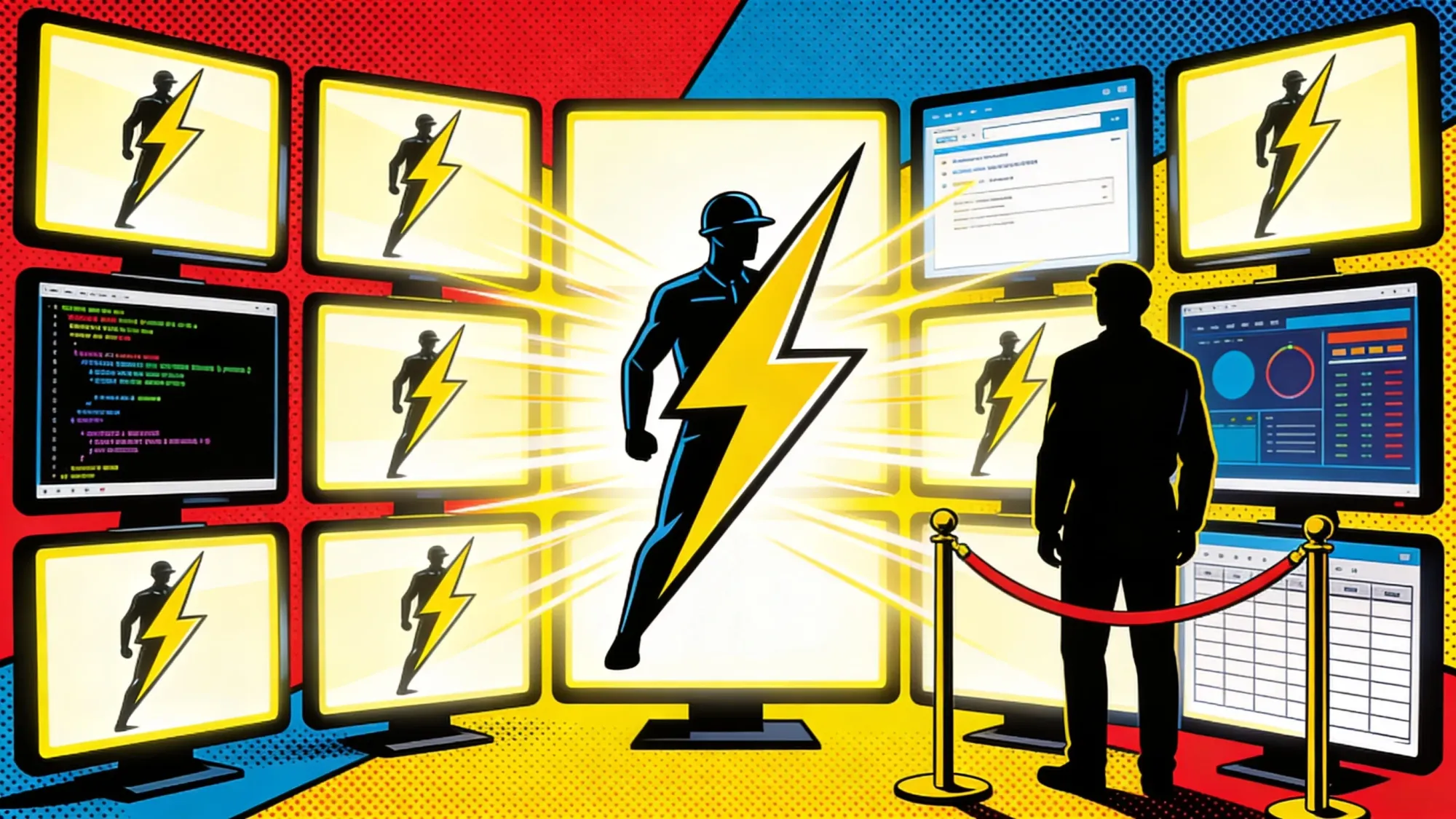
Google made Gemini 3.5 Flash generally available across the Gemini app, AI Mode in Search, Antigravity, AI Studio and enterprise products. Pro waits until next month. Flash arrives first because agents need a cheap worker, not another keynote benchmark.
At I/O 2026, Google said Flash is the default model for the Gemini app and AI Mode globally, and powers Gemini Spark, a 24/7 agent running on Google Cloud VMs. DeepMind's Koray Kavukcuoglu said the model outperforms 3.1 Pro on nearly all benchmarks and runs four times faster than other frontier models. Antigravity 2.0 ships a Flash variant Google says is 12 times faster at the same quality.
The pricing tells the other story. Simon Willison clocked Flash at $1.50 per million input tokens and $9 per million output, three times the price of Gemini 3 Flash Preview and six times 3.1 Flash-Lite. Sundar Pichai's pitch to enterprises: shift 80% of frontier workloads to Flash, save $1 billion a year. AI Overviews now has 2.5 billion monthly users; AI Mode passed 1 billion; the Gemini app sits above 900 million.
Pro waits. Developers groaned when Pichai said next month, per Business Insider. Tulsee Doshi told TechCrunch the plan is Pro as orchestrator and planner, Flash as the subagent doing the clicks.
Why This Matters:
- Google bet the agent surface on speed and per-token price rather than a flagship benchmark, setting up a new comparison axis with OpenAI and Anthropic.
- Spark's Ultra beta and the missing 3.5 Pro are now Google's two dated tests, both promised before June ends.
Reality Check
What's confirmed: Gemini 3.5 Flash is generally available across the Gemini app, AI Mode, Antigravity, AI Studio and enterprise products; 3.5 Pro is internal-only until next month.
What's implied (not proven): That Flash is cheap and capable enough to absorb 80% of frontier workloads at the price Google quoted.
What could go wrong: Per-token Flash pricing has risen sharply versus older Flash tiers, so enterprise savings depend on a workload mix Google has not disclosed.
What to watch next: Whether 3.5 Pro ships in June and Spark's Ultra beta produces customer-side metrics rather than another stage demo.
The One Number
56% - The share of companies in CNBC's AI-layoff screen that traded lower after announcing cuts tied to AI or heavier AI use. Wall Street is not rewarding every "efficiency" memo. Payroll cuts help only when investors believe the AI spend turns into durable demand, not just a cleaner headcount chart.
Source: CNBC, May 17, 2026
Meta Begins Cutting 8,000 Jobs and Drafting 7,000 Into a New AI Org Chart
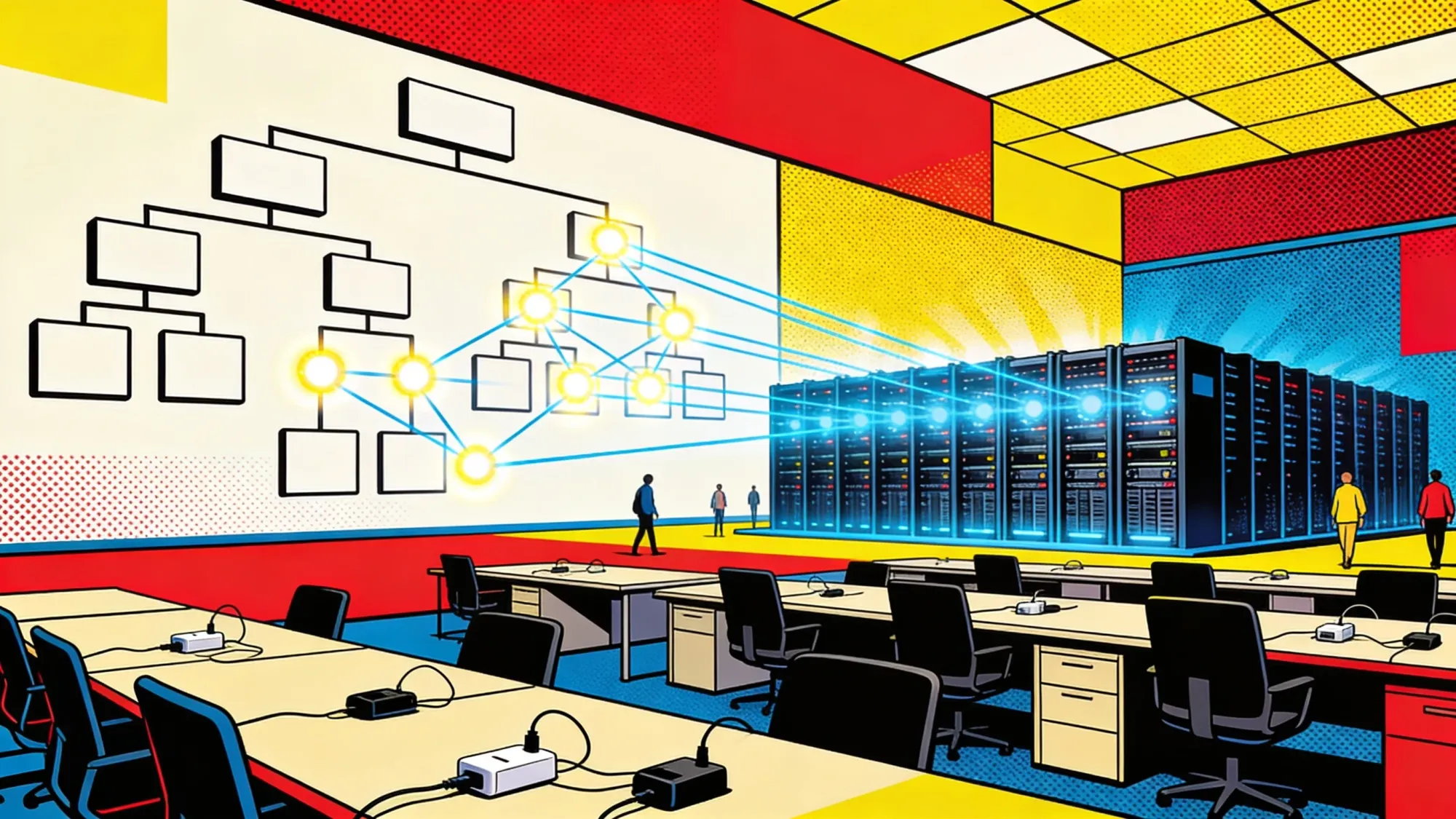
At 4 a.m. Singapore time, Meta started sending layoff emails. By Wednesday morning local time, about 8,000 workers will be out and another 7,000 will be moved into AI roles. The org chart arrived first.
Janelle Gale's memo, reviewed by Reuters, names the destinations: Applied AI Engineering, Agent Transformation Accelerator (ATA) XFN, Central Analytics and Enterprise Solutions. Maher Saba's Applied AI group already has roughly 2,000 employees, with about 50 workers reporting to each manager, per the New York Times. Meta expects 2026 capex of $125 billion to $145 billion, nearly double 2025's $72.22 billion, and recorded a $107 billion step-up in contractual commitments in Q1.
Employees are pushing back. More than 1,000 signed a petition against the Model Capability Initiative, which CNBC says collects mouse movements and keystrokes to train agents for coding and white-collar tasks. CTO Andrew Bosworth told staff: "It's all bad. I'm not going to try to sugarcoat that."
Why This Matters:
- Meta is rebuilding around AI roles while compute capex roughly doubles, leaving headcount as the only flexible cost line on the page.
- The protected status of the Applied AI team and the data-tracking program signals that worker monitoring is the fast lane into the new org.
AI Image of the Day

Prompt: detailed and ultra realistic 3D blender style of a ultra realistic hedgehog, cute chubby animal character, full body shot, sitting upright in a centered composition, holding and nibbling a bright orange carrot with a small green leafy top, eyes closed in a focused grumpy-cute expression, cheeks slightly puffed, tiny paws wrapped around the carrot, soft rounded body, adorable compact proportions, realistic fur texture, highly detailed whiskers, small rounded ears if suitable for the animal, tiny feet visible, a few small carrot crumbs on the ground, clean minimalist composition, pure white background, subtle soft ground shadow, polished premium 3D render, soft studio lighting, sharp focus, ultra high detail, 16K, no text, no letters, no typography, no watermark, no logo --ar 1:1 --raw --profile tk6m7rn --v 8.1
Karpathy Joins Anthropic's Pretraining Team to Use Claude on Claude

Andrej Karpathy, OpenAI co-founder and former Tesla AI director, started this week at Anthropic. His assignment from pretraining head Nick Joseph: build a team that uses Claude to accelerate pretraining research itself.
Joseph announced the role on X; Karpathy's own post called the next few years at the LLM frontier "especially formative." TechCrunch identified pretraining as the most compute-intensive phase of building a frontier model. The hire arrives weeks after the New York Times reported Anthropic was in talks to raise $30 to $50 billion at up to $950 billion, on top of February's $380 billion round.
The resume fits the assignment. Karpathy led Tesla Autopilot's computer vision from 2017 to 2022, then returned to OpenAI in 2023 to build a midtraining and synthetic-data team before leaving in 2024 for Eureka Labs. Reuters notes co-founder John Schulman made the same OpenAI-to-Anthropic move in 2024.
Why This Matters:
- Anthropic is betting research labor, not only more compute, can shorten the next training run, which the proposed $950 billion funding story needs to back up.
- Karpathy's public-education work pauses, narrowing one of the most-watched independent voices in AI just as agents move into production.

🧰 AI Toolbox
How to Turn Your Notion Workspace Into a Live AI Assistant with Notion AI
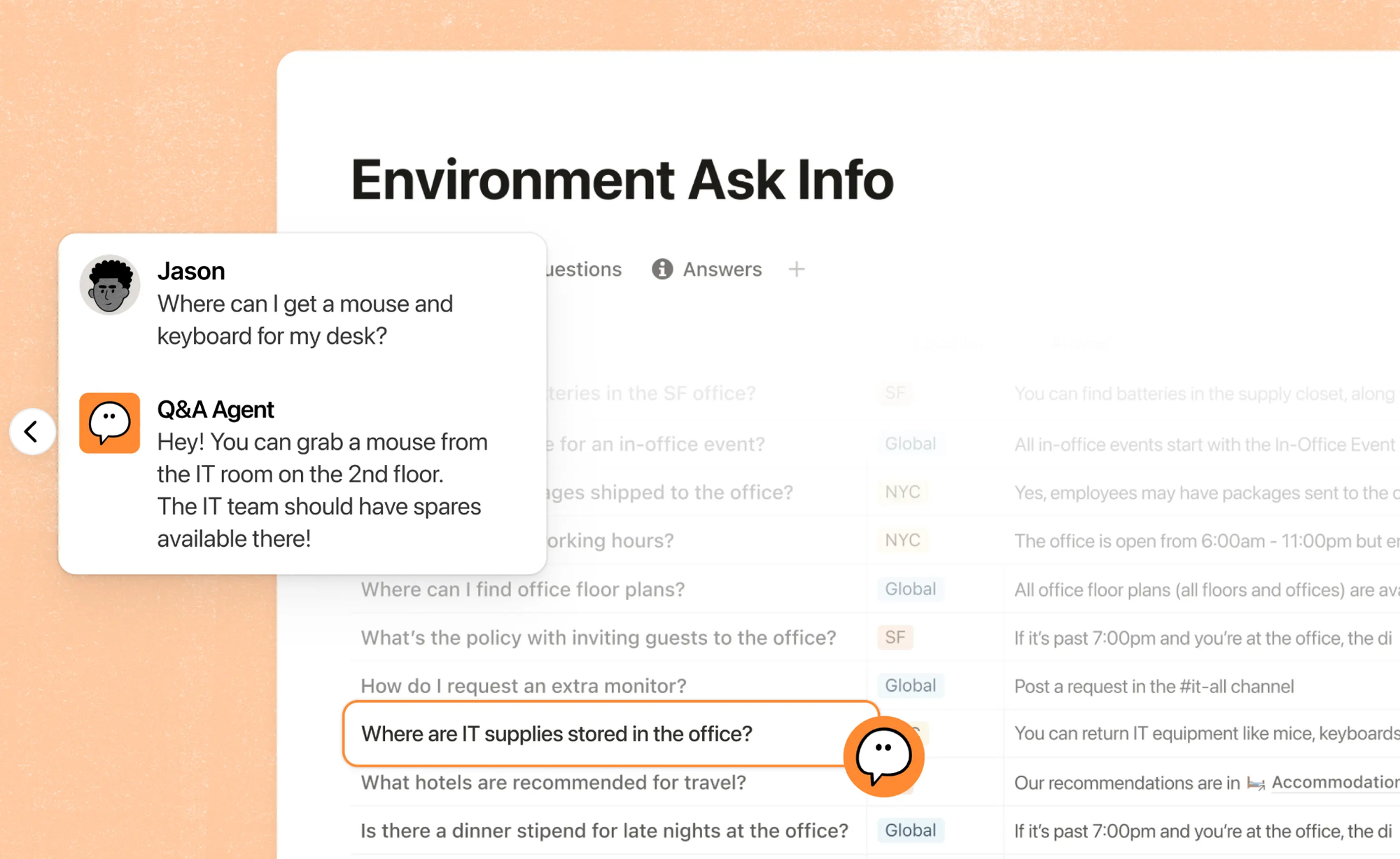
Notion AI is the AI layer built directly into Notion that searches your workspace, drafts pages, summarizes meetings, and connects out to Slack, Google Drive, Gmail, Jira and Linear so the assistant answers across your whole stack, not just Notion. The new Agents feature lets you stand up a custom AI that runs background tasks on a schedule. Available on all paid Notion plans with usage tiers.
Tutorial:
- Open any Notion page on notion.com and press the spacebar to invoke Notion AI inline
- Connect external sources under Settings > Connections: Slack, Gmail, Google Drive, Jira, Linear, GitHub
- Ask a workspace-wide question in the AI sidebar: "What did the design team decide about onboarding last week, and where are the open tasks?"
- Highlight a meeting transcript and choose "Summarize and extract action items" to generate a clean follow-up note in seconds
- Build an Agent: give it a goal such as "Every Monday, scan our project pages and write a 5-bullet leadership update"
- Drop a research prompt at the top of a blank page and Notion AI drafts a structured doc with linked sources from connected apps
- Use AI Translate to convert any page into another language while keeping formatting and database properties intact
What To Watch Next (24-72 hours)
|
||
|
||
|
🛠️ 5-Minute Skill: Turn a Layoff Rumor Into a Personal Risk Map Before Panic Takes Over
Wednesday, 9:12 a.m. Your company has announced "organizational changes," and Slack is doing forensic astrology. The job is not predicting the future. It is separating what you know from what you can prepare.
Your raw input:
Company: B2B SaaS, 800 people. Signals: CFO froze backfills, manager canceled Friday 1:1, AI productivity push in support and QA, no official layoff notice. My role: support ops lead, two years tenure, strong reviews, visa not an issue. Constraints: mortgage, four months cash, partner's insurance. Need: 72-hour plan without spiraling.
The prompt:
Act like a calm career risk chief of staff. Build a personal layoff risk map from only the facts I provide. Separate confirmed facts, weak signals, questions to ask my manager, actions for the next 72 hours, and actions that can wait. Include a "do not do" list that prevents panic messaging, rumor chasing, and LinkedIn theater. No reassurance unless a fact supports it.
The output:
Confirmed: backfills are frozen, your meeting moved, and support operations sits near automation pressure. Weak signal: a canceled 1:1 is not a notice. Next 72 hours: save personal documents, list measurable wins, refresh your resume quietly, identify five target companies, and ask your manager what priorities changed. Do not DM rumors, post hints, or announce "open to work" before you know what happened.
Why this works
Panic turns every calendar change into evidence. This prompt forces the model to label facts by strength, then converts anxiety into reversible actions. The "do not do" list is the useful part because most career damage happens in the rumor window, not the layoff meeting.
What to use
ChatGPT is fast for triage and resume bullets. Claude is better if you paste performance reviews, role descriptions, or a messy manager thread. Keep the line "no reassurance unless a fact supports it." Otherwise the model will soothe you instead of helping you prepare.
📖 AI Alphabet
|
I
|
📖 AI Alphabet Instruction Tuning Instruction tuning is extra training that teaches a model to follow prompts more usefully. It is one reason chat-based AI systems feel more obedient and conversational than base models. |
AI & Tech News
Huawei Router Zero-Day Tied to 2025 Luxembourg Telecom Outage
A previously unknown vulnerability in Huawei enterprise routers was exploited last year to knock Luxembourg's national telecom offline for three hours, according to The Record. Investigators say the flaw was a zero-day in widely deployed core network gear.
GitHub Investigates Unauthorized Access to Internal Repositories
GitHub said it is investigating unauthorized access to its internal repositories and so far sees no evidence that enterprise, organization or user code hosted outside those systems was touched. The company has not confirmed the source or full scope of the intrusion.
Nvidia's Business Development Team Drives $90 Billion Dealmaking Push Across 145 Companies
Nvidia's business development group, not its NVentures venture arm, has run roughly $90 billion of investments and partnerships across more than 145 companies in 16 months, the Financial Times reported. The strategy locks customers and startups deeper into Nvidia's AI stack.
Hg Spins Out €500 Million From Visma as London IPO Stays Shelved
Private equity firm Hg has carved €500 million of assets out of its €19 billion software group Visma, the Financial Times reported, while the long-planned London IPO remains on hold. The move reflects weak public-market appetite for SaaS valuations.
White House Drafts Voluntary AI Executive Order With Early Model Access for Federal Agencies
A draft White House executive order would set up a voluntary framework giving federal agencies early access to new AI models before public release, according to sources cited by Axios. It is part of a broader cybersecurity and AI safety package expected this week.
Vietnam Enacts Decree 142 With Risk-Based AI Rules and Deepfake Labels
Vietnam has issued Decree 142, which implements its 2025 AI law with risk-based classification, deepfake labeling and mandatory chatbot disclosure, according to Nikkei Asia. Rules apply immediately to new deployments and by November 2026 to existing systems.
Take It Down Act Takes Effect, Mandating 48-Hour Removal of Nonconsensual Intimate Images
The Take It Down Act, effective May 19, now requires platforms to remove reported nonconsensual intimate imagery within 48 hours or face civil penalties, per The Verge. Critics say the loose definitions invite abuse by bad actors and government censorship.
Singapore Commits $234 Million and Signs Partnerships With Google and OpenAI
Singapore has signed a National AI Partnership with Google and a memorandum with OpenAI, with more than $234 million committed to a national AI lab and ecosystem, CNBC reported from the ATxSummit. The city-state is positioning itself as the Asia-Pacific AI hub.
Alibaba's T-Head Unveils Zhenwu M890 AI Chip for Training and Inference
Alibaba's T-Head unit has launched the Zhenwu M890, a unified chip for training and inference aimed at agentic workloads, Bloomberg reported. The company committed to annual hardware upgrades as it builds an in-house AI silicon stack.
Samsung Faces May 21 Work Stoppage After Rejecting Union Mediation
Samsung Electronics rejected a mediation proposal its largest union had accepted, setting up a May 21 general work stoppage that could disrupt memory production, Bloomberg reported. Talks broke down over workplace conditions, overtime policies and union rights.
🚀 AI Profiles: The Companies Defining Tomorrow
Project Prometheus is the secretive AI startup Jeff Bezos is helping fund and reportedly co-leading, aiming applied AI at industrial and real-world tasks rather than another chat assistant. Reports describe a roughly $6.2 billion raise at launch, partly from Bezos himself, with around 100 employees pulled from OpenAI, DeepMind, and Meta. 🔥
Founders
The company is co-led by Jeff Bezos and former Google AI researcher Vik Bajaj, according to multiple reports surfaced in November 2025. Bezos has framed it as a working role rather than a passive investment, his most operational AI bet since stepping back from day-to-day at Amazon.
Product
Prometheus targets applied AI for the physical economy: manufacturing, engineering, and other domains where current generative models still misbehave outside of text. Public details are sparse on what ships first, but staffing and pitch materials suggest robotics, simulation, and industrial autonomy as the early surface area.
Competition
The closest comparison set includes Physical Intelligence, Figure, Skild AI, and Sanctuary on the robotics axis, plus frontier labs (OpenAI, Anthropic, Google DeepMind) that increasingly tout enterprise and physical-world use cases. The contrast is intent: most frontier labs are general-purpose; Prometheus is reportedly verticalized from day one.
Financing 💰
Approximately $6.2 billion in initial funding, with Bezos himself among the lead backers, according to The New York Times and follow-up reports in late 2025. The company has not confirmed a formal valuation.
Future ⭐⭐⭐⭐
Prometheus has the rarest commodity in AI: a balance sheet that does not need to wait for product-market fit before recruiting. The risk is mission drift: when you fund every direction, none of them ship. If Bezos picks a single physical-world wedge and resources it like AWS, this becomes a real frontier lab. If it sprawls, it becomes an expensive talent farm. 🤖
🤨 Yeah, But...
The Verge reported that the Take It Down Act went into effect on May 19, requiring online platforms to remove reported nonconsensual intimate imagery within 48 hours or risk penalties. The law targets deepfake abuse, but critics warn the notice system could be abused for censorship or malicious takedowns. (The Verge, May 20, 2026)
Our take: Congress found the one tech policy that sounds impossible to oppose: take down sexual abuse images quickly. Good. Then it handed the internet a fast-removal button and asked everyone to behave normally, which is not a phrase that belongs near the internet. The law treats speed as proof of seriousness, but speed is also how bad systems skip judgment. Platforms now get 48 hours to decide whether a report protects a victim, silences an enemy, buries evidence, or just creates paperwork with moral lighting. The noble version is obvious. The exploit version is already filling out the form.
Free AI briefing · Weekdays
The AI stories that matter, sourced and explained.
Join the Morning Briefing. It goes out every weekday at 4:45 a.m. Pacific, with later sends for the East Coast, Berlin and Tokyo.
Free when you sign up: The Paperclip Compendium, our tested guide to running AI agents.
Free. Unsubscribe in one click.

Marcus Schuler
Editor-in-Chief and founder of Implicator.ai. Former ARD correspondent and senior broadcast journalist with 10+ years covering tech. Writes daily briefings on policy and market developments. Based in San Francisco. E-mail: editor@implicator.ai