IMPLICATOR
San Francisco | Tuesday, May 19, 2026
Musk lost in Oakland on timing, then called the verdict a calendar technicality. The court did not decide whether OpenAI betrayed its nonprofit origin. It did something more useful for the market: put control, xAI demand and OpenAI's IPO path back on one page.
The chasers are quieter but sharper. Pi's first-project guide treats coding agents like tools with blast radius, not toys. Stanford and Princeton are moving the classroom in the opposite direction, back to blue books, proctors and proof of work.
AI keeps promising reach. Institutions keep asking for receipts.
Stay curious,
Marcus Schuler
Know someone drowning in AI noise? Forward this briefing. They can subscribe free here.
Musk Calls OpenAI Verdict a Technicality After Jury Rejects His Case
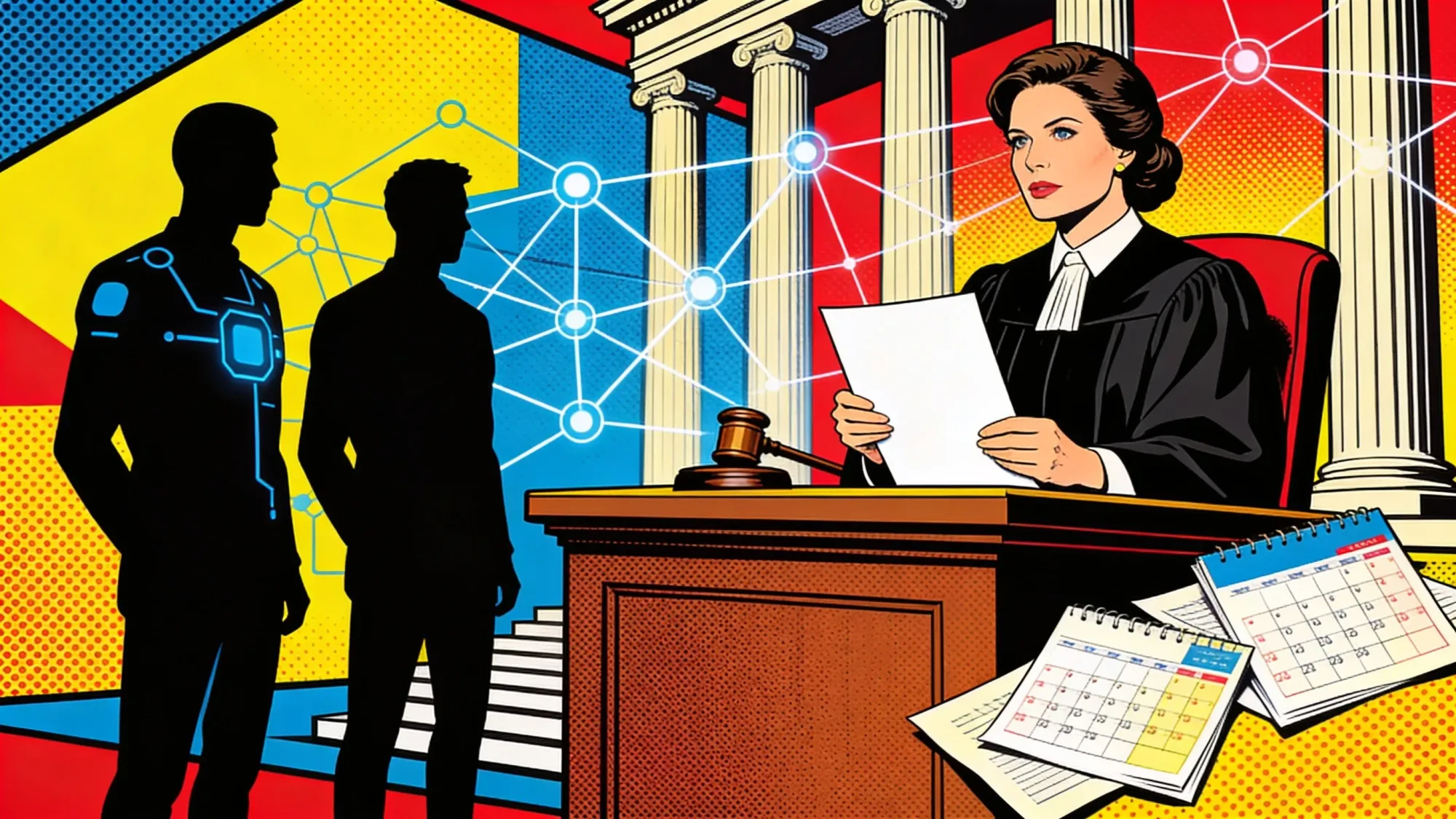
A fast Oakland verdict ended Musk's case on timing, not theology. That still gives OpenAI the cleanest legal win it could plausibly get before an IPO.
The nine-person advisory jury found Musk sued too late, and Judge Yvonne Gonzalez Rogers adopted the finding immediately. Musk answered on X with "calendar technicality." OpenAI's lawyer called it substantive: the case arrived too late and, in OpenAI's telling, only after Musk had built xAI into a competitor.
The record now does business work even if the merits stay unresolved. Musk gave about $38 million to the original nonprofit, later sought as much as $180 billion, and challenged a restructuring after OpenAI was valued above $850 billion. The court did not bless OpenAI's conversion. It narrowed the danger path, as the advisory jury had been set up to do.
Why This Matters:
- OpenAI gets one IPO overhang reduced without winning a moral referendum on its nonprofit origin story.
- Musk's xAI context turns the case from mission fight into competitor evidence for investors watching both companies.
Reality Check
What's confirmed: The jury found Musk's claims untimely, and Gonzalez Rogers adopted that finding.
What's implied (not proven): OpenAI wants investors to read the suit as a competitive weapon, not charity defense.
What could go wrong: An appeal or Apple distribution fight can replace one overhang with another.
What to watch next: Any IPO filing activity in the next 30 to 60 days.
The One Number
56% - The share of companies in CNBC's AI-layoff screen that traded lower after announcing cuts tied to AI or heavier AI use. Payroll cuts help only when investors believe the AI spend turns into durable demand, not just a cleaner headcount chart.
Source: CNBC, May 17, 2026
Pi Setup Guide Shows Developers How to Start With One Safe Diff
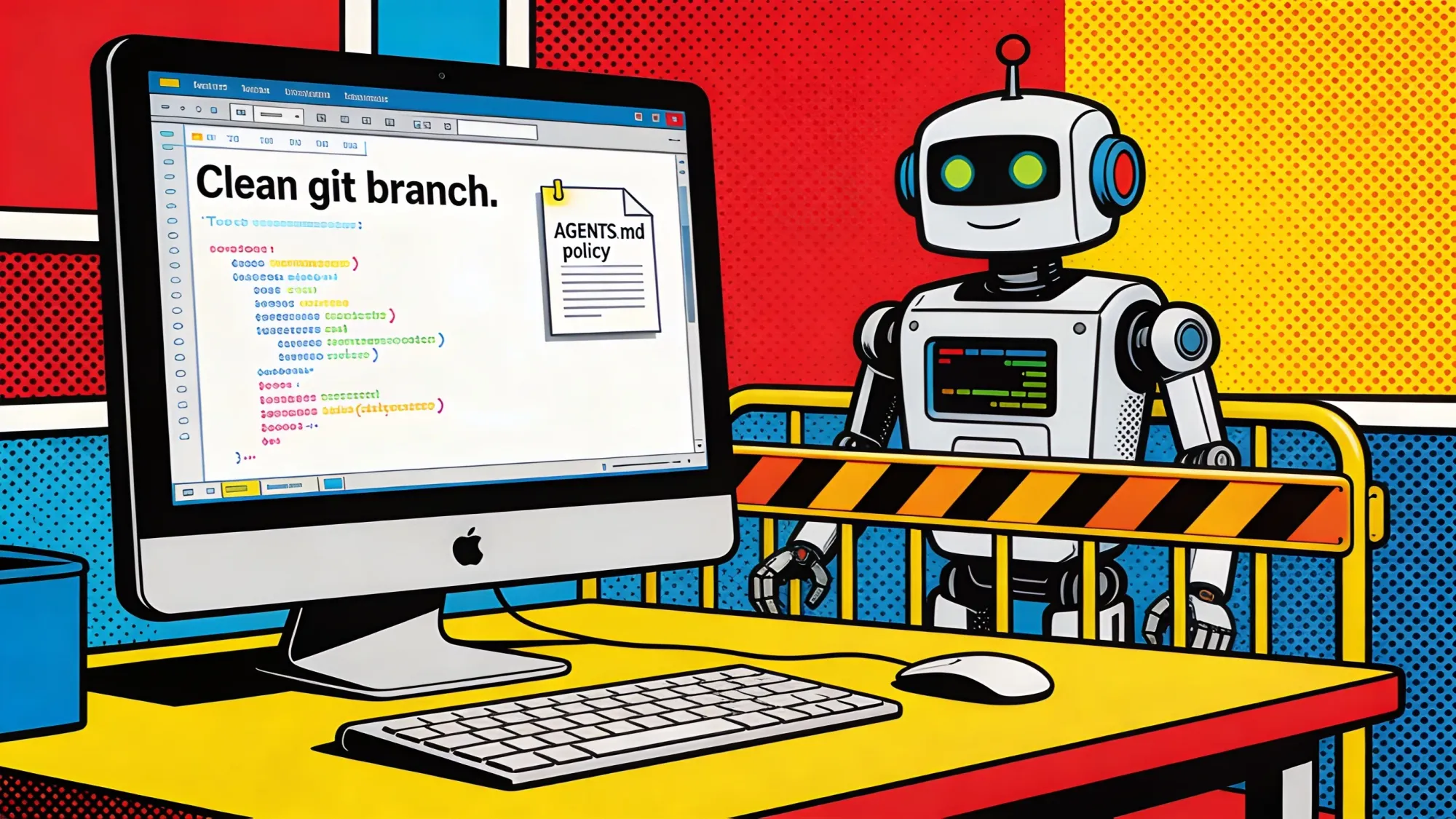
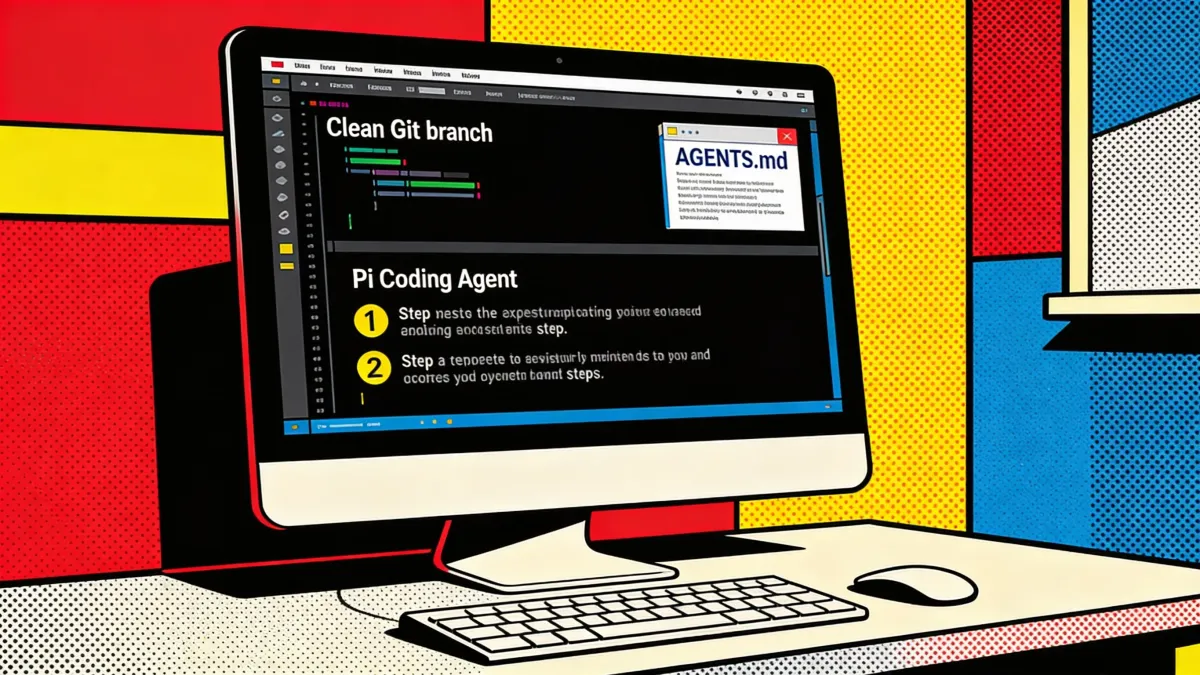
Pi Coding Agent is a terminal harness with file access, shell access and an editing loop. The safe first setup is boring on purpose.
The guide starts with the official @earendil-works/pi-coding-agent package, verifies the pi binary, authenticates one provider and writes a project-level AGENTS.md. Only then does the user run a read-only smoke test, make one reversible edit and inspect the diff.
That order matters because Pi can add packages, MCP servers, skills and custom tools after the baseline works. The larger market angle matches the earlier harness rebellion around coding agents: the model matters, but the control surface around the model decides what it can touch.
Why This Matters:
- Coding agents fail less often when repo scope, test commands and secret boundaries are explicit before the first patch.
- Package and MCP systems become safer only after the user knows which binary, provider and project rules are active.
AI Image of the Day

Prompt: At the bottom center, in small, perfectly legible characters, is the inscription "Manuelo Diferto" in keeping with the style of the work. Striking mixed-media portrait of a contemplative woman sitting on a stool, blending grayscale realism with bold pops of orange. Her long, wavy hair cascades naturally over her shoulders, and she is dressed in a casual off-shoulder top. The most striking feature is her black-and-white striped knee-high socks, which are vividly highlighted in bright orange, creating a bold contrast against the monochromatic tones of her skin and clothing. The background is a complex layer of abstract geometric shapes, lines, and splatters in grayscale, with selective orange accents that echo the color of the socks. The texture is rich and varied, combining smooth skin tones with rough, almost stencil-like elements in the background. The overall style is a fusion of contemporary street art and fine art portraiture, evoking a sense of modern urban culture and introspective mood. Ultra HD, 8K resolution, inspired by pop art and mixed-media techniques.
Universities Bring Back Blue Books as AI Detectors Lose Trust

Stanford and Princeton are rebuilding old exam controls because the finished essay no longer proves enough. The detector era is giving way to process evidence.
Theo Baker's Stanford account in The New York Times had the perfect campus image: a student signing a no-ChatGPT declaration while ChatGPT sat open in the next window. Four years after ChatGPT arrived, Stanford's proctoring pilot has grown from seven courses to more than 50, and Princeton is requiring proctoring for all in-person exams starting July 1.
The numbers point in the same direction. The student-use data we covered earlier showed 85 percent of students used generative AI for coursework, while 25 percent used it to complete assignments. Turnitin, Vanderbilt and UNF all warn detector scores cannot carry a misconduct case alone.
Why This Matters:
- Universities are shifting from detecting output to verifying drafts, oral answers, revision notes and supervised work.
- The burden moves back to faculty design, which means more labor before campuses get clearer rules.

🧰 AI Toolbox
How to Search Every App Your Company Uses From One AI Window with Glean
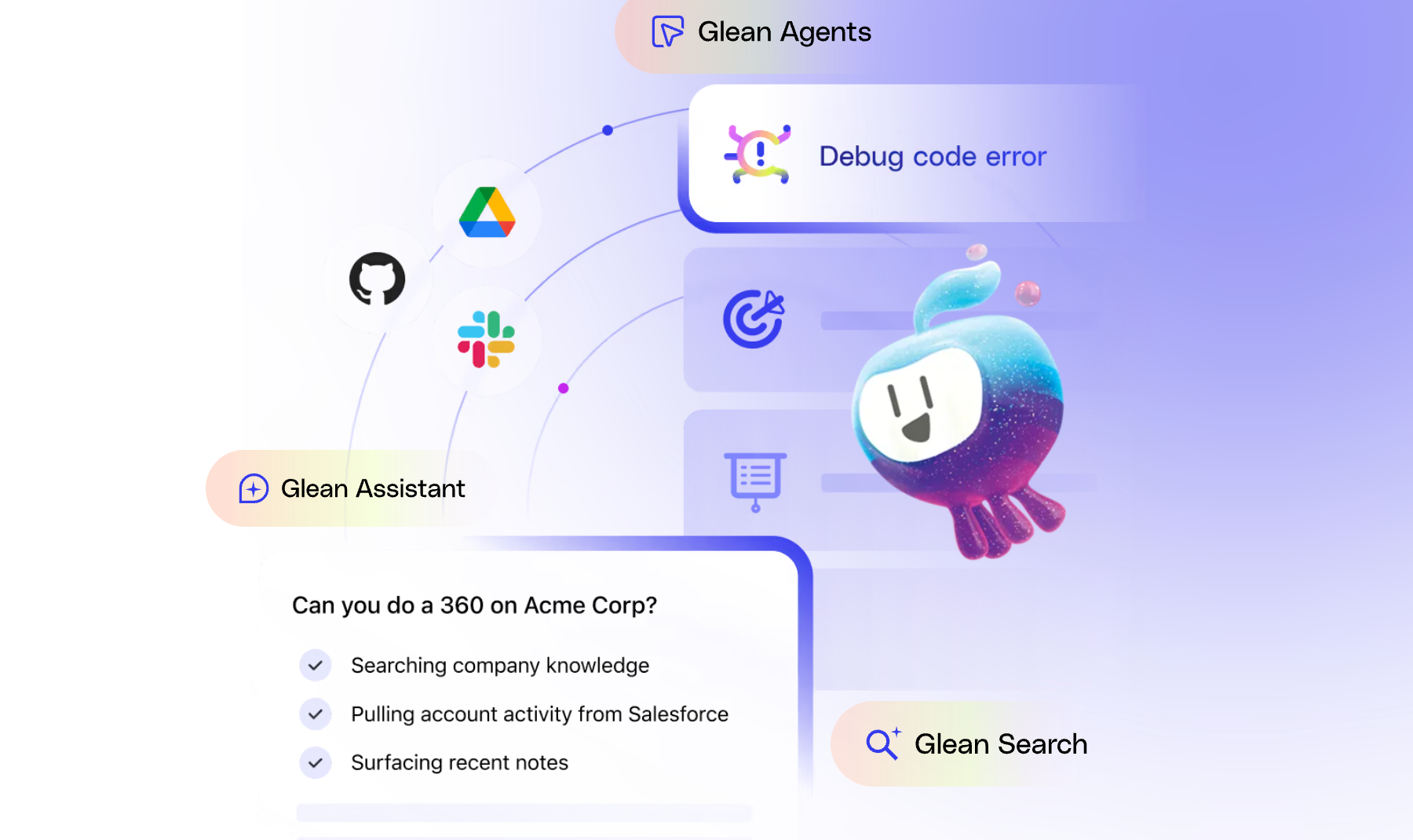
Glean is an enterprise AI search and assistant that connects to the apps your team already runs: Google Workspace, Slack, Notion, Salesforce, Jira, Confluence, Zendesk, GitHub and more than 100 others. It answers questions with sourced citations from the documents you already have permission to see. Beyond search, it ships a no-code workbench for building company-specific agents, plus a chat assistant that drafts emails, summarizes threads and writes code grounded in company knowledge. Pricing is enterprise, with a free trial through the website.
Tutorial:
- Go to glean.com and request a trial through your work email
- Connect your data sources during onboarding, including Slack, Google Drive, Notion, Jira, Salesforce and GitHub
- Ask Glean Chat a question that normally needs three tabs: "What is the latest status of the Q3 pricing project and who is the DRI?"
- Click any answer to inspect the underlying source documents, snippets and timestamps
- Build a no-code agent for a repeated workflow, such as summarizing customer calls into a leadership channel
- Add Glean's browser extension so the assistant follows you into Gmail, Linear and Salesforce
- Use the Glean Apps directory to deploy pre-built agents for engineering, sales and HR teams
URL: glean.com
What To Watch Next
|
||
|
||
|
💡 5-Minute Skill: Turn a Layoff Rumor Into a Personal Risk Map Before Panic Takes Over
Your company has announced "organizational changes," and Slack is doing forensic astrology. The job is not predicting the future. It is separating what you know from what you can prepare.
Your raw input:
Company: B2B SaaS, 800 people. Signals: CFO froze backfills, manager canceled Friday 1:1, AI productivity push in support and QA, no official layoff notice. Role: support ops lead, two years tenure, strong reviews. Constraints: mortgage, four months cash. Need: 72-hour plan without spiraling.
The prompt:
Act like a calm career risk chief of staff. Build a personal layoff risk map from only these facts. Separate confirmed facts, weak signals, questions for my manager, next 72-hour actions, actions that can wait, and a do-not-do list. No reassurance unless a fact supports it.
What you get back:
Confirmed: backfills are frozen, your meeting moved and support operations sits near automation pressure. Weak signal: a canceled 1:1 is not a notice. Next 72 hours: save personal documents, list measurable wins, refresh your resume quietly, identify five target companies and ask your manager what priorities changed.
Why this works
Panic turns every calendar change into evidence. This prompt makes the model label facts by strength, then converts anxiety into reversible actions.
What to use
ChatGPT: fast for triage and resume bullets. Claude: better if you paste reviews, role descriptions or a messy manager thread.
📖 AI Alphabet
|
I
|
📖 AI Alphabet Instruction Tuning Instruction tuning is extra training that teaches a model to follow prompts more usefully. It is one reason chat-based AI systems feel more obedient and conversational than base models. |
AI & Tech News
CISA Contractor Exposed GovCloud Keys in Public GitHub Repo
A CISA contractor kept hardcoded AWS GovCloud credentials in a public GitHub repository, KrebsOnSecurity reported. CISA opened an investigation after discovering the leak, because the credentials could access GovCloud accounts and internal agency systems.
Google and Blackstone Commit $5B to TPU Cloud Venture
Google and Blackstone are creating a new U.S. company that will sell enterprise access to Google TPUs, the Wall Street Journal reported. Blackstone's initial $5 billion equity commitment turns Google's custom chips into a finance-backed cloud distribution play.
Meta Plans $200B Hyperion Data Center Campus in Louisiana
Meta is building a Louisiana data center campus called Hyperion that Bloomberg says could exceed $200 billion and reach up to 5 gigawatts of power capacity. The project puts Meta's AI strategy in electricity, land and grid terms, not just model releases.
Meta Reassigns 7,000 Workers to AI Units Before Layoffs
Meta is moving 7,000 employees into four AI-focused units, according to an internal memo obtained by The New York Times. The shift lands days before planned cuts of about 8,000 workers, turning the restructuring into both a labor story and an AI org-chart reset.
Cloudflare Tests Mythos on 50+ Repositories for Bug Chaining
Cloudflare says it tested its security-focused Mythos model against more than 50 software repositories. The company says the system can find multiple vulnerabilities and connect them into an end-to-end exploit, which moves AI security work from flagging bugs toward building attack paths.
Anthropic Lets Mythos Users Share Threat Findings
Anthropic changed Mythos policy so users can share discovered cyber threats with organizations facing similar vulnerabilities, the Wall Street Journal reported. The move favors collective defense, but it also forces Anthropic to decide how much sensitive customer data can move through a shared warning system.
Anthropic Buys Stainless to Tighten Developer Tooling
Anthropic acquired API-to-SDK startup Stainless in a deal TechCrunch reported at more than $300 million. Stainless built developer tooling used by OpenAI, Google and Cloudflare, so the purchase gives Anthropic more control over the plumbing around its own platform.
Intel and Qualcomm Circle AI Chip Startup Tenstorrent
Tenstorrent has drawn early takeover interest from Intel and Qualcomm, Bloomberg reported. A deal could value the AI chip startup above $5 billion and give an incumbent chipmaker a faster route into accelerator design.
FBI Seeks Nationwide License Plate Reader Access
The FBI is pursuing nationwide access to automated license plate reader data, according to procurement records reviewed by 404 Media. The requirement points toward real-time federal querying across local surveillance networks, with Flock Safety and Motorola among the few vendors able to meet the scale.
Analog Devices Nears $1.5B Empower Deal
Analog Devices is in advanced talks to buy Empower Semiconductor for about $1.5 billion, Bloomberg reported. Empower makes high-performance voltage-regulator chips, a small-sounding layer that matters more as AI systems push power management to the center of hardware design.
🚀 AI Profiles: The Companies Defining Tomorrow
Project Prometheus is the secretive AI startup Jeff Bezos is helping fund and reportedly co-leading, aiming applied AI at industrial and real-world tasks rather than another chat assistant. Reports describe a roughly $6.2 billion raise at launch, partly from Bezos himself, with around 100 employees pulled from OpenAI, DeepMind and Meta. 🔥
Founders
The company is co-led by Jeff Bezos and former Google AI researcher Vik Bajaj, according to multiple reports surfaced in November 2025. Bezos has framed it as a working role rather than a passive investment, his most operational AI bet since stepping back from day-to-day at Amazon.
Product
Prometheus targets applied AI for the physical economy: manufacturing, engineering and other domains where current generative models still misbehave outside of text. Public details are sparse on what ships first, but staffing and pitch materials suggest robotics, simulation and industrial autonomy as the early surface area.
Competition
The closest comparison set includes Physical Intelligence, Figure, Skild AI and Sanctuary on the robotics axis, plus frontier labs that increasingly tout enterprise and physical-world use cases. The contrast is intent: most frontier labs are general-purpose; Prometheus is reportedly verticalized from day one.
Financing 💰
Approximately $6.2 billion in initial funding, with Bezos himself among the lead backers, according to The New York Times and follow-up reports in late 2025. The company has not confirmed a formal valuation.
Future ⭐⭐⭐⭐
Prometheus has the rarest commodity in AI: a balance sheet that does not need to wait for product-market fit before recruiting. The risk is mission drift. If Bezos picks a single physical-world wedge and resources it like AWS, this becomes a real frontier lab. If it sprawls, it becomes an expensive talent farm. 🤖
🤨 Yeah, But...
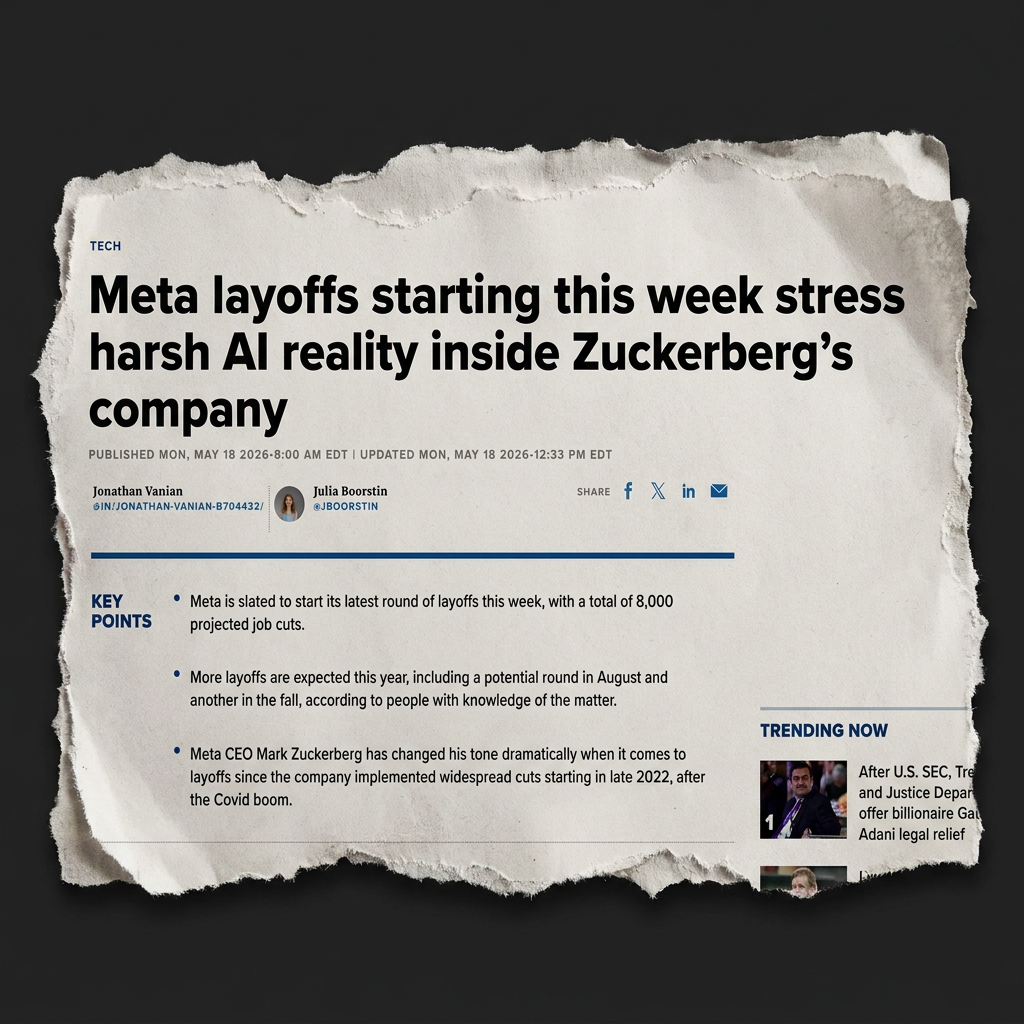
CNBC reported Monday that Meta's latest reductions start Wednesday, cutting about 10% of its workforce, or roughly 8,000 jobs, while more cuts may come later in the year. WIRED reported that Meta installed employee-tracking software for its Model Capability Initiative, capturing workplace activity to train AI agents. Meta says safeguards are in place and the data is not used for other purposes.
(CNBC, May 18, 2026; WIRED, May 14, 2026)
Our take: Meta has turned the workplace into a training dataset with severance paperwork pending. The old bargain was simple enough: employees built the product, then the company judged the product. The new bargain asks employees to produce the trace data that teaches the next software layer how to do work, while finance decides how many employees the next layer makes optional. Zuckerberg says AI-tool efficiency is not driving the cuts, and maybe the spreadsheet proves that distinction. The cafeteria version is harder to defend. If your keystrokes help train agents in May and your badge stops working in June, nobody needs a philosophy seminar on automation. They can read the onboarding prompt.
Free AI briefing · Weekdays
The AI stories that matter, sourced and explained.
Join the Morning Briefing. It goes out every weekday at 4:45 a.m. Pacific, with later sends for the East Coast, Berlin and Tokyo.
Free when you sign up: The Paperclip Compendium, our tested guide to running AI agents.
Free. Unsubscribe in one click.

Marcus Schuler
Editor-in-Chief and founder of Implicator.ai. Former ARD correspondent and senior broadcast journalist with 10+ years covering tech. Writes daily briefings on policy and market developments. Based in San Francisco. E-mail: editor@implicator.ai