IMPLICATOR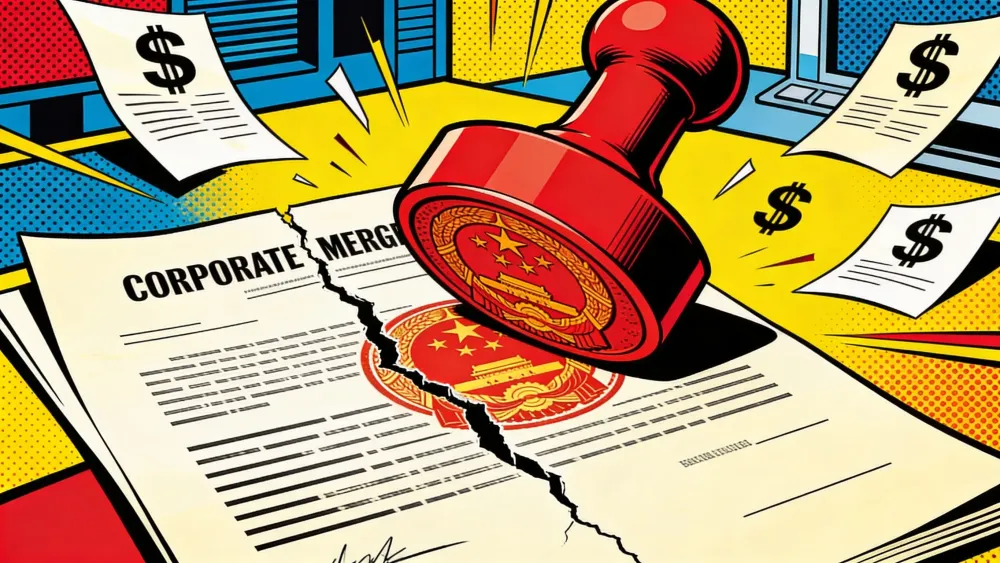
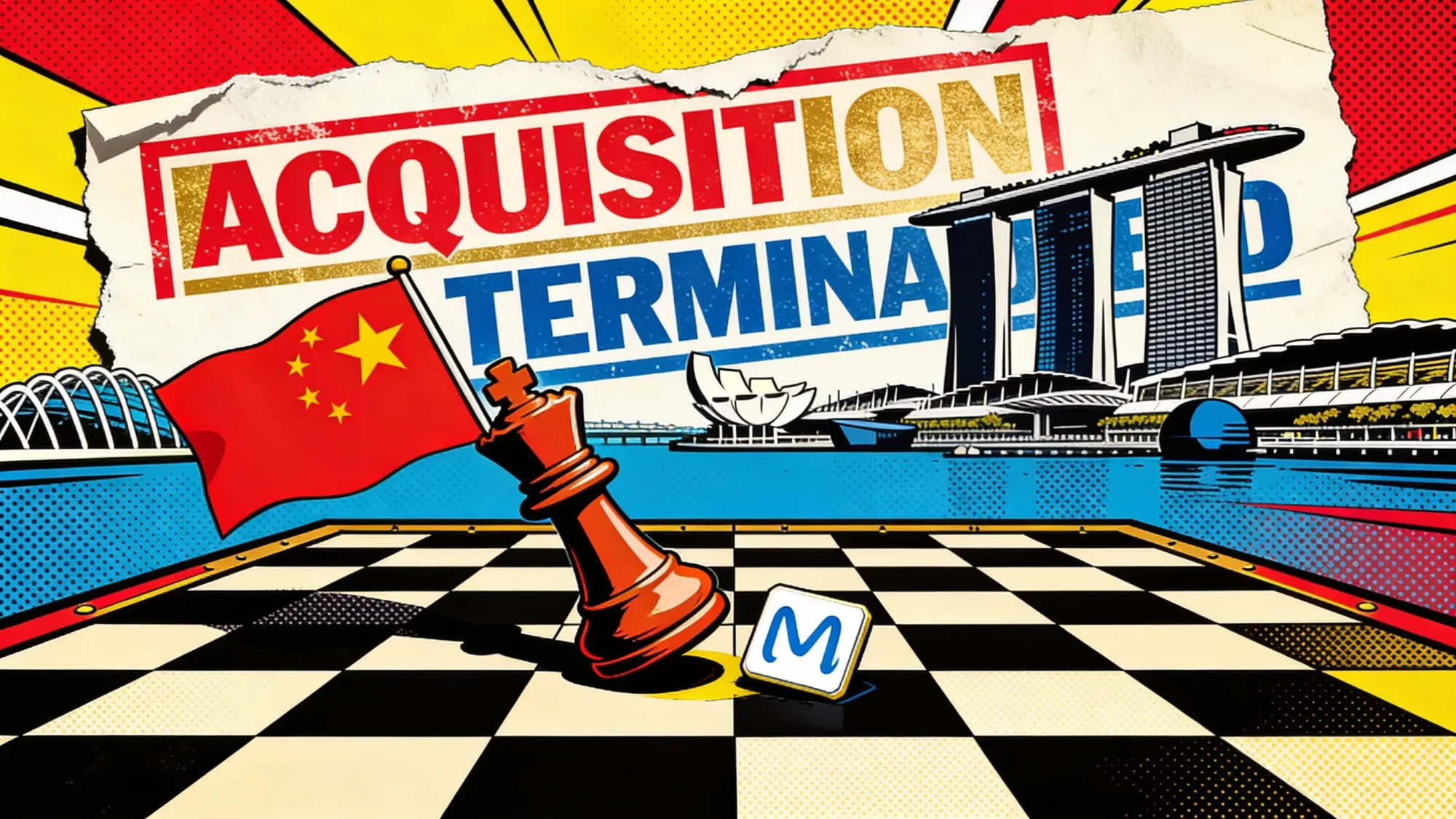
Meta has begun internal preparations to unwind its $2.5 billion December acquisition of Manus, the Wall Street Journal reported Monday, after China's National Development and Reform Commission blocked the deal on Sunday on national security grounds. People familiar with the discussions said Chinese authorities have given Meta and Manus a preliminary deadline of several weeks to return Manus's Chinese assets and remove transferred data and technology from Meta's systems.
Key Takeaways
- China's NDRC blocked Meta's $2.5 billion December acquisition of Manus on national security grounds, giving the parties weeks to reverse the closed deal.
- Beijing classified Manus as Chinese based on its founding engineering team and active domestic subsidiaries, despite Manus's Singapore parent company.
- Co-founders Xiao Hong and Ji Yichao remain barred from leaving China; Meta has acknowledged it may have to let the founders depart in any reversal.
- The decision arrives three weeks before a planned Trump-Xi meeting and signals that Singapore redomiciliation no longer protects Chinese AI deals.
AI-generated summary, reviewed by an editor. More on our AI guidelines.
Beijing sets the timeline
The Wall Street Journal report followed Beijing's order to reverse the deal two days earlier. The NDRC said it would prohibit foreign investment in Manus and required both parties to withdraw the transaction.
Manus investors Benchmark, Tencent, HSG and ZhenFund have either received their portion of the proceeds or said they would cooperate with a reversal, according to the Journal. Meta closed the Singapore-based deal in December and moved Manus staff and product into its main AI organization within the following weeks.
That timing is the operational issue. Most blocked acquisitions never reach integration, so unwinding them is a matter of canceling contracts and refunding investors. The Manus deal closed in December, and engineering, product and personnel work had been combined with Meta's existing teams before the NDRC's order. Separating it out again will require pulling back code commits, reassigning staff and rolling back internal access permissions four months after they were issued.
Origin, not domicile, drives the decision
Reuters reported that the NDRC treated Manus as a Chinese company despite its Singapore parent. Beijing pointed to two facts: Manus was originally built by engineers at Beijing Butterfly Effect Technology, and Manus continued to operate Chinese subsidiaries after its corporate redomiciliation.
Stay ahead of the curve
Strategic AI news from San Francisco. No hype, no "AI will change everything" throat clearing. Just what moved, who won, and why it matters. Daily at 6am PST.
No spam. Unsubscribe anytime.
The review was conducted under the foreign investment national security review mechanism that took effect in 2021. State media commentary cited by Reuters framed the decision around the company's Chinese technology, talent and training data rather than its place of incorporation.
For Chinese AI startups looking to sell to U.S. buyers, the precedent removes the Singapore-redomiciliation route as a reliable path to closing.
The founders are still in Beijing
Manus co-founders Xiao Hong and Ji Yichao were summoned to Beijing in March and barred from leaving China during the regulatory review, as Implicator reported last month. The exit ban remains in place, which limits what Meta can offer them in any retention scenario.
Before Beijing's formal ruling, Manus executives had reportedly explored departing Meta voluntarily as a possible concession to Chinese regulators, according to the Journal. Meta has since acknowledged that allowing the founders to leave the company may form part of any negotiated resolution.
Such an outcome would significantly diminish what Meta paid for. Manus was acquired not only for its codebase but for its team and for an operational agent product that had already drawn paying users before Meta launched a competing offering of its own. Engineering know-how cannot be transferred back through a corporate filing.
Investors recalibrate cross-border exits
The Manus decision arrives roughly three weeks before a scheduled mid-May meeting between President Donald Trump and Chinese President Xi Jinping in Beijing. It also follows a Bloomberg report that Beijing has been warning several Chinese AI companies not to accept U.S. capital without prior regulatory approval.
For venture investors, the implication is straightforward. A Singapore corporate structure no longer provides reliable separation for a Chinese-origin AI company seeking foreign investment or acquisition. Lawyers interviewed by Reuters said investors will now require more thorough separation arrangements, covering intellectual property assignment, R&D relocation, governance and data ownership, before agreeing to price a cross-border exit.
Meta has stated that the original transaction complied with applicable law and that it expects an appropriate resolution. Beijing's position is that the deal will not be considered closed until the disputed assets are returned to Chinese control. The dispute now centers less on whether Manus successfully left China and more on which components of an AI company, once acquired by a foreign buyer, can practically be unwound and returned.
Frequently Asked Questions
How does Meta unwind an acquisition that already closed four months ago?
According to the Wall Street Journal, Meta must return Manus's Chinese assets, strip transferred data and technology from its systems, and possibly let the founders depart. Investors Benchmark, Tencent, HSG and ZhenFund have signaled willingness to cooperate. Practically, this requires reversing code commits, reassigning staff and rolling back internal access permissions four months after integration was completed.
Why did China block the deal if Manus is incorporated in Singapore?
The NDRC ruled that incorporation does not determine national security relevance. Reuters reported that Beijing classified Manus as Chinese because its engineering work began at Beijing Butterfly Effect Technology, and the company kept active domestic subsidiaries even after redomiciling. State media framed the issue as ties to Chinese technology, talent and training data, not corporate seat.
What is the 2021 foreign investment national security review mechanism?
A regulatory framework giving Beijing authority to review or block foreign investment in companies it considers nationally significant. The NDRC used this mechanism to evaluate the Meta-Manus deal. Its application here is notable because it reaches a transaction already closed and operationally integrated, rather than one still in negotiation, expanding the perceived reach of Chinese review well past announcement stage.
What did Meta actually buy when it acquired Manus?
Manus is a startup behind an autonomous AI agent product that drew paying users before Meta launched a competing offering. Meta acquired the codebase, the engineering team and the operational product. The Journal reports the founders may have to depart as part of the unwind, which would leave Meta without the institutional knowledge that built Manus.
How does this affect other Chinese AI startups?
The decision removes Singapore redomiciliation as a reliable workaround for Chinese-origin AI startups seeking U.S. exits. Lawyers told Reuters investors will now require stricter separation, including IP assignment, R&D relocation, governance and data ownership, before pricing a cross-border exit. Bloomberg also reported Beijing has warned several Chinese AI companies not to accept U.S. capital without prior approval.
AI-generated summary, reviewed by an editor. More on our AI guidelines.

Free AI briefing · Weekdays
The AI stories that matter, sourced and explained.
Join the Morning Briefing. It goes out every weekday at 4:45 a.m. Pacific, with later sends for the East Coast, Berlin and Tokyo.
Free when you sign up: The Paperclip Compendium, our tested guide to running AI agents.
Free. Unsubscribe in one click.

Marcus Schuler
Editor-in-Chief and founder of Implicator.ai. Former ARD correspondent and senior broadcast journalist with 10+ years covering tech. Writes daily briefings on policy and market developments. Based in San Francisco. E-mail: editor@implicator.ai