IMPLICATOR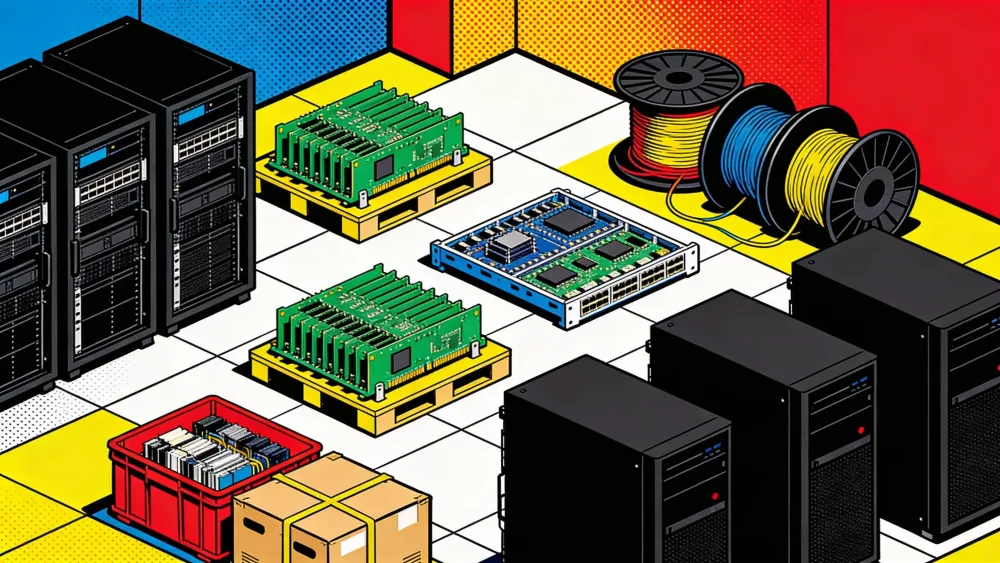
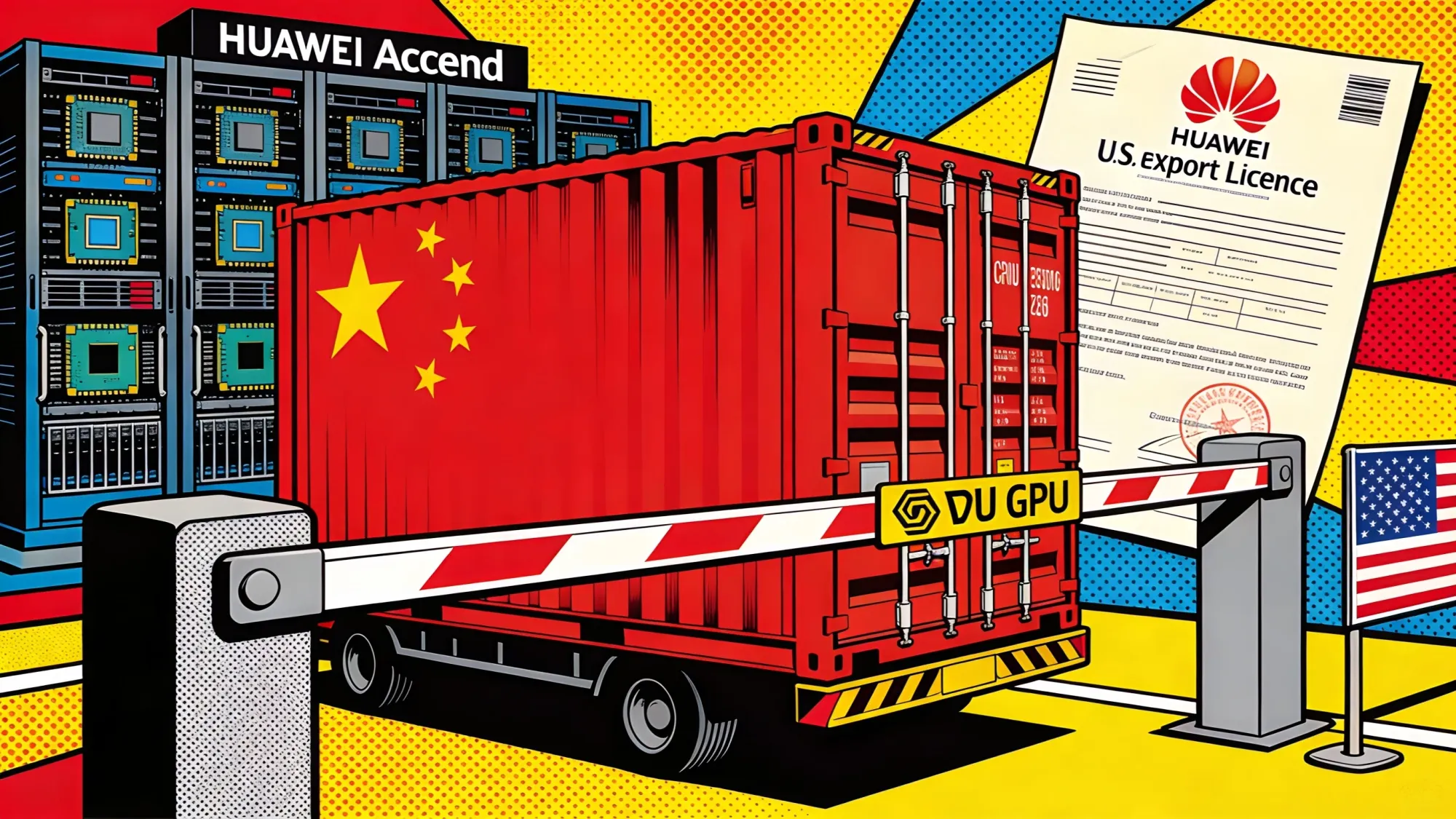
On May 12, Xiang Xiaotian gave Bloomberg the sentence Chinese AI investors did not want to hear. The Shanghai Chengzhou Investment Management director said component bottlenecks were "unlikely to be resolved anytime soon, certainly not within 2026." Two weeks earlier, Reuters reported that DeepSeek V4 had "turbocharged demand for domestic Chinese AI hardware" as ByteDance, Tencent and Alibaba reached out to Huawei for Ascend 950 chips.
DeepSeek has not freed China from the physical limits of the AI supply chain. It has moved those limits from Nvidia export licenses to the components, factories and prepayments that decide who actually gets machines.
China already had a hardware shortage before V4 pulled Huawei's Ascend line to the center of China's domestic procurement scramble. The Implicator covered the same shift when Nvidia's China accelerator share fell to zero while Huawei expected to ship about 750,000 950PR units this year. DeepSeek pulled demand forward.
Key Takeaways
- DeepSeek V4 pushed ByteDance, Tencent and Alibaba toward Huawei Ascend 950 orders.
- China’s AI suppliers face component bottlenecks that Bloomberg’s source expects to last through 2026.
- The shortage now spans optics, CPUs, power chips, MLCCs and memory, not just accelerators.
- Investors have largely looked past missed estimates while suppliers demand prepayments for allocation.
AI-generated summary, reviewed by an editor. More on our AI guidelines.
Demand arrived before allocation
Reuters said "demand for Huawei's Ascend 950 AI chips has surged following the release of DeepSeek's V4" model after "DeepSeek's decision to optimize its V4 specifically for Huawei's chips." The 950PR "represents a breakthrough for Huawei after years of struggling to win large orders from China's tech sector," the news agency reported. Customer testing "went well earlier this year"; ByteDance and Alibaba planned orders after January samples.
Alibaba Cloud's Bailian platform put V4-Pro and V4-Flash online the day DeepSeek released them, Reuters said. Tencent Cloud launched V4 preview services on TokenHub the same day. Reuters said "millions of users and developers can now access V4."
Huawei said its Ascend SuperNode product line had been adapted for V4 inference. Output of the 950 is expected to "fall short of demand" because U.S. export controls still restrict China's access to advanced chipmaking tools.
The missing parts are smaller than the model
Bloomberg's signal came from cash flow, not chip design. Zhongji Innolight's first-quarter prepayments topped 1.5 billion yuan, or $221 million, more than 10 times the earlier level. The optics supplier was booking materials before production. Foxconn Industrial Internet gave investors the same answer: buy raw materials early enough to keep server lines moving.
Suzhou TFC Optical Communication put the problem in factory language. "Due to the pace of production ramp-up by suppliers, there are still some shortages of certain materials, which has had a certain impact on related products," the company said on an April earnings call. Victory Giant Technology Huizhou flagged the same grind in another corner of the stack: its new Thai facility still faces "production line break-ins" before full capacity.
China's demand now lands on optical chips, printed circuit boards, passive components and the labor discipline needed to run new lines in Thailand and Vietnam. Guosheng Securities analysts said those countries are favored factory locations under geopolitical pressure, but local workforce constraints remain and line proficiency lags Chinese standards.
Track the AI hardware squeeze
Strategic AI news from San Francisco. No hype, no "AI will change everything" throat clearing. Just what moved, who won, and why it matters. Daily at 6am PST.
No spam. Unsubscribe anytime.
The shortage moves through the server
Intel and AMD told Chinese customers that server CPUs were short too, Reuters and TrendForce reported. Intel warned of "delivery times extending as long as six months," while AMD lead times stretched to "eight to 10 weeks." Intel said "inventory at lowest level in Q1, but we are addressing aggressively and expect supply improvement in Q2 through 2026." AMD said, "We remain confident in our ability to meet customer demand globally."
Power chips are bending the same way. TrendForce lowered its global server shipment growth forecast to 13 percent from 20 percent after delayed parts deliveries, according to Chosun Biz. Lead times for some power semiconductors from Infineon, Texas Instruments and onsemi exceeded 35 to 40 weeks. Daily Alpha's compilation put lead times for some high-end MLCCs at 20 to 30 weeks, while orders for AI-related parts jumped 20 to 25 percent in the first quarter. A Yicai channel source put the procurement mood more bluntly: "For some models, it's not a matter of high prices but out of stock."
A domestic AI chip can be available while the CPU, optics, memory, power module or capacitor that completes the box sits somewhere else.
Scarcity now sets the price
Data Center Knowledge cited a CNAS report saying "the world's leading AI companies cannot get enough chips" and that chip production is a "binding constraint on the pace of the AI compute buildout." HyperFrame Research analyst Stephen Sopko gave the new order of constraint plainly: "Silicon is the binding short-term constraint. Power is the binding long-term constraint."
That is why Xiang's second Bloomberg quote matters as much as the first. "Despite some first-quarter earnings clearly missing optimistic expectations, share prices didn't fall much on the day, some even edged higher," he said, "suggesting the market is largely overlooking these concerns." The market reaction treated missed estimates as timing noise. Suppliers had already shown the other side of that reaction: customers were paying ahead to hold allocation.
The shortage already has a price.
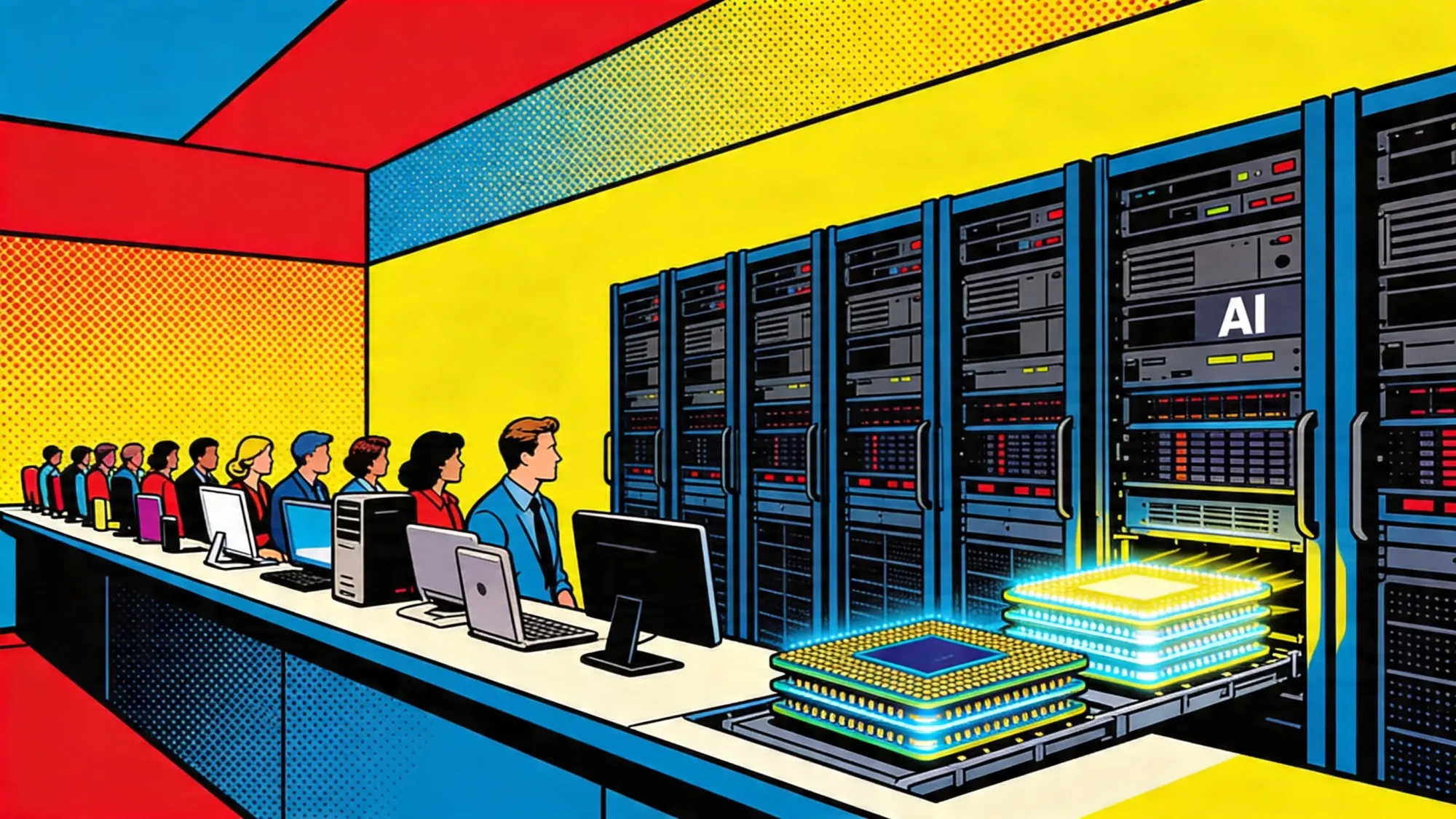
DeepSeek discounted V4-Pro by 75 percent until May 5 and said prices may fall again once Ascend 950 supernodes "ship at scale." Huawei can plan 750,000 950PR units this year, with mass production starting in April and full-scale shipments in the second half. The model can move at release speed. The racks cannot.
DeepSeek pulled China toward domestic AI hardware. Now China's AI suppliers have to build the parts fast enough for DeepSeek.
Frequently Asked Questions
Why are China’s AI suppliers short of components?
Demand for domestic AI hardware jumped after DeepSeek V4, while suppliers still depend on constrained optics, printed circuit boards, CPUs, power semiconductors, memory and passive components.
What did DeepSeek V4 change for Huawei?
Reuters reported that DeepSeek optimized V4 for Huawei’s Ascend 950 chips, prompting ByteDance, Tencent and Alibaba to reach out to Huawei about new orders.
How many Ascend 950PR chips does Huawei plan to ship?
Reuters reported that Huawei planned to ship about 750,000 950PR units in 2026, with mass production beginning in April and full-scale shipments starting in the second half.
Which non-GPU parts are becoming bottlenecks?
The article cites shortages in optical components, PCBs, Intel and AMD server CPUs, power semiconductors, MLCCs, HBM and memory-related storage components.
Why are investors not punishing missed supplier estimates?
Bloomberg quoted Xiang Xiaotian saying some earnings misses barely moved shares, suggesting investors may be overlooking procurement risks while demand remains strong.
AI-generated summary, reviewed by an editor. More on our AI guidelines.


Marcus Schuler
Editor-in-Chief and founder of Implicator.ai. Former ARD correspondent and senior broadcast journalist with 10+ years covering tech. Writes daily briefings on policy and market developments. Based in San Francisco. E-mail: editor@implicator.ai