IMPLICATOR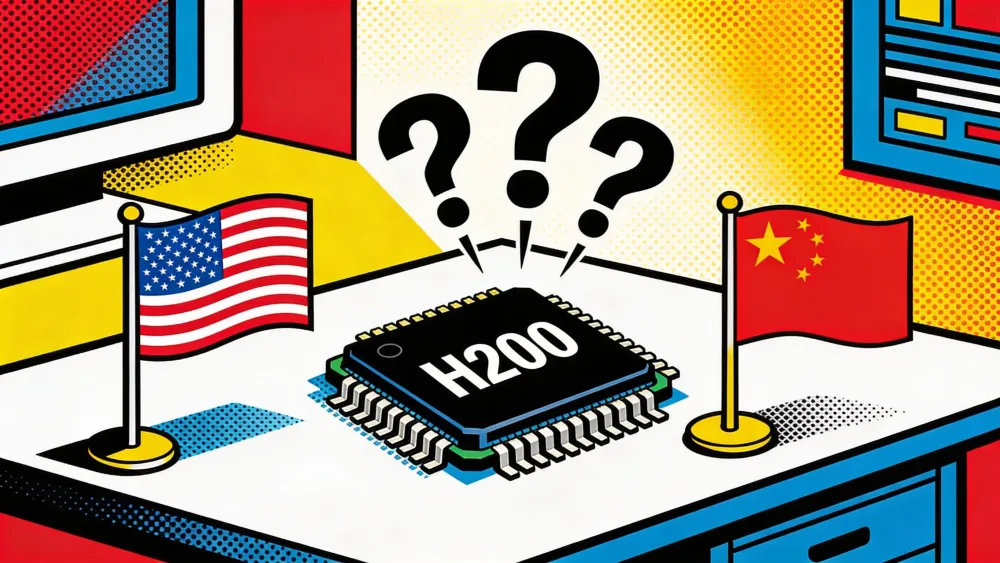
Nvidia's H200 processor deliveries to China remain stalled after President Trump's two-day Beijing summit with Xi Jinping closed Friday without a breakthrough on semiconductor export controls. U.S. Trade Representative Jamieson Greer told Bloomberg News that the controls were not a topic of the bilateral talks, leaving roughly 10 approved Chinese buyers, among them Alibaba, Tencent, ByteDance and JD.com, waiting on Beijing's go-ahead to take delivery. Not a single H200 has shipped since Trump first authorized the sales in December 2025, Reuters reported on May 14, citing three people familiar with the export licenses.
Key Takeaways
- Trump's two-day Beijing summit with Xi Jinping closed without a chip-export breakthrough; H200 deliveries to China remain stalled.
- About 10 Chinese firms hold U.S. export licenses for up to 75,000 H200 units each, but Beijing has paused all orders.
- USTR Jamieson Greer told Bloomberg that chip controls were not on the bilateral agenda and called the decision sovereign for China.
- Nvidia reports earnings Wednesday; China is roughly 5 percent of revenue versus above 20 percent before U.S. export controls tightened.
AI-generated summary, reviewed by an editor. More on our AI guidelines.
What Washington has approved
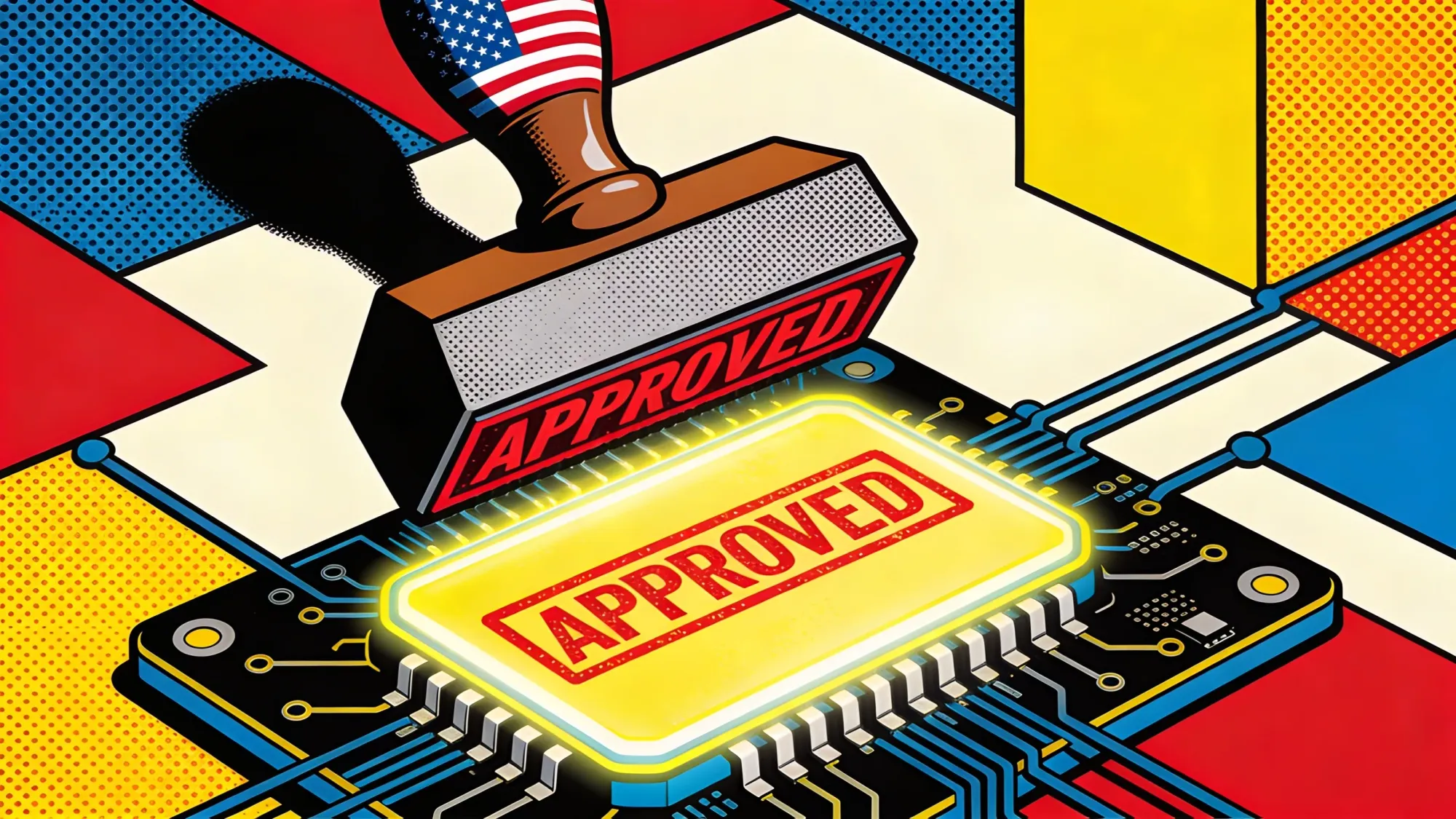
The U.S. Commerce Department cleared the firms under a January 13 licensing framework that allows each customer to buy up to 75,000 H200 units. Distributors Lenovo and Foxconn received separate authorizations. The framework requires Nvidia to remit 25 percent of approved sales to the U.S. government, a revenue-share structure Trump announced on December 8, 2025. Washington had earlier monetized chip-export licenses with a 15 percent toll on the lower-tier H20 chip in August.
The H200 is a Hopper-generation AI accelerator that sits below Nvidia's Blackwell systems such as the B200 and GB200, which remain barred from sale into China.
Why Beijing has held back
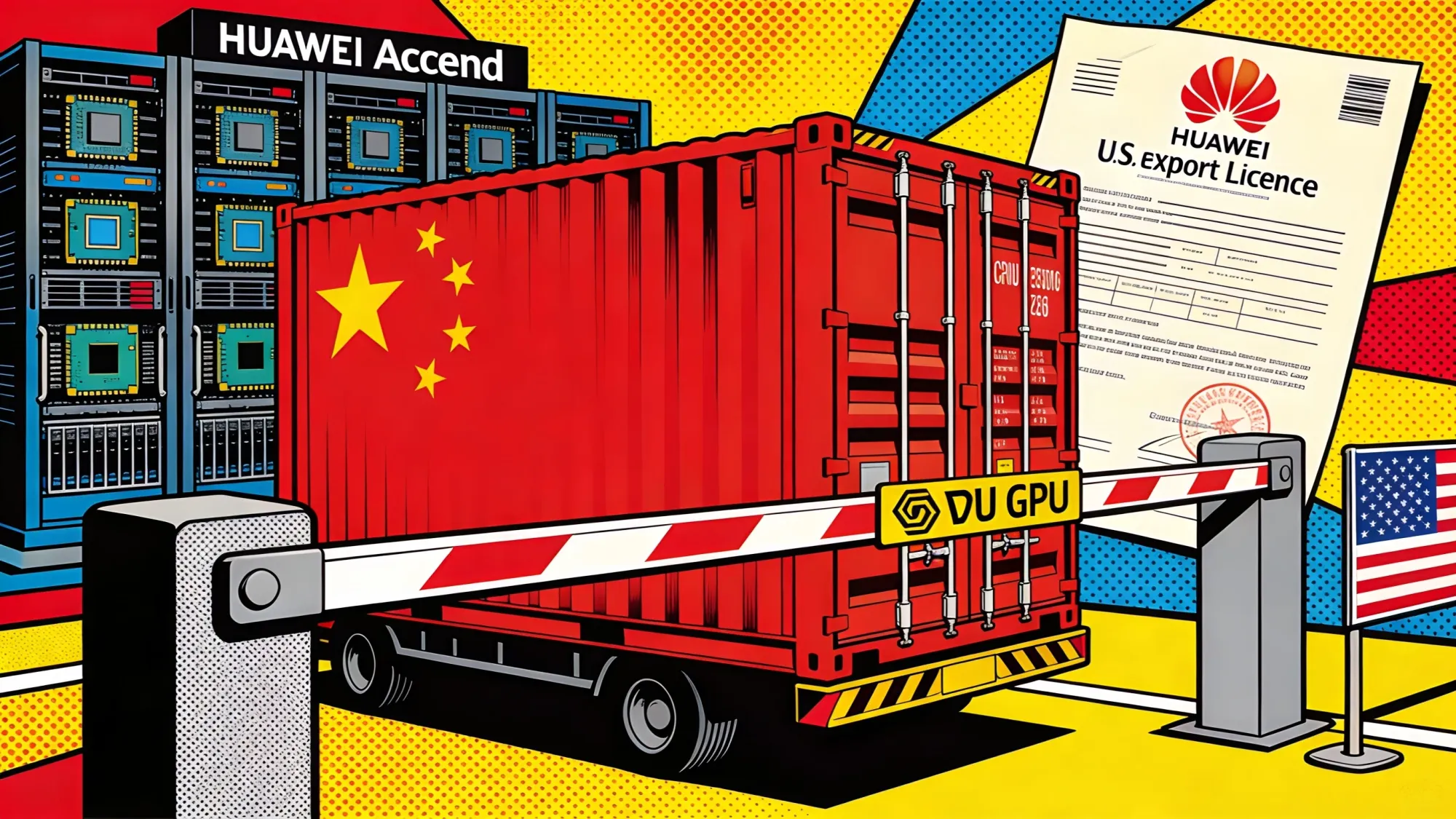
Chinese regulators have not greenlit any H200 purchases. Commerce Secretary Howard Lutnick stated at a Senate hearing last month that Chinese firms are "trying to keep their investment focused on their own domestic" suppliers, including Huawei. Beijing's State Council ordered a parallel supply-chain security review to cut dependence on U.S. semiconductors.
Days before the summit, DeepSeek confirmed that its latest model had been optimized to run on Huawei processors. Tencent Chief Strategy Officer James Mitchell said on the company's Wednesday earnings call that Chinese GPU supply will increase "progressively" through 2026, while an Alibaba executive said T-Head's proprietary GPUs had "achieved scaled mass production." The shift continues a trend Huawei accelerated through 2025 as Nvidia's market share collapsed.
Track the AI policy that moves markets
Strategic AI news from San Francisco. No hype, no "AI will change everything" throat clearing. Just what moved, who won, and why it matters. Daily at 6am PST.
No spam. Unsubscribe anytime.
Huang's last-minute role at the summit
Nvidia CEO Jensen Huang was not on the original White House delegation. Trump reversed course Tuesday, called Huang directly, and picked him up in Alaska as Air Force One refueled en route to Beijing. Greer described the H200 decision as "a sovereign decision for China."
Aboard Air Force One on Friday night, Trump acknowledged the issue came up in his meeting with Xi. "I think something could happen on that," he told reporters.
Market reaction and earnings on Wednesday
Semiconductor stocks declined sharply Friday. Nvidia fell more than 2.5 percent in premarket trading, Intel and AMD dropped more than 3 percent, SK Hynix closed 7.7 percent lower in Seoul and ASML fell 4.7 percent in Amsterdam. Nvidia is scheduled to report quarterly results on Wednesday. The company's official guidance assumes no revenue from China, according to Nvidia CFO Colette Kress on the February earnings call.
Chris McGuire, senior fellow for China and emerging technologies at the Council on Foreign Relations, argued in remarks to Reuters that expanded China sales would shrink the U.S. lead in AI. "It is remarkable that President Trump keeps getting convinced to put Nvidia's interest ahead of America's," he said. China has fallen to roughly 5 percent of Nvidia's revenue in recent quarters, down from above 20 percent before export controls tightened, the company has disclosed in its fiscal 2026 filings.
Frequently Asked Questions
Which Chinese firms can buy Nvidia's H200 chips?
The U.S. Commerce Department has cleared roughly 10 Chinese firms, including Alibaba, Tencent, ByteDance and JD.com, plus distributors Lenovo and Foxconn. Each licensed customer is permitted to buy up to 75,000 H200 units. Lenovo confirmed its license publicly; the others have not responded to media requests.
Why have no H200 chips shipped yet?
Beijing has not greenlit the purchases. China's State Council ordered a supply-chain security review aimed at cutting dependence on U.S. semiconductors, and Commerce Secretary Howard Lutnick told a Senate hearing that Chinese firms are prioritizing investment in domestic alternatives such as Huawei's Ascend processors and Alibaba's T-Head GPUs.
What is the 25 percent revenue-share arrangement?
Under the framework Trump announced on December 8, 2025, and formalized in a January 13, 2026 Commerce Department regulation, approved Chinese firms can purchase H200 chips provided Nvidia remits 25 percent of those sales to the U.S. government. The structure followed an earlier 15 percent toll on the lower-tier H20 chip.
How did semiconductor stocks react to the summit?
Nvidia fell more than 2.5 percent in premarket trading on Friday, while Intel and AMD dropped over 3 percent. SK Hynix closed 7.7 percent lower in Seoul, ASML fell 4.7 percent in Amsterdam, and STMicroelectronics shed 4.8 percent, reflecting investor disappointment that the bilateral talks produced no chip-export breakthrough.
When does Nvidia report its next earnings?
Nvidia is scheduled to report quarterly results on Wednesday, May 20, 2026. The company's official financial guidance assumes no revenue from China, CFO Colette Kress noted on the February earnings call. China has fallen to roughly 5 percent of Nvidia's revenue in recent quarters, down from above 20 percent before U.S. export controls tightened.
AI-generated summary, reviewed by an editor. More on our AI guidelines.

Marcus Schuler
Editor-in-Chief and founder of Implicator.ai. Former ARD correspondent and senior broadcast journalist with 10+ years covering tech. Writes daily briefings on policy and market developments. Based in San Francisco. E-mail: editor@implicator.ai