

Moltbot Left the Door Open. Tesla Bet the Factory.
Moltbot exposed 1,862 servers without authentication. Tesla discontinues flagship cars for unproven robots. Airtable launches AI agents amid platform complaints.
Moltbot exposed 1,862 servers without authentication. Tesla discontinues flagship cars for unproven robots. Airtable launches AI agents amid platform complaints.

Researchers found 1,862 Moltbot servers exposed without authentication. The viral AI assistant stores credentials in plaintext and invites attack by design.
Airtable launches Superagent, its first new product in 13 years, betting on multi-agent AI while enterprise customers complain about reliability issues.

Nvidia released open AI models the same week reports surfaced that Meta is abandoning open source. Coincidence? The real story: Nvidia's best customers are building their own chips. Open models create dependencies that survive hardware defection.

OpenAI is welding together its own chips. Google has TPUs humming in data centers across three continents. Anthropic and Amazon are building custom silicon. The companies buying Nvidia's $40,000 H100s today may not need them in three years. Jensen Huang knows this.
On Monday, Nvidia released Nemotron 3, a family of open AI models that traps developers in Nvidia's orbit even if the hardware underneath them changes. Meta, whose Llama models dominated open source AI for two years, is bleeding users and reportedly running toward closed models. Chinese alternatives already squat in the space Llama vacated. Nvidia wants to evict them with American models that run best on Nvidia GPUs. Open weights on proprietary infrastructure. That's the hook.
The Breakdown
• Nvidia released Nemotron 3 as Meta reportedly abandons open source; enterprise open source share dropped from 19% to 11% this year
• Only Nano (30B parameters) ships now; Super and Ultra won't arrive until H1 2026, leaving a gap for Chinese competitors
• Unlike Meta, Nvidia is releasing 3 trillion tokens of training data, positioning transparency as competitive advantage
• Strategic hedge: as OpenAI, Google, and Amazon build their own chips, open models create ecosystem lock-in beyond hardware
Llama's collapse happened fast. In February 2023, Meta's open model release was a landmark event, offering researchers and startups a viable alternative to closed systems from OpenAI and Google. By 2024, Llama competed with the best proprietary models. Then came 2025.
The April release of Llama 4 drew mediocre reviews and controversy about training methodology. Today, no Llama model appears in the top 100 on LMSYS's LMArena Leaderboard. DeepSeek, Alibaba's Qwen, and Moonshot AI's Kimi K2 took those positions. Menlo Ventures' "State of Generative AI" report blamed Llama directly for declining enterprise adoption of open source, noting that the model's "stagnation, including no new major releases since the April release of Llama 4, has contributed to a decline in overall enterprise open-source share from 19% last year to 11% today."
The retreat will deepen. Bloomberg's Kurt Wagner and Riley Griffin reported last week that Meta's forthcoming project, code-named Avocado, may launch as a closed model. Alexandr Wang, installed as Meta's Chief AI Officer this year after the company invested in his previous company Scale AI, "is an advocate of closed models," they noted. Meta spent two years building brand equity around openness. Now the company is abandoning the position.
Nvidia smells blood. Chinese models dominate open source today. Qwen and DeepSeek are everywhere. Nvidia wants American alternatives running on American silicon.
The technical pitch centers on efficiency for agentic AI systems, applications where multiple AI agents collaborate on complex tasks. Three model sizes span different use cases: Nano at 30 billion parameters with 3 billion active, Super at roughly 100 billion with 10 billion active, and Ultra at approximately 500 billion with 50 billion active. Only Nano ships today. Super and Ultra arrive sometime in the first half of 2026.
Nvidia built Nemotron 3 on a hybrid architecture combining three approaches. Mamba layers handle long-range dependencies with minimal memory overhead. Transformer layers provide precision for tasks requiring detailed attention mechanisms. Mixture-of-experts routing activates only relevant portions of the model for each token, reducing compute requirements without sacrificing capability.
The performance claims are specific. Nemotron 3 Nano achieves 4x higher token throughput than its predecessor and reduces reasoning token generation by up to 60%. A 1-million-token context window enables processing entire codebases or extended documents without chunking. Artificial Analysis benchmarks show Nano generating roughly 377 tokens per second, outperforming competitors of similar size including offerings from Mistral, DeepSeek, and Meta.
The architecture borrows from research at Carnegie Mellon and Princeton, weaving selective state-space models into the hybrid design. These models handle long sequences efficiently by maintaining states rather than recomputing attention across the entire context for every token. The practical effect: memory usage drops dramatically for long-context applications. Nvidia claims several times faster inference with less memory because the hybrid approach avoids the massive attention maps and key-value caches that standard transformers require.
For Super and Ultra, Nvidia introduced "latent MoE," a variant where expert networks share a common core representation while maintaining private specializations. The approach allows activating 4x more experts at equivalent inference cost, enabling finer-grained specialization without proportional compute increases.
Strategic AI news from San Francisco. Clear reporting on power, money, and policy. Delivered daily at 6am PST.
No spam. Unsubscribe anytime.
But note what Nvidia is not claiming. These models do not top overall leaderboards. They compete well within their weight class, not against frontier systems from OpenAI or Anthropic. The pitch is efficiency for specific workloads, not general superiority.
The efficiency focus matters because agentic systems burn through tokens at alarming rates. A year ago, a typical query might trigger 10 model calls. By January, that number hit 50. Now complex queries can generate 100 calls or more. At that scale, inference bills compound into real money. Electricity meters spin. Server fans scream. Faster and cheaper wins.
Nvidia is using data openness as a dagger against Meta. Where Meta released model weights without training data, Nvidia is publishing nearly everything: three trillion tokens of pretraining data, post-training datasets, reinforcement learning environments, and an agentic safety dataset with 11,000 AI workflow traces. You can see what went in. You can reproduce the process.
The contrast is pointed. When Nvidia partnered with Meta last year to distill Llama 3.1 into smaller Nemotron models, Meta refused to share even a portion of its training data. Nvidia had to reverse-engineer the distillation process on its own. Llama was "open weight," not open source. The distinction matters more than marketing departments admit.
MIT researchers recently studied code repositories on Hugging Face and found "a clear decline in both the availability and disclosure of models' training data." Their analysis distinguished between truly open source models, which include training data, and merely "open weight" models that do not. Nvidia is claiming the former category while Meta was always selling the latter.
For enterprise customers running compliance reviews, the distinction matters. A bank deploying AI for loan decisions cannot easily explain a black box to regulators. Nvidia offers an audit trail. That's the sell.
Nvidia announced early adopters including Accenture, CrowdStrike, Cursor, Deloitte, Oracle Cloud Infrastructure, Palantir, Perplexity, ServiceNow, Siemens, and Zoom. Ten logos for a slide deck. ServiceNow's CEO promised the combination would "define the standard." Sure.
This is what launch announcements look like. Someone signs an MOU, someone else gets a logo on a press release, everyone pretends exploration equals deployment. The real test comes months later, when procurement actually cuts checks and engineers wire models into production systems. CrowdStrike kicking tires on Nemotron is not CrowdStrike betting its threat detection on it.
Perplexity's use case illustrates the intended pattern. CEO Aravind Srinivas noted that their agent router can direct tasks to fine-tuned open models like Nemotron or leverage proprietary models when specific capabilities are required. This routing approach, using efficient open models for routine work and expensive frontier models for hard problems, represents the economic logic Nvidia is selling. Not replacement of proprietary systems. Coexistence alongside them.
Nemotron 3 Nano ships today through Hugging Face and inference providers including Baseten, Deepinfra, Fireworks, and Together AI. Amazon Bedrock support is coming. Super and Ultra, the models targeting demanding multi-agent applications, will not ship until the first half of 2026. Six months is forever in AI.
DeepSeek and Qwen teams are not waiting. If Meta does release Avocado as a closed model, other players will flood the gap. Google and OpenAI both offer small open models, though they update them less frequently than Chinese competitors. Nvidia is betting that establishing ecosystem position now, with Nano as proof of concept and a credible roadmap, justifies the wait. The bet could miss.
There is also the question of what "open" means when the models run best on Nvidia hardware. Nemotron 3 Super and Ultra train using NVFP4, Nvidia's 4-bit floating-point format optimized for Blackwell architecture. The efficiency gains depend on the silicon. You can download the weights, but you'll want Nvidia iron underneath them.
Nvidia's motivation runs deeper than squatting in Meta's abandoned territory. The company faces an existential problem: its best customers are building alternatives to its products. OpenAI, Google, and Anthropic all have chip programs. Amazon's Trainium racks are multiplying. Microsoft is pouring money into custom silicon. The data center GPU business that generates most of Nvidia's revenue depends on customers who are actively trying to escape it.
Models create addiction that hardware alone cannot. A developer who builds on Nemotron, who fine-tunes it for a specific application and wires it into production, gets hooked on Nvidia's optimization tools, inference libraries, training infrastructure. Ripping that out hurts. The model is the bait. The platform is the trap.
Jensen Huang wrapped it in the usual language about open innovation and developer empowerment. Kari Briski, Nvidia's VP of generative AI software, was blunter about commitment: "As Jensen says, we'll support it as long as we shall live."
That's a hardware company talking like a platform company. The shift is the story.
Q: What is the Mamba architecture and why does it matter?
A: Mamba is a state-space model developed by researchers at Carnegie Mellon and Princeton. Unlike transformers, which recompute attention across the entire context for every token, Mamba maintains a running state. This makes it far more efficient for long sequences. Nemotron 3 combines Mamba with transformer layers to get efficiency on long contexts while keeping precision for complex reasoning tasks.
Q: Can I run Nemotron 3 without Nvidia GPUs?
A: Technically yes. The model weights are open and work with standard inference frameworks like vLLM, SGLang, and llama.cpp. But the efficiency gains Nvidia touts depend on their hardware optimizations, especially NVFP4 for the larger models. Running on AMD or other hardware works, but you lose the performance advantages that make the models competitive.
Q: What exactly is "agentic AI" that Nvidia keeps mentioning?
A: Agentic AI refers to systems where multiple AI models work together on complex tasks, often calling each other repeatedly, using tools, and making decisions across multiple steps. A single user query might trigger 100 separate model calls as agents plan, execute, verify, and revise. This multiplies inference costs, which is why Nvidia emphasizes efficiency in Nemotron 3.
Q: How does Nemotron 3 Nano compare to DeepSeek or Qwen models?
A: Artificial Analysis benchmarks show Nemotron 3 Nano generating 377 tokens per second, faster than similarly-sized Chinese alternatives. On accuracy, it scores 52 on their Intelligence Index, competitive with DeepSeek and Qwen models in its weight class. The key difference is data transparency: Nvidia released its training data, while Chinese models typically release only weights.
Q: Why would Meta abandon open source after investing so heavily in Llama?
A: Wall Street pressure. Meta has committed hundreds of billions to AI data centers and needs to show returns. Open models helped Meta recruit talent and build developer goodwill, but they don't directly generate revenue. The reported shift toward closed models under new AI chief Alexandr Wang, who previously ran Scale AI, suggests Meta now prioritizes monetization over ecosystem influence.
 Marcus Schuler
 Marcus Schuler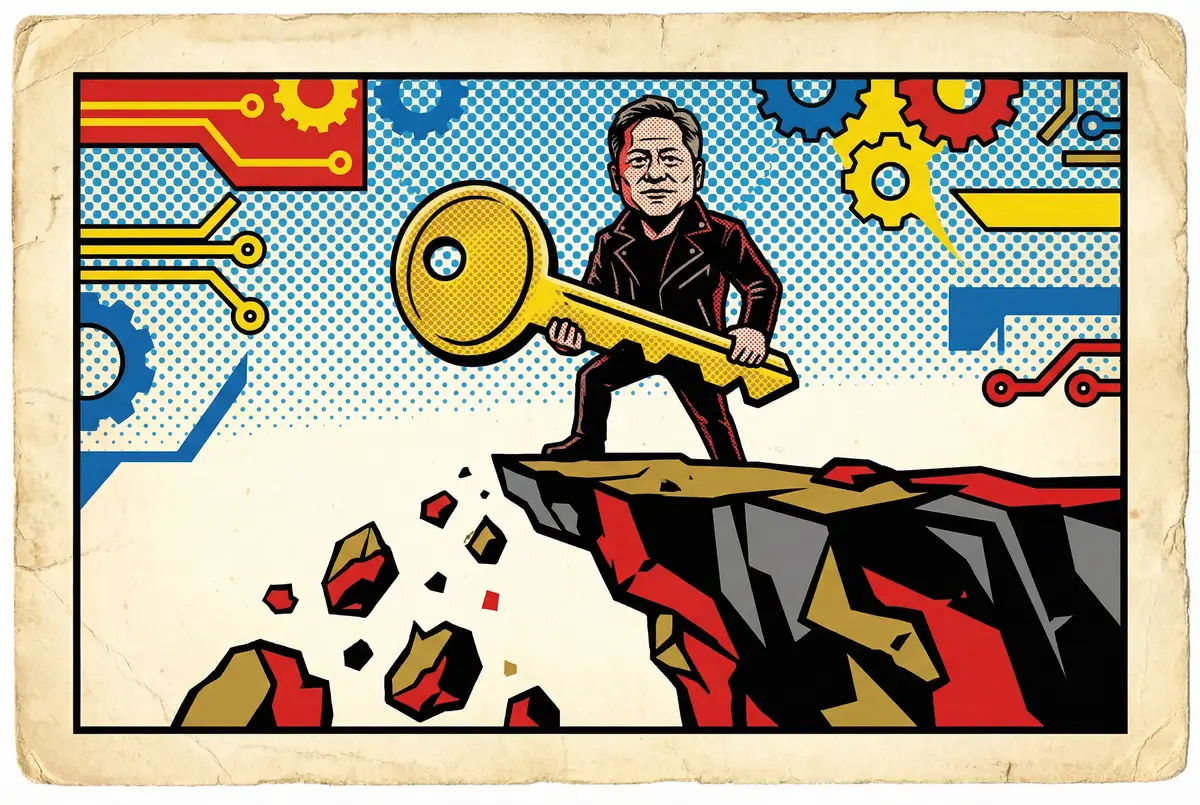

Researchers found 1,862 Moltbot servers exposed without authentication. The viral AI assistant stores credentials in plaintext and invites attack by design.

Airtable launches Superagent, its first new product in 13 years, betting on multi-agent AI while enterprise customers complain about reliability issues.

Tesla discontinuing flagship vehicles to build Optimus robots. Musk admits zero robots doing useful work despite promising thousands. $20B capex plans.


Masayoshi Son sold his entire Nvidia stake to double down on OpenAI. Now he wants to pour another $30 billion into Sam Altman's company. Credit agencies are watching the math closely.
Get the 5-minute Silicon Valley AI briefing, every weekday morning — free.