 IMPLICATOR
From San Francisco
1 |
The Editorial |
Good morning.
Today’s stories take a closer look at the money behind the AI you use.
Elon Musk said on Oct. 25 that SpaceX has closed $40 billion in GPU financing. His description includes an escape hatch before the chips arrive in 2027.
OpenAI’s GPT-5.6 Sol listed at $30 per million output tokens before Aug. 21; GPT-6.1 Sol lists at $10. There’s more behind that change than a cheaper bill.
Moonshot launched Kimi K3.1 Pro on Oct. 23, when an unauthenticated influencer brief surfaced. One instruction concerns the label that would tell readers somebody paid for the enthusiasm.
Stay curious,
Marcus Schuler
2 |
THE BIG STORY |
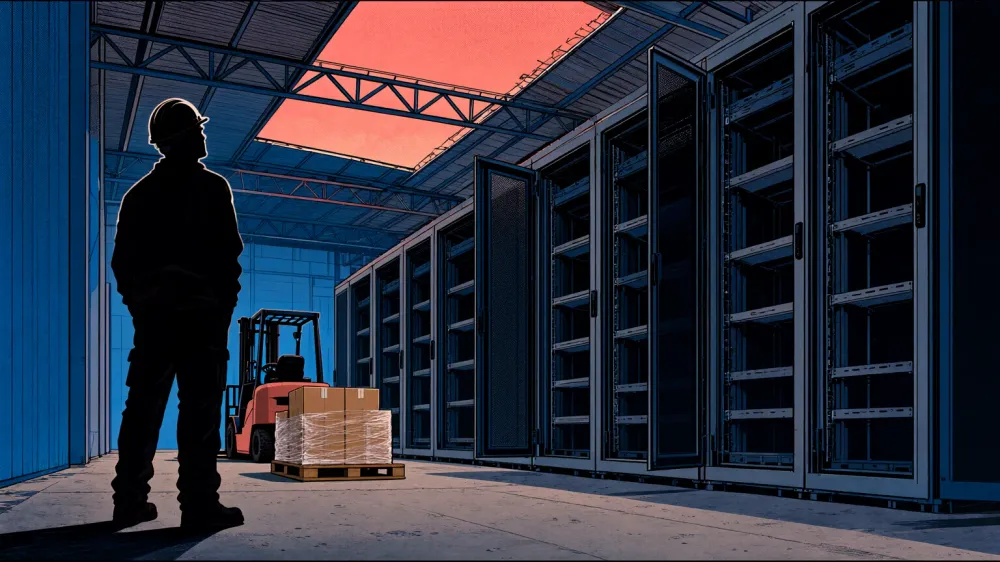
Elon Musk said on Oct. 25 that SpaceX has closed $40 billion in debt financing to buy GPUs arriving in the first half of 2027.
Musk called it “primarily callable debt” (repayable early under agreed terms), crediting SpaceX’s investment-grade credit and Starlink and launch revenue. Before the claimed close, the proposal reportedly used a special purpose vehicle to keep debt off SpaceX’s balance sheet and protect its investment-grade ratings.
Musk’s posts are the only first-party source. Final terms and lenders are unconfirmed; the chip vendor is unnamed. He wrote: “200+ neoclouds are going to see guppy-level death and consolidation.”
Why This Matters:
- GPU rental companies face a financing constraint if lenders require substantial revenue from businesses outside AI data centers, as Musk claims.
- SpaceX’s planned GPU arrivals in the first half of 2027 make the financing terms a concrete development to watch.
3 |
ALSO TODAY |
OpenAI’s GPT-6.1 Sol lists at $2 per million input tokens and $10 per million output tokens after its Sept. 29 release, down from GPT-5.6 Sol’s $5 and $30 before Aug. 21.
Claude Opus 5.5 launched Sept. 22 at $4/$20 per million input/output tokens, below Claude Opus 5’s $5/$25. A team paying list prices from months ago may be overpaying for a model it can easily replace.
4 |
The Outside Read |
CNBC traces how Nvidia became the AI buildout’s financier, guarantor and potential buyer of last resort.
Nvidia disclosed $36 billion in neocloud backstops in its July 2026 filing, plus a guarantee of up to $105 billion for OpenAI’s proposed Ohio campus. CoreWeave’s credit-default-swap spread exceeded 11 percent in October 2026, while Nvidia has committed to buy as much as $6.3 billion of its unused compute.
5 |
The One Number |
6 |
Today's Headlines |
- DreamHost completed precautionary password resets for some email and FTP/SFTP users Oct. 24 following an incident that began Oct. 23.
- Block unveiled Dessa on Oct. 23, a voice model it says learned only from human speech, with no public access or published evaluation.
- Ponytail claims 26% savings for its coding-agent plugin, while an outside 480-build test found cost per run up 13%.
- Nanbeige LLM Lab released Nanbeige4.3-33B under Apache 2.0, with a Terminal-Bench 2.1 score of 80.9, highest in its own comparison table.
- Cerebras described running Kimi K3 across 59 chips on Oct. 22, targeting 1,000 to 2,000 or more tokens per second, without naming a customer.
- Torsten Slok wrote that AI has delivered “zero financial payoff to corporate America outside of tech,” citing flat margins and revenue per worker for the S&P 493.
7 |
The 5-Minute Skill |
Stress-test a presentation claim.
A slide can make a strong claim with evidence that only partly supports it. Test the claim before an audience does.
Your raw input:
The prompt:
Why this works:
The model must inspect the chain from data to conclusion instead of polishing the slide. The constrained rewrite preserves useful evidence while removing overstatement.
What to use:
Use ChatGPT or Gemini when the chart is an image. Claude is a strong fallback when the slide content is pasted as text.
8 |
Fresh Funding |
9 |
The Rausschmeisser* |
Elshayib posted screenshots of an alleged Kimi influencer brief on Oct. 23 containing the instruction “Please DO NOT put on the paid partnership label.”
Our take: The brief is unauthenticated. Its instruction, “Please DO NOT put on the paid partnership label,” treats disclosure as a formatting error. Drafts require approval before posting. A tag of the official account is unnecessary. The company gets an editorial desk for an advertisement whose identifying label has been told to leave.
The price pitch could use that editor. The brief puts Kimi K3.1 Pro at one-fifth of Claude Opus 5.5’s price. Published API prices put it at half. Perhaps arithmetic should submit a draft for approval, too.
FREE · ABOUT FIVE MINUTES
Free AI briefing · Weekdays
The AI stories that matter, sourced and explained.
Join the Morning Briefing. It goes out every weekday at 4:45 a.m. Pacific, with later sends for the East Coast, Berlin and Tokyo.
Free when you sign up: The Paperclip Compendium, our tested guide to running AI agents.
Free. Unsubscribe in one click.

Marcus Schuler
Editor-in-Chief and founder of Implicator.ai. Former ARD correspondent and senior broadcast journalist with 10+ years covering tech. Writes daily briefings on policy and market developments. Based in San Francisco. E-mail: editor@implicator.ai