
The AI Industry Has a $98 Billion Problem. It Lives in Zoning.
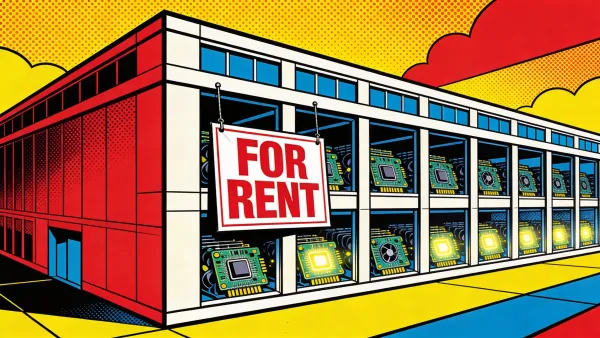
Local opposition halted $98 billion in U.S. data center projects in Q2 2025. With 50+ groups active in 17 states, zoning is now AI's binding constraint.
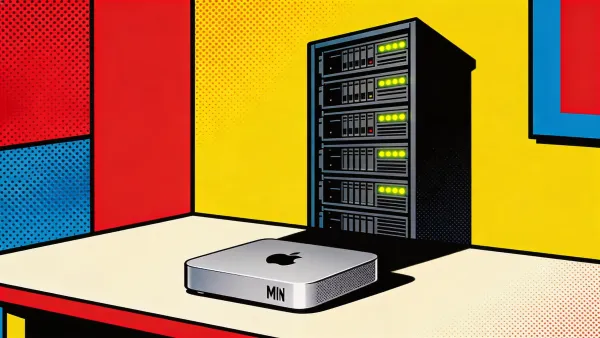
Apple tried to build its own AI. It failed. Now it's paying Google $1 billion a year to license Gemini while pretending the arrangement is strategic. The company that controlled every layer of the stack is now renting the most important one.
Meta just named a Goldman Sachs banker—not an AI researcher—to lead its $600 billion infrastructure buildout. The appointment signals that AI has become a capital and political problem, not a technical one. Powell McCormick's job is handshakes in Riyadh and zoning hearings in Nevada.
Within 72 hours of publishing its AI adoption report, Microsoft's messaging saturated LinkedIn. The coordination wasn't secret—it was architectural. When you own the platform, distribution is just moving furniture between rooms.
Microsoft says one in six people now use AI. The methodology: counting clicks on Microsoft products. The US ranks 24th despite hosting every major AI lab. South Korea's surge? A viral selfie filter. The company selling AI infrastructure has appointed itself scorekeeper of AI adoption.
Three months after a $2.5 billion SPAC, Kodiak announces it needs Bosch to manufacture its autonomous trucks. The partnership reveals the gap between building software and building a business—and what happens when scaling meets reality.
Anthropic's multi-agent Claude Code lets developers run five AI assistants simultaneously. Early adopters report 10x productivity gains. The token bills tell a different story about who really benefits from autonomous overnight coding.
Zhipu AI's GLM-4.7 benchmark chart excludes its strongest competitor. The data table tells a different story. But the real signal isn't the missing bar—it's a €30 annual subscription designed to snap into tools Western labs built.
Zuckerberg paid $14 billion for Scale AI's founder to lead Meta's AI push. But Wang built a data labeling company, not a research lab. The Financial Times reports tensions mounting as Turing Award winner Yann LeCun heads for the exit.
Oracle says "no delays to contractual commitments" on its OpenAI data centers. But that careful hedge reveals a structural problem in the $300B deal that credit markets have already priced in. Equity investors haven't caught up.
Google launched a research agent and wrote the test that grades it. Unsurprisingly, Google's tool leads the leaderboard. Competitors must now replicate Google's search infrastructure or accept permanent disadvantage on web research tasks.
Three AI rivals donate competing protocols to a new Linux Foundation project. They call it open governance. But Zemlin's Tokyo speech—citing $24.8B bleeding to Chinese alternatives—reveals the real calculus: pour concrete before Shenzhen arrives.
Mistral's Devstral 2 matches trillion-parameter rivals with just 123B parameters. The engineering is real. So is the license that bars companies over $240M revenue from using it freely. Europe's "open source" champion has some explaining to do.
Get the 5-minute Silicon Valley AI briefing, every weekday morning — free.