


San Francisco | January 14, 2026
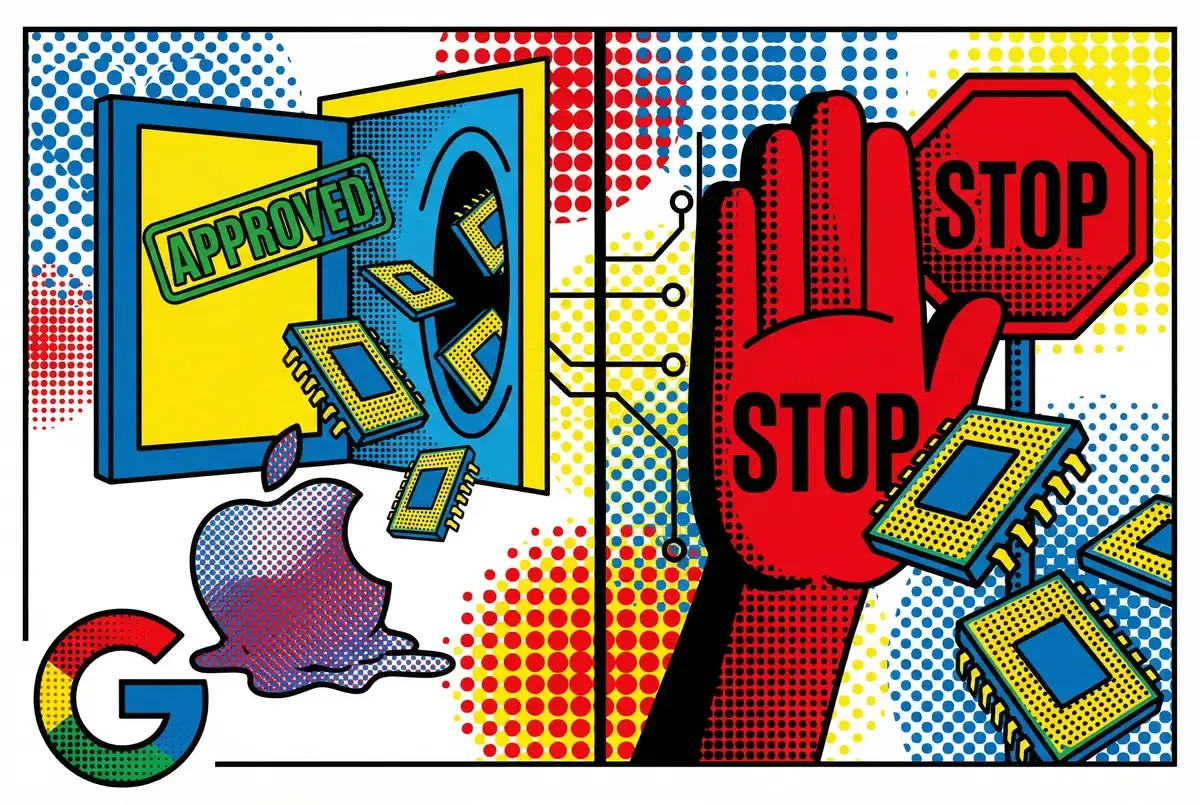
The Trump administration unlocked Nvidia's H200 chips for export to China on Tuesday. Beijing responded the same afternoon by telling domestic tech companies to stop buying them. Fifty-four billion dollars in semiconductor orders now sits in limbo, hostage to a policy reversal that both sides are already reversing.
Apple, meanwhile, made its own surrender official. The company will pay Google roughly a billion dollars a year to license Gemini, the AI it failed to build itself. Cupertino called it a partnership. The stock market called it what it was. Alphabet's market cap passed Apple's for the first time since 2019.
And in Washington, a West Point grad just convinced investors that his 19-million-dollar startup is worth 2.15 billion. OneBrief wants to own military planning before Palantir notices.
Stay curious,
Marcus Schuler
Washington Unlocks Nvidia Chips for China. Beijing Immediately Blocks the Purchase.
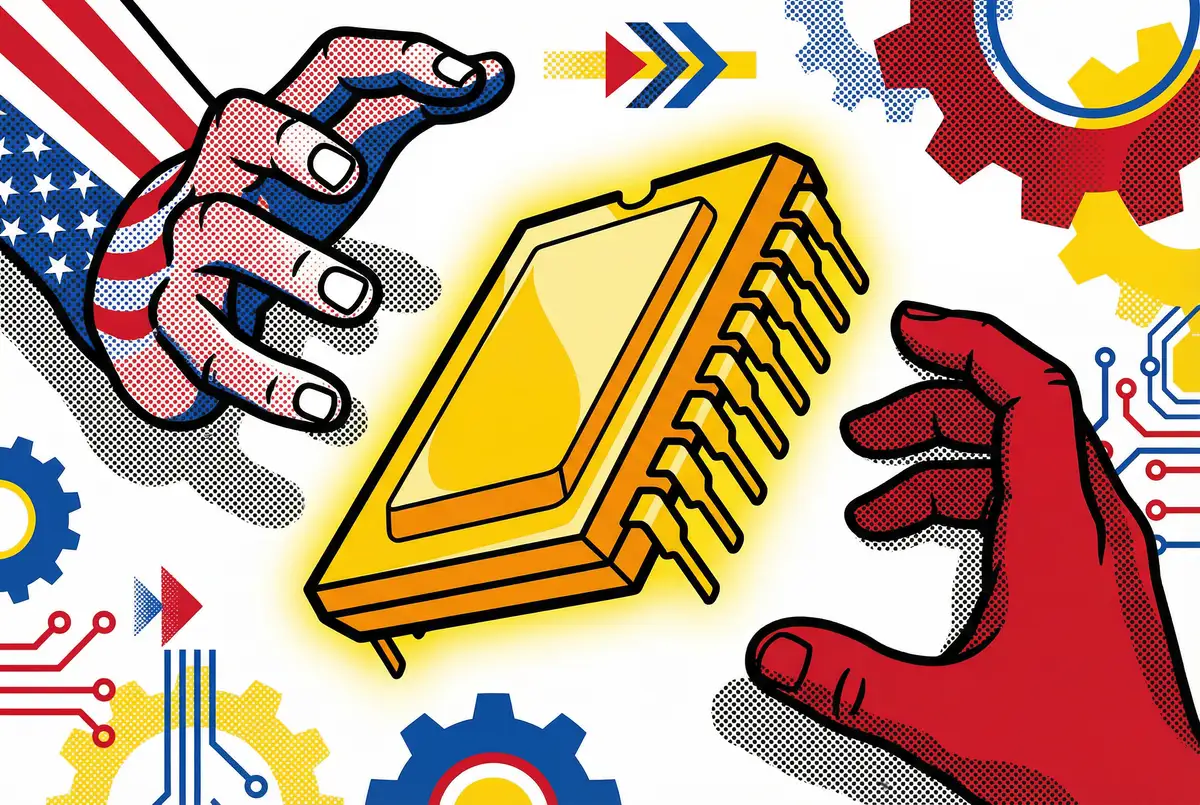
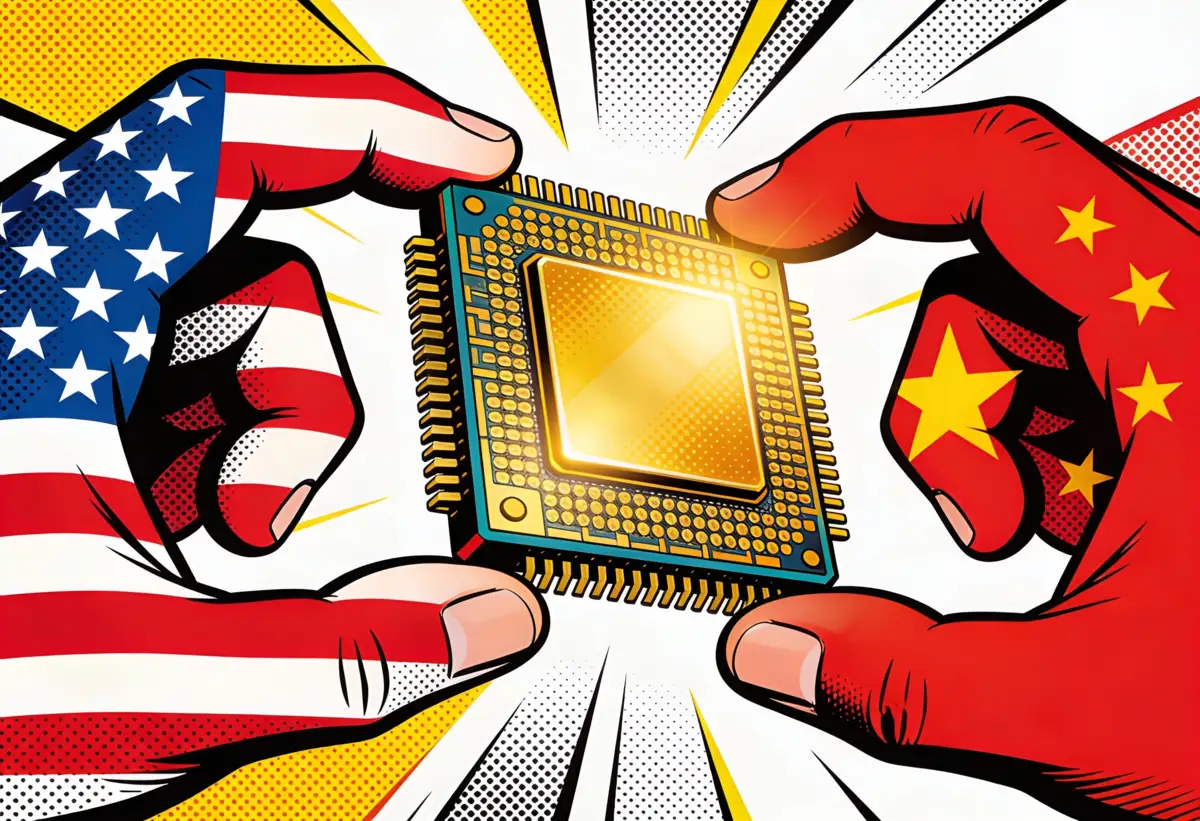
The Trump administration approved exports of Nvidia's H200 processors to China on Tuesday. Hours later, Beijing told its tech companies to stop buying. Fifty-four billion dollars in chip orders now sits frozen between two governments playing the same card.
The Commerce Department's shift from default-denial to case-by-case review marks a dramatic reversal of Biden-era restrictions. The H200 is Nvidia's second-most-powerful processor, exactly the kind of hardware Beijing needs for AI training clusters.
But China's countermove was immediate. Domestic tech firms received guidance to pause orders before the ink dried on Washington's approval. The message was clear: if the U.S. wants to use chip access as leverage, China will deny itself the leverage first.
Neither side gets what it wants. American semiconductor companies lose a $54 billion market. Chinese AI labs lose access to cutting-edge hardware. The only winner is the bureaucracy on both sides that gets to claim it stood firm.
Why This Matters:
- Nvidia's China revenue, once its fastest-growing segment, faces structural uncertainty regardless of which administration holds power
- Beijing's willingness to block its own companies signals chip independence is now a political priority over near-term AI capability
✅ Reality Check
What's confirmed: Commerce Department approved H200 exports under case-by-case review. Beijing issued same-day guidance to domestic firms to pause orders.
What's implied (not proven): This policy reversal signals a durable shift in U.S. chip export strategy under Trump.
What could go wrong: Policy whiplash, with approvals granted then revoked as political winds shift, leaving Nvidia unable to plan inventory or commitments.
What to watch next: Whether Beijing's pause becomes permanent policy, and whether Nvidia's next earnings call downgrades China revenue guidance.
Apple Didn't Partner With Google. It Surrendered to It.
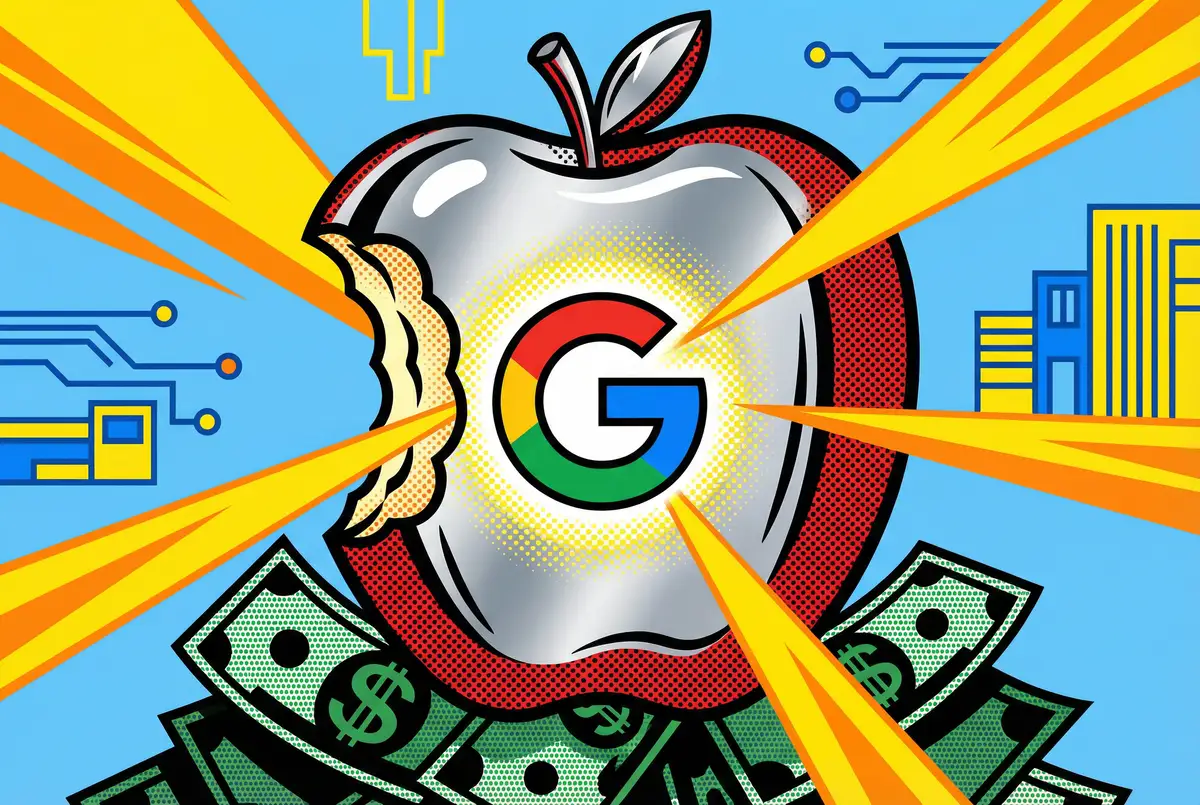
Apple will pay Google approximately one billion dollars a year to license Gemini for Siri. The company that built its empire on controlling every layer of its technology stack just handed the most important one to a competitor.
The announcement came Sunday evening in a 147-word joint statement. Apple called it a multi-year strategic partnership. The market read it differently. Alphabet's stock surged. Its market cap passed Apple's for the first time since 2019. Google just posted its best stock year since 2009.
The deal inverts fifteen years of leverage. Apple spent that time collecting licensing payments from Google for default search placement. Now the payments flow the other direction. Cupertino tried to build its own foundation models. It failed. The Gemini deal is the receipt.
Apple announced Creator Studio the same day, a $13-per-month software bundle. The timing looked like distraction. The substance confirmed the retreat.
Why This Matters:
- Apple's AI dependency on Google creates long-term strategic vulnerability if the relationship sours or regulators intervene
- The power inversion signals that vertical integration, Apple's core advantage, has limits when the technology shifts faster than internal R&D can follow

AI Image of the Day

Prompt: The text "Freedom to Iran" appears in bold, slightly distressed lettering across the bottom edge of the composition. A woman's face fills the frame, her gaze directed slightly downward, with a single tear tracing a path from the corner of her violet eye down her cheek. Her lips are full and rosy, and her expression conveys a sense of profound emotion. She wears a hijab composed of interwoven panels of green, red, and white fabric, draped over her hair and shoulders, with the signature "Dette" subtly inscribed in the lower right corner.
🧩 Workflow of the Day
Workflow of the Day: "Turn meeting chaos into assigned tasks in 10 minutes"
Who: Project manager juggling 4-6 weekly syncs with scattered action items across Slack, email, and memory.
Problem: Meeting notes become PDFs nobody reads. Action items evaporate. Accountability breaks down by Thursday.
Workflow (with Fathom + Claude + Slack):
- Record the meeting with Fathom or Fireflies (auto-transcribed, timestamped).
- Export transcript and paste into Claude with: "Extract all action items with owner names and deadlines. Flag any items missing an owner or date."
- Review Claude's list for accuracy, fix any misattributions.
- Ask Claude to format as Slack-ready messages: one message per owner with their tasks.
- Post to Slack in the project channel, tagging each owner.
- Pin the summary so it survives the scroll.
Payoff: Action item completion rate jumps 40%. Everyone aligned within 15 minutes, not days.
Gotcha: If owners aren't named in the meeting, Claude can't assign them. Say names out loud.
Tools: Fathom | Fireflies | Claude | Slack
OneBrief Raised at 110x Revenue. The Bet Is Speed.
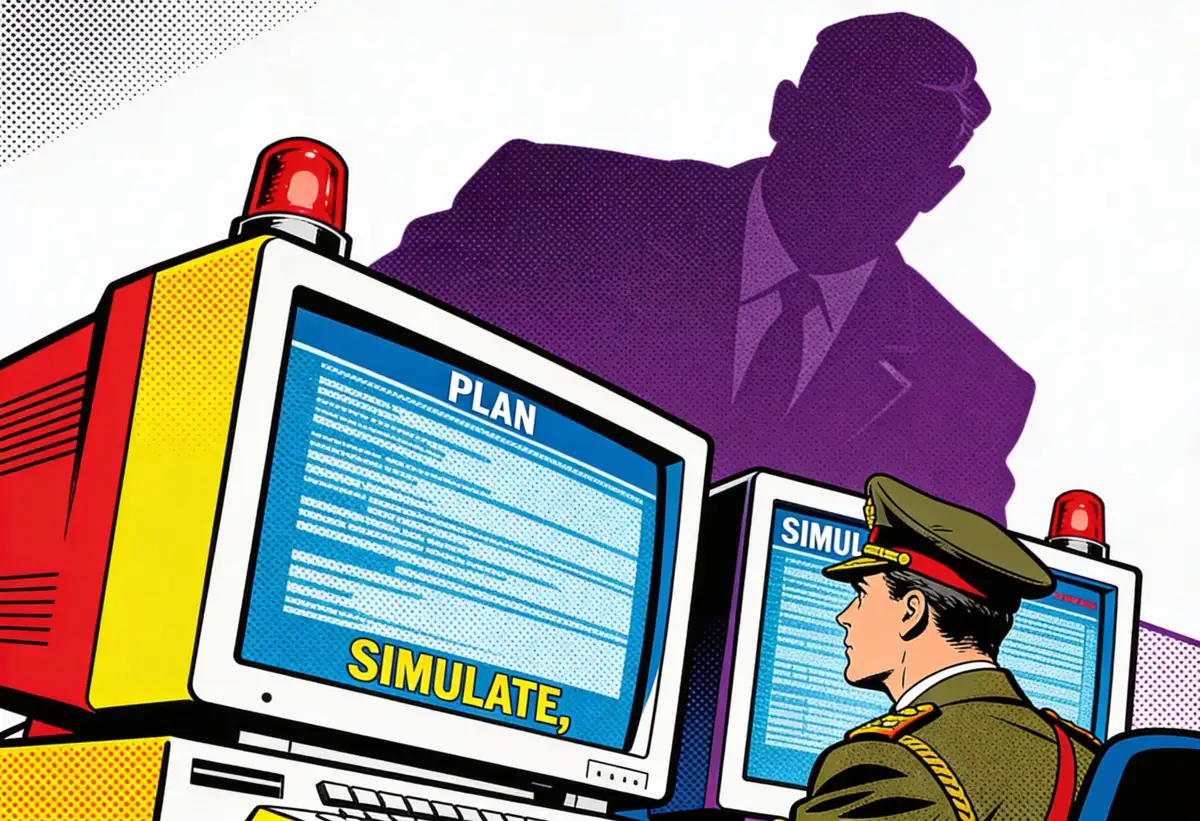
A West Point graduate just convinced investors his $19 million startup is worth $2.15 billion. OneBrief wants to own military planning software before Palantir realizes it should.
Brendan Demaree, a 101st Airborne veteran, built OneBrief to replace the PowerPoint slides and spreadsheets that still dominate Pentagon war planning. The company operates in four of seven geographic combatant commands. It claims 19,600% growth in usage hours and 4x year-over-year revenue increases.
The valuation math is aggressive. OneBrief trades at 110x revenue. Palantir, with $2.5 billion in annual sales and a $10 billion Army contract, trades at 70x. The gap reflects a bet on trajectory, not current scale.
But the technical architecture reveals a dependency. At the Army's Scarlet Dragon exercise, OneBrief's simulation engine ran "alongside Palantir's data plane." The company owns the planning interface. Palantir owns the data infrastructure underneath it.
OneBrief is scaling to 500 employees this year. The race is whether it can build independent capabilities before Palantir decides military planning is territory worth claiming.
Why This Matters:
- Defense tech valuations increasingly reward speed and specialization over profitability, creating pressure to capture market position before incumbents respond
- OneBrief's reliance on Palantir's Foundry for data infrastructure means its independence depends on building or acquiring capabilities its largest competitor already controls

Better Prompting... Today: Preparing for Difficult Conversations
The conversation happens in your head first. These prompts help you rehearse.
The Objection Simulator
"I need to tell [person/role] that [difficult message]. List the five most likely objections they'll raise, ranked by emotional intensity. For each, give me a response that acknowledges their concern without backing down from my position."
Best on: Claude (nuanced emotional reasoning) or ChatGPT (strong at role-playing)
The Subtext Decoder
"In this upcoming conversation about [topic], what's the other person likely worried about that they won't say directly? What are they protecting? What would make them feel heard before they can hear my point? Give me the subtext beneath the surface objections."
Best on: Claude (excels at psychological nuance and unstated implications)
The Opening Line Generator
"I need to open a difficult conversation about [topic] with [person]. My relationship with them is [describe]. Give me five different opening lines ranging from direct to diplomatic. For each, predict how it shapes the next 30 seconds of the conversation and what door it opens or closes."
Best on: ChatGPT (versatile with tone variations) or Claude (better at predicting conversational dynamics)
Hard conversations get easier when you've already had them ten times in your head.
🧰 AI Toolbox
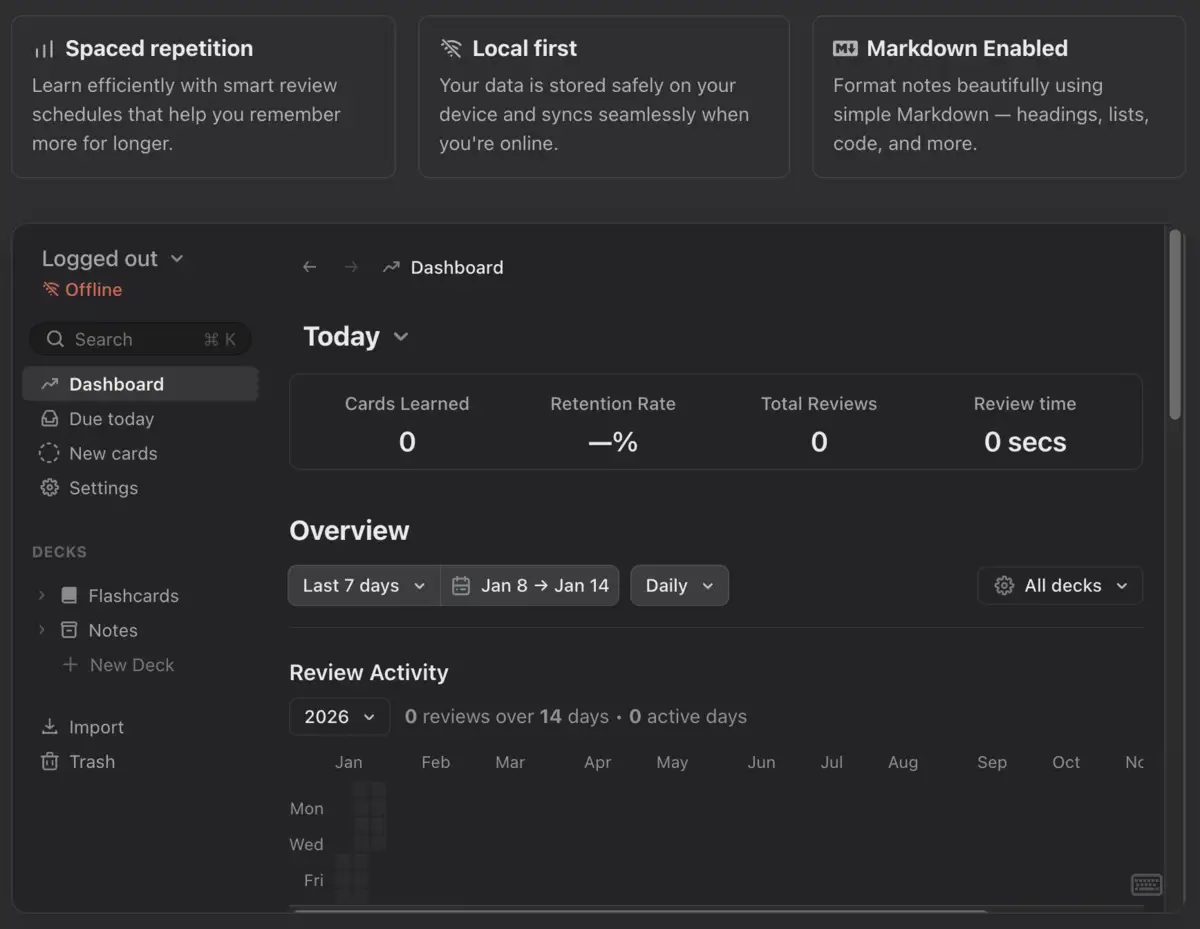
How to Build Flashcards from Any Document with Mochi AI
Mochi uses spaced repetition and AI to turn your notes, PDFs, or pasted text into study flashcards. The AI identifies key concepts and generates question-answer pairs automatically.
Tutorial:
- Download Mochi from mochi.cards (works on Mac, Windows, Linux, and mobile)
- Create a new deck and paste any text, notes, or upload a PDF
- Click "Generate Cards" to let AI extract key concepts into flashcards
- Review and edit the generated cards to match your study needs
- Start studying with built-in spaced repetition scheduling
- Sync across devices so you can study anywhere
- Track your retention stats to see which concepts need more review
URL: https://mochi.cards
AI & Tech News
Skild AI Raises $1.4 Billion at $14 Billion Valuation
Pittsburgh robotics startup Skild AI has raised $1.4 billion in Series C funding led by SoftBank, tripling its valuation from $4.5 billion just seven months ago. The company builds foundation models that help robots learn to complete tasks.
Airbnb Hires Meta's Llama Team Leader as CTO
Airbnb has appointed Ahmad Al-Dahle, who led Meta's generative AI efforts and its Llama large language model team, as its new Chief Technology Officer. The hire signals Airbnb's strategic push to integrate AI across its platform.
China Orders Firms to Drop US and Israeli Cybersecurity Software
Beijing has directed domestic companies to stop using cybersecurity software from approximately 12 American and Israeli firms, citing national security concerns. The move escalates technology decoupling between China and Western nations.
Ireland Unveils Plan to Win Back AI Data Centers
Ireland, once a leading destination for data center investment, has fallen behind in the AI boom due to an overburdened electricity grid. The government introduced a new energy strategy to restore competitiveness.
Big Tech Ramps Up Energy Hiring as AI Demands Surge
Major tech companies are aggressively recruiting workers with energy expertise as AI operations drive unprecedented power consumption. Microsoft alone has hired over 570 employees with energy-related backgrounds since 2022.
China Opens Antitrust Investigation Into Trip.com
China's market regulator has launched an antitrust probe into Trip.com Group, the nation's largest online travel agency. Authorities have not disclosed specific details about the alleged conduct.
IMF Warns of AI Impact on Young Workers
The IMF has called for governments to support young workers being displaced by AI, recommending job candidates learn to work alongside the technology. The organization found evidence AI is already affecting wages in certain sectors.
South Korea's AI Competition Stumbles on Foreign Code
Three of five finalists in South Korea's national AI competition used foreign open-source code, sparking controversy over the country's push to build indigenous AI capabilities. The teams defended their approach as practical necessity.
Montage Technology Plans $900 Million Hong Kong IPO
Chinese chip designer Montage Technology is preparing a Hong Kong IPO that could raise over $900 million. Alibaba and JPMorgan Asset Management are backing the secondary listing.
Polymarket Draws Scrutiny for War Betting Markets
Polymarket faces increased scrutiny for offering prediction markets on military conflicts, including potential US strikes on Iran that generated over $18 million in trading volume. Most competitors have avoided direct wagers on war.
McKinsey Tests Candidates on AI Prompting Skills
McKinsey is piloting a new recruitment process requiring candidates to use its AI assistant Lilli during case study assessments. The firm evaluates how effectively prospective consultants prompt the tool.
UK Abandons Mandatory Digital ID for Workers
The UK government has reversed its plans to require workers to register with a mandatory digital ID scheme to prove their right to work. The policy reversal comes just four months after the initiative was announced.
British Satellite Firm Wins Key Spectrum License
Open Cosmos has won a contested Ka-band spectrum license from Liechtenstein, beating Peter Thiel-backed rivals. The victory secures valuable rights for high-speed internet services in low-Earth orbit.
Alpaca Reaches Unicorn Status at $1.15 Billion
Brokerage infrastructure startup Alpaca has raised $150 million in Series D funding led by Drive Capital, achieving unicorn status. The company provides software enabling businesses to offer stocks and ETFs through their platforms.
🚀 AI Profiles: The Companies Defining Tomorrow
Converge Bio

Converge Bio wants to be the generative AI lab for drug discovery. The Boston and Tel Aviv startup trains models on molecular data to help pharma companies design drugs faster. 🧬
Founders
Dov Gertz co-founded Converge Bio in 2023. The thesis: drug development wastes years on trial-and-error when AI could generate better hypotheses upfront. The team grew from 9 to 34 employees in just over a year, a signal that customers are buying what they're selling.
Product
Generative AI trained on DNA, RNA, and protein sequences, plugged directly into pharma workflows. Three systems ship today: antibody design, protein yield optimization, and biomarker discovery. The antibody system chains a generative model, predictive filters, and physics-based docking into one pipeline. Customers get ready-to-use tools, not raw models they have to assemble themselves. Case studies show 4-4.5X protein yield improvements and single-nanomolar binding affinity.
Competition
Crowded and getting more so. Over 200 startups chase AI drug discovery. Google DeepMind won a Nobel for AlphaFold. Eli Lilly partnered with Nvidia on pharma supercomputing. The skeptics worry about hallucinations, where validating a bad molecule costs weeks, not seconds. Converge pairs generative models with predictive filters to reduce that risk.
Financing 💰
$25M Series A in January 2026, led by Bessemer Venture Partners. TLV Partners and Vintage Investment Partners joined. Execs from Meta, OpenAI, and Wiz also invested. Previous: $5.5M seed in 2024. Total raised: ~$30M.
Future ⭐⭐⭐⭐
Converge has 40 pharma partnerships and 40 active programs. The momentum is real, skepticism is fading, and inboxes are full. The risk: this is biology, not software. Molecules don't always cooperate. But if generative labs become standard alongside wet labs, Converge wants to be the default. 🧪


