IMPLICATOR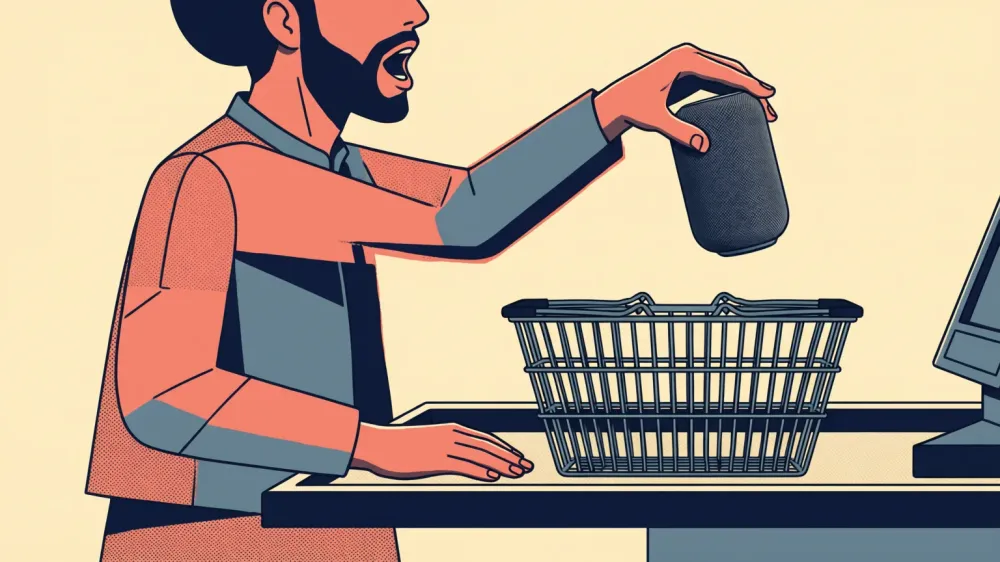
From San Francisco
1 |
The Editorial |
Good morning.
Three stories today about things that were happening quietly until somebody looked.
Amazon took the Echo Dot to $79.99 from $49.99 with no announcement, and blamed memory costs. Four weeks earlier it raised 2026 capital spending to $220 billion for the same scarce chips.
Chinese state-linked groups more than doubled their attack volume after picking up DeepSeek. In the one campaign researchers recovered in full, the autonomous runs got into nothing.
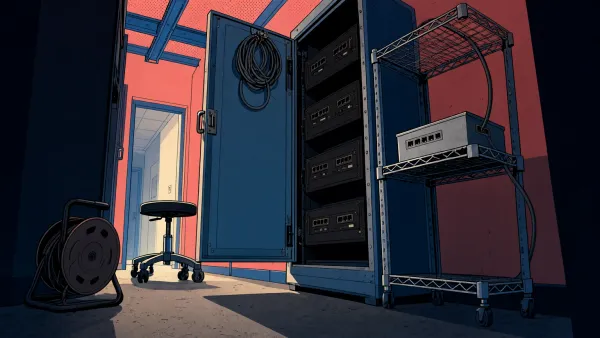
And AliExpress was fingerprinting shoppers with sound nobody can hear. It came out because a developer's Bluetooth headphones kept refusing to switch back to his phone.
Stay curious,
Marcus Schuler
2 |
The Big Story |
Amazon raised prices across Echo, Kindle, Fire TV and eero with no public announcement, taking the fifth-generation Echo Dot to $79.99 from $49.99.
The company blamed memory and storage costs. Four weeks earlier, Andy Jassy told investors that 2026 capital spending would reach $220 billion, up from $200 billion, with memory costs driving the revision.
The 16-gigabyte Kindle went to $149.99 from $109.99 as of Aug. 22, and the Fire TV Cube climbed $60 to $199.99. Ring cameras and doorbells were spared. JPMorgan estimated in August that DRAM costs would rise more than 400% from early 2024 through the end of 2026.
Why This Matters:
- Anyone budgeting consumer hardware for the holidays is working from list prices that moved without notice and may move again.
- The same memory shortage now sets both the AWS capital plan and the shelf price of a kitchen speaker.
3 |
Also Today |
State-affiliated Chinese groups more than doubled their attack volume after adopting DeepSeek, Taiwanese research firm TeamT5 found.
DeepSeek is the favored model because it is cheap to run and lightly guarded. In the one campaign Unit 42 recovered in full, the model narrowed 25,209 exposed Chinese n8n instances to three vulnerable targets and exploited none of them. Every confirmed impact across more than 460 attempted targets came from a human working by hand.
4 |
The Outside Read |
WIRED reverse-engineers Flock Safety's unreleased police agent from exposed login-page code and shows how a plate-reader network becomes a system for generating suspects from travel patterns.
In the August 2026 codebase, 14 of the 69 preset prompts need no plate, name or physical description; one asks the model to find likely witnesses from vehicles seen most often in a neighborhood during the previous 14 days. WIRED also traces how those results can be joined to police records and commercial identity files containing names, addresses and relatives.
5 |
The One Number |
6 |
Today's Headlines |
- Britain became the first foreign partner admitted to Ukraine's Avengers Labs, opening five million battlefield frames to British military-AI work, with no validation method disclosed.
- The White House authorized vetted private firms to run offensive cyber operations against foreign criminal groups under an Aug. 12 memorandum, with every operation requiring written government approval.
- Nvidia disclosed 122.8 million SpaceX shares worth $20.98 billion at the end of June, its second-largest position in a $63.4 billion portfolio.
- Lambda is in talks to raise as much as $3 billion at a valuation of $12 billion or more, a round that could set up an IPO next year.
- OpenAI cut its frontier model's developer price to $4 and $20 per million tokens from $5 and $30, a three-month promotion aimed at Anthropic and cheaper Chinese labs.
- Ordinary RAM may get cheaper after 2027, but high-memory GPUs run on a different price clock because buyers also pay for scarce capacity and CUDA compatibility.
Tue 8/25 |
Fairs: Gamescom Opening Night Live opens the Cologne games fair with its annual announcement show. |
Wed 8/26 |
Earnings: Nvidia reports fiscal second-quarter 2027 results after the close, with the call at 5 p.m. ET. |
Wed 8/26 |
Economy: the Bureau of Economic Analysis releases its second estimate of second-quarter GDP and July PCE inflation, both at 8:30 a.m. ET. |
Thu 8/27 |
Policy: the Jackson Hole symposium opens, on financial innovation and its implications for payments and policy. |
7 |
The 5-Minute Skill |
Make vendor quotes comparable. Vendors can price one service with different units. This method turns two proposals into a comparable decision table.
Your raw input: Gather each quote, expected monthly volume, the business outcome being purchased, contract length, implementation fees, support charges, overage rates and renewal terms.
The prompt:
Why this works: A common denominator blocks each vendor's preferred framing. The unknown rule limits invented figures, while the usage test exposes overage risk.
What to use: GPT-5.6 Sol or Claude Opus 4.6 for dense quotes. Gemini 3.7 Pro is a good fallback for shorter proposals.
8 |
AI Toolbox |
NudgeForMe scans email threads you sent, finds conversations that appear to be waiting for a reply, and prepares follow-ups in the original thread. Unlike reminder tools that require you to flag a message in advance, it searches existing sent mail; the Free plan costs $0 for one mailbox and 100 draft credits per month, while Pro was $12 per month or $96 per year when checked August 12, 2026.
How to use it:
- Open NudgeForMe and select Scan my inbox free.
- Connect Gmail, Google Workspace, Outlook, Microsoft 365, Yahoo, iCloud, or another IMAP mailbox.
- Review the missed opportunities it surfaces from proposals, introductions, invoices, approvals, support issues and scheduling threads.
- Select only the conversations that still warrant a reply, then create the suggested drafts.
- Edit or delete each draft in your mailbox before sending it from the original thread.
Where it falls short: The Free plan searches only the previous 30 days, and its classification of an unanswered thread still needs human review before any follow-up goes out.
9 |
AI Image of the Day |

10 |
The Rausschmeisser* |
Developer Matt Callaghan found two obfuscated scripts on the AliExpress homepage running a sawtooth oscillator into a gain node set to zero, an inaudible signal whose processing quirks identify a device. He noticed because his multipoint Bluetooth headphones stopped handing audio back to his phone whenever the tab was open. (The Register, August 24, 2026)
Our take: The technique is worthless. Brave has randomized audio fingerprints by default for six years, Firefox covers the same surface, and Callaghan's own verdict was that WebAudio fingerprinting is nearly useless. AliExpress runs more than a dozen other fingerprinting methods that work better. This one is the appendix of the tracking stack, kept because nobody remembered to remove it.
So the cost-benefit here is a marvel. Alibaba gained a signal it did not need, and paid for it by breaking Bluetooth headphones across the internet for anyone who left a shopping tab open. A surveillance method this bad is a maintenance problem wearing a privacy scandal's coat.
Free AI briefing · Weekdays
The AI stories that matter, sourced and explained.
Join the Morning Briefing. It goes out every weekday at 4:45 a.m. Pacific, with later sends for the East Coast, Berlin and Tokyo.
Free when you sign up: The Paperclip Compendium, our tested guide to running AI agents.
Free. Unsubscribe in one click.

Marcus Schuler
Editor-in-Chief and founder of Implicator.ai. Former ARD correspondent and senior broadcast journalist with 10+ years covering tech. Writes daily briefings on policy and market developments. Based in San Francisco. E-mail: editor@implicator.ai