IMPLICATOR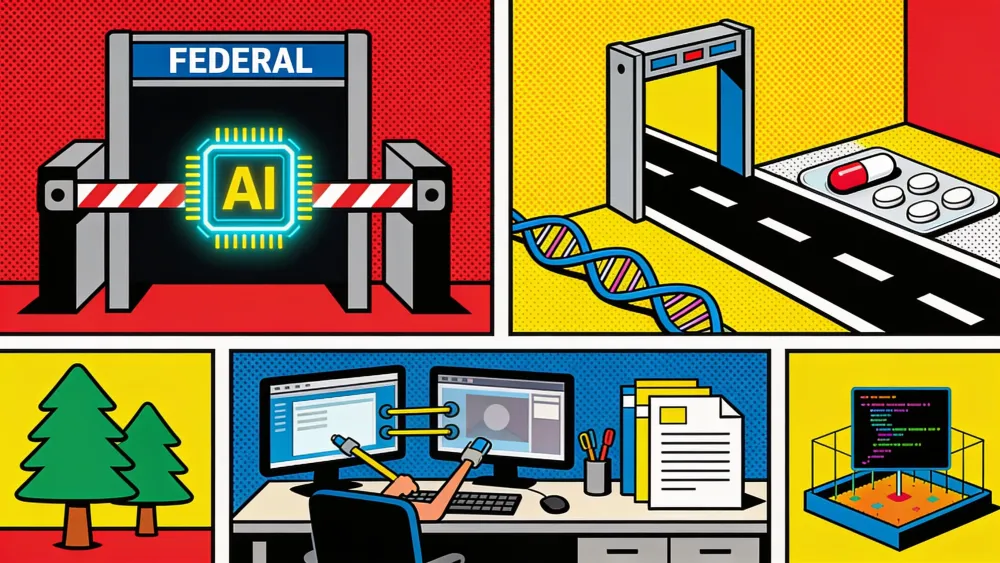
San Francisco | Thursday, June 11, 2026
Dario Amodei is asking Washington for a harder gate on frontier models. His essay wants the government to be able to block or reverse releases that fail safety tests, even after Trump's June 2 order kept reviews voluntary and barred mandatory licensing.
The same document asks the FDA to move faster on AI-designed drugs. The split favors stricter rules for the few labs Anthropic competes with, while making more room for products that those models could feed.
GitHub, meanwhile, is building around the argument. Our "Repo Radar" finds agents reaching into Reddit, Polymarket, video rendering, file indexes, Office documents, and Pydantic's Monty, a microsecond Python sandbox for model-written code.
Programming note: no briefing tomorrow, Friday, June 12. Back Monday.
Stay curious,
Marcus Schuler
Amodei Asks Congress to Let Government Block Failed AI Models

Dario Amodei wants a binding safety gate for frontier AI models. The catch is that his same policy essay asks the FDA to move faster on AI-designed drugs.
Amodei published a Wednesday essay asking Congress to let the government block or reverse a frontier model release that fails safety tests. The request goes beyond Trump's June 2 order, which kept model review voluntary and barred mandatory licensing.
The proposed perimeter covers models trained above 10²⁵ FLOPs from companies with more than $500 million in AI revenue or more than $1 billion in AI research spending. That likely captures OpenAI, Anthropic, Google, Meta and a few others. Amodei's FDA request points the other way: accept AI simulations and avoid jamming a drug pipeline that can run seven to eight years.
Why This Matters:
- Frontier labs could turn federal testing into a compliance badge smaller rivals cannot easily buy.
- Drug companies get the opposite signal: use AI to expand candidate flow while FDA pilots faster early-phase review.
Reality Check
What's confirmed: Amodei's essay asks for mandatory third-party tests and a government veto on failed frontier releases.
What's implied (not proven): Anthropic can benefit if safety rules become a federal gate only the largest labs can clear.
What could go wrong: Congress could take the model gate and ignore the FDA speed-up.
What to watch next: Anthropic's draft legislation and FDA docket FDA-2026-N-4390 show which half moves first.

The One Number
40% - the share of May's announced U.S. job cuts that employers attributed to AI, according to Challenger data reported by Fox Business. That was 38,579 cuts out of 97,006, while payrolls still rose by 172,000. The useful signal is attribution, not a clean labor-market verdict.
💰 Fresh Funding
💰 Fresh Funding
Raises up to $1.4B: NEURA scales physical AI in Europe
NEURA Robotics said Wednesday it closed a Series C of up to $1.4 billion led by Tether, with Amazon, NVIDIA, Qualcomm, Bosch, Schaeffler and the European Investment Bank joining. The German robotics company will spend the capital on series production, NEURA Gyms and its Neuraverse platform as humanoid funding continues to run ahead of shipped fleets.
Visit NEURA Robotics →Raises $350M: TensorWave expands AMD-only AI cloud
TensorWave said Wednesday it raised a $350 million Series B co-led by Magnetar and AMD Ventures at a $1.55 billion valuation. The Las Vegas cloud provider runs memory-heavy AI workloads on AMD Instinct GPUs, giving AMD a funded customer as enterprises look for capacity outside Nvidia's supply chain.
Visit TensorWave →Raises $24M: Jedify gives enterprise agents business context
TechCrunch reported Wednesday that Jedify raised a $24 million Series A led by Norwest, with Snowflake Ventures participating as a strategic investor. The New York startup builds context graphs from enterprise data so agents can answer with customer, policy and workflow detail instead of generic retrieval.
Visit Jedify →Repo Radar Finds Five Projects Extending Agent Reach Beyond Chat

Repo Radar's ninth issue starts with last30days-skill, which added 9,307 stars in a week. The thread is reach: agents now pull from community feeds, Office files, video systems and code sandboxes.
last30days-skill queries Reddit, X, YouTube, Hacker News, Polymarket and GitHub. HyperFrames turns HTML and CSS into deterministic MP4s. fff gives MCP clients frecency-ranked file search, and OfficeCLI lets agents read and edit Microsoft files without a local Office install.
Pydantic's Monty is the strategic one: a Rust Python interpreter for LLM-written code, with startup near one microsecond and no default access to filesystem, network or environment variables. The README calls it experimental, but the direction is clear enough. Agent execution is moving from prompt chains to capability-bound runtimes.

AI Image of the Day

Prompt: Cyberpunk x silkpunk x Biopunk x Dieselpunk x Solarpunk x warpunk x Horrorpunk x Terrorpunk. God level detail. Photorealistic. Real life realism.
🧰 AI Toolbox
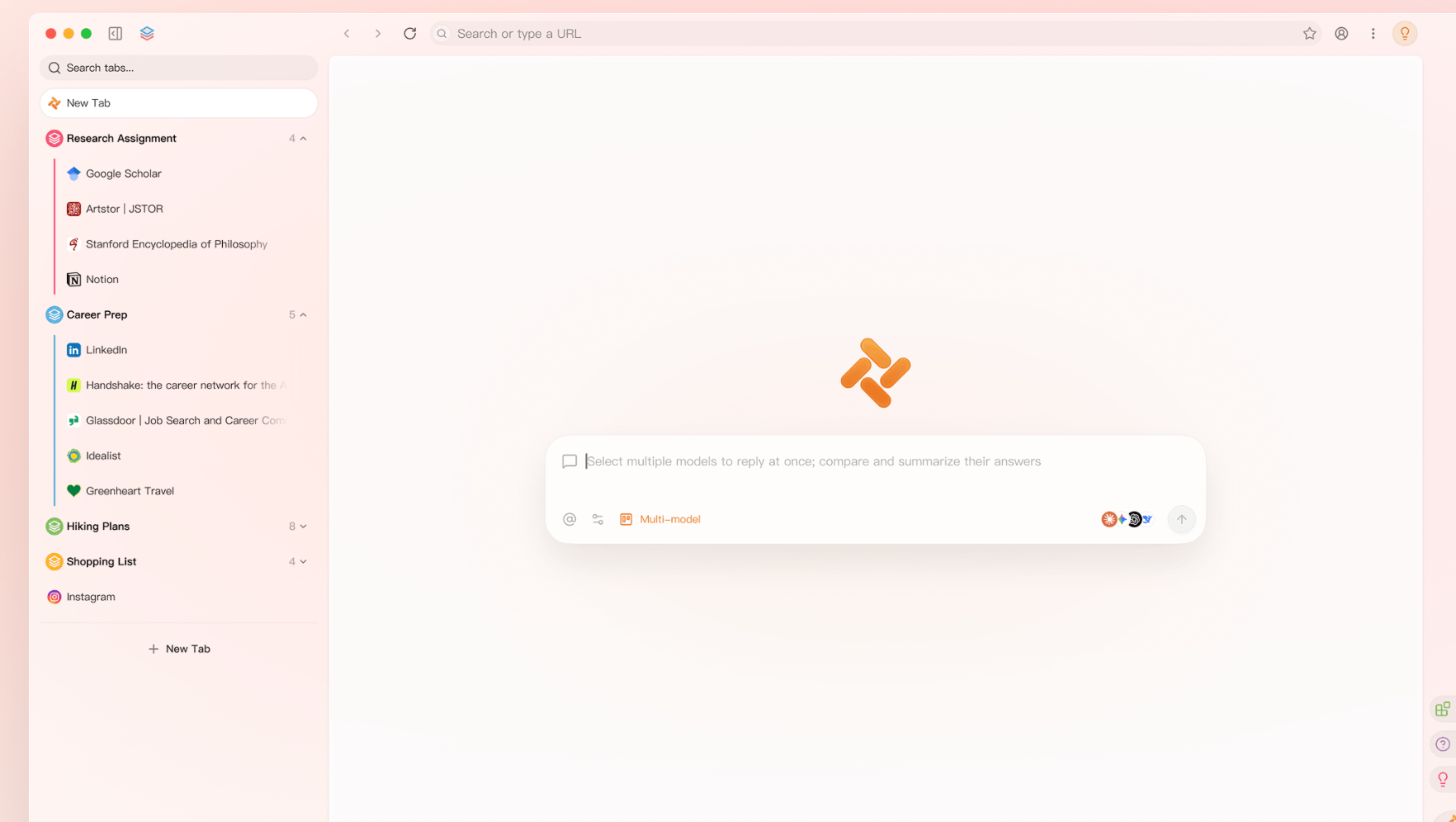
How to Replace Your Browser With an AI Workspace That Reads Every Tab Using Tabbit
Tabbit is an AI-native browser that treats every open tab as a queryable document. Ask a question and Tabbit answers across the tabs, drafts an email that pulls quotes from three articles, or auto-organizes your tabs by project. Background agents handle multi-step tasks while you keep working in the foreground. Free download for Mac and Windows.
Tutorial:
- Download Tabbit from tabbitbrowser.com for Mac or Windows
- Import your Chrome or Safari profile during setup so bookmarks, passwords, and extensions migrate over
- Open the AI chat panel and ask a question that spans your tabs: "Summarize the differences between the three landing pages I have open"
- Use the "Organize" command to auto-group tabs by project, person, or topic; Tabbit suggests labels based on content
- Set up a background agent for a recurring task: "Check the AWS pricing page daily and ping me if S3 storage drops below $0.022/GB"
- Try Vertical Tabs Mode for a calmer layout when you have 40+ tabs open during research
- Connect Tabbit to Slack, Notion, or Linear so the AI can post summaries or open tickets without leaving the browser
URL: Tabbit website
What To Watch Next
|
||
|
||
|
||
|
||
|
💡 5-Minute Skill
Thursday, 8:22 a.m. A manager drops a chart into Slack saying AI caused 40% of May layoffs. Before the claim becomes a slide, make the model separate employer attribution from measured job loss.
Your raw input:
Claim: AI caused 40% of May job cuts, based on Challenger. Other facts: payrolls rose 172,000, fewer than one in five firms use AI, Stanford found a 16% decline for workers aged 22 to 25 in AI-exposed jobs. Need: what we can say without overstating it.
The prompt:
Act like a labor-market editor. Turn this AI layoff claim into a source check I can use before publishing or presenting it. Separate employer attribution, actual payroll data, early-career exposure and missing evidence. Give me one safe sentence, one sentence to avoid, three questions to ask the source, and the chart label that would not mislead a reader.
The output:
Safe sentence: Employers attributed 38,579 announced May job cuts to AI, but that does not prove AI reduced net employment. Avoid: "AI caused 40% of layoffs." Questions: does the data count announcements or completed cuts, who assigned the reason, and what denominator is used? Chart label: "Share of announced job cuts employers attributed to AI."
Why this works:
AI labor claims get sloppy because the verb does too much work. This prompt makes the model label the measurement before it writes the conclusion. You end with a usable sentence, a banned sentence and the question that keeps a scary chart from becoming a false causal claim.
What to use:
Claude is best when you paste the full article, source report and a few counterexamples. ChatGPT is faster for turning the check into slide notes. Keep "announcements or completed cuts" in the prompt. That is where most AI-layoff claims change meaning.
📖 AI Alphabet
|
B
|
📖 AI Alphabet Bias Bias in AI usually means a model produces skewed or unfair outcomes because of patterns in the data or design. It can show up in what the model sees, predicts, or prioritizes. |
AI & Tech News
CISA Cuts Federal Patch Deadline to Three Days
CISA shortened the window for federal agencies to fix critical vulnerabilities to three days, Reuters reports. The agency cited faster exploit cycles as attackers use AI to find and weaponize gaps.
OpenAI Suspends China-Linked Influence Accounts
OpenAI banned accounts linked to China that used ChatGPT to draft posts about U.S. tariffs and AI data centers, Axios reports. The campaigns tried to make coordinated political messaging look like domestic grassroots debate.
Canada Bill Would Ban Social Media for Under-16s
Canada introduced legislation to bar under-16 users from social media and set safety rules for AI chatbots reachable by minors. The bill also targets youth recommendation systems and pushes age verification into platform design.
Reuters Finds China Firms Use Quiet AI Layoffs
Chinese companies are using individualized performance reviews and restructuring notices to cut workers during AI adoption, Reuters reports. Keeping layoffs below the 10% threshold avoids government approval rules that apply to larger reductions.
Shopee Cuts Hundreds of Developer Roles During AI Pivot
Sea's Shopee is cutting hundreds of developer jobs, roughly 8% of its engineering staff, Bloomberg reports. The move ties e-commerce cost control to a broader AI restructuring push.
Oracle Beats Revenue Estimates and Plans $40B Raise
Oracle's fourth-quarter revenue rose 21% to $19.18 billion, just above analyst estimates, Reuters reports. Shares fell more than 10% after hours after the company said it plans to raise about $40 billion in fiscal 2027.
Amazon Adds $17.5B Loan After Canadian Bond Sale
Amazon secured a $17.5 billion syndicated loan after a CA$14 billion corporate bond sale, Bloomberg reports. The near $32 billion financing push gives the company room for cloud and infrastructure spending.
Instagram Lets Users Tune Main-Feed Recommendations
Instagram is bringing its "Your Algorithm" controls to the main feed, The Verge reports. Users can tell the system which topics they want more or less of as Meta pushes AI curation closer to user preference settings.
Xbox Leaders Prepare 100-Day Reset
Xbox executives told staff to expect a major reset within 100 days, The Verge reports. The warning follows a roughly $500 million annual revenue decline over five years and internal preparations for cuts.
YouTube Brings Back Direct Messaging
YouTube launched a new in-app messaging system after retiring its old Messages feature in 2019. The new version lets users share videos and run one-on-one chats inside the app.
🚀 AI Profiles: The Companies Defining Tomorrow
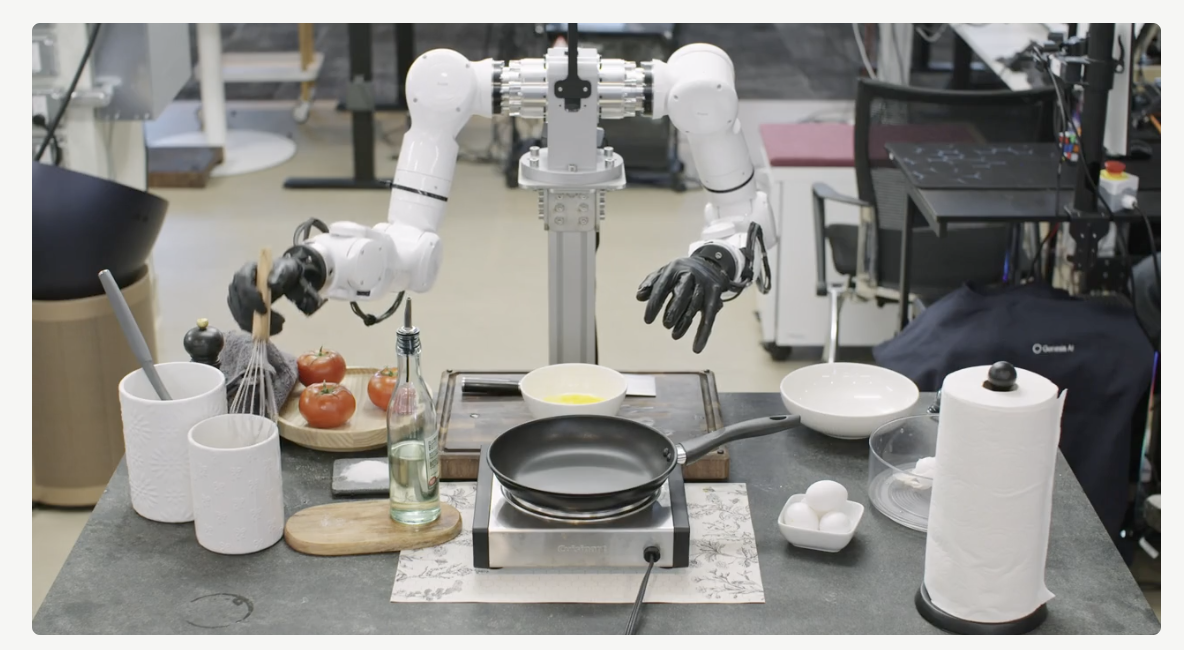
Genesis AI is the physical-AI lab betting that robots get useful the way chatbots did: one foundation model trained on enough data to generalize. The Paris-and-California company left stealth in July 2025 with a $105 million seed, and in May it showed GENE-26.5 driving custom human-shaped hands that cook, solve a Rubik's cube and run lab work. 🦾
Founders
Founded in December 2024 by CEO Zhou Xian, a Carnegie Mellon robotics PhD, and president Théophile Gervet, a former Mistral research scientist. Zhou earlier led the open-source Genesis physics-simulation project, which is the tell: this team thinks the road to capable robots runs through simulation and data, not bigger actuators.
Product
Genesis AI is building a universal robotics foundation model and the platform to run it, and it has gone full-stack, designing hardware and software in-house. GENE-26.5, shown in May 2026, drives custom dexterous hands built with China's Wuji Tech, not the two-finger grippers most robot startups settle for. The harder bet is data: the company is pushing a sensor-loaded glove so pharma and factory workers can record human manipulation on the job, turning everyday labor into training data.
Competition
The physical-AI foundation-model race is filling up fast. Physical Intelligence and Skild AI chase the same general robot brain, and Generalist AI just raised $400 million for a parallel thesis. Humanoid makers like Figure and Robotera own the bodies; Genesis wants to own the intelligence any body runs, with dexterity and a self-built data pipeline as its wedge.
Financing 💰
$105 million seed co-led by Eclipse and Khosla Ventures, with Bpifrance, HSG, Eric Schmidt, Xavier Niel, MIT roboticist Daniela Rus and Vladlen Koltun on the list. Genesis ran the round at its July 2025 stealth exit, now has roughly 60 people split between Europe and the US, and has not disclosed a follow-on or valuation since.
Future ⭐⭐⭐
Robotics demos age badly, and hands solving a Rubik's cube are not a deployment. Genesis is strong where it counts: a serious team, a foundation-model thesis that already worked for language, and a data plan that does not require buying robot fleets first. It wins if GENE generalizes across hardware the way investors hope. It stalls if "universal" manipulation stays a lab trick that needs retraining for every new gripper. 🤖
🤨 Yeah, But...
Bloomberg's Emily Chang reported this week that Anthropic CEO Dario Amodei has one direct report, his chief of staff, while President Daniela Amodei runs the executive team. The setup comes as Anthropic prepares for an IPO after a $965 billion private valuation.
(The Implicator, June 10, 2026)
Our take: Most CEOs claim their calendars have too many people in them. Amodei solved that problem with one report, which is either excellent time management or an org chart performing close-up magic. The work still exists: sales, finance, security, recruiting, customers, investors, regulators. It just reaches the board through his sister first. That may be coherent inside Anthropic, where culture is treated like infrastructure. Public markets tend to prefer less elegant labels. Bankers will translate the arrangement into key-person language, control tables and board-risk prose, which is Wall Street's least funny dialect but occasionally its most useful one.

Marcus Schuler
Editor-in-Chief and founder of Implicator.ai. Former ARD correspondent and senior broadcast journalist with 10+ years covering tech. Writes daily briefings on policy and market developments. Based in San Francisco. E-mail: editor@implicator.ai