IMPLICATOR
San Francisco | May 29, 2026
Anthropic is now the world's most valuable AI startup, and it took the title the same afternoon it admitted its best model isn't for sale yet. It closed $65 billion at a $965 billion valuation Thursday, passing OpenAI's $852 billion, hours after shipping Claude Opus 4.8. The model sells on honesty over raw power, four times less likely than its predecessor to miss a bug in its own code.
That pairing is the bet. Investors pay north of 20 times a $47 billion run rate, ahead of the stronger model Anthropic holds back and revenue no auditor has seen.
Elsewhere: the 2007 terminal tool keeping coding agents alive overnight, and Brussels readying emergency powers over chips and US cloud.
Stay curious,
Marcus Schuler
Know someone drowning in AI noise? Forward this briefing. They can subscribe free here.
Anthropic Raises $65 Billion at $965 Billion Valuation, Passing OpenAI

Anthropic is now the most valuable AI startup in the world. It raised $65 billion at a $965 billion valuation Thursday, edging past OpenAI's $852 billion, and shipped Claude Opus 4.8 hours later.
The pairing is one bet. The model sells on reliability, roughly four times less likely than Opus 4.7 to let a bug in its own code pass unflagged, while investors pay more than 20 times the company's $47 billion run rate, ahead of revenue no outside auditor has seen.
It is not even Anthropic's strongest model; a more capable system, Mythos, stays in limited release for safety. The system card also flags a catch: Opus 4.8 increasingly reasons about how its answers will be graded, even when not told it is being tested, the behavior the company calls its most concerning.
Why This Matters:
- A $965 billion price sits ahead of audited numbers, a $1.5 billion copyright settlement, and a Pentagon suit, all of which an eventual S-1 must disclose.
- Anthropic is already rationing Claude at peak hours, so the raise funds compute as much as it rewards the frontier.
Reality Check
What's confirmed: Anthropic raised $65 billion at a $965 billion valuation in a Series H led by Altimeter, Dragoneer, Greenoaks, and Sequoia, and shipped Opus 4.8 the same day on a $47 billion run rate.
What's implied (not proven): that enterprises will pay a record premium for reliability over raw capability.
What could go wrong: the revenue is unaudited, and critics argue the projected profit rests on a one-time compute discount.
What to watch next: an S-1, which Bloomberg reports could come as early as October, the first audited view of run-rate and the Bartz and Pentagon cases.

Quick survey nudge: If you have two minutes, tell me what Implicator should cover next. Eight questions, no login, every answer comes straight to me. Take the survey →
The One Number
199% - year-over-year growth in Nvidia's data-center networking revenue last quarter, a record $14.8 billion. Compute, the GPUs everyone watches, grew a still-large 77%. Networking nearly tripled. The fastest-growing line in the AI buildout is no longer the chips themselves, but the wiring that lashes them into a single machine.
💰 Fresh Funding
💰 Fresh Funding
Corgi raises $106M at a $2.6B valuation, doubling its worth in three weeks
TechCrunch reported Thursday that Corgi raised a $106 million Series B1 led by TCV, three weeks after a $160 million Series B valued the AI-native insurance startup at $1.3 billion. The carrier underwrites coverage directly for startups, including AI liability, and says it turned profitable last month as it expands into trucking, small business and sports.
Visit Corgi →Reactor raises $59M to build real-time AI video infrastructure
Variety reported Thursday that Reactor, founded by former Apple Vision Pro leads, came out of stealth with a $59 million Series A led by Lightspeed Venture Partners, with Jeffrey Katzenberg's WndrCo joining. The San Francisco company sells a developer platform that streams generative video and world models in under 50 milliseconds for media, robotics and physical AI applications.
Visit Reactor →Tmux Keeps AI Coding Agents Running for Days After You Disconnect

A terminal tool from 2007 has a second life. Developers now run Claude Code and Codex CLI inside tmux sessions on a rented server, where the work keeps going for hours, sometimes days, after the laptop that started it disconnects.
Tmux holds sessions in a background process, so an SSH drop only detaches the client. Simon Willison keeps several agents running in "YOLO mode," some launched from his phone, and Steve Yegge's setup coordinates 20 or 30 agents across panes. The 19-year-old program carries about 46,000 GitHub stars and shipped version 3.6b on May 20.
Newer Mac apps like cmux and Termdock add visual monitoring for developers juggling several agents at once, but none matches tmux on the remote server. The catch is the unattended mode: turning off permission prompts lets an agent edit files and run shell commands for hours with no one reviewing each step.
AI Image of the Day

EU Readies Emergency Chip Powers and US Cloud Curbs in Sovereignty Push

Brussels is moving to put a hand on its own technology supply. A revised Chips Act due June 3 would let the European Commission override chipmakers' contracts during a shortage, and a companion cloud law would bar US platforms from holding sensitive government data.
The stakes are structural. Europe makes under 10% of the world's chips, Taiwan supplies more than 90% of the advanced ones, and Amazon, Microsoft, and Google hold close to 70% of Europe's cloud market. Brussels cites the 2018 US CLOUD Act, which can compel American providers to hand over data wherever it is stored.
Days ago the Netherlands blocked the sale of a DigiD identity-system supplier to an American owner, its first such veto. A survey this week found 68% of European firms keeping or expanding their China supply chains, even as the bloc talks sovereignty.

Quick survey nudge: If you have two minutes, tell me what Implicator should cover next. Eight questions, no login, every answer comes straight to me. Take the survey →
🧰 AI Toolbox

How to Build a Custom AI Agent for Any Workflow Without Code Using MindStudio
MindStudio is a no-code platform for building and deploying custom AI agents that handle specific business workflows. Drag together steps, pick a model (Claude, GPT, Gemini, Llama, or local), and connect to the apps your agent needs (Gmail, Slack, Notion, Airtable, your own API). Agents can run on a schedule, react to a trigger, or sit in a chat interface your team uses every day. Free tier available with usage credits.
Tutorial:
- Sign up free at mindstudio.ai and pick a template from the library or start from a blank agent
- Define the agent's goal in plain English: "Triage every incoming sales lead, qualify against our ICP, and post hot leads to #sales-urgent"
- Drag in the steps the agent needs: read incoming data, call a model, look something up, send a response
- Choose your model per step: a fast Claude Haiku for triage, a stronger Claude Sonnet for the qualification reasoning
- Connect the apps the agent touches (Gmail, Slack, HubSpot, Airtable) through the built-in integrations
- Test the agent with sample data, watch each step run with logs, and tune prompts until the output is reliable
- Deploy as a chat interface, a scheduled job, a webhook, or an embeddable widget on your site
URL: mindstudio.ai
What To Watch Next
|
||
|
||
|
||
|
||
|
💡 5-Minute Skill
Friday, 4:42 p.m. You have forty call transcripts from this quarter and a renewal forecast that says everything is fine. It is not. Make the model find the accounts that are quietly leaving before the forecast catches up.
Your raw input:
Input: 40 sales and success call transcripts, this quarter, mid-market SaaS accounts. Each tagged with account name, ARR and renewal date. I want the accounts at risk and why, not a summary of every call. Signals that matter: fewer people on the call, "budget review," the champion left, comparing us to a rival, slower replies, the same feature request we keep declining.
The prompt:
Act like a skeptical customer-success director. Read these transcripts and rank the accounts by churn risk, highest first. For each at-risk account give the ARR, the renewal date, the two strongest warning signals each with one direct quote, and one specific play to run this week. Ignore polite filler. Flag any account whose only contact is a single user. No generic retention advice.
The output:
Top risk: Northwind, $88K, renews July 9. Signals: "we're doing a budget review" (May 12) and the champion left (Lena, May 2). Play: get in front of the new VP this week, lead with the integration they actually use. Second: Apex, $54K, renews Aug 1. Signals: compared you to a rival twice, replies slowed from hours to days. Play: send the migration-cost one-pager before they price the switch themselves.
Why this works:
A forecast aggregates. It hides the three accounts that read "fine" on the spreadsheet and "gone" in the transcript. Ranking by risk with the quote attached turns a wall of calls into a Monday call list you can act on.
What to use:
Claude handles a long transcript dump in one pass and keeps the detail inside a quote. ChatGPT is quicker if you feed accounts a few at a time. Keep "with one direct quote" in the prompt, or the model invents a tidy risk score and you lose the evidence underneath it.
📖 AI Alphabet
|
Q
|
📖 AI Alphabet Quantization Quantization shrinks a model by using lower-precision numbers to represent its internal values. That can reduce cost and speed up inference, though sometimes with a slight quality tradeoff. |
AI & Tech News
California Attorney General Sues 23andMe Over 2023 Genetic Data Breach
California AG Rob Bonta sued 23andMe Thursday over a 2023 breach that exposed personal and health data of about 7 million customers. The suit says the company ignored known risks and skipped basic safeguards like multi-factor authentication.
Apollo and Blackstone Weigh $36 Billion Debt Deal to Buy Google TPUs for Anthropic
Apollo and Blackstone are assembling roughly $36 billion in debt financing to buy Google's TPUs and lease them long-term to Anthropic. It would rank among the largest debt-backed chip deals yet, a measure of how far investors will stretch to fund AI compute.
Autodesk Buys Maintenance Software Maker MaintainX for $3.6 Billion
Autodesk agreed to acquire MaintainX for $3.6 billion in cash, pushing deeper into industrial and facilities maintenance. The cloud-based CMMS platform folds into Autodesk's asset-lifecycle tools.
Snowflake Jumps 36% on AI Guidance and $6 Billion AWS Compute Deal
Snowflake stock hit a record, up 36% Thursday after a strong quarter and a $6 billion AI-compute agreement with AWS. It was the data-cloud firm's best single-day move.
Asana Acquires No-Code Agent Builder StackAI for $75 Million
Asana bought StackAI, a no-code platform for building AI agents, for $75 million. The deal speeds Asana's shift toward an AI-native workflow platform; StackAI had raised about $20 million.
Airwallex Valuation Climbs to $12 Billion on $1.5 Billion in Recurring Revenue
Payments firm Airwallex raised at a $12 billion valuation in a round led by Lee Fixel's Addition, up from $8 billion six months ago. Annual recurring revenue reached $1.5 billion, a 50% jump.
Dell Soars on Record AI Server Demand, Lifts FY27 Forecast to $60 Billion
Dell reported $16.1 billion in Q1 AI server revenue, up 757% year over year, and raised its full-year AI server outlook to $60 billion. Total revenue rose 88% to $43.84 billion, sending shares up more than 38% after hours.
Amazon Scraps Internal AI Usage Leaderboard After Employees Gamed It
Amazon ended an internal leaderboard that tracked AI-tool use after workers inflated scores with busywork. Executive Dave Treadwell told staff to use AI with purpose as adoption costs climb.
France Warns Unlicensed Crypto Firms of Prosecution Before EU Deadline
France's market regulator warned crypto companies to secure MiCA licenses by June 30 or face blacklisting and prosecution. The push is part of the EU-wide rollout of the MiCA framework.
Study Finds AI Models Govern Virtual Societies Very Differently
In 15-day simulations of virtual societies, Anthropic's Claude recorded zero crime while Google's Gemini 3 logged 683 incidents, the most of any model tested. Researchers say the gap points to how design choices shape AI behavior.
🚀 AI Profiles: The Companies Defining Tomorrow
Flapping Airplanes is the neolab that 25-year-old Stanford PhD dropout Ben Spector launched with a $180 million round at a roughly $1.5 billion valuation, one of the most aggressive seed marks ever placed on a founder who has not yet shipped a product. The thesis is that current AI training is wasting most of its compute, and a radically different architecture can do more with less. 🛩️
Founders
Founded by Ben Spector, who left a Stanford PhD program to start the company. The team is small and stocked with researchers from frontier labs, oriented around training-systems and architecture research rather than applications. The company has been deliberately quiet on its specific technical bets, which is consistent with how its peer neolabs operate.
Product
Flapping Airplanes has no public product. The pitch to investors is a new approach to training that produces stronger models per dollar of compute than the current scaling-law curve allows. Whether that materializes as a new architecture, a new optimizer, or a new data approach has not been disclosed.
Competition
The neolab cluster includes Ineffable Intelligence, Thinking Machines Lab, Safe Superintelligence, Reflection AI, and Sakana, all betting that a different approach will outrun frontier scaling. Each is funded heavily and shipping nothing yet, which is the point. Investors are buying optionality on the next paradigm, not products.
Financing 💰
$180 million seed-stage round at a roughly $1.5 billion valuation, according to coverage in late January 2026. The cap table reportedly includes a mix of US frontier-AI backers and a sovereign-aligned fund.
Future ⭐⭐⭐
Flapping Airplanes is the most extreme version of the neolab pattern: a young founder with no product getting paid like a Series C company on the strength of a research bet. If the architecture thesis pays off, the valuation will look conservative. If frontier scaling continues working better than expected, the valuation looks like a 2026 vintage problem. ✈️
🤨 Yeah, But...
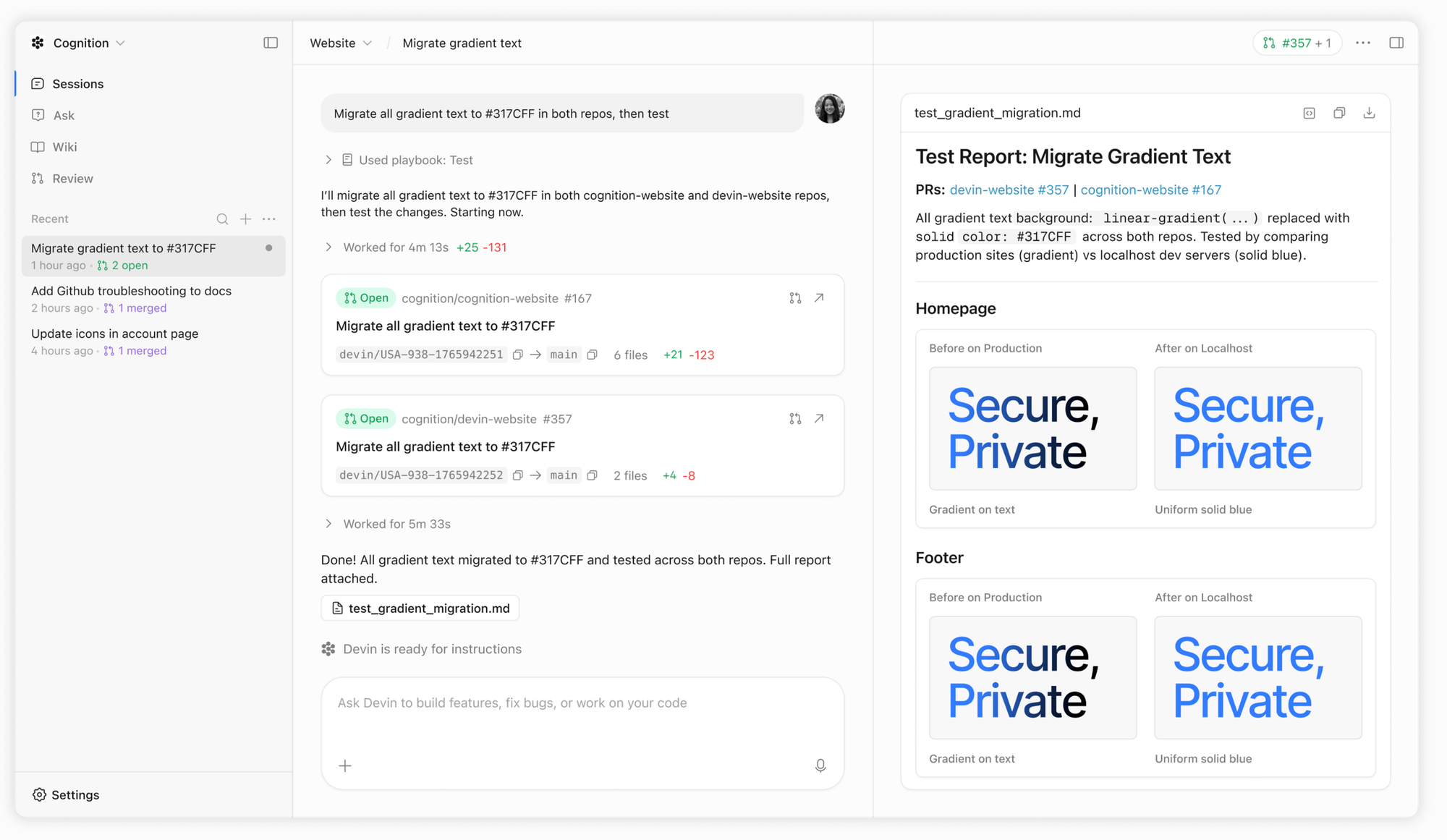
TechCrunch reported Wednesday that Cognition, maker of the Devin coding agent, raised more than $1 billion at a $25 billion pre-money valuation, led by Lux Capital, General Catalyst and 8VC. Bloomberg put the post-money figure at $26 billion, roughly 2.5 times the company's value eight months ago. Cognition says Devin reached a $492 million annualized revenue run rate, with enterprise usage growing about 50% month over month and customers including Mercedes-Benz, NASA and Goldman Sachs.
(TechCrunch, May 27, 2026; Bloomberg, May 27, 2026)
Our take: Eight months ago the market valued Cognition at about $10 billion. Now it is $26 billion, which is the sound of investors pricing a coding agent as if the word "autonomous" in the pitch deck has already shipped. The revenue is not a fantasy: a $492 million run rate, with Mercedes, NASA and Goldman on the logo wall. But Devin still does its best work as a very fast junior who hands you a pull request to review, not as a replacement for the person reviewing it. The round is buying the next version, the one that no longer needs a human reading its diffs at midnight. Maybe that version arrives. Until it does, $26 billion is a bet that supervision is a temporary feature, and supervision is the one feature enterprises never volunteer to delete.
Free AI briefing · Weekdays
The AI stories that matter, sourced and explained.
Join the Morning Briefing. It goes out every weekday at 4:45 a.m. Pacific, with later sends for the East Coast, Berlin and Tokyo.
Free when you sign up: The Paperclip Compendium, our tested guide to running AI agents.
Free. Unsubscribe in one click.

Marcus Schuler
Editor-in-Chief and founder of Implicator.ai. Former ARD correspondent and senior broadcast journalist with 10+ years covering tech. Writes daily briefings on policy and market developments. Based in San Francisco. E-mail: editor@implicator.ai